
A daylily clump can live for years without being divided, so a crowded-looking plant is not automatically a plant in trouble. The more useful signals are declining bloom production, a congested center, or the need to move a clump before nearby shrubs shade it. Splitting a healthy clump just because the calendar says to can trade this year’s flowers for unnecessary transplant stress.
When division is justified, success depends on three visible parts: leaf fans, live fleshy roots, and the crown where they meet. Unlike a bearded iris, a daylily does not have a thick rhizome that you leave exposed at the surface. This guide shows how to choose the season, separate usable divisions, and put the crown back at a sensible depth.
Decide whether the clump actually needs dividing
Stand back and compare the clump with its flowering history. A plant with strong leaves and abundant scapes can usually stay where it is, even when the foliage forms a broad mound. Consider division when a mature clump makes noticeably fewer flowers than before, the center is congested, or its edges have run into an adjacent plant or walkway. First check light and watering: daylilies in increasing shade can flower less without being rootbound. A waterlogged bed can also cause decline. If the foliage is yellowing out of season or roots are visibly rotting, investigate the underlying problem before multiplying damaged stock. Division is a way to renew space and distribute healthy plants, not a treatment for every symptom. Record which clumps were vigorous enough to share and which should be assessed further. If you are starting from scratch, read When to Divide Agapanthus in Pots or Borders Without Losing Blooms.
Choose an early-spring or post-bloom window
University of Minnesota Extension recommends dividing in early spring or immediately after flowering; Iowa State also describes late summer as a workable period. These are growing-stage windows rather than dates on a national calendar. In spring, newly emerging foliage is easy to see and water demand is relatively modest, but flowering may be lighter that season. A post-bloom division preserves the earlier display, provided the roots can reestablish before harsh cold. Avoid working during hot, drying winds or when the soil is saturated and sticky. Water dry ground ahead of digging and plan the move for an overcast day when possible. In a short-season climate, ask a local Extension office how much growing time is left for roots before the soil freezes.
Lift a generous root ball before pulling fans apart
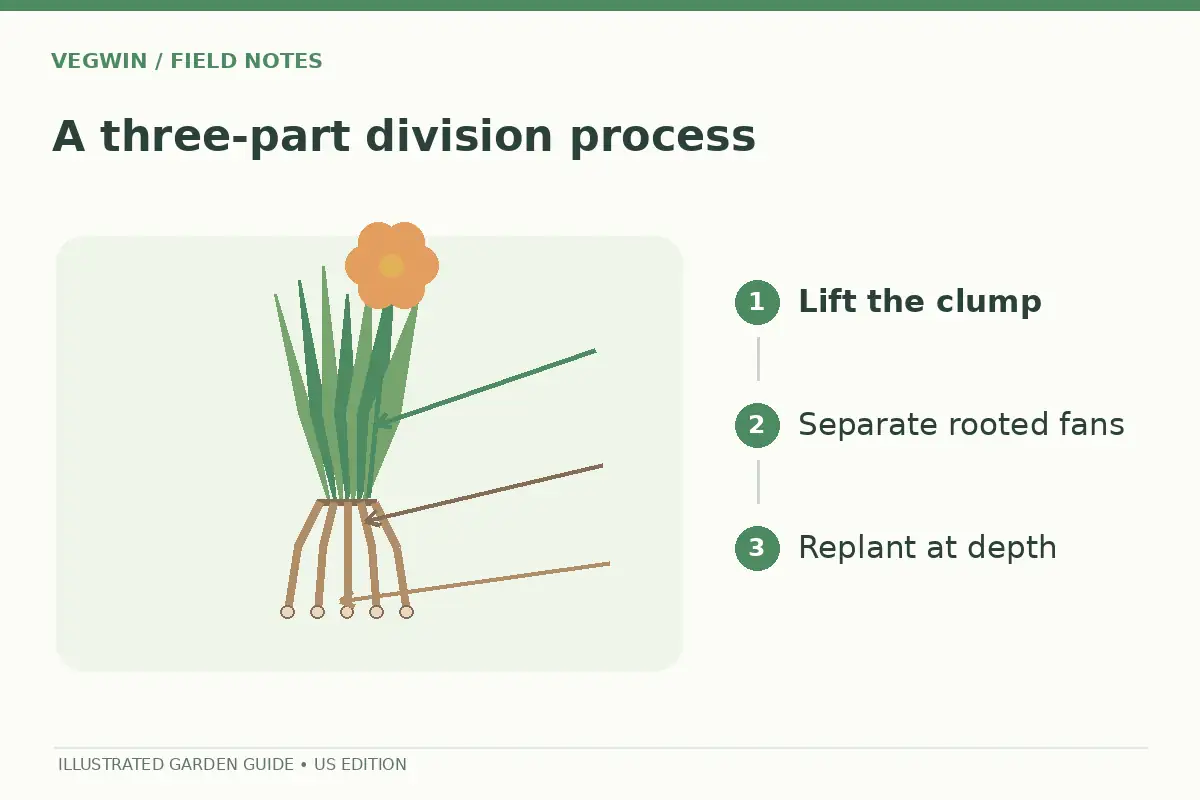
Prepare the new planting space before you disturb the parent plant. Work a digging fork or spade around the outside of the clump rather than slicing straight through the center. Lever it up carefully; mature daylilies hold substantial fleshy roots that break if you yank the leaf mass. Set the root ball on a tarp in light shade, then shake or rinse away just enough soil to locate individual fans and root connections. Discard obviously decayed roots but do not trim every long root for neatness. Keep divisions shaded and roots from drying while you work. A large clump can be separated by hand, with a knife or clean spade reserved for tightly interlocked sections. Sharp cuts are preferable to repeated tearing when the mass will not release. For the basics, see our guide: When and How to Divide Daylilies While Keeping Healthy Fans and Roots.
Save complete leaf fans with live attached roots
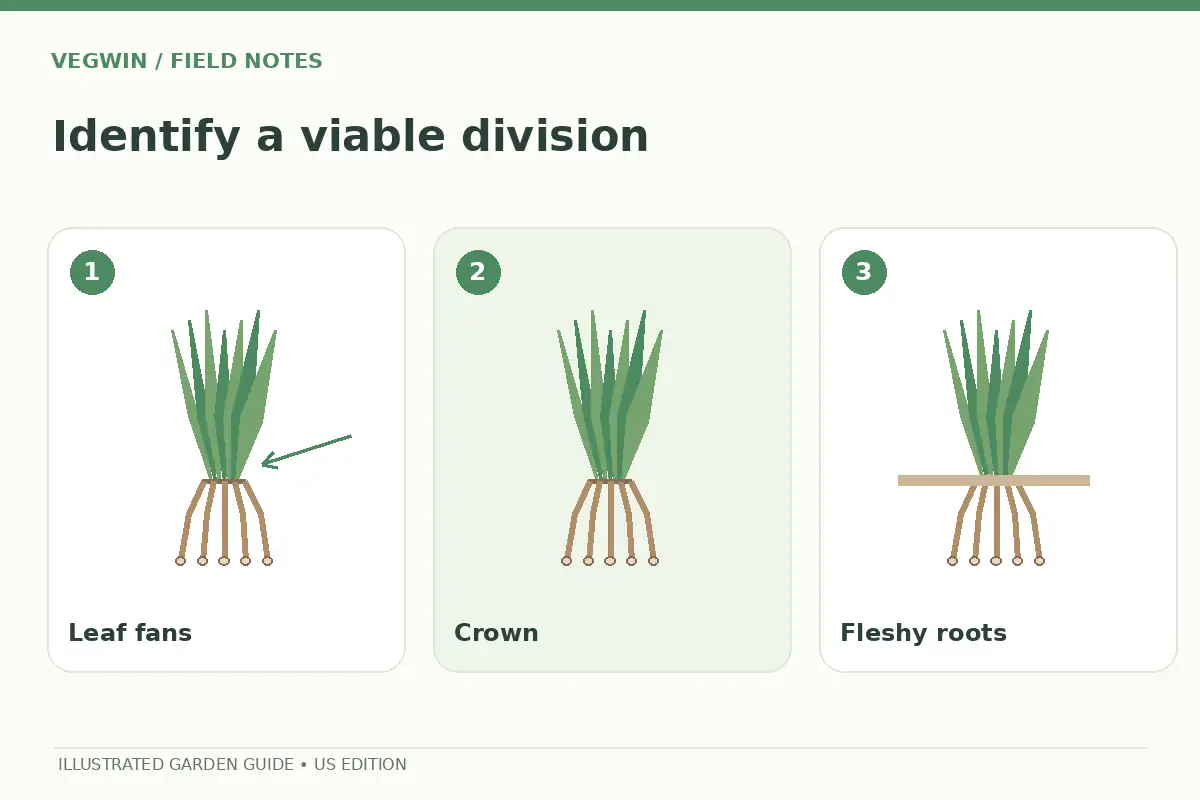
Look for fans of leaves emerging from short crowns above a bundle of substantial roots. Iowa State describes divisions of two or three fans with a good root system; that is a practical starter size that resists drying and is easy to position. A tiny single fan can sometimes live, but do not assume every leaf fragment is a viable plant. Follow each fan down to its base and confirm that healthy roots remain attached. Keep varieties separately labeled if several clumps are being divided together. If foliage is bulky after summer division, trim it to reduce the demand on disturbed roots; follow a local guide for the amount rather than cutting into the crown. Put healthy leftovers in appropriately prepared beds, not in a dry bucket in direct sun.
Place the crown below the surface, not buried deeply
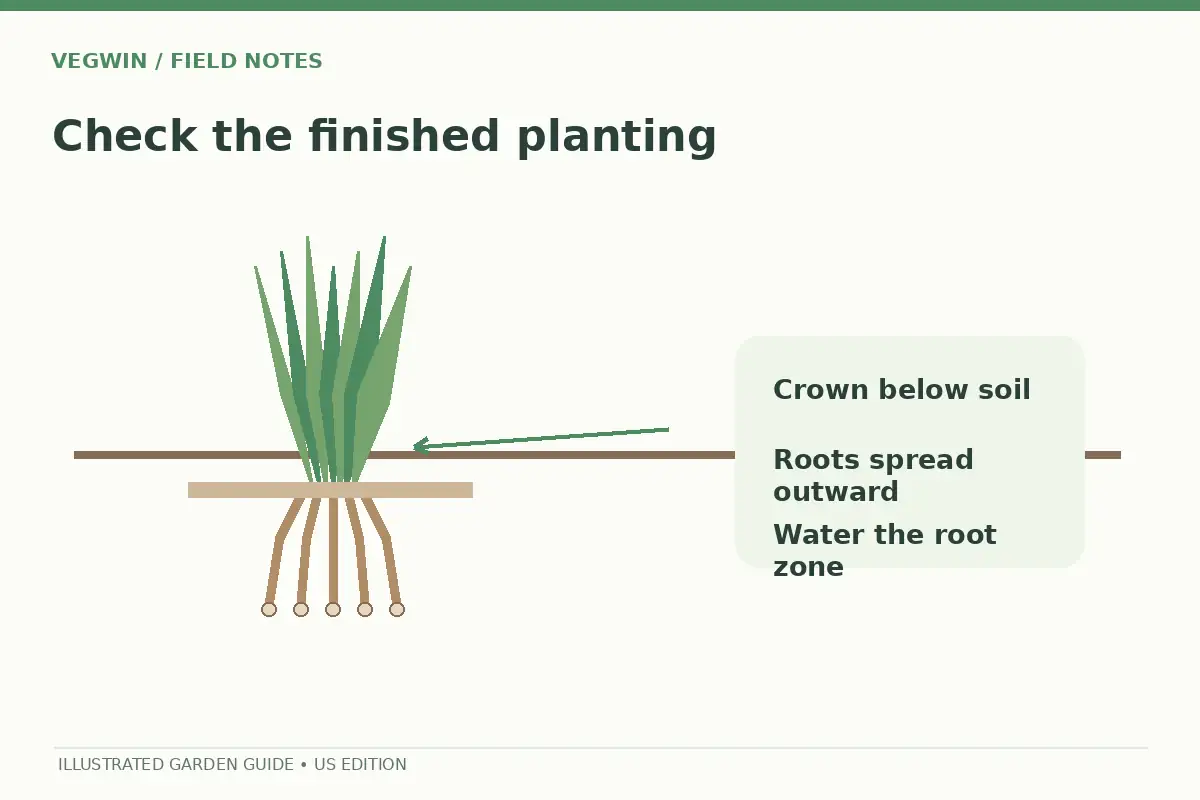
Make a hole wide enough to spread the fleshy roots without turning them sharply upward. The crown is the junction between shoots and roots; University of Minnesota and Iowa State recommend setting it approximately one inch below the soil surface. A shallow measurement is more useful than burying every division to the height it appeared inside the old clump. Settle soil around the roots so large air gaps do not remain, but avoid compacting wet ground into a hard ring. Do not copy the exposed-rhizome technique used for bearded iris. Space divisions for their eventual mature spread rather than packing them tightly because the small fans look lonely today. Label the cultivar and water well immediately after planting.
Water the new divisions without creating a swamp
Freshly divided plants have fewer functioning roots than established clumps. Soak the planting area, then check whether moisture is actually reaching the root zone instead of adding a token splash to the leaves. In dry spells, revisit regularly while new roots establish. In heavy clay, inspect drainage because constant waterlogging is as unhelpful as bone-dry soil. A light organic mulch can reduce moisture swings, but keep it from piling over the crowns. Avoid adding strong fertilizer to compensate for the loss of flowers; establishment depends more on healthy roots, sensible moisture and correct placement. Watch for upright new leaf growth. Wilting immediately after a hot move can be temporary, while continuing collapse and foul-smelling roots suggest a more serious problem.
Expect a pause in flowering while roots rebuild
New divisions may make healthy leaves yet bloom lightly during the next season or two. Iowa State cautions that divided plants commonly flower less for one or two years. The plant is allocating resources to a new root system, not necessarily failing. Check whether the site gets suitable sun and whether competing roots from nearby trees have invaded the planting area. If a division has healthy emerging leaves, do not lift it repeatedly to check its progress. Conversely, a fan that never resumes growth in warm conditions deserves a gentle inspection for crown rot or severe desiccation. Note which divisions were made in spring versus after bloom so you can compare recovery honestly. Avoid promising immediate mass flowering in the first year.
Finish with a quick field checklist before putting tools away
Before calling the job complete, count the rooted fans in each division and confirm that the crown sits just below the finished soil line. Check that the roots were not packed upward, the labels are legible, and every new plant has been watered. Clean equipment before moving to other beds, especially if suspicious rotted tissue was present. Photograph the layout or draw a small garden map; the bare soil between young fans can look identical in a month. Keep your original vigorous clump if there is no reason to split it. A restrained, properly timed division generally does more good than repeatedly disturbing every perennial in the border simply to make more plants.
Related Guides
- How to Divide Herbaceous Peonies in Fall and Set the Eyes Shallowly
- How to Divide Shasta Daisies in Spring and Replant Healthy Crowns
- When to Divide Catmint Clumps and Keep Rooted Shoots Alive
- When to Divide Coral Bells and Replant Rooted Heuchera Crowns
- When to Divide Bee Balm and Replant Rooted Rhizome Sections
How We Research and Check Gardening Advice
We checked the linked sources on October 21, 2026. The distinct reader task is: A clump-to-division field decision: when not to divide, how to recognize complete rooted fans, and how to set crown depth without confusing daylily roots with iris rhizomes. Our overlap check was title- and tag-based for older articles and does not establish that the full text of every existing post was audited. Advice must be adapted to local conditions; when plant disease, spray history, or regional freeze risk affects the decision, follow qualified local Extension guidance.
Sources checked October 21, 2026: 1. University of Minnesota Extension — Early spring or post-bloom division, rooted fans and correct crown depth. 2. Iowa State University Extension — Early spring or late-summer division, 2–3 rooted fans, watering and short-term reduced flowering. 3. University of Illinois Extension — Daylily fleshy roots, division in spring or fall and the distinction from bulb crops. No products, paid services, or affiliate arrangements are recommended in this guide. See the VegWin affiliate disclosure for the site-wide policy.
Frequently Asked Questions
It is possible but more stressful. Early spring or just after bloom is generally preferable so roots can recover.
Two or three healthy leaf fans with a good attached root system make a practical, durable division.
Set the junction where shoots meet roots about one inch below the finished soil surface, following regional guidance.
Some may, but division can reduce bloom in the current season or for one to two years while roots establish.
No. Divide when plants are overcrowded, losing vigor, or need moving; thriving clumps can remain untouched.