
An overnight frost can injure tender growth on a small lemon, lime or other citrus tree, especially after mild weather has encouraged new shoots. Covering a young tree looks simple until you ask what type of cold is coming. Lightweight fabric may reduce heat loss during a radiational frost, but it does not turn an exposed citrus tree into a hardy outdoor plant during a prolonged hard freeze.
This guide focuses on a backyard tree small enough to cover safely. It explains why the fabric should protect a pocket of air influenced by the ground, when a support frame helps, what to do at sunrise, and how to assess the plant afterward. There are also situations in which moving a container indoors or seeking a region-specific freeze plan is the better choice.
Check the forecast pattern instead of looking only at one low
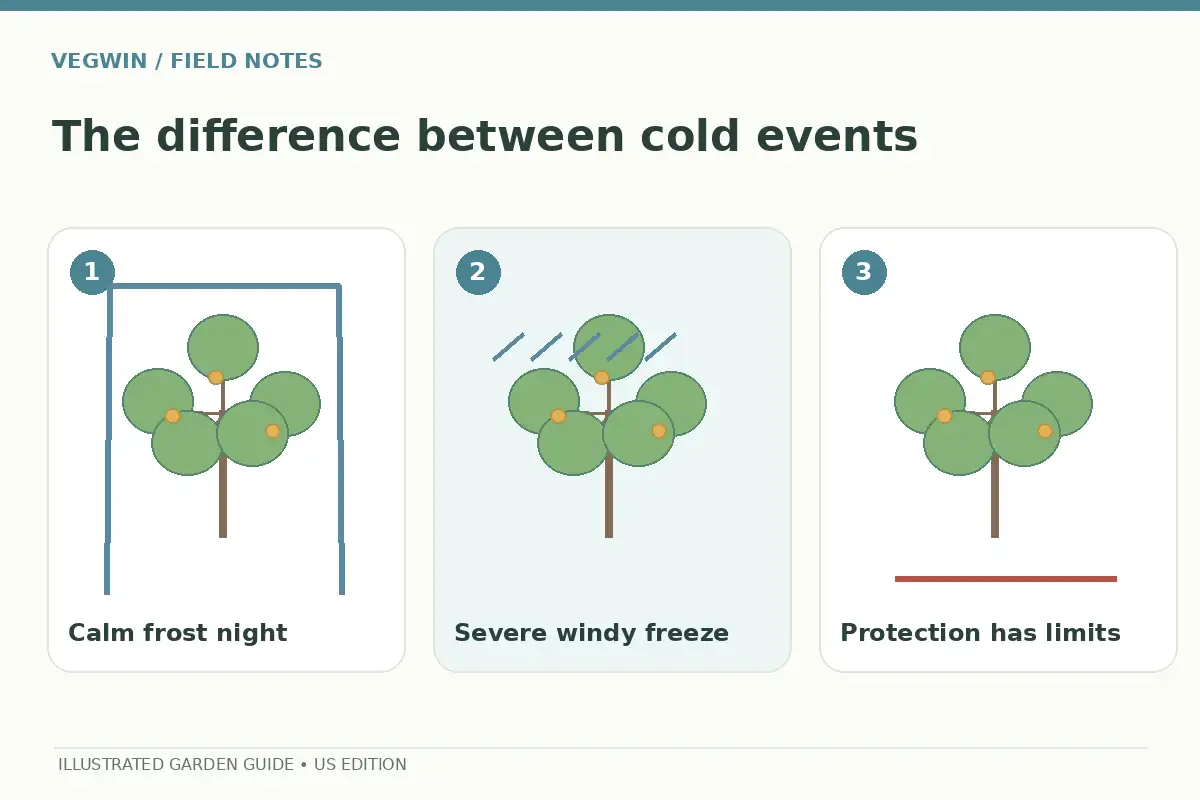
Two nights with the same predicted minimum can create different risks. A calm, clear frost night allows the ground to radiate heat away, and a correctly placed cloth barrier may help preserve some of that warmth around the plant. A windy, prolonged hard freeze is a more serious event; fabric alone may offer little protection. UF/IFAS Extension explicitly distinguishes frost protection by covering from protection during a true hard freeze. Note predicted temperature, duration below freezing, wind and whether the tree has tender new shoots. Lemon and lime are generally less cold tolerant than many satsuma mandarins, but the variety, rootstock, age and acclimation all matter. Avoid a promise such as “one blanket protects to 20°F” without testing the actual system and weather conditions.
Prioritize small trees and container plants
A potted citrus is often easier to move to a protected, bright place before freezing weather than it is to engineer a secure outdoor cover. Avoid placing it next to an unsafe heat source or sealing it in a dark closet for days. For a small planted tree, assess how tall and wide a fabric cover would need to be and whether stakes can hold it away from tender growth. Large mature trees are rarely practical to cover fully with household fabric, and strong winds can turn improvised sheets into sails. Pay particular attention to the graft union and young lower trunk; damage below the union may change which plant regrows. University Extension notes that younger citrus is typically more vulnerable than established bearing trees, even when varieties are considered relatively cold tolerant.
Prepare soil before the cold arrives
Bare, appropriately moist soil can absorb and release more heat than a dry, heavily mulched insulating surface under certain frost conditions. UC and UF Extension resources recommend watering dry ground ahead of an expected cold event rather than waiting until ice is forming. This is not permission to saturate poorly drained soil or spray an untested irrigation system throughout a freeze. Evaluate actual moisture and drainage; a heavy wet clay bed can already contain ample water. Move loose mulch temporarily away from the area immediately beneath the cover when regional guidance advises exposing soil to daytime warmth, while continuing to protect roots according to local practices. Work before dusk while the soil and tree can still benefit from the remaining daylight. If you want the full process, read how to cover plants from frost without trapping heat or moisture.
Use breathable fabric and keep it clear of sharp twigs
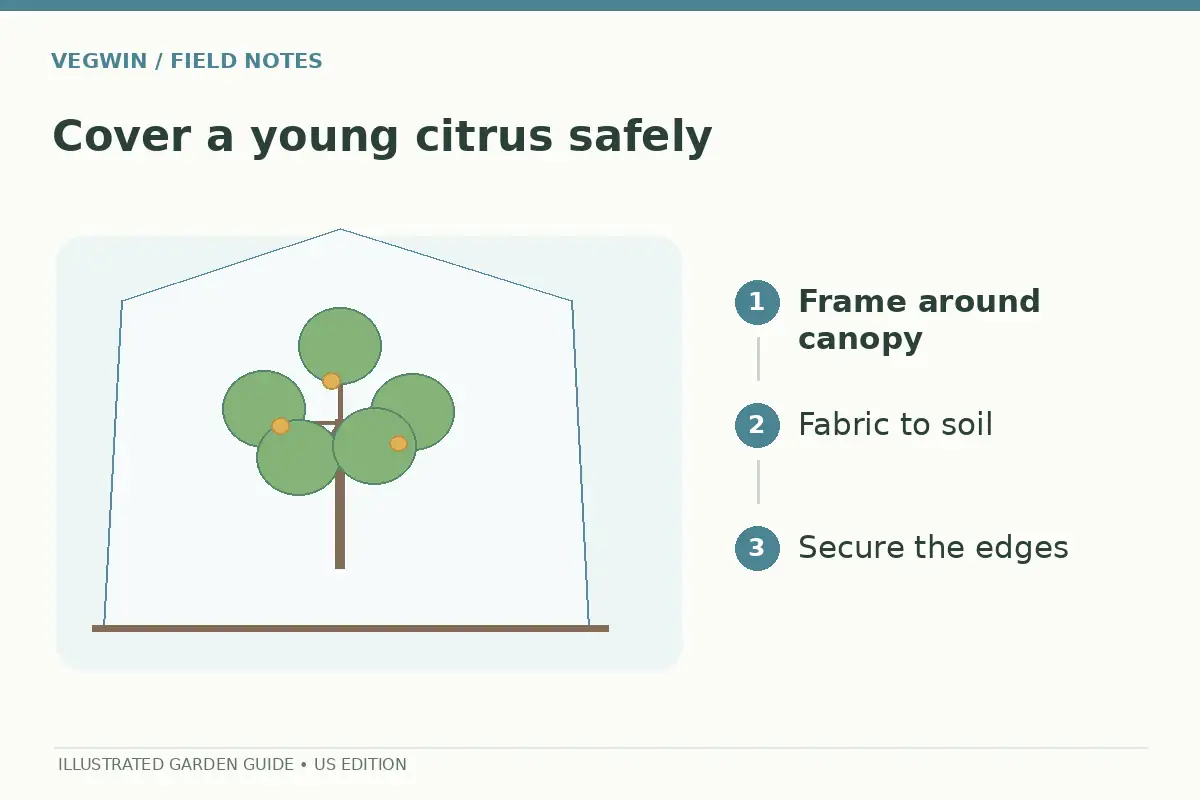
Frost cloth, woven sheets and suitable garden fabric are common coverings. Bare plastic against citrus foliage is risky because it can transfer cold and cause contact injury; many Extension instructions favor cloth for homeowners. Build a simple frame with stakes or a hoop where practical, taking care not to spear roots or scrape the trunk. Pull material over the frame so wind cannot whip tender branch tips, and secure edges without crushing the tree. A protected pocket around foliage is the aim, not a tight shrink-wrap around every leaf. Check the fabric is in sound condition and large enough for the selected plant. Do not mix electric heaters, heat lamps or extension cords into a fabric tent as an improvised solution: fire and shock hazards require professionally suitable equipment and controls.
Secure the cover near the ground to collect useful warmth
For small trees, UF/IFAS advises draping coverings to the ground so the space under them benefits from heat stored in soil. UC resources likewise show ground-secured blankets, while some local guidelines describe leaving ventilation at the base under particular conditions. The principle is not simply wrapping the upper canopy like a bag: the ground and air beneath the cover are part of the system. Weight edges with appropriate clean objects or use secure landscape pins where safe, and ensure drainage and access are not blocked. A cover tied only around the trunk leaves the lower branches and soil outside the protected zone. Sketch the arrangement before the cold arrives, particularly if several trees of different sizes need protection.
Remove or vent covers when daytime weather warms
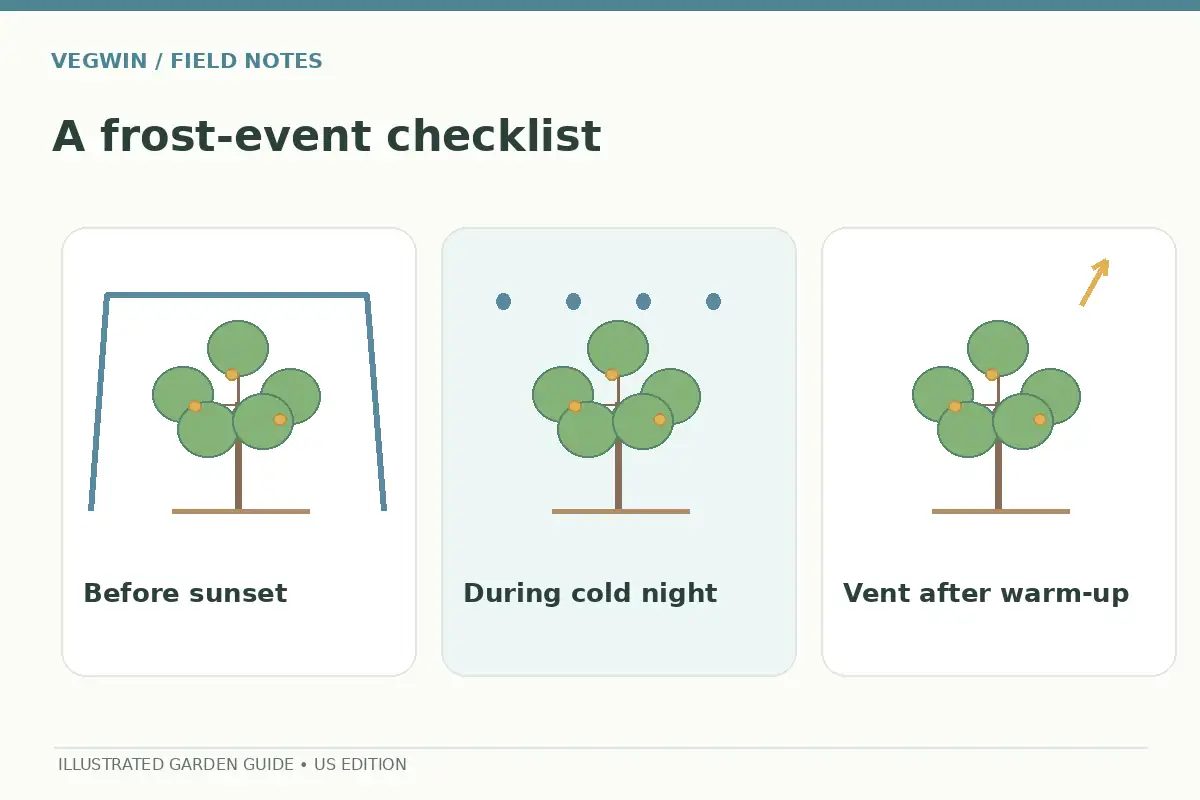
A good cover installed before frost can become a problem if left sealed over foliage through sunny warm hours. Temperatures beneath the material may rise, humidity can build and shoots can become less hardened for the next cold night. Remove or ventilate the cover according to fabric design and current conditions as the cold danger passes; UF/IFAS recommends prompt removal, preferably the next day after the event. Re-cover before sunset if another frost is forecast and the tree remains vulnerable. Do not tug frozen cloth off leaves before thawing if it is stuck. Mark which cover belongs to each tree, allow wet fabric to dry before storage, and inspect for tears that might leave gaps at the next use.
Give damaged citrus time before making big pruning cuts
Brown or drooping leaves right after a frost are not a reliable measure of exactly how much wood has died. University of California IPM recommends waiting until new growth develops in late spring or summer before removing apparently dead branches, except when a limb poses an immediate hazard. Cutting early can remove living tissue and expose healthy wood to another freeze. Remove fruit that is clearly damaged and follow local food-safety and quality advice; do not assume frozen fruit stores normally. Record where bark and buds remain alive as temperatures recover, and seek local Extension guidance if trunk or graft-union injury is suspected. Never claim that surviving leaves alone prove the trunk is unharmed.
Keep a small-tree frost kit and a backup plan
Before winter, measure the tree, select an adequate frame and fabric, and place anchors, labels and safe storage within easy reach. Add a soil-moisture check, a local forecast source and a plan for removing the covering the next morning. Container citrus should have a move-in location chosen well before the forecast turns urgent. For a severe, multi-night hard freeze or very exposed site, consult the regional Extension service about appropriate species, rootstock and long-term protection; cloth may not be enough. The best frost kit contains realistic expectations: prevent avoidable radiational frost damage when possible, avoid overheating or unsafe improvisation, and allow the tree to recover before deciding how much pruning is necessary.
How We Research and Check Gardening Advice
We checked the linked sources on October 21, 2026. The distinct reader task is: An event-based risk decision distinguishing radiation frost from severe freeze; practical cover-ground contact, safe daytime removal and postfreeze pruning restraint. Our overlap check was title- and tag-based for older articles and does not establish that the full text of every existing post was audited. Advice must be adapted to local conditions; when plant disease, spray history, or regional freeze risk affects the decision, follow qualified local Extension guidance.
Sources checked October 21, 2026: 1. University of Florida IFAS Extension — Cover young trees to ground and remove promptly; fabric helps frost more than hard freezes. 2. University of California IPM — Frost versus freeze distinction, soil moisture, cloth versus plastic and pruning after damage. 3. University of California ANR — Cold tolerance differences, bare moist ground and ground-secured frost cover. No products, paid services, or affiliate arrangements are recommended in this guide. See the VegWin affiliate disclosure for the site-wide policy.
Not reliably. Fabric is more helpful in certain frost conditions than in sustained, windy or severe freezing.
For small trees, many UF/IFAS and UC guides recommend securing it near the ground to capture stored soil warmth.
Avoid bare plastic touching foliage. Cloth or supported frost fabric is generally preferred for homeowner covers.
Remove or vent after frost danger passes and daytime conditions warm; avoid leaving trees sealed under sun.
Usually wait until regrowth reveals the damage, unless branches pose an immediate safety hazard.