
One day an okra pod looks perfect; a few days later it can be fibrous enough to resist the knife. That speed surprises gardeners who wait for the fruit to look large and mature. For eating quality, the best cue is a young, easily cut pod, with size adjusted for variety. University of Georgia Cooperative Extension gives approximately two to three inches as a reliable home-garden target for many kinds, while Oklahoma State notes that larger fresh-market pods and some long-podded varieties may still be tender. Harvest often, handle gently, and do not confuse a mature seed pod with a better vegetable.
Know What Part of Okra You Are Picking
Okra (Abelmoschus esculentus) grows upright with large leaves and hibiscus-like yellow blossoms that form edible green, red, or other colored seed pods. Each pod is a young fruit, and its walls become more fibrous as it matures. The ribs and slight fuzz on many varieties are normal, not necessarily disease or damage. The pod grows rapidly after flowering, especially during warm conditions. Rather than waiting for the plant to reach a certain number of days after planting, look directly at new developing pods where blossoms recently fell. Once pods become woody, cooking does not truly reverse their fiber buildup. Leaving all pods for seed produces a different harvest objective from gathering tender eating pods. For the fuller picture, see our guide to growing okra.
Start With a Practical Pod Size
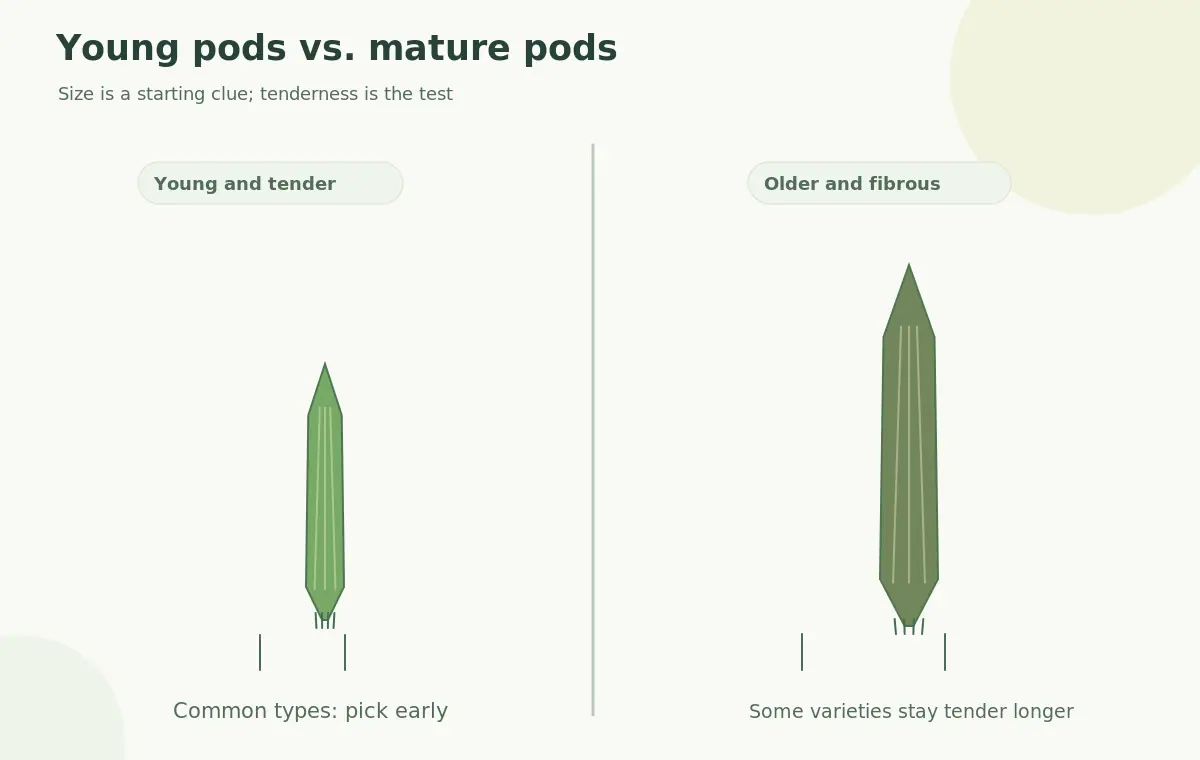
UGA’s home-garden guide recommends harvesting many okra types when pods measure about two to three inches long, whereas Oklahoma State describes fresh-market harvests of roughly three to four inches and emphasizes that some longer varieties remain tender. These are not contradictory universal limits: genetics and market use matter. On a standard green ridged variety, begin inspecting at a small size and test a sample. Long, slender Asian cultivars or round-podded types may retain tenderness at larger sizes. Do not wait automatically for the advertised maximum pod length. Record which length delivers good texture for your particular seed variety, season, and cooking method. Use texture and ease of cutting alongside the ruler.
Look for Tenderness Before You Cut Every Pod
A good candidate is bright and young, with a firm but not hardened surface. Its stem is still manageable and the pod can be cut cleanly with a sharp knife. For a sampling harvest, gently bend or slice one pod and look for a relatively soft interior rather than resistant tough fiber. If the knife struggles through the wall and ribs, it has probably passed the ideal stage for many table uses. Color alone is less useful because red okra and green okra have different normal appearances. Do not routinely snap hard stems off by pulling; the plant can be damaged and the fruit bruised. Safety matters more than an informal “snap test” if stems resist.
Inspect Plants Frequently in Hot Weather
Warm sunny weather can move a flower to a usable pod in only several days. Oklahoma State says fruit can reach picking stage approximately four to six days after bloom depending on conditions, and established home plots may need harvesting every two days or so. In very rapid periods, a daily pass is reasonable. In cooler or slower weather, inspect rather than harvest strictly by a calendar. Work down the plant and lift broad leaves to find pods tucked against the stalk. Mark several flowering sites in a photo if you want to learn your own pace. Missing a picking round can mean that a batch moves from tender to tough before the next convenient weekend.
Cut Pods Without Damaging the Plant
Wear gloves and long sleeves if the plant’s trichomes irritate your skin; Oklahoma State recommends protective clothing for workers because short spines can cause discomfort. Use clean, sharp shears or a knife and cut the short stalk just above the pod, leaving enough separation to avoid nicking the fruit. Support the branch rather than wrenching a pod sideways. Harvest when plants are dry if practical and place pods into a shallow, clean basket rather than compressing them under a heavy pile. Bruising causes dark marks and shortens the useful storage period. Inspect shears before use and wash hands before working with food. Keep dropped fruit away from contamination during collection. For the basics, see our guide: When to Harvest Eggplant.
Keep Plants Producing by Removing Overmature Pods
Leaving many fully mature pods on a plant diverts its resources toward seed development and can reduce subsequent flowering and picking potential. Both UGA and Oklahoma State Extension stress removing overmature pods during harvest. If you want to save seed, deliberately designate a few healthy pods and accept that these stems may produce fewer young edible pods. Do not leave dozens of tough pods just because they are too old for tonight’s recipe. Remove damaged or diseased fruit to the appropriate disposal pathway as well. Your goal during the food harvest is a steady rhythm of removing young fruit, not waiting for each pod to reach its largest possible size.

Sort Tender Pods From Seed Pods
Create three piles while you pick: tender for the kitchen, questionable to check by cutting, and clearly hard mature pods for seed or disposal. For culinary pods, judge tenderness by sample texture before combining them in a dish. Tough mature pods are not automatically poisonous, but they are usually unpleasant to eat and may be useful instead for dry seed when the variety is worth saving. If the pods are diseased or moldy, discard them rather than saving seed. When preserving, use tested food-preservation instructions for okra; a safe pickling or canning process depends on acidity and procedure, not simply on how fresh the pods look. Never improvise shelf-stable low-acid vegetable canning methods.
Cool and Store Pods Gently
Fresh okra loses quality quickly if left hot in a harvest bucket. Gather in the morning if that is feasible, keep harvested pods shaded, and move them promptly to appropriate storage. UGA reports that okra is sensitive to storage conditions and that temperatures around 45–50°F with moisture-retaining humidity are suited to commercial short-term quality; many household refrigerators run colder and can cause chilling-related injury. Do not claim a fixed one-week shelf life for every home refrigerator. Plan to cook or process pods soon after picking. Keep them dry on the surface when storing to avoid unnecessary decay, use a breathable clean container, and sort out bruised or wet damaged pods promptly.
Avoid Mistaking Stress for Overmaturity
Not every poor-textured pod is simply too old. Drought, heat extremes, uneven watering, or poor pollination can affect pod development, while pests can deform or damage fruit. Check the plant’s foliage, flower production, soil moisture and recent weather. Irregularly shaped pods do not always indicate a nutrient deficiency. Water deeply according to weather and soil rather than routinely flooding the bed. Keep weeds controlled and maintain mulch where useful for moisture. If pods repeatedly become inedible while still very short, compare performance with the variety description and consult Extension diagnosis resources. More nitrogen is not a general remedy for woody pods; overly vigorous leaf growth may not improve usable yield.

Build Your Personal Okra Harvest Schedule
For the first week that flowering produces pods, check daily and write down how many inches long a sample tender pod was at harvest. Match that observation to days since flowering, not just to the seed packet’s maturity estimate. Set picking intervals based on growth speed. In midsummer, a short visit every day or two often beats a large weekly harvest. If you are growing several types, maintain separate size notes rather than forcing them all into one rule. Take a picture of a tender pod beside a ruler to guide family members picking when you are away. The simplest success measure is good cooked texture and continued flowering rather than total pod weight alone. For a step-by-step method, see how to grow rat-tail radishes for tender edible seed pods.
Related Guides
- How to Start Okra From Seed After the Soil Warms
- How to Save Okra Seeds From Brown Pods Before They Split Open
How We Research and Check Recommendations
Research checked October 23, 2026. This guide combines plant-specific Cooperative Extension advice with institutional guidance on propagation, pruning, crop handling, or integrated pest management as applicable. Where institutions describe different methods or regional calendars, we identify the difference instead of presenting one schedule as universal. Recommendations are educational, not a substitute for plant diagnosis, product labels, or locally applicable rules.
Institutional sources reviewed: University of Georgia Cooperative Extension (home-garden harvest size, frequent picking and effect of mature pods); Oklahoma State University Extension (harvest stage after bloom, cultivar variation, safe handling and protective clothing); University of Georgia Cooperative Extension (differences between fresh market and processing pod size and quality). This article is not sponsored; no product endorsement or confirmed affiliate relationship is claimed. See the VegWin affiliate disclosure for site-wide information.
For many common home-garden varieties, about 2–3 inches is a useful starting point. Some round- or long-podded cultivars can stay tender at larger sizes.
Oklahoma State reports around 4–6 days under its conditions, but warmth, sunlight and cultivar affect the pace. Inspect the actual pod.
Check frequently during warm rapid growth. Many beds need picking every day or two; cooler weather may slow development.
Remove them to maintain production. Disease-free fully mature pods may be dried for seed saving when variety genetics and seed quality suit that goal.
Small tender pods may snap, but sharp shears or a knife usually reduce stem injury and fruit bruising.