
Mexican sunflower (Tithonia rotundifolia) produces brilliant orange-red daisy-family flowers on tall, branching stems. The seed does not come from a loose bag of orange petals. It forms as small one-seeded fruits, called achenes, within the central portion of a flower head after pollination. The gardener’s task is to recognize the transition from a colorful bloom to a thoroughly dry, brown, often spiky head and then separate usable dark achenes from chaff without trapping moisture.
Confirm the species before collecting seed
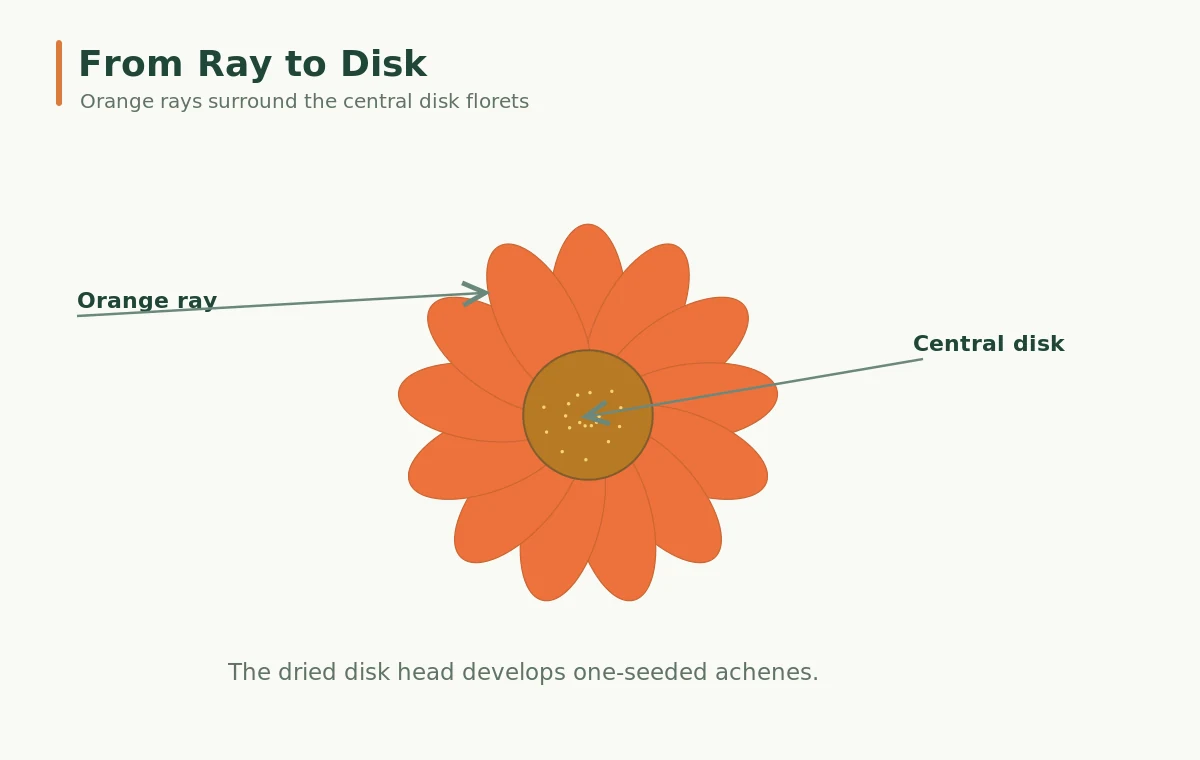
Mexican sunflower is not the same plant as the familiar annual sunflower Helianthus annuus. Wisconsin Extension places Tithonia in the aster family and describes a branching, often tall warm-season annual with coarse hairy stems and broad triangular to ovate, sometimes lobed leaves. The margin is visibly toothed. A mature flower head is an inflorescence made of orange-red ray florets around many small yellow disk florets, not one enormous single flower.
Read the plant label for Tithonia rotundifolia and the cultivar if you want to reproduce a similar display. Seed collected from a selected cultivar may not match its parent perfectly if cross-pollination or genetic variation is involved. Do not confuse the name with unrelated plants sold as sunflower or with green, undried ornamental seed heads. In the first illustration, the showy orange rays and the central disk appear on the same real stalk, with a coarse triangular leaf attached below.
Let some heads finish instead of deadheading
Removing faded blooms can extend an ornamental display, but every head you remove early is one less potential seed source. Choose several healthy, typical flowers late enough in the season to ripen naturally. Mark them with a loose tag or simply record their branch positions. Continue normal plant care while the rays lose color and fall. On a tall, brittle-stemmed plant, avoid yanking branches to see the heads more closely; Wisconsin Extension warns that flower stalks can break easily.
Tithonia prefers sun and relatively well-drained, average soil. Its floppy stems may need shelter from strong winds or gentle support. You do not have to feed the plant heavily just to make seed; excessive fertility can push lush growth. If an entire flower stalk collapses before the head matures, move it carefully and distinguish actual brown developed achenes from pale, soft, immature tissue. Seed saving is more successful when you can inspect the head without crushing or shaking everything loose.
Read the changing flower-head stages
A fresh Tithonia bloom has orange-red ray florets surrounding a yellow disk. After flowering, rays wilt and disappear; the disk becomes more prominent. As the head ages, its receptacle and surrounding structure dry and become tougher, eventually forming a brown spiky mass of achenes. North Carolina Extension describes the fruit as brown achenes in a round spiky cluster. That dry cluster, not the open orange flower, is the signal to begin careful seed collection.
Avoid setting one arbitrary number of days after first bloom for all climates. Rain, humidity, cultivar, plant vigor, and the position of the bloom can change the drying rate. Examine more than one head on a dry day. A head that is still moist or yielding soft pale contents is not equivalent to a fully dry brown head. Conversely, a brittle head that is already shedding can lose seed to the ground. Collect before repeated rain or complete shattering when practical.
Remove dry heads without scattering achenes
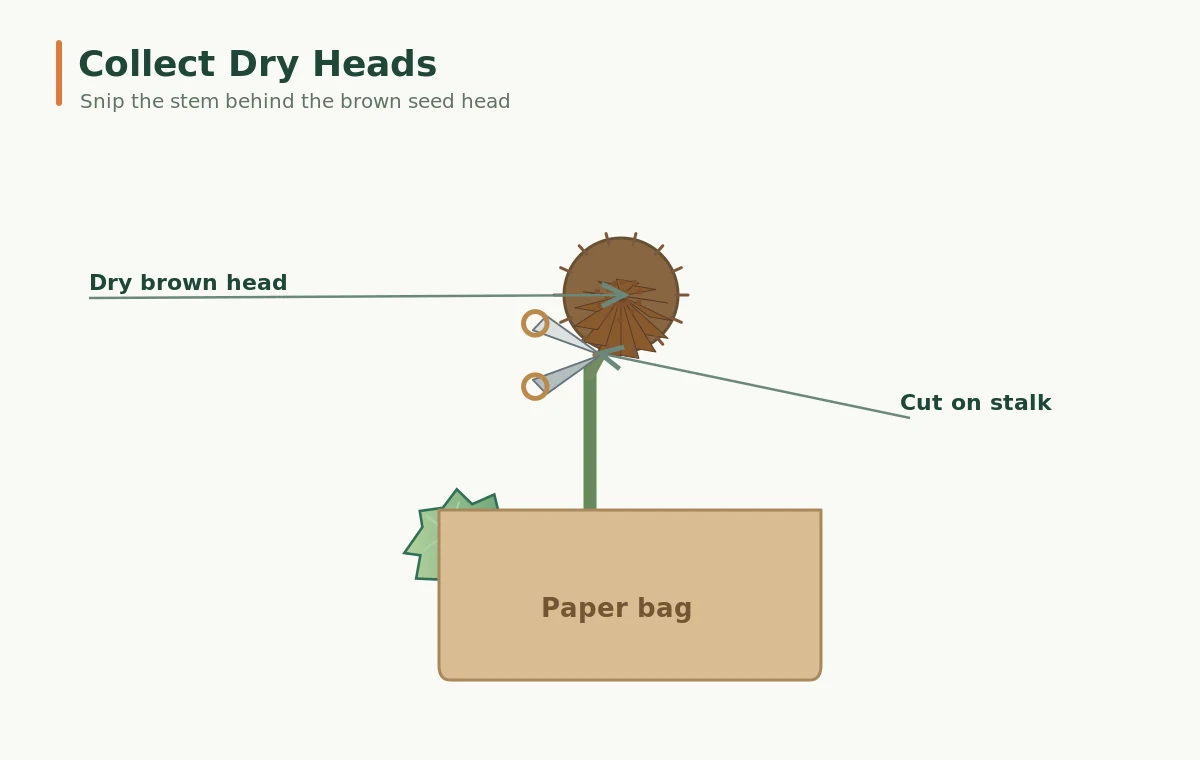
Bring a paper bag or a clean shallow tray under the selected head. Hold the stalk gently and snip it with clean scissors behind the dry head; let it fall into the container instead of squeezing the seed-bearing structure. A tray beneath the hand catches achenes that shake loose. Wear gloves if the spiky dried head is uncomfortable. Do not strip an entire green plant bare when only two heads are mature; inspect and cut ripened heads individually.
Keep each cultivar or planting area separately labeled if preservation matters. If a head is lightly damp from dew, postpone collection until dry weather when possible rather than sealing it in a plastic bag. Make sure the detached flower head really came from the Tithonia stem you identified. The harvest diagram shows the short cut on the stalk behind the brown head; cutting through the head itself would scatter the clustered achenes before you could separate them.
Find the dark triangular achenes inside
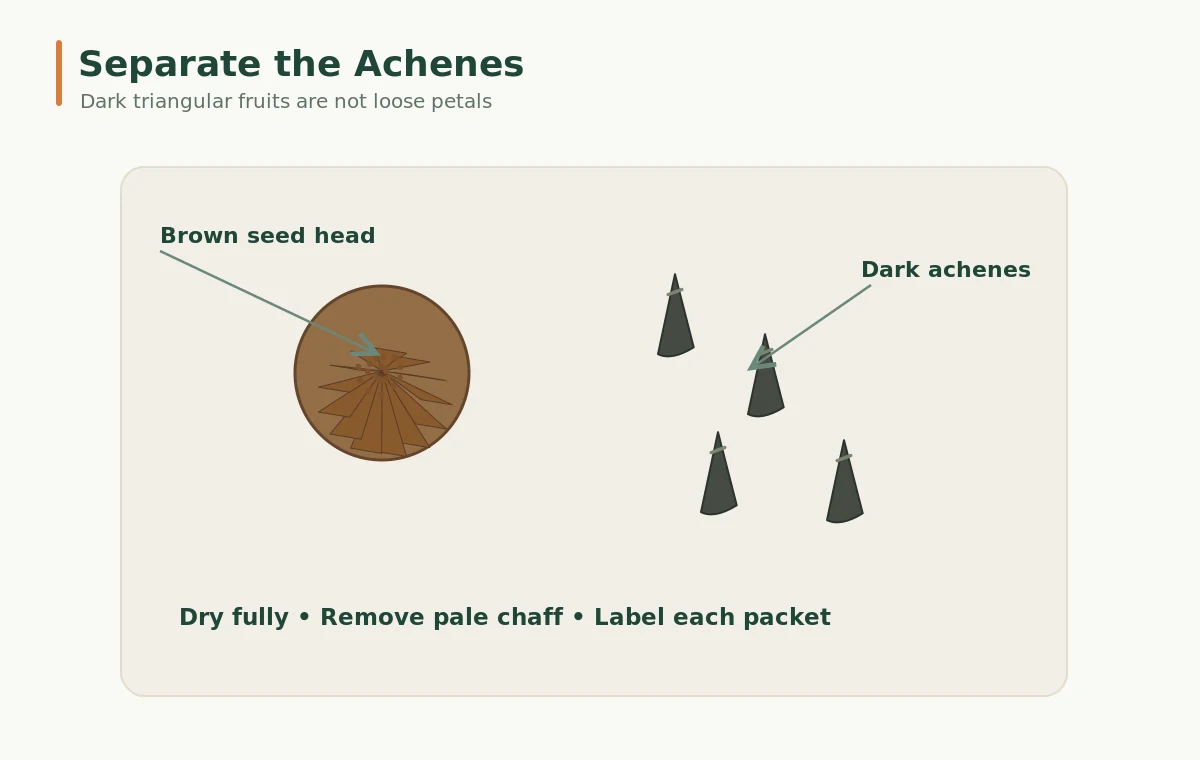
Work over a tray and gently rub or break apart a completely dried head to release the seeds. Wisconsin Extension describes them as flattened, triangular, grey-to-black structures. They may look like narrow dark pieces rather than plump round kernels. Remove the bulk of dry floral bracts and pale chaff, but do not discard all slender dark pieces as debris. A close-up of the actual achene shape is much more useful here than an oversized symbol of a generic sunflower seed.
Separate damaged, moldy, or obviously undeveloped material. It is not necessary to promise a precise germination rate or to test individual achenes by squeezing them until they break. If seed-saving volume is modest, work slowly with a white plate so the dark fruits are easy to see. The goal is a clean, dry, labeled sample—not a perfectly polished commercial seed lot. Avoid washing seed under a tap and then sealing it wet; added moisture is counterproductive for storage.
Dry fully and store in labeled paper
Spread the separated seeds in one thin layer in an airy, shaded, dry place while any residual moisture leaves them. Keep the tray protected from strong wind and inaccessible to pets or children who might spill it. Once completely dry, transfer the batch to a labeled paper packet or another appropriately dry storage container. Include plant name, cultivar if known, collection year, and any notes about mixed colors or nearby Tithonia varieties.
Keep packets cool, dry, and protected from insects and condensation. Avoid leaving a newly collected damp seed lot in a sealed plastic bag, which can encourage mold. There is no evidence-based way to tell germination quality merely from the number of dark achenes; save a few extra and test a small sample when planning the next sowing. Inspect stored packets before use, and discard material showing active mold or rot rather than planting suspect seed into indoor trays.
Sow saved seed and assess the result
Wisconsin Extension says Tithonia can be direct-seeded after the last spring frost or started indoors earlier for a head start, with shallow sowing because light can help germination. Use the seed packet and local frost guidance rather than burying saved achenes deeply. Start a labeled small test pot so you know which packet produced which seedlings. The first true leaves should eventually begin showing the coarse foliage characteristic of the plant, not grasslike blades.
Once the new crop flowers, compare head size, plant height, and flower color with the source plants. Variation is possible even from apparently normal seed. Saving the species can be worthwhile without promising exact cultivar duplication. The botanical checkpoints remain consistent: angular hairy foliage, orange ray florets around a disk, dry brown spiky head, and dark flattened achenes released from that head. Keeping those structures in order prevents the most common mistake: collecting a decorative fading flower and calling all of its dried petals seed.
Related Guides
- How to Save Cleome Spider Flower Seeds Before Dry Pods Split
- How to Save French Marigold Seeds From Fully Dry Flower Heads
- How to Save Sunflower Seeds for Next Year Before Birds Take Them
- How to Save Calendula Seeds After the Flower Heads Turn Brown
- How to Save Marigold Seeds from Fully Dry Tagetes Flower Heads
How We Research and Check Botanical Details
We read and checked university Extension resources on 2026-10-29: hort.extension.wisc.edu; plants.ces.ncsu.edu. These sources inform the specific plant structures, seasonal decisions and horticultural practices described here. We compared the article intent with the supplied VegWin WordPress title list and earlier draft archives to avoid a duplicate focus. Published and draft statuses differ; outside public indexing cannot conclusively reveal hidden draft slugs. Local climate, cultivar labels and site drainage still affect decisions.
This educational guide is independently written and is not a paid recommendation. No affiliate arrangement or sponsored product is claimed. Please see the VegWin affiliate disclosure for the site’s existing policy. Botanical diagrams are explanatory illustrations designed to clarify structures and actions; a local Extension specialist is best placed to diagnose an uncertain disease or site-specific plant problem.
The mature central flower head produces small one-seeded fruits called achenes, not loose orange ray petals.
Wisconsin Extension describes a dry flattened triangular achene that is grey to black.
Wait until the flower head matures and dries; colorful fresh blossoms have not yet completed seed development.
A breathable paper bag or open tray is safer during collection and further drying; avoid sealing damp material.
Not necessarily. Seed offspring may vary, especially where more than one compatible selection was grown nearby.