
A delivery of free arborist wood chips can solve muddy garden paths and create another problem if it is tilled directly into the vegetable root zone. The same material behaves differently depending on where it goes. On a permanent path it can suppress annual weeds and improve footing. Mixed through an actively planted seedbed, fresh woody carbon may temporarily compete for plant-available nitrogen as microbes decompose it.
The practical answer to “Are wood chips good for vegetable gardens?” is therefore a map of your garden, not an unqualified yes or no. This guide separates paths, established perennial areas and annual seed rows, then shows what to do with the chips you already have.
Draw three zones before unloading the chips
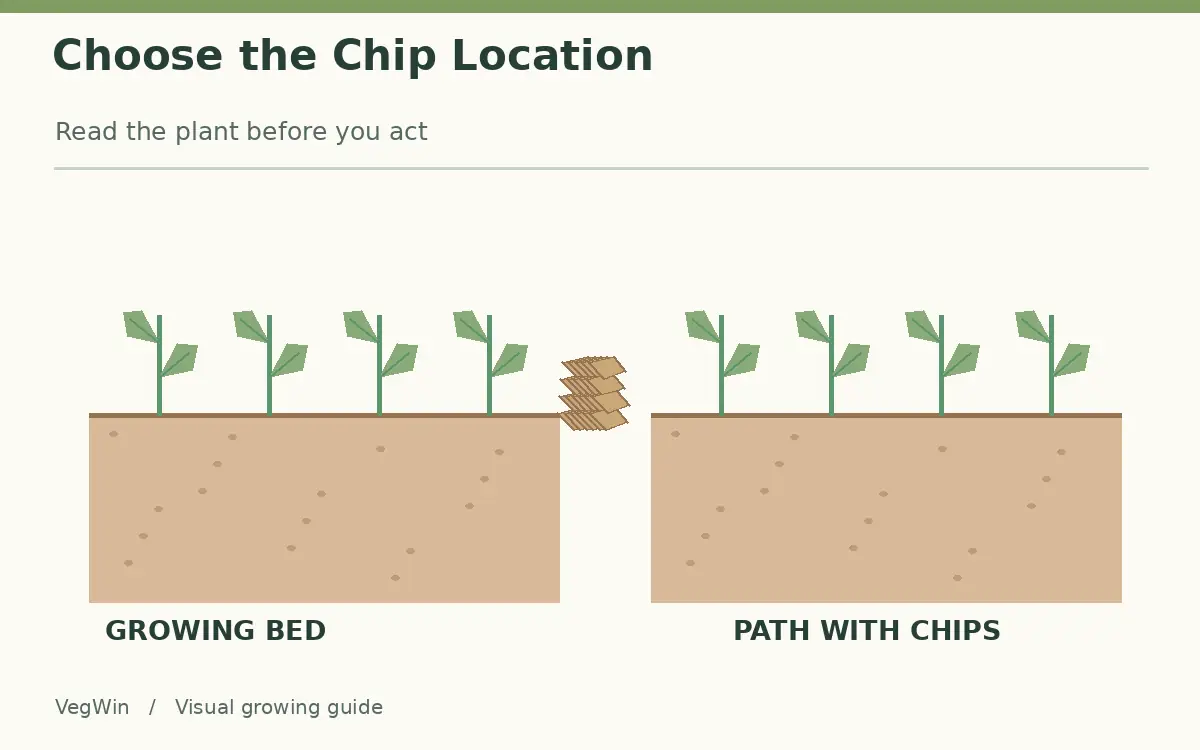
Identify permanent walkways, beds holding established perennials, and beds where you direct-sow or transplant vegetables every season. These locations have different goals. Paths need a durable weed-suppressing surface; perennial areas may tolerate slower organic decomposition; finely seeded annual beds need soil contact and room for seedlings to emerge. Maine Cooperative Extension explicitly recommends arborist chips for paths between raised beds and favors other materials, such as straw, for intensively planted vegetable beds. Do not dump one thick layer indiscriminately over seedlings, crowns and paths.
Use coarse chips where shoes and carts travel
A well-defined path is often the best first use for a mixed truckload of chips. Rake out perennial weeds and remove hazardous debris before laying a surface layer that stays within the path edges. The chips limit light at the soil surface and help reduce mud, but they will not permanently eliminate all weeds. Refill low spots after decomposition instead of repeatedly raising the path above bed edging. If wheelbarrows need access, test the surface with a loaded barrow; deep loose chips may slow small wheels or wash away on a slope.
Understand the difference between surface and soil mixing
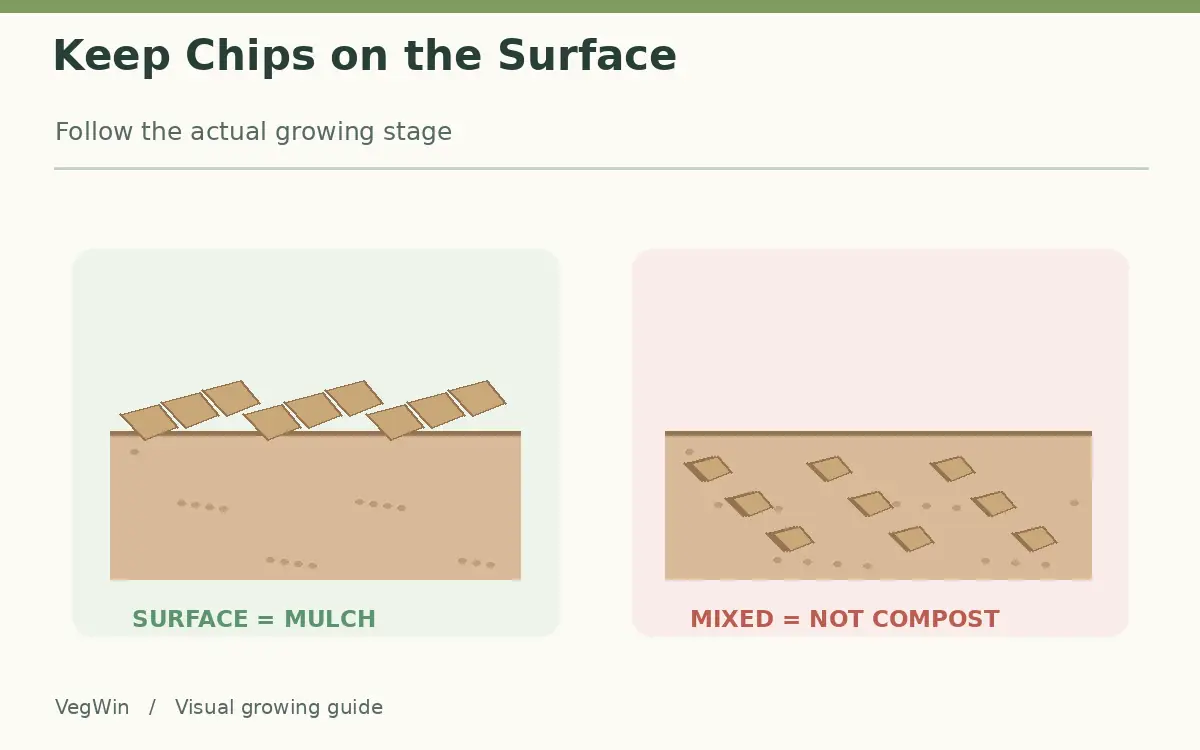
Oregon State Extension cautions that working fine woody material into garden soil can tie up nitrogen because decomposer organisms use it while breaking down carbon-rich chips. Washington State University makes the same distinction: long-lasting chips left on the surface affect nutrients differently from chips incorporated throughout the rooting zone. Some public explanations disagree about the magnitude of boundary effects, but both favor treating wood chips as surface mulch rather than a quick substitute for finished compost. Do not rototill a fresh chip delivery into beds for immediate vegetables. If you want the full process, read how to use straw mulch in vegetable beds without extra weeds.
Keep fine seeds and vulnerable crowns uncovered
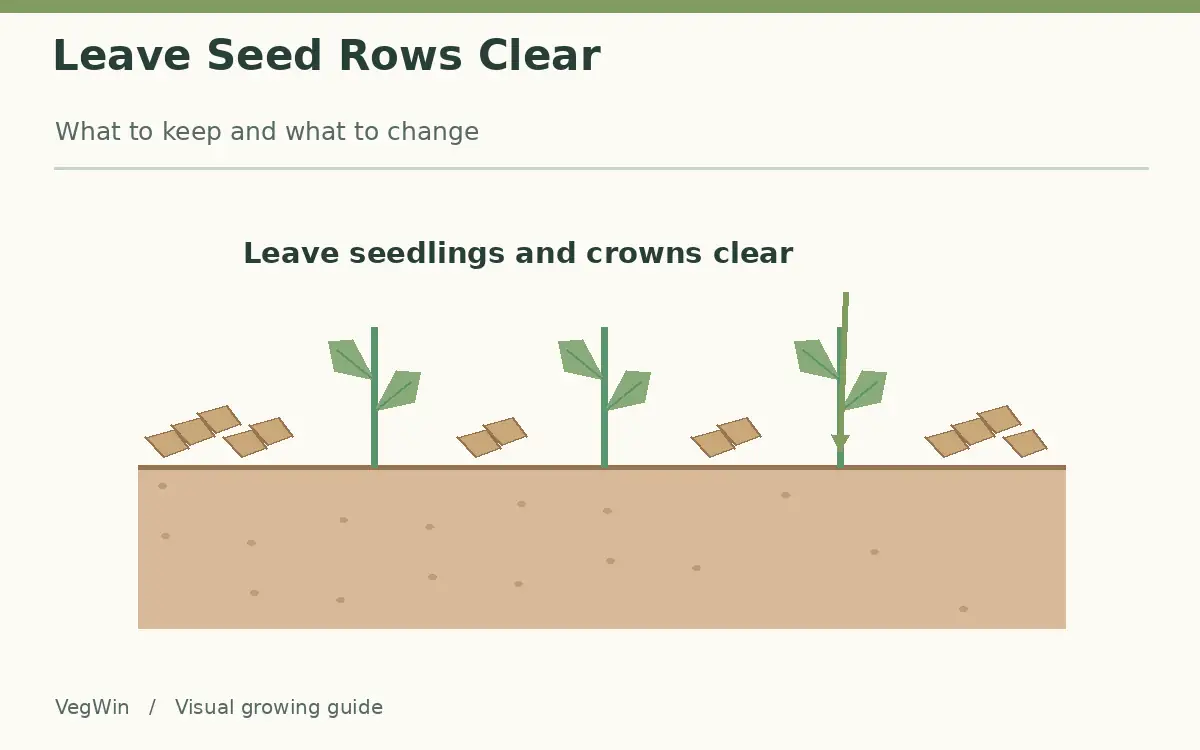
Seeds of lettuce, carrots and other small-seeded crops cannot reliably push through an arbitrary deep layer of chunky chips. Leave a clear strip for each sowing row and keep the surface soil suitable for germination. Around transplants, pull woody mulch back from tender stems and crowns so water does not remain trapped against them. Check for slugs or sow bugs if moisture stays high beneath debris. A seedbed should have consistent root-zone moisture, but never require seedlings to struggle through a cap of decomposing sticks.
Choose alternate mulch for fast vegetable turnover
Straw, shredded leaves or suitable finished compost can be easier to move aside when you sow successive crops, although each material has drawbacks. Straw can carry weed seeds; grass clippings can mat; compost may grow weeds and is not a durable path surface. Minnesota Extension describes these tradeoffs. Pick based on crop, climate and how often you replant the bed. For an annual bed that is cultivated and reseeded repeatedly, coarse permanent chips are usually less convenient than a material you can temporarily lift from the rows.
Inspect the source before accepting free arborist chips
Ask what trees were chipped and whether the load includes litter, treated lumber, roadside contamination or suspect diseased material. Fresh mixed arborist chips are not automatically unsafe, but a load containing construction waste is not acceptable garden mulch. Do not assume every species has the same properties or declare all hardwood chips a fertilizer. Set the pile where runoff will not carry chips into drains and keep it away from building foundations or combustible storage. Use clean material of known origin where edible crops are growing. Our guide “Straw Bale Vegetable Gardening” goes into more detail.
Avoid automatic nitrogen applications to fix yellow leaves
Yellowing can result from many causes: waterlogged roots, cool soil, nutrient problems, diseases or fertilizer mistakes. If chips were recently mixed into the soil, nitrogen competition is a plausible concern, not a diagnosis by itself. Assess where the chips sit, look at root-zone conditions and consider a soil test before adding fertilizer. Because surface chips break down slowly and most microbial activity is close to the interface, broadcasting nitrogen simply because a path has new chips may be wasteful. Follow local testing and crop guidance.
Maintain paths and check how water moves
After storms, note whether chips float out of the path, collect around a bed drain or create an unwanted dam against a wooden edge. Smooth them back or add edging that still lets surface water escape. In dry conditions, inspect the soil under vegetable rows directly; a pretty chip surface does not prove roots have adequate moisture. Over seasons, pathways may become a mixture of partially decomposed chips and fine soil. Top-dress only as necessary to restore the surface rather than creating an ever-higher mound.
Choose the next action from the material in hand
If the chips are coarse, clean and plentiful, prioritize permanent paths. If they are partially composted but still visibly woody, use them as surface cover in an appropriate location rather than assuming they are finished compost. If they are fine sawdust-like material, be especially cautious about mixing them into vegetable soil. If the load has unknown debris or chemicals, do not use it next to food crops. A labeled garden sketch and a small trial area prevent a garden-wide experiment from becoming an expensive soil repair project. Our guide “Landscape Fabric in Vegetable Gardens” goes deeper into when it helps or hurts.
Match the Next Step to What You See
| What you observe | Suggested decision |
|---|---|
| Path between raised beds | Strong fit for coarse, clean wood chips. |
| Actively direct-sown seed row | Keep chips off the seedbed until plants are established. |
| Perennial shrub bed | Surface mulch may work; keep stems clear. |
| Mixing fresh chips through root-zone soil | Avoid; microbial decomposition may immobilize nitrogen. |
| Load with treated timber or unidentified waste | Reject for food-growing areas. |
How We Research This Guide
These recommendations were checked against university Cooperative Extension and botanical-garden references on October 23, 2026. The sources clarify general plant biology; your local Cooperative Extension, weather and cultivar instructions still govern regional decisions. Key references: University Extension reference (Maine Extension use of arborist chips for paths and outside intensively planted annual vegetable beds.). Plant-care source (Difference between mixing wood chips into soil and leaving them on the surface.). Additional Extension guidance (WSU information on mulch versus incorporation and nitrogen competition.). Supplemental growing guidance (Mulch benefits and context-specific material choice for vegetables and perennial beds.).
This is independent informational gardening content, not a claim of professional on-site diagnosis or a product endorsement. We have not confirmed any paid referral partnership for this article. Read the affiliate disclosure before using any future commercial recommendations. Photos, local species identification, and site-specific safety concerns should be checked before acting.
Not automatically. The main concern is mixing fresh carbon-rich chips into the growing soil; surface use behaves differently.
Yes. Coarse, clean chips can reduce mud and annual weeds on permanent paths.
Do not cover fine seed rows with chunky chips; keep a clear seedbed for germination.
No. Check soil and crop needs; a chip-covered path alone is not a fertilizer diagnosis.
No. They are woody mulch that decomposes slowly, not a direct replacement for finished compost.