
A faded marigold flower can become a packet of seeds, but only if it has had time to mature and dry. The marigolds usually grown in bedding are Tagetes species and cultivars. Their mature seeds are elongated dark achenes, commonly with a lighter straw-colored tip, packed together at the base of a drying flower head. They do not look like the curved, knobby seeds of calendula, which is also called pot marigold. The safest simple method is to leave selected flowers on healthy plants until their heads are brown and papery, then remove the dry seeds and store them without damp flower fragments. This guide shows the anatomy and timing rather than relying on flower color alone.
Confirm Tagetes Instead of Pot Marigold
Garden marigolds such as Tagetes patula and T. erecta produce showy yellow, gold or orange flower heads with many individual florets. The finished seed heads are narrow at the base, and the seed-like fruits are long and dark with pale ends. Calendula officinalis is a different plant despite the shared common word “marigold”; its dry fruits often curve into distinctly different shapes. Check the packet or original nursery label before saving. The exact variety name matters if you want to compare next year’s seedlings with the original plant.
Select a healthy, vigorous plant with the bloom characteristics you like. Illinois Extension advises choosing disease-free parent plants when collecting seeds. Avoid making seed from a seriously rotted or heavily diseased flower just because it is already brown. If several Tagetes cultivars bloom close together, assume insect pollination may mix traits rather than promising that all seedlings will be identical. Hybrids can vary substantially the following generation. Collecting seed is useful and interesting, but it is not a guaranteed cloning method for a specific named flower color.

Allow Selected Flowers to Complete Seed Ripening
A newly faded bloom is not yet necessarily a ripe seed head. Leave several flowers on the plant after petal color fades and the entire head dries toward brown. Illinois Extension emphasizes fully brown, shriveled heads and browning stems as good general indicators; RHS also links seed harvest to a noticeable color change before seed dispersal. Marigolds set new flowers when spent heads are removed, but deadheading every bloom prevents the chosen seed heads from finishing. Mark one or two flowers if needed and leave the others for continued display.
Look for a dry papery base that is firm rather than soft and wet. A wet, collapsing flower may rot before the seeds mature. If autumn rain threatens, inspect the selected heads frequently and collect those already mature on a dry day. Do not put green soft petals in a sealed jar and expect them to finish safely there. A little patience is easier than trying to rescue sticky, prematurely picked material. The seed-head detail below distinguishes a ready brown flower head from a still damp one.
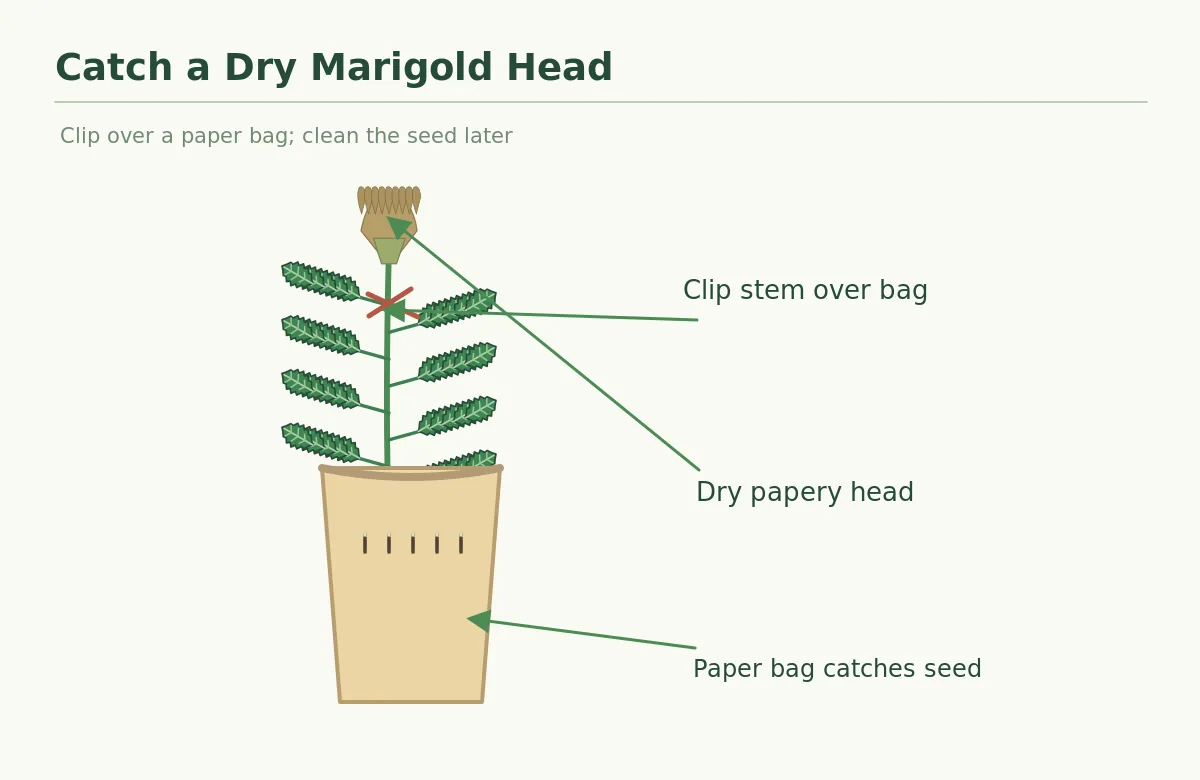
Catch the Dry Head Before Seeds Scatter
Choose a dry part of the day after surface moisture has evaporated. Hold a small paper bag or clean shallow tray beneath the dried head, then clip or gently pinch off the whole head without crushing it over the soil. RHS recommends collecting ripe seed heads before they disperse and drying them further if needed. Paper gives any remaining moisture a chance to escape during brief drying, unlike a sealed plastic bag. Label the bag with the species or cultivar and collection date as soon as you bring it indoors.
Avoid shaking a whole plant vigorously when the seed heads are ready to release their contents. Seeds can fall into mulch and volunteer later, but that is a loss if your purpose is careful collection. If the flower head resists separating, wait until it becomes drier or cut a short piece of supporting stalk. Work over the tray so that fine seed mixed with petals remains visible. Do not assume all brown dust is seed; the next step is to separate the long fruits from papery plant fragments.
Pull Out the Narrow Dark Achenes and Remove Chaff
Once fully dry, hold the papery base of a Tagetes flower head and gently rub or pull the bundle of slender achenes free. The seed-bearing fruits are dark, narrow pieces; a contrasting pale tip is common. Spread the material on a light-colored sheet of paper so you can distinguish actual seeds from dried ray petals, empty flower parts and debris. You do not need to grind the flower head into powder. Gentle handling makes the shapes much easier to recognize and prevents losing the seed in clouds of chaff.
Discard anything visibly moldy or damp. RHS advises cleaning seed before storage so surrounding plant debris does not encourage decay. If the material still has a trace of moisture, leave it in a dry, shaded, well-ventilated place until thoroughly dry. Do not set it under harsh heat and claim a precise drying time; ambient humidity changes the process. A separate paper envelope for each variety helps prevent mixing collections. The illustration compares the seed itself with the ragged dry remnants of a flower head.
Store Dry Seed and Make Realistic Variety Expectations
Package the clean, dry achenes in a labeled paper envelope, then store in a cool, dry place with protection from moisture and pests. For longer storage, RHS discusses moisture-proof outer containers for seed already properly dried. Do not seal questionable damp heads into a jar where mold can spread unseen. Mark the harvest year and color or plant height of the parent. This record is particularly useful when several orange and yellow cultivars were growing in the same border.
If the original plants were hybrids, expect variation in the next generation. Cross-pollination among nearby compatible Tagetes plants can also change characteristics. A saved seed that germinates and produces a yellow bloom rather than the parent’s intricate bicolor is not necessarily mislabeled. When planting time returns, test a small number of seeds if viability is uncertain, then adjust sowing to your local frost window. Keep the unused seed dry rather than repeatedly exposing all of it to humid air.
Troubleshoot Empty, Damp or Uneven Seed Heads
An empty-looking head may have been cut before the seeds matured, lost its seeds after a long wait, or produced less viable material because of poor conditions. Compare several healthy heads rather than judging the whole plant from one bloom. A damp clump that smells stale should not be combined with clean storage seed. If the narrow achenes come out readily from a crisp brown head, you are on the right path. Inspect storage envelopes periodically for condensation, mold or insects.
The most useful next-year experiment is small and controlled: sow a few saved seeds beside a labeled fresh packet under the same conditions. Compare emergence and flower appearance rather than assuming either source is universally better. Save notes on which head maturity gave the cleanest seed. Seed saving rewards observation, and good records will reveal whether your main problem was premature collection, moisture during storage or natural variability in the next generation.

Related Guides
- How to Save Marigold Seeds from Fully Dry Tagetes Flower Heads
- How to Save French Marigold Seeds From Fully Dry Flower Heads
- How to Save Mexican Sunflower (Tithonia) Seeds From Dry Flower Heads
- How to Save Statice Seeds From Fully Dry Flower Clusters, Not the Papery Calyx
- How to Save Cleome Spider Flower Seeds Before Dry Pods Split
How We Research and Verify This Method
The following specialist horticultural pages were checked on 2026-10-27: extension.illinois.edu — Illinois Extension explicitly recommends saving marigold seed from brown, dry flower heads on healthy plants. www.rhs.org.uk — RHS explains seedhead ripeness, dry-day collection, cleaning, storage and variability in hybrid offspring. extension.umn.edu — Minnesota Extension describes Tagetes marigolds, spent flowers and deadheading to manage flowering and seed set. The guidance distinguishes source-backed cultivation steps from cultivar, climate, and container choices that gardeners must adapt. The diagrams show anatomy and safe positions for actions, not exact guarantees of growth or harvest.
No paid product placement was used in producing this guide. The site-wide policy is available in the VegWin affiliate disclosure.
Tagetes typically has long, dark, slender achenes, often with pale straw-colored ends.
Wait until the head is brown, papery and thoroughly dry to improve the chance of mature seed.
No. Calendula has noticeably curved fruit forms; Tagetes has narrow elongated achenes.
Not necessarily. Hybrids and insect cross-pollination can produce variable offspring.
Clean and fully dry the seed first; avoid sealing damp flower heads in plastic.