
True culinary bay, Laurus nobilis, is a glossy-leaved evergreen shrub or small tree that grows well in a container. A pot makes it easier to harvest leaves, keep the plant compact, and move it out of severe winter weather. It also introduces two challenges: roots can remain waterlogged in a closed container, and the root ball may freeze faster than a comparable plant growing in the ground. RHS guidance emphasizes free drainage, sheltered light, measured watering, and winter protection for container-grown bay. The name matters too—other plants called “laurel” are not culinary bay. This guide combines identification, pot setup, routine care, and a practical winter decision for home gardeners.
Identify True Culinary Bay Before Harvesting
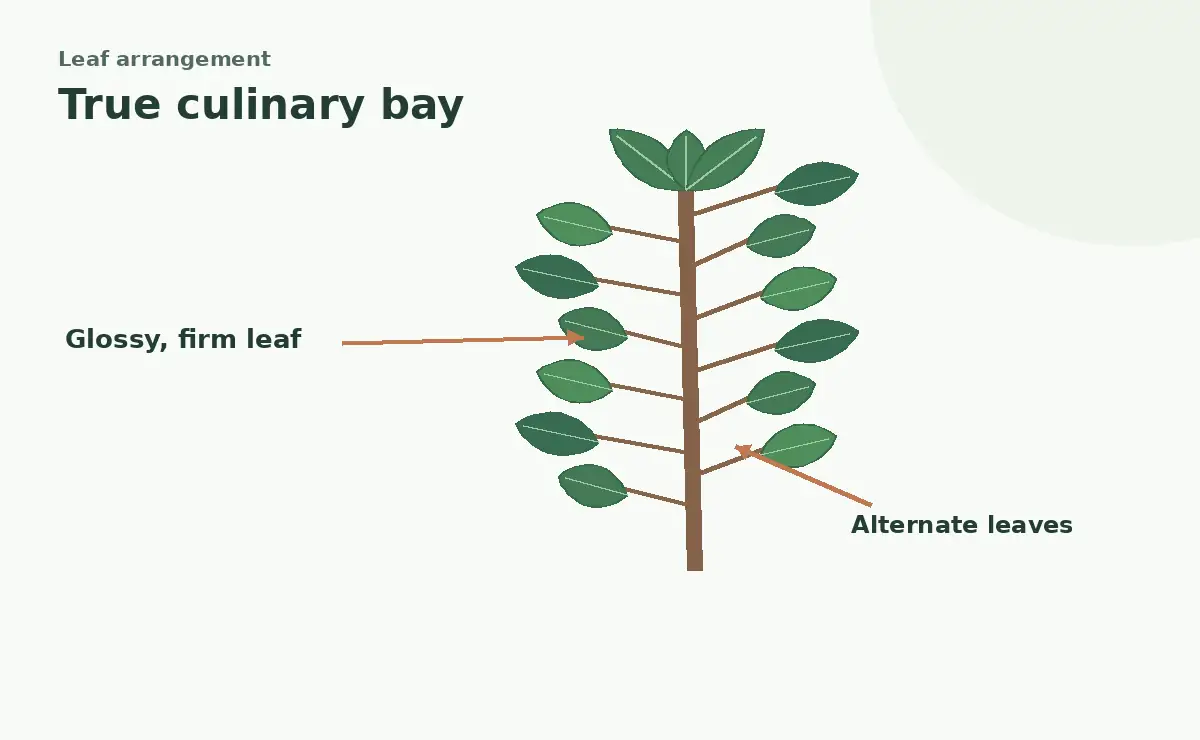
Look for Laurus nobilis on the plant label. Its evergreen leaves are leathery, aromatic, usually elliptic to lance-shaped, and arranged alternately along stems. The RHS and NC State describe this true bay as the culinary species. Cherry laurel and mountain laurel are different plants; do not eat leaves from a shrub merely because someone called it “laurel.” If identity is uncertain, confirm it with a reputable nursery before using any foliage in cooking. Culinary bay leaves are normally used to flavor simmered dishes and removed before serving because they remain tough. This simple species check is more important than any harvest calendar or pruning shape.
Choose a Stable Pot With Open Drainage
Select a container just larger than the existing root ball rather than instantly moving a tiny plant into an oversized tub. The RHS recommends gradual potting-up and drainage holes. Bay can become top-heavy, so choose a stable pot that will not topple on a windy patio. Check that water can actually exit from underneath; decorative outer pots without holes can trap irrigation water against roots. Use feet or a small stand if the drainage openings are blocked by pavement. A thick gravel layer at the bottom does not fix a waterlogged potting medium. Good drainage depends on a suitable mix, open holes, and watering matched to the plant’s demand.
Use a Suitable Potting Mix, Not Garden Mud
Bay prefers a well-drained, fairly substantial growing medium. RHS container guidance recommends a loam-based peat-free mix with grit when useful for stability and drainage. Heavy garden soil packed into a small pot can compact and stay airless, particularly after many watering cycles. Fill around the existing roots gently, keeping the plant at approximately the same planting depth as before. Do not bury the trunk flare or pile fresh potting mix against the stem. Water once to settle the mix and confirm drainage. If the pot remains soggy for days, investigate the medium and outlet rather than adding fertilizer to a stressed root system. If you want the full process, read how to repot a Japanese maple without burying the root flare.
Set the Pot in Shelter and Good Light
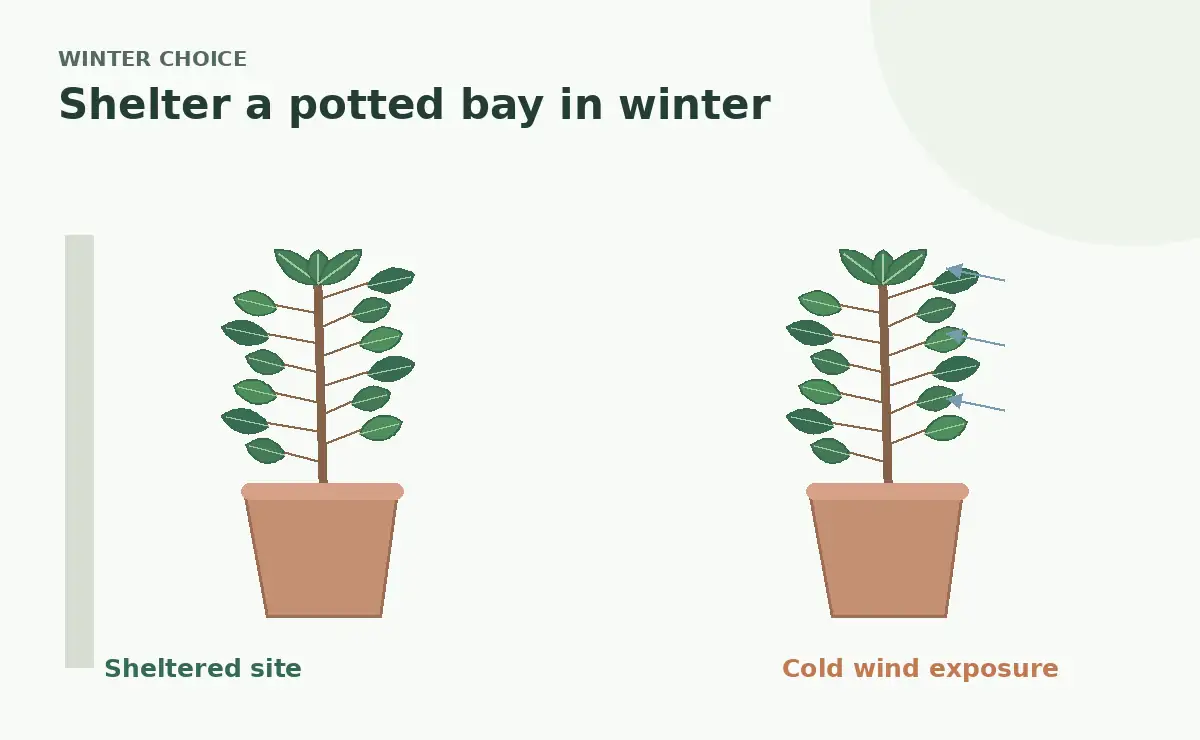
A bay plant can grow in full sun or partial shade, but harsh drying wind and exposed winter sites are difficult for container plants. RHS and NC State both favor well-drained conditions in a sheltered position. When moving a plant from an indoor greenhouse or store display, introduce direct sunshine gradually to avoid scorched leaves. A south- or west-facing patio can be useful where summers are mild, while hotter climates may require protection during the strongest afternoon heat. Rotate the pot occasionally so branches develop more evenly. Keep enough space around foliage for airflow and to see scale insects or leaf problems before they become severe.
Water by Root-Zone Need Rather Than a Fixed Day
A potted evergreen uses water throughout much of the year but slows down in cold weather. Test below the surface before watering; if the root zone is still wet, wait. Water thoroughly when the mix needs it and allow excess water to leave the container. Repeated shallow sprinkling can leave deep roots dry while wetting only the surface. Conversely, keeping the saucer full of water can cause root injury. RHS notes that container bay can develop leaf spots and discoloration when roots are waterlogged. Wilt, yellowing, or browning does not automatically indicate thirst. Check roots, soil moisture, and exposure before changing the watering plan.

| Situation | Recommended action | Why it matters |
|---|---|---|
| Pot remains wet for days | Check open drainage and potting mix | Waterlogging can injure evergreen roots |
| Severe frost or cold wind predicted | Move to cool shelter or protect pot | Container roots freeze more readily |
| Roots crowd the pot after active growth | Pot up gradually into fresh medium | Supports healthy long-term container growth |
Feed and Repot Only When Growth Justifies It
A healthy bay does not need frequent improvised fertilizing. In an actively growing container, use a suitable labeled slow-release or liquid feed according to its directions and the plant’s condition; avoid pushing soft late-season growth just before frost. The RHS advises repotting as needed and describes roughly two-year intervals for many potted bays. Watch for roots crowding the container, water running straight through exhausted medium, or slow growth that cannot be explained by light and weather. Pot up gradually into fresh medium rather than radically cutting a weak root system. A fresh soil test is rarely necessary for a small commercial potting-mix container, but diagnosis matters more than arbitrary fertilizer doses.
Prune Lightly to Keep a Natural or Formal Shape
Bay responds to careful trimming and may be trained as a loose shrub, cone, or rounded standard. Start by removing dead or damaged stems and lightly shortening overlong shoots. Cut just above a sound leaf or side shoot without leaving long stubs. Heavy shaping is not mandatory for culinary quality. Repeated tight topiary pruning can reduce flowering but keeps a small plant manageable. Use clean blades so the large leathery leaves are not shredded. If an overgrown plant requires substantial renovation, spread the work over a sensible period rather than stripping every green shoot from a stressed container specimen.
Protect the Roots Before Hard Frosts Arrive
Container roots are exposed to low air temperatures on all sides. RHS states that bay foliage can be injured by hard frost and cold winds, and that containers especially need winter safeguards. Before a severe forecast, move the pot against a sheltered wall or into a bright cool frost-free place when possible. Insulate the pot as appropriate for your climate and leave drainage openings unobstructed. Do not assume the cold hardiness of a mature plant in the ground describes a small root ball in a narrow pot. In warm climates, winter handling may simply mean reducing irrigation and avoiding waterlogged conditions. Check forecasts, microclimate, and plant size together.
Make an Indoor Winter Stay Cool and Bright
When the climate is too cold to keep the plant safely outdoors, a bright cool space is generally preferable to a dark, heated living room. The RHS describes taking container bay into a cool room or other protected structure during severe conditions. Provide light, prevent freezing, and check the potting medium because indoor airflow and temperature affect drying. Avoid placing foliage against a heater, hot vent, or icy pane. Inspect leaves and stems periodically for scale or other hitchhiking pests. Acclimate plants slowly when they return outdoors, rather than moving them directly from protection into strong sunlight and drying wind.
Harvest Leaves Without Stripping the Plant
Choose clean, mature leaves from several parts of a healthy, identified Laurus nobilis plant. Do not strip the tiny tree bare for one recipe, especially if it is recovering from frost or repotting. The RHS notes that leaves can be used fresh or dried; their fragrance seasons food but the tough leaves should be removed before eating. Never taste berries or unknown ornamental laurel foliage. Keep tools and hands clean when harvesting for the kitchen. Over time, modest repeated picking also encourages a more useful shape. A vigorous bay with sound roots, a stable pot, and sheltered winter conditions will provide more dependable leaves than a plant repeatedly pushed with fertilizer.
How We Research and Verify Recommendations
We checked the crop or species identity, practical stages, and important exceptions against the following authoritative material on 2026-10-24 (UTC): www.rhs.org.uk reference; www.rhs.org.uk reference; plants.ces.ncsu.edu reference. We use an identifiable visual cue before recommending a cut or harvest and distinguish generalized gardening principles from region-specific timing. University Extension and horticultural guidance may address different climates or varieties; compare recommendations with your seed packet, local soil, weather, and local regulations. These articles are educational guidance, not an independent trial of every cultivar.
Safety, Disclosures, and Local Limitations
No paid partnership, approved affiliate program, or commercial product recommendation is asserted here. Read the VegWin affiliate disclosure. Do not use unidentified plants as food. Check current local rules before growing species known to spread or before using plant protection products. Conditions vary by climate, variety, container, and planting system. Diagnose suspicious symptoms instead of assuming a single cause; follow any locally applicable pesticide label exactly rather than copying an unverified home recipe.
Yes, where winter exposure is suitable. In colder climates move or insulate the container because its roots are especially vulnerable to freezing.
No. Culinary leaves come from correctly identified Laurus nobilis, not any shrub sold under the common name laurel.
No. Bay performs best with well-drained medium and watering guided by the root zone; persistent saturation can injure roots.
In regions with damaging frosts, a bright cool protected position may be needed. Use local conditions, not a universal calendar.
Only if it is positively identified as culinary Laurus nobilis. Remove the tough leaves from finished dishes.