
Oregano (Origanum species) is a branching mint-family herb with small paired leaves along its stems. Rooting a cutting from a known, healthy plant is useful when you want to keep its aroma and growth habit rather than gamble on the variation of seedlings. Put one or more leaf nodes in the rooting environment while keeping leaves above the water or mix. University of Vermont Extension describes oregano cuttings prepared by removing flowers and lower foliage, then placing the bare nodes in water. You can also use a freely draining propagation mix, but both methods fail easily if soft leaves stay submerged or soggy. This guide focuses on cutting anatomy, hygiene, moisture and aftercare.
Start With a Healthy Known Oregano Plant
Choose a vigorous established plant with the flavor or fragrance you want to keep. Culinary oregano species and ornamental oreganos can differ considerably, so label the parent plant and do not assume every plant with the name oregano tastes the same. A cutting reproduces the parent vegetatively; it does not promise that a mislabeled garden plant is a particular named cultivar. Avoid stems showing mildew, leaf discoloration, pest clusters or shriveled new growth. Water a dry parent plant sensibly before taking material, and cut during cooler hours when the stems are not severely wilted. Keep collected shoots shaded while preparing the containers. Taking a few stems is preferable to stripping a small weak mother plant. If you want the full process, read how to root oregano cuttings and keep the parent plant’s flavor.
Locate the Leaf Nodes Before Making a Cut
Oregano carries opposite pairs of small oval leaves at its nodes. A node is the point where a leaf pair meets the stem; the smoother section between nodes is an internode. For reliable preparation, find several intact nodes on a flexible nonflowering shoot. University of Vermont Extension advises making the lower cut immediately below a node and placing bare nodes under water. It is more useful to recognize the node than to memorize one cutting length for every species. Use sharp scissors and make a clean cut rather than crushing a stem between fingernails. Discard a badly torn cutting and prepare a fresh one if the lower end splits.
Remove Flowers and Lower Leaves First
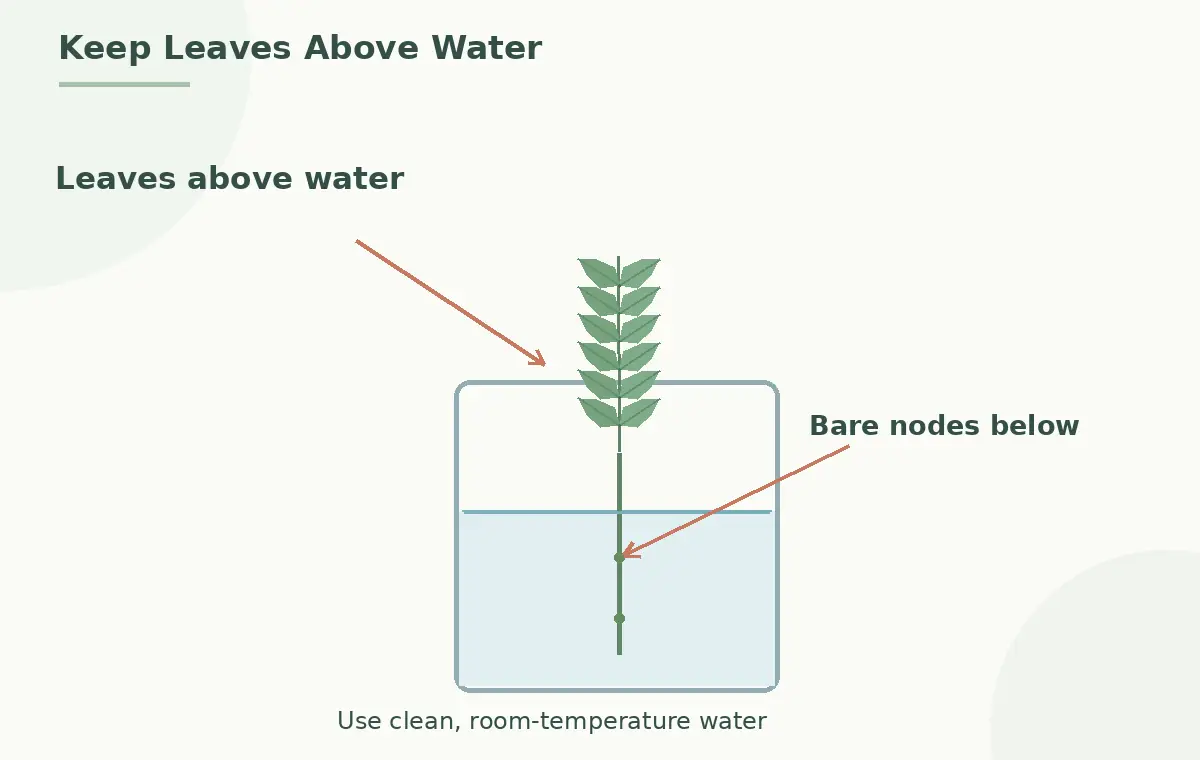
Strip away flowers or forming buds, which would compete with root establishment. Remove leaves from the bottom section that will enter the water or growing mix, while leaving a small healthy cluster near the top. The Vermont guidance describes retaining only a few leaves, commonly two to four at the upper end. Keep the top leaves intact because they support continued growth, but avoid leaving a large mass that wilts in a dry room. Do not bury or submerge foliage: decaying leaves contaminate water and can help rot develop in moist mix. Lay the prepared cutting beside a clean plant label to identify parent, date and rooting medium before proceeding. For the fuller picture, see our guide “Grow Sweet Marjoram in Pots for Fragrant Leaves and Repeat Harvests”.

Root One Cutting in Clean Water
Fill a clean narrow jar or glass with room-temperature water and place the bare stem end so that at least one or two nodes sit below the waterline. Every leaf must remain above the surface. A small jar with a narrow opening can support the top without forcing the stem into a tight coil. University of Vermont Extension explicitly describes this arrangement for oregano and related perennials. Keep the container in bright indirect light, not a hot sunbeam that overheats the water. Replace cloudy water, wash a slimy container and discard any cutting with a mushy black base. A jar is a temporary rooting station, not permanent indoor growing conditions.
Use a Free-Draining Potting Mix Instead
If you prefer to form roots directly in a medium, fill a small pot with clean moistened, well-drained seed-starting or propagation mix. Make a hole with a pencil, insert the leafless lower node and firm the mix gently around the stem. The pot must have drainage holes; do not add a water-filled bottom saucer and call it extra humidity. Keep the mix lightly moist so a cutting does not dry out, but avoid waterlogged soil that reduces air around emerging roots. Bright filtered light reduces stress while new roots develop. If you use a humidity cover, ventilate it to prevent constant leaf wetness and remove it when the cutting is established.
Understand Why Cuttings Wilt or Rot
A cutting has leaves that lose water before a new root system exists. If leaves collapse in strong direct sun, move the propagation station to bright shade and check water contact with the nodes. If the lower stem turns mushy, excessive moisture, stagnant water or an unhealthy starting shoot may be involved. A yellow older leaf alone is not a reliable rooting indicator. Avoid adding improvised fertilizer or household powders in an attempt to rescue a rotting base. Make a fresh cut from healthy parent material after cleaning the container. Rooting success depends on conditions and the individual stem; neither water nor potting mix guarantees a fixed rooting date. For a step-by-step method, see how to root grocery store lemongrass stalks and grow them in pots.
Know When Roots Are Ready for a Pot
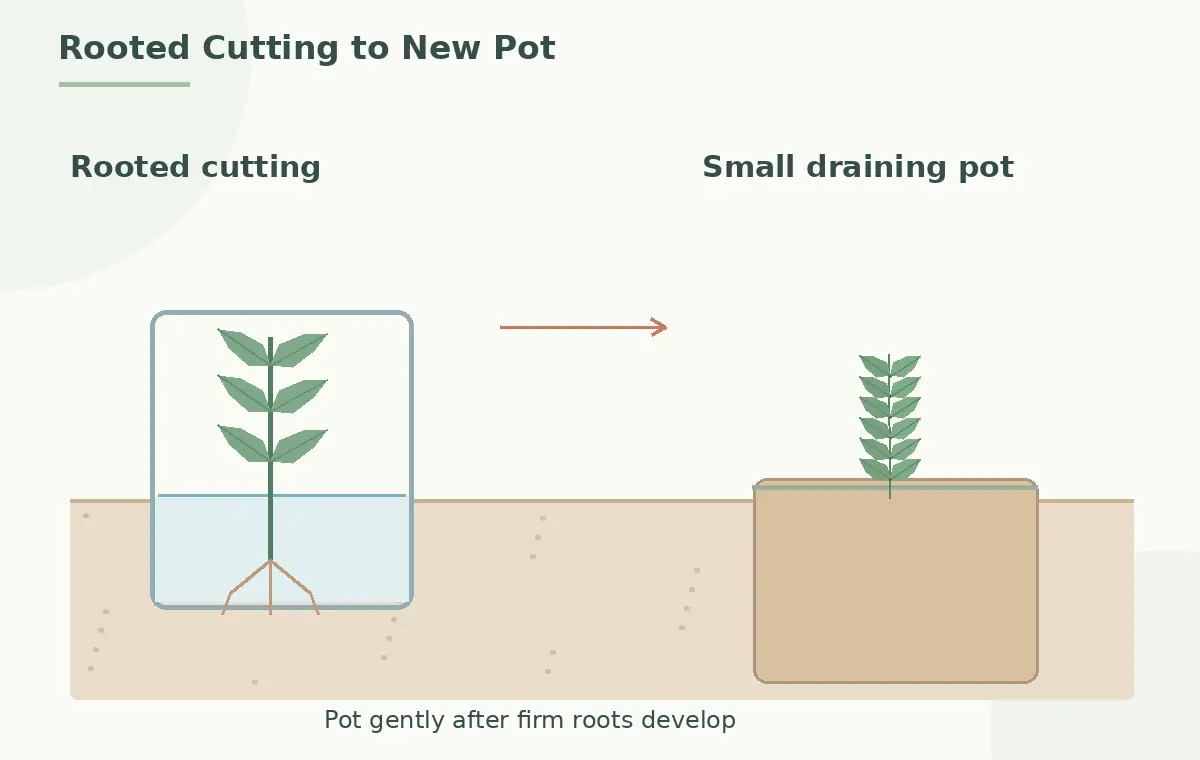
In water, look for several firm roots long enough to handle without pinching rather than transplanting at the first tiny white bump. In mix, gentle new leafy growth and resistance to an extremely light tug may indicate rooting, but do not yank the cutting to test it. Prepare a modest pot with drainage and a loose potting mix. Slide rooted stems into a hole and backfill carefully; water and let extra moisture escape. Roots that developed in water can be delicate, so keep the transition evenly moist for a short period and avoid sudden full sun. Label the new plant with its parent identity so you do not later confuse it with seedlings.
Transition Young Oregano Gradually to Sun
Once new roots and growth are established, increase light over several days rather than moving from an indoor jar to unfiltered midday summer sun immediately. University of Minnesota Extension notes that herbs generally perform best in strong sun after establishment. Avoid planting a newly rooted cutting outside ahead of a local freeze just because oregano is sometimes perennial. Species, cultivar, container size and regional winter conditions affect hardiness. Give a small rooted plant sufficient time to expand before regular harvesting. Remove only modest tips to encourage branching, leaving healthy leaves to support recovery. Keep the pot on a surface where excess water can drain.
Choose Cuttings Rather Than Seeds for a Known Flavor
Seeds can be convenient for generic oregano, but herb names and seedling characteristics vary. A vegetative cutting is often more predictable when you like the flavor and habit of the established parent. Division can also multiply some clump-forming oregano plants, as Virginia Cooperative Extension notes; it is not the same operation as rooting a detached shoot. Do not take wild oregano or horticultural stock without landowner permission, and avoid spreading rooted pieces into natural areas. For culinary use, confirm the plant was correctly identified and has not been treated with pesticides inconsistent with edible harvest. Propagation itself is not a guarantee of food safety or herb quality.
Keep a Small Rooting Comparison Log
Prepare two labeled cuttings from the same healthy parent: one in water and one in draining mix. Use similar light, then record leaf condition, when roots first appear and how each transplant responds. This practical comparison is more informative than claiming one method is universally best. If both fail, review the age of the shoot, whether buried leaves were present, container cleanliness and how hot the rooting location became. Photograph the node before inserting the stem so the diagram remains useful later. Once each plant resumes growth, you can decide which technique fits your watering habits and space next season. Our walkthrough on how to propagate basil from cuttings in water or potting mix sets out each step.
Related Guides
- Growing Herbs by Type: Water, Harvest, and Winter Survival Guide
- How to Grow Greek Oregano in Containers and Cut Stems for Regrowth
- How to Root Rosemary Cuttings in a Free-Draining Potting Mix
- Propagate Lemon Verbena From Soft Tip Cuttings Without Root Rot
- How to Root Culinary Sage Cuttings From Fresh Nonflowering Shoots
How We Research and Check Recommendations
We reviewed the named university Extension, land-grant IPM and specialist horticultural references for the precise species and task discussed here. The information and linked sources were checked October 24, 2026. We compared plant stage, season, climate, and risk statements rather than converting regional advice into universal planting dates or treatment instructions. The educational drawings explain structure and choices and are not presented as photographs or evidence of a controlled VegWin trial. Local Extension and product labels take precedence for region-specific problems.
Sources, Date and Editorial Disclosure
Sources checked October 24, 2026: University extension and horticultural reference — University of Vermont Extension: oregano stems, removal of lower leaves, under-water nodes and cutting handling.; University extension and horticultural reference — Virginia Cooperative Extension: oregano may be propagated from seed, cuttings or divisions; basic herb culture.; University extension and horticultural reference — University of Minnesota Extension: herb sun, spacing, pruning and conditions after establishment.. The source organizations do not endorse VegWin.
Editorial disclosure: no paid product placement, sponsor or affiliate arrangement was verified for this article. Our next-step buttons use existing internal category links, not paid redirects. Read the VegWin affiliate disclosure. Gardening outcomes vary with local conditions; use a confirmed label for any crop-protection product.
Use a clean cut immediately below a leaf node on a healthy, preferably nonflowering shoot.
Yes. Keep one or more nodes below water with all leaves above it, and replace water if it clouds.
No. Strip leaves from the section entering water or mix to reduce decay.
Cuttings keep the parent plant’s characteristics more predictably; seed-grown oregano may vary.
Mushy black tissue can signal rot. Clean the setup and restart from a healthy nonrotting shoot.