
A container guide to Greek oregano, including drainage, opposite leaves, light, pruning positions and protecting perennial roots. This guide follows the real structure of the plant and makes each decision visible: when the seed or crown should be placed, which part must stay above soil, and what changes as the plant grows. Conditions vary with location and cultivar, so the examples are observations and practical checks rather than fixed regional dates.
Identify Culinary Greek Oregano by Its Stems and Leaves
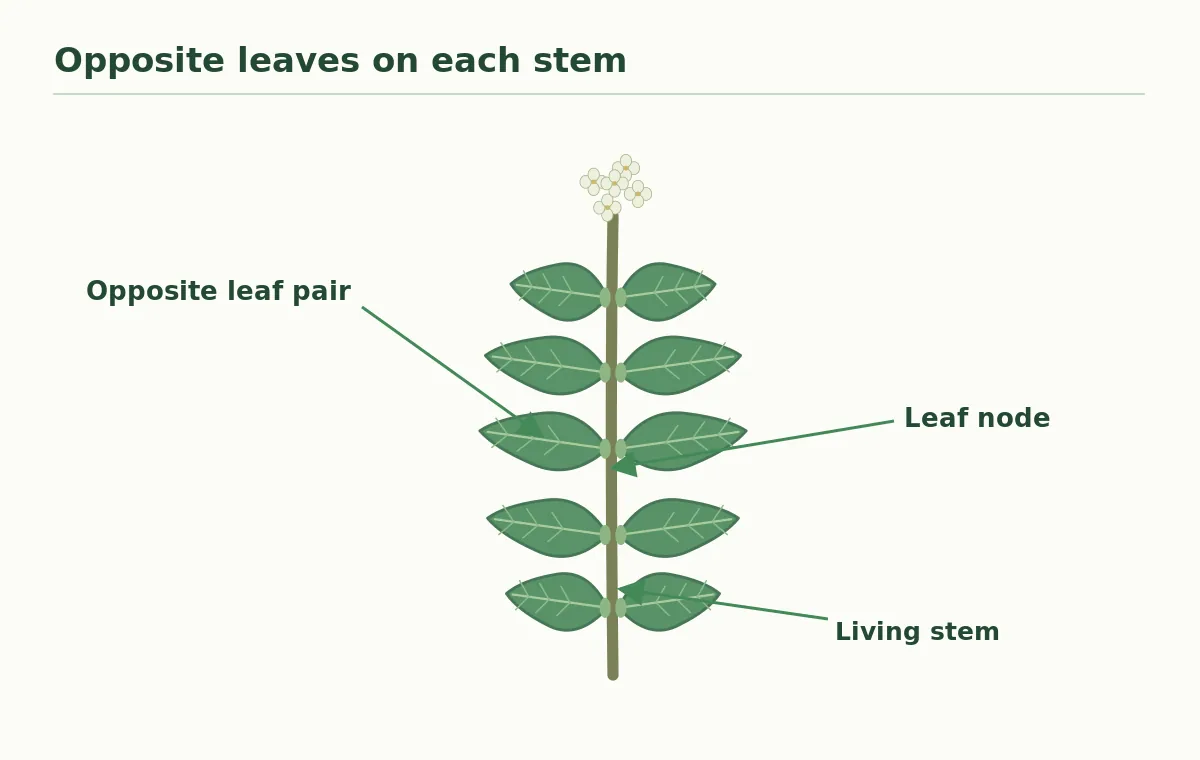
Greek oregano is a flavorful culinary form of Origanum vulgare, often sold as O. vulgare subsp. hirtum. Its leaves occur in opposite pairs on branching, often slightly hairy stems. They are small, oval and green, rather than long narrow rosemary needles or the thick succulent leaves of so-called Cuban oregano. Small white flowers may appear in terminal clusters in summer. This is a leafy herb; the leaves and tender stems, not swollen roots, are harvested.
Botanical labels can be confusing because several plants share oregano in their common names. Mexican oregano, Lippia graveolens, is a different genus, while marjoram and ornamental oregano varieties may look similar but have different aroma. Buy correctly labeled starts from a reliable nursery if culinary flavor matters. Gently rub a leaf to compare the aroma with the plant you expect, but never use scent alone to identify unknown wild plants as edible. Use the name and characteristic opposite leaf arrangement together.
Choose a Pot That Drains Freely
A pot with drainage holes and a light, porous growing mix is the simplest way to prevent stagnant water around oregano roots. Illinois Extension specifically lists Greek oregano as a suitable container herb. Use a pot large enough for the root ball and room to grow; oversize containers filled with wet mix can remain soggy when a small plant uses very little water. Put the pot where excess water can leave freely.
A saucer can protect a tabletop, but empty standing water rather than letting the base soak continuously. If the soil compacts into a hard crust, repot into a looser medium rather than increasing fertilizer. Avoid planting a tiny oregano beside a much thirstier vegetable in the same small pot; their irrigation needs conflict. A broad planter can hold several compatible drought-tolerant herbs if each retains root space, but overcrowding weakens airflow and increases maintenance.
Place the Plant Where Stems Stay Compact
Give outdoor oregano a sunny site with moving air, sheltered from severe wind on exposed balconies. Inadequate light can produce stretched shoots with widely spaced leaf pairs and disappointing flavor. A windowsill may look bright to a person while still giving an herb insufficient direct light. Watch the new growth, not merely the label on a pot.
Rotate the pot periodically if stems lean strongly toward a window. Indoors, supplemental plant lighting may be necessary where winter days are dim. Acclimate an indoor plant gradually to stronger outdoor light before summer placement, because sudden sun can scorch tender leaves. Conversely, a small dark container on very hot pavement may overheat; monitor the root zone and use a less heat-absorbing setting if needed. The goal is sturdy branching growth rather than constant fast, pale growth.

Water the Root Zone, Not the Calendar
Push a finger below the surface or lift the pot to judge its weight. Water thoroughly when the mix has begun to dry but before the plant suffers prolonged wilting, and let excess drain away. Oregano does not need continuously saturated soil. The illustration compares healthy roots in a breathable medium with dark, wet roots in a waterlogged pot; neither is an instruction to let the entire pot desiccate.
Container watering frequency changes with pot size, sun, wind, material and plant growth. A clay pot may dry much faster than glazed ceramic or plastic. Do not react to every yellow leaf with additional irrigation: check whether old leaves are naturally shedding, roots are crowded, or the soil stays wet. Apply fertilizer conservatively and according to the product label; forcing lush soft growth is not a substitute for good light and drainage.
Find Opposite Leaf Pairs Before You Cut
Each stem carries repeated pairs of opposite leaves. A node is the point where a pair meets the stem, and new side growth can develop from the buds at nodes left below a trim. To take a small harvest, choose a healthy stem, locate a well-developed leaf pair and cut the stem just above it. The scissors in the practical illustration sit above the pair, not through either leaf or below all living nodes.
Illinois Extension advises taking tips before bloom and retaining several pairs of leaves so the plant can branch and recover. The amount taken should be modest on a small or stressed pot. If a stem is woody and bare near its base, trimming deeply into leafless wood may not produce the regrowth you expect. Instead take healthy green shoot tips and distribute cuts among the plant’s branches. Use clean scissors and avoid tugging the stems from the crown.
Harvest Leaves While Protecting New Side Shoots
For cooking, remove a few clean healthy sprigs from the top of actively growing stems. The small opposite leaves have more flavor when harvested in good light before the flowering stems dominate. If flowers are desired for pollinators, leave some stems uncut; the plant can serve both kitchen and insects. Avoid treating every flower bud as a plant disease simply because leaf production slows.
After trimming, give the remaining leaf pairs time to supply energy to the new branches. Repeat light harvests as shoots lengthen; do not shear a young pot to bare woody nubs. Rinse only the amount needed for use, and dry cut stems in a clean airy place if preserving the culinary leaves. Never assume oregano from a roadside or a container exposed to contaminated spray is safe to eat. Keep the kitchen harvest separate from diseased or pesticide-treated material.

Protect the Perennial Crown Through Winter
Greek oregano can survive winter outdoors in suitable regions, but a container exposes its roots to lower temperatures than surrounding garden soil. In very cold weather, consider a protected spot or insulated pot according to local hardiness and rainfall patterns. Keep drainage open, because roots in cold standing water are vulnerable even when the air temperature is not extreme.
A living oregano crown may appear sparse or partly dormant in winter. Do not force it to grow with heavy irrigation or fertilizer while light and temperatures are low. Trim dead stems only once you can distinguish them from live growth and check for new shoots in spring. If bringing it indoors, inspect for insects and adapt it to indoor light gradually. One well-rooted perennial pot can supply years of modest harvest when cutting preserves living nodes and the root zone is neither frozen solid nor waterlogged.
Related Guides
- Growing Herbs by Type: Water, Harvest, and Winter Survival Guide
- How to Root Oregano Cuttings and Keep the Parent Plant’s Flavor
How We Research and Verify These Growing Steps
Source pages reviewed on 2026-10-27: extension.illinois.edu — Greek oregano is a culinary oregano with full-sun and drainage needs; harvest stem tips before flowering and retain leaf pairs for branching. extension.illinois.edu — Greek oregano is suitable for containers with drainage holes and free-draining potting mix; herbs benefit from modest pruning and appropriate watering. www.rhs.org.uk — Oregano is an herb suited to container culture and may overwinter outdoors when established under suitable climatic conditions. extension.umn.edu — Herbs need suitable light, airflow and moisture; soggy media encourage root problems and dry indoor air can stress herbs. The instructions in this article describe observed plant anatomy and the documented growing method. Where university and RHS advice varies with climate, soil or cultivation system, those distinctions are explained rather than hidden. Check local Extension guidance before selecting regional planting dates, overwintering methods or pest controls.
No paid products or affiliate relationships are recommended in this guide. Read our affiliate disclosure. Illustrations are explanatory botanical drawings, not photographs or guarantees of cultivar appearance. Take care with sharp tools, plant identification and site-specific food safety.
Greek oregano has small oval leaves in opposite pairs along its stems.
Often yes, but winter root protection and drainage depend on local temperatures and container exposure.
Cut just above a healthy opposite leaf pair, leaving several pairs below for regrowth.
No. Use free-draining mix and water when the root zone begins to dry.
No. Flowering is normal; leaf production may slow, and trimming some stems can encourage new branching.