
Learn what makes purple cauliflower different from purple broccoli, and how to grow and harvest a firm compact curd without waiting too long. Botanical diagrams below identify the correct structure, not just the broad plant family. Use your cultivar label and local conditions alongside the steps, and check food safety cautions before collecting any unfamiliar plant part.
Buy a Purple Cauliflower, Not Just Purple Sprouting Broccoli
Purple cauliflower can be a true cauliflower with a compact colorful curd, but purple sprouting broccoli can be loosely labeled purple cauliflower in older references. Read the cultivar and botanical group on the packet. An RHS listing for the cultivar Graffiti specifically identifies a Botrytis Group cauliflower with dense deep-purple curds. Sprouting broccoli typically makes a different harvest of numerous tender spears. The featured illustration shows one compact central purple head enclosed by large leaves, rather than many detached broccoli shoots.
The distinction matters because the harvest instruction for one crop is not automatically valid for the other. A true cauliflower usually produces one substantial curd per plant and rarely replaces a cut head with meaningful side shoots. Buying seedlings with missing variety labels makes this distinction harder. Check photographs of mature plants and use seed from a reliable producer. Color alone does not settle species or maturity: a head can be purple because of its genetics while still tender or still immature.

Time Growth for Mild, Even Weather
Cauliflower forms its best head when early root and leaf growth are not repeatedly checked by drought, extreme heat or prolonged cold stress. RHS notes the crop needs a dependable period of active growth before the central curd expands. Match a variety and planting window to the growing season in your area rather than assigning a global planting date from a hardiness zone. Summer, autumn and overwintering cultivars have very different cycles. Purple curd color does not override those ordinary cauliflower requirements.
Choose a bed with strong light, fertile moisture-retentive soil and drainage that prevents soggy roots. Allow each plant enough space for broad protective outer leaves; overcrowding can result in small plants and poor airflow. If sowing indoors, use individual modules to lessen root disturbance. Gradually harden seedlings to outdoor wind and sun. Where caterpillars, flea beetles or pigeons threaten young brassicas, properly supported insect mesh can reduce damage without relying on unsupported pesticide claims.
Transplant a Sturdy Young Plant Without a Root Check
Choose plants with a compact growing center and several sound leaves instead of tall yellow seedlings held too long in a tray. Water the module, then remove it from below, carrying the soil plug with as few torn roots as possible. Prepare a roomy hole, position the plant according to cauliflower transplant guidance, firm soil around the roots and water in. RHS allows setting young cauliflower a little deeper for stability, with lower leaves near the soil line; avoid burying the actual living leaf center.
If the transplant settles crookedly, firm soil gently at the base rather than drawing a deep mound across emerging leaves. Water consistently during establishment, especially when wind and sun increase water loss. A plant that drops its outer leaves after transplanting needs its roots and moisture checked, not random extra fertilizer. Nearby brassica weeds and leftover crop debris can harbor pests, so clear the site and rotate where possible. A healthy canopy later supports the single curd developing between the leaves.
Recognize a Developing Purple Curd
At first the central flower structure is small and partly sheltered by enclosing leaves. A cauliflower curd consists of many tightly packed immature flowering structures, not a swollen edible root. In purple cultivars, the growing head may develop a lavender to deep-violet tone that differs by cultivar and sunlight exposure. The botanical-detail illustration enlarges small contiguous curd bumps, with a leaf wrapping around the side. Distinguish this clustered surface from long open stems ending in separate sprouting-broccoli buds.
A small curd is not instantly a harvesting signal. Keep watching as the head enlarges, judging both size and density relative to the cultivar. Some cauliflower types have deeply wrapping leaves; other purple types keep more of the colored curd exposed. Do not automatically bind leaves over a purple head to whiten it as with certain traditional white types. Graffiti is grown precisely for its purple color, and RHS notes sunlight can deepen that pigmentation.
Prevent Loose or Ricey Head Formation
Water the root zone as required to prevent alternating bone-dry and sodden conditions during curd formation. Mulch may help stabilize moisture when applied without burying the crown. Maintain adequate spacing and inspect undersides of leaves for caterpillars. Loose separated curds, uneven head formation or premature flowering may follow stresses such as excess heat, transplant setbacks and interrupted growth. Those disorders should not all be mislabeled fungal disease on the strength of a single unusual head.
If you see a head turning coarse and granular, compare its firmness with one that still has tightly joined little florets. The comparison diagram shows one dense purple curd and one curd beginning to separate, not two identical colored balls. Do not wait for a dramatic, fully open flower if the goal is tender cauliflower. Once a plant becomes overmature, returning it to cool weather cannot make the separated structures pack tightly together again.
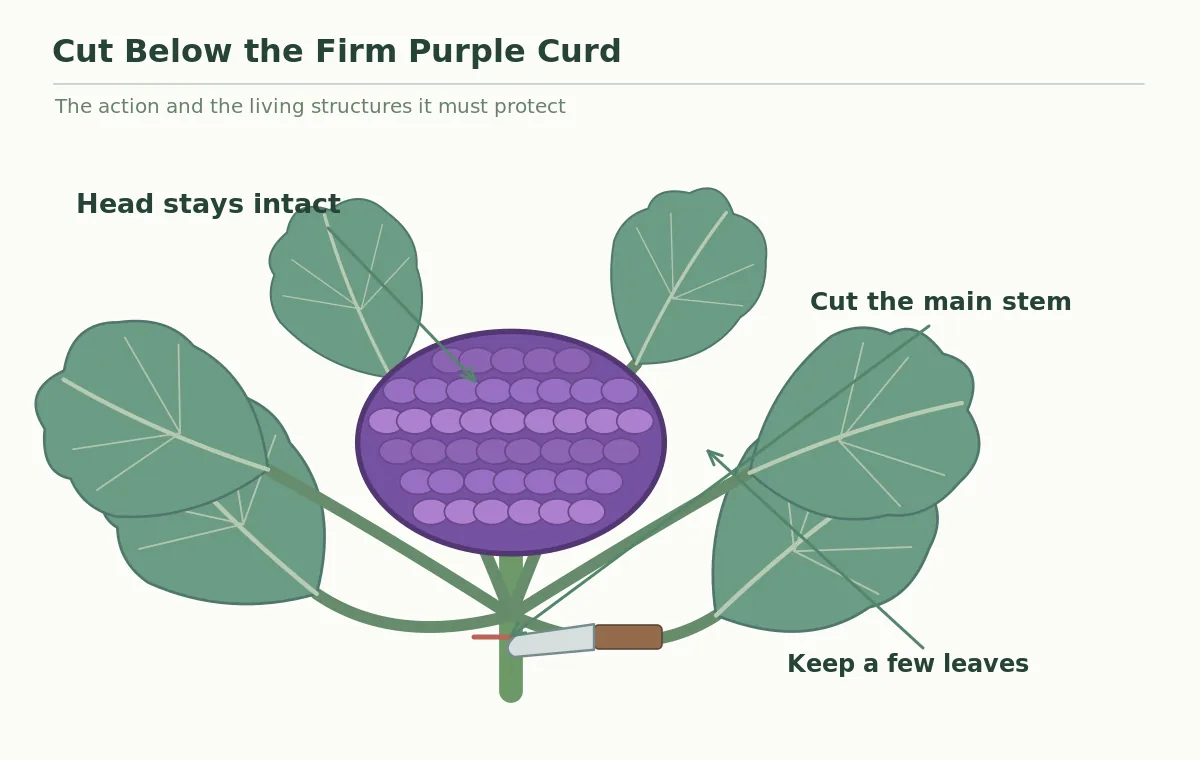
Cut Below the Firm Head With Protective Leaves
Inspect the developing curd often as it approaches its expected size. Harvest when it remains compact and firm, before the surface becomes ricey or starts opening into distinct tiny branches. Use a clean sharp knife to sever the main stalk a short distance below the head, including several nearby leaves to protect the curd during handling. Never place the knife directly through the head or through your supporting hand. The cut diagram clearly separates the curd, protective leaves and the stem being cut.
The desired size depends on the cultivar, planting conditions and whether it is a standard or mini type. A smaller compact head can be better than a huge loose one. Treat cauliflower as a fresh perishable vegetable: clean and prepare it with food-safe kitchen practices. Avoid promises that a single harvest method will force new full heads afterward; ordinary heading cauliflower does not behave like purple sprouting broccoli. Remove exhausted plants as appropriate and manage brassica debris responsibly.

Troubleshoot Color Changes Without Misdiagnosis
Purple is an intended trait in a correctly identified colored cauliflower. It does not mean the plant is rotting. Light, genetics and cooking can change the apparent hue of the curd. A developing head that turns brown, smells foul or becomes mushy deserves a different assessment; examine surrounding leaf damage and actual affected tissue before calling it ordinary purple color. Healthy green leaves with a purple head are normal on the right cultivar.
The final panel compares a dense purple true-cauliflower curd, an overmature open curd and separate long-stemmed purple sprouting broccoli. These are botanical and harvest distinctions, not marketing flavor promises. Save the packet, record the mature head appearance and note local weather during head formation. The best next crop often comes from choosing a better planting window and variety suited to local conditions rather than applying another product to a head that has already loosened.
Related Guides
- Growing Cauliflower: Protect the Curd and Spot Stress Early
- How to Grow Romanesco Cauliflower in a Container With Firm Spiral Curds
- How to Grow Romanesco Cauliflower With Tight Green Spiral Curds
- How to Blanch White Cauliflower by Folding Leaves Over the Developing Head
How We Research and Check These Plant Details
References reviewed on 2026-10-27: www.rhs.org.uk — RHS outlines cauliflower propagation, steady cool growth, young transplant protection, head formation and harvest before curds separate. www.rhs.org.uk — RHS identifies Graffiti as a cauliflower Botrytis Group cultivar with dense naturally purple curds. extension.illinois.edu — Illinois Extension describes firm compact curds, overmature ricey heads, drought or heat stresses, and conventional white versus purple cultivar naming issues. The text distinguishes cultivar-specific features from general crop guidance. These botanical illustrations are explanatory diagrams, not photographs of a guaranteed specific cultivar.
No sponsorship or paid product links are included. See our affiliate disclosure. When pests, weather or harvest safety depend on your location, follow current local Extension guidance and exact product labels rather than assuming conditions shown in a diagram apply everywhere.
Not always. Check the cultivar; true purple cauliflower forms a dense central Botrytis-type curd, whereas sprouting broccoli produces spears.
No. Purple-head cultivars are selected for color and do not need white-curd blanching.
When it is firm and compact, before the surface becomes coarse, open or ricey.
Most ordinary heading cauliflowers do not produce another comparable central head.
No. Purple is normal for named colored cultivars; examine soft rot or unusual lesions separately.