
Catnip is not just a product in a pet-store pouch. Nepeta cataria is a living, aromatic perennial that can grow vigorously, reseed and attract curious cats before young stems are robust. Another plant labeled ‘catmint’ may belong to a different Nepeta species or hybrid and have a more ornamental habit. The practical work is to verify the plant, choose a contained growing space and decide when flowers or leaves should be removed. This article concentrates on containment, harvest and plant identity, not unsupported medical or pest-repellent claims about the herb.
Identify Nepeta cataria before buying
Begin with the botanical name Nepeta cataria. Wisconsin Horticulture describes a branched, generally upright mint-family perennial with gray-green toothed leaves and characteristic square stems. It is related to, but not interchangeable with, the ornamental hybrids often marketed as catmint. Those may have different flower displays and garden habits. A generic blue-flowered photo on a label is not sufficient to establish species. If you want the herb traditionally called catnip, choose a reliable nursery label or traceable seed source. Keep that label through the first growing season to avoid mixing it with other Nepeta plants.
Wisconsin also notes that true catnip can form volunteers from dropped seed and is sometimes considered weedy. This matters more in a small vegetable bed than in an open ornamental planting. Catnip is not a universally reliable pest repellant, and planting it beside tomatoes does not replace insect monitoring. Think of it first as an herb and a pollinator flower. If your local climate is unsuitable for perennial survival, manage it as a seasonal potted plant rather than trusting a USDA zone to predict the exact winter fate of a container exposed on all sides.
Give catnip a manageable pot and safe location
A pot with open drainage holes helps limit underground expansion and makes it easier to position the herb without sacrificing an entire border. Use a suitable loose growing medium, provide bright light and monitor moisture rather than leaving the root ball permanently saturated. Catnip tolerates a range of soils once established but does best with good drainage. During extreme heat, observe the plant and local conditions; a small container can dry rapidly even where a garden-bed plant seems comfortable. Avoid an elevated pot where wind or an inquisitive cat can knock it onto people or other plants.
Protect young cuttings and transplants from repeated flattening by animals. Wisconsin Horticulture discusses guarding plants with a cage or raising containers where cats cannot easily reach them. Such barriers should remain stable and not catch paws or trap wildlife. Give the pot enough room that a mature plant can be trimmed from all sides. A plant left wedged behind other containers becomes difficult to check for volunteers and insect damage. Water its soil rather than spraying a nearby pet, and use garden products only according to safe label directions.

Start plants from seed or obtain a division
Illinois Extension lists seed, stem-tip cuttings and divisions as ways to propagate catnip. For beginners, a clearly identified transplant avoids a long period of protecting fragile seedlings. If sowing seed, use clean seed-starting media and place the young plants in adequate light; follow the packet and a reliable regional source for sowing depth rather than guessing a universal temperature or timing. Garden timing depends on actual frost risk, not a USDA hardiness-zone label. Keep seedlings evenly but not excessively moist, and avoid moving tender plants into cold nights abruptly.
A division should include viable roots and shoots, taken from a healthy plant at a suitable growth stage. Replant into a container that drains and allow recovery before harvesting heavily. Cuttings require clean tools and healthy stem tissue. Be suspicious of a pot that arrives badly root-bound, wilted or infested with insects, because it may need treatment or replacement before introducing it near edibles. Record plant source, date and whether your seedling is a particular labeled type. This is especially helpful if several ornamental catmints share the same growing space. Our guide “Grow Real French Tarragon From Cuttings or Divisions, Not Seeds” adds more detail on this.
| Observed situation | Useful first action | Decision principle |
|---|---|---|
| New plant or cutting | Let roots and shoots establish | Verify condition |
| Growing leafy stems | Pick modest amounts only | Correct before adding products |
| Flowering and later growth | Harvest and deadhead deliberately | Monitor the result |
Control flowers and volunteer seedlings deliberately
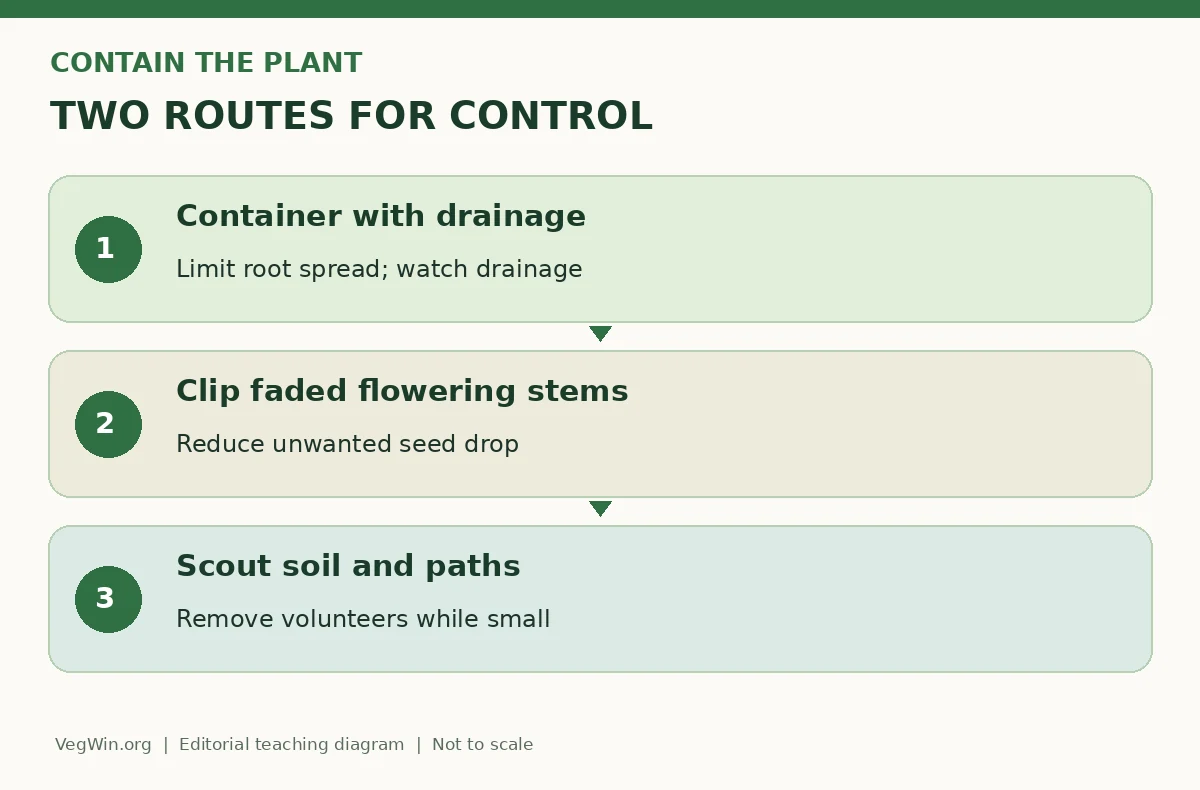
Catnip flowers are valuable to pollinators, so the decision to remove them is a trade-off rather than an automatic command. If preventing self-seeding in a compact vegetable garden is the priority, clip spent flowering stems before seed is shed and monitor bare soil for volunteers. If supporting pollinators is more important in a contained area, allow some flowers and then check for seed set. Wisconsin Extension notes that shearing after flowering can encourage additional bloom while reducing uncontrolled reseeding. Flowers and seed heads on stems left to dry should not be scattered where new catnip plants are unwanted.
Containers restrict creeping growth beyond the pot but cannot stop wind-, animal- or gardener-dispersed seeds. Check paving cracks, neighboring pots and path margins periodically. Pull unwanted seedlings when small, before their roots entangle other crops. Avoid pushing the plant’s clipped seedy material into a cool compost bin and assuming all seed will be destroyed. Compost conditions vary and many household piles do not consistently sanitize every portion. Place seed-bearing waste according to local garden-waste recommendations if spread prevention matters. This simple containment workflow makes catnip more manageable than a ‘plant it anywhere’ instruction.
Harvest healthy leaves while preserving regrowth
Allow a young plant to establish before clipping significant foliage. Harvest clean leaves or modest shoot portions with sharp tools while retaining enough growth to support the roots. Cutting back lanky stems can make the plant denser and may provide material for drying, as Illinois Extension describes. Avoid stripping the whole pot when the plant has just emerged from winter dormancy or has been heat-stressed. Inspect the undersides of harvested leaves for dirt, pests and damage. Clean harvesting tools and use potable water when washing herbs intended for the kitchen.
If drying leaf material for household use or pet toys, use clean, dry conditions and keep the result in a closed labeled container, protected from moisture and contamination. Do not claim a particular drying or heating time unless it comes from a tested relevant process. Cats vary in their reaction to catnip and not all animals respond; any concern about ingestion, vomiting or changed behavior belongs with a veterinarian. A cat-friendly plant is not a veterinary treatment. Keep pesticides away from leaves intended for cats unless the product is expressly labeled for the relevant use.
Troubleshoot the plant without overcorrecting
Leggy growth may reflect inadequate light, crowding or a plant left unpruned rather than an instant fertilizer shortage. Yellowing leaves and limp stems in wet mix call for a drainage check before additional watering. If the pot dries quickly, consider its size, exposure and root occupancy. Check for chewed or broken stems where cats have rolled on young plants, not just for insect feeding. Note the difference between an injured leaf and a repeated pattern across new growth. A photograph and moisture check usually provide better evidence than switching fertilizer products at random.
At the end of the season, decide whether the plant will remain in its container, be divided or be replaced by a new plant. In colder regions, exposed pot roots experience different conditions from ground-planted perennials, so follow local guidance for overwintering. If catnip repeatedly reseeds beyond the allowed area, move it to a more controlled site or remove it; its benefit as an herb does not outweigh every gardener’s need for tidy beds. Above all, verify species, observe actual growth and clip flowers with a clear aim. That is a practical, repeatable management system.

Related Guides
- Growing Herbs by Type: Water, Harvest, and Winter Survival Guide
- How to Grow Catnip From Seed With Light and Strong Leafy Stems
How We Research and Verify These Decisions
Source review date: October 20, 2026. This guide was researched using the primary university guide; second Extension or IPM source; additional specialist reference. Specific details were checked against the original publications rather than copied from unverified search snippets. The diagrams and comparative decisions are original editorial syntheses; they are not experimental proof or a substitute for the plant, climate and regulations in your location. Local overlap checking compared 150 prior VegWin batch draft titles and slugs; an authenticated full inventory of live WordPress URLs could not be checked independently. Verify the final live URL, internal links, category and publication suitability before manual publishing.
Disclosure: This article has no claimed sponsorship, paid endorsement or approved affiliate relationship, and the buttons point only to independent educational resources. See the affiliate disclosure for the site policy. This article has no /go/ affiliate route; no external merchant relationship is asserted.
Not necessarily. True catnip is Nepeta cataria; many ornamental catmints are other Nepeta species or hybrids.
A container limits roots but does not prevent seed dispersal. Remove spent flowers and scout for volunteer seedlings.
Yes. Use traceable seed, suitable seed-starting media and regional timing; divisions or cuttings are also possible.
After the plant has established, take modest healthy foliage and leave enough growth to support regrowth.
This gardening guide offers no veterinary treatment advice. Ask a veterinarian about ingestion concerns or unexpected symptoms.