
Nasturtiums (Tropaeolum majus and cultivated relatives) are colorful annuals with round, shieldlike leaves and trumpet-shaped orange, red, yellow or cream flowers. Their relatively large seeds are well suited to direct sowing, but success depends on one detail that differs from tiny light-germinating flowers: nasturtium seeds are covered with soil. In many gardens, sowing outside after the final frost is simpler than raising transplants that dislike root disturbance. Choose a bush or trailing variety that fits your space, set the seed about half an inch deep, and keep the bed moist enough for emergence without waterlogging it. This guide walks through placement, early care, bloom and seed decisions.
Identify Nasturtium Seeds and Seedlings Correctly
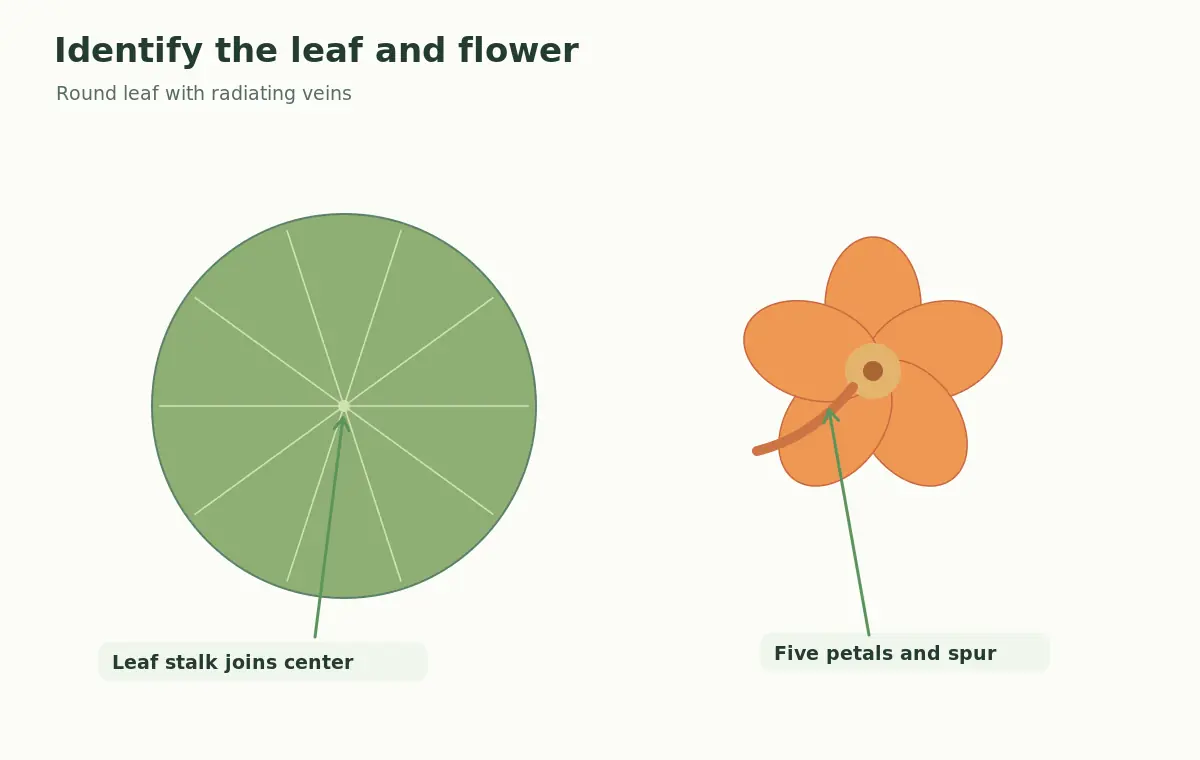
Nasturtium seeds are relatively large, rounded and wrinkled when dry. They do not look like the dustlike seed of many bedding flowers. Emerging plants develop characteristic leaves whose petioles attach close to the center of a rounded blade, creating radiating veins like a small shield. Wisconsin Horticulture describes both compact bush types and long trailing plants. The latter may sprawl or drape but do not attach themselves with tendrils like true climbers. Make certain the seed packet says Tropaeolum rather than simply accepting a common name: watercress is sometimes called a nasturtium in other botanical contexts, and it has completely different cultural needs.
Wait for Local Frost Risk to Pass
University of Maryland Extension recommends sowing outside only after frost danger has passed and the soil has warmed. Wisconsin Horticulture similarly places outdoor sowing in late spring or early summer. A USDA hardiness zone indicates typical winter minimum temperatures; it does not tell you the last spring freeze date at your particular garden. Check local historical frost estimates, short-term forecasts and soil workability. In regions with very hot summers, plants may bloom best in cooler spring or fall weather, so planting timing may need local adjustment. Avoid sowing into chilled saturated soil simply because a calendar page changed. If a late freeze is forecast after emergence, protect seedlings appropriately or resow if necessary.
Place Seeds About Half an Inch Deep
Wisconsin Horticulture advises covering nasturtium seed with about ½ inch of soil because darkness supports germination. Press each seed into a small prepared hole, draw fine soil back over it and firm gently so that moisture surrounds the seed. This contrasts with snapdragons, whose tiny seed is sown at or very near the surface for light. Do not place nasturtium seeds on bare sunlit soil and assume all will root successfully; birds, drying and exposure can interfere. Do not bury them several inches deep either: the emerging shoot must travel through the covering. Follow updated package directions when a specialty cultivar specifies a different method.
Space Bush Types Differently From Trailers
Wisconsin Horticulture suggests spacing seed around 10 to 12 inches apart as a useful starting point, though final spacing and spread depend on variety. Compact bush nasturtiums fit edges and smaller pots; vigorous trailing forms can cover surrounding plants or spill from a bed. Read the growth habit on the packet before deciding how many seeds to use. If you sow extras to insure against poor emergence, thin to the appropriate mature spacing once leaves develop. Pulling a rooted seedling aggressively may disturb its neighbor, so snipping extra shoots at the soil surface may be preferable in tight clumps. Never promise that a trailing plant will climb a trellis unattended: it may need loose guidance or support.
Choose Sunlight and Drainage Together
Nasturtiums like well-drained soil. Wisconsin Horticulture recommends full sun for strong blooming, while Maryland Extension notes that partial shade can be beneficial in some settings. In hot climates, a little afternoon relief can help avoid intense summer stress, but deep shade usually produces fewer flowers. In a container, choose a pot with functioning drainage holes and adequate root volume for the variety’s growth habit. Water should soak through the root zone and escape rather than stand at the surface for long periods. Avoid planting at the edge of an irrigation downspout where roots will remain saturated. Plant form and light exposure should guide placement more than a single sweeping claim about every climate.
Keep the Surface Moist Until Emergence
Following planting, moisten the seedbed gently so the half-inch covering settles without washing away. Check the upper soil daily in drying weather and water when necessary to maintain even moisture through germination. Wisconsin Horticulture notes that seeds commonly sprout in about 7 to 10 days under suitable conditions, but cool soil can delay that process. Do not keep the soil continually waterlogged or assume that pouring on more water will compensate for cold conditions. Once seedlings grow, water more deeply and allow the surface to dry somewhat between irrigations as appropriate for local heat and soil. A thin layer of suitable mulch can limit crusting after establishment, but avoid burying tiny new shoots. If you want the full process, read how to direct-sow nasturtium seeds without disturbing their roots.

Do Not Feed for Leaves at the Expense of Flowers
Rich soil and generous nitrogen can create lush leaves with relatively few flowers. Wisconsin Horticulture advises against routine fertilizer unless soil is exceptionally poor. Choose a moderately fertile, well-drained location rather than applying products by habit. If a plant makes only foliage, evaluate light levels, temperature, seed variety and nitrogen input before adding any fertilizer. Do not describe all green vigorous nasturtiums as deficient in nutrients simply because blooms are late. Similarly, do not starve a container plant until it yellows: a balanced response considers soil mix, season and growth. Local soil tests provide better evidence for nutrient interventions than a universal schedule of feeding every week.
Look After Flowers and Edible Parts Safely
Nasturtium leaves and blooms are commonly eaten and have a peppery flavor, as Maryland and Wisconsin Extension note. If grown for food, use seed and soil from reputable sources and avoid pesticide treatments or contaminated locations not suitable for edible plants. Harvest only flowers and leaves you have positively identified, wash them with clean running water, and use them while fresh. Pick flowering stems or remove faded blossoms to encourage continued bloom, but do not claim that one cut can prevent all seed formation. Flowers attract insects, including pollinators, so avoid spraying casually. Aphids or caterpillars may occur; correct insect identification is better than routine broad-spectrum treatment on a plant visited by bees.
Handle Seeds and End-of-Season Cleanup
Allow a few flowers to mature if you want to save seed. The seed structures swell and eventually dry; collect mature seed on a dry day, let it finish drying out of direct heat, then label with the variety and year. Plants raised from selected hybrids or mixed pollination may not reproduce a named flower color exactly, so seed saving is an experiment rather than a guaranteed copy. Remove diseased material and clean containers as seasons change. Outdoor nasturtiums are frost-tender in most temperate American gardens, while they can behave differently where freezes are rare. Check local rules and the plant’s reseeding behavior rather than assuming every volunteer seedling must be encouraged.

Related Guides
- How to Save Nasturtium Seeds After Pods Turn Tan and Dry
- How to Start Nasturtium Seeds Indoors Without Disturbing Their Roots
- How to Direct-Sow Cosmos Seeds and Thin Seedlings for Strong Summer Flowers
- When to Sow California Poppy Seeds and Why Direct Sowing Helps
- How to Direct-Sow Sunflower Seeds at the Right Depth After Frost
How We Research and Check Recommendations
Sources checked October 23, 2026. We compared the named plant or disease against university Cooperative Extension recommendations, distinguishing broadly applicable biology from regional production schedules. When guidance depends on crop type, climate or cultivar, those limits are stated rather than hidden behind one universal calendar. This guide offers practical education, not a remote diagnosis, tested soil report, pesticide recommendation, or guarantee of harvest. We do not claim independent field experiments or any commercial relationship with the institutions cited here.
Research sources reviewed: University of Wisconsin–Madison Horticulture (½-inch seed depth, seed spacing, temperature window, light, fertilizing and growth forms); University of Maryland Extension (after-frost direct seeding, well-drained soil, site exposure and edible young growth). No sponsorship, product endorsement, or verified affiliate arrangement is implied. See the VegWin affiliate disclosure for site policy.
No. University of Wisconsin recommends covering them about half an inch deep; darkness helps their germination.
After your local last spring frost when soil is warm enough for steady germination; the right calendar date varies by location.
About 10 to 12 inches is a useful starting point, adjusted for compact or trailing cultivar spacing.
Too much nitrogen or insufficient sunlight can favor leaves over blooms, although temperature and variety also matter.
Not reliably. They lack tendrils and usually sprawl or drape, so guide or loosely support stems if training them upward.