
Bottle gourd (Lagenaria siceraria) can fill an arch with broad leaves, white flowers and long or rounded fruit, but success begins with matching the cultivar to its support. A vine carrying small hanging gourds is a different load from one carrying very large hard-shell gourds. Start only when the soil is warm, protect young roots, and decide before planting whether you want carefully identified young culinary gourds or mature shells for crafts. Never taste a bitter gourd: bitterness can signal dangerously high cucurbitacins.
Match the fruit type to the structure before sowing
Check the seed packet for expected fruit shape and mature weight, not just the generic name bottle gourd. Smaller ornamental or slender cultivars can hang from a sturdy arbor, but exceptionally large selections may require ground culture or individual support. An inexpensive decorative arch can twist as a vine and wet fruit gain weight. Choose anchored posts, strong crosspieces and enough access to inspect flowers and fruit. A pictured mature fruit is not a promise that every seedling will have the identical shape, especially if seed was saved from cross-pollinated gourds.
Start seed only after soil and nights warm
NC State advises direct sowing after frost risk has passed and soil reaches about 70°F. Cold, wet soil encourages slow emergence and loss of seed. A warm indoor start is possible in a generous pot, but do not start so early that a long vine becomes root-bound before the garden is ready. Place seed in moist seed-starting mix as directed by the packet; the UC Master Gardener instructions describe about an inch of coverage for their indoor method. Maintain even moisture rather than a sealed, waterlogged pot.
Recognize cotyledons and the first true leaves
A bottle gourd seedling first produces two relatively rounded seed leaves, or cotyledons. The subsequent true leaves become larger, lobed and rougher textured. Use that transition when deciding whether an indoor plant has enough foliage to be hardened off outdoors. Hold the seedling by the container or supporting rootball rather than pulling the tender stem. If it stretched under weak light, correct the light and warmth rather than burying a long weak stem deeply. Roots need air and a loose, draining root zone.
Space roots well away from the trellis footing
Place the root zone where the sun reaches the foliage and irrigation can reach the soil. The UC Master Gardener guidance gives substantial space between large vigorous plants because foliage and roots spread widely; do not use tight salad-cucumber spacing. Keep the original rootball intact and set it at the same depth as it grew in its pot. Water in gently and apply mulch around, not against, the stem base. A footing that steals the whole root area or a container with no outlet cannot sustain fast summer growth.
Guide the vine using its own tendrils
Bottle gourd climbs with coiling tendrils that wrap around wires or narrow crosspieces. As a young shoot approaches the support, loosely guide it to the outside so its tendrils can attach naturally. Do not tie tightly around the growing tip or assume the tendril can grab a thick smooth beam. Check that leaves remain attached to genuine stem nodes and that new branches are not crushed by string. As fruit enlarges, inspect the structure for deflection; add a sling for a manageable hanging fruit only if necessary and without constricting its stalk.
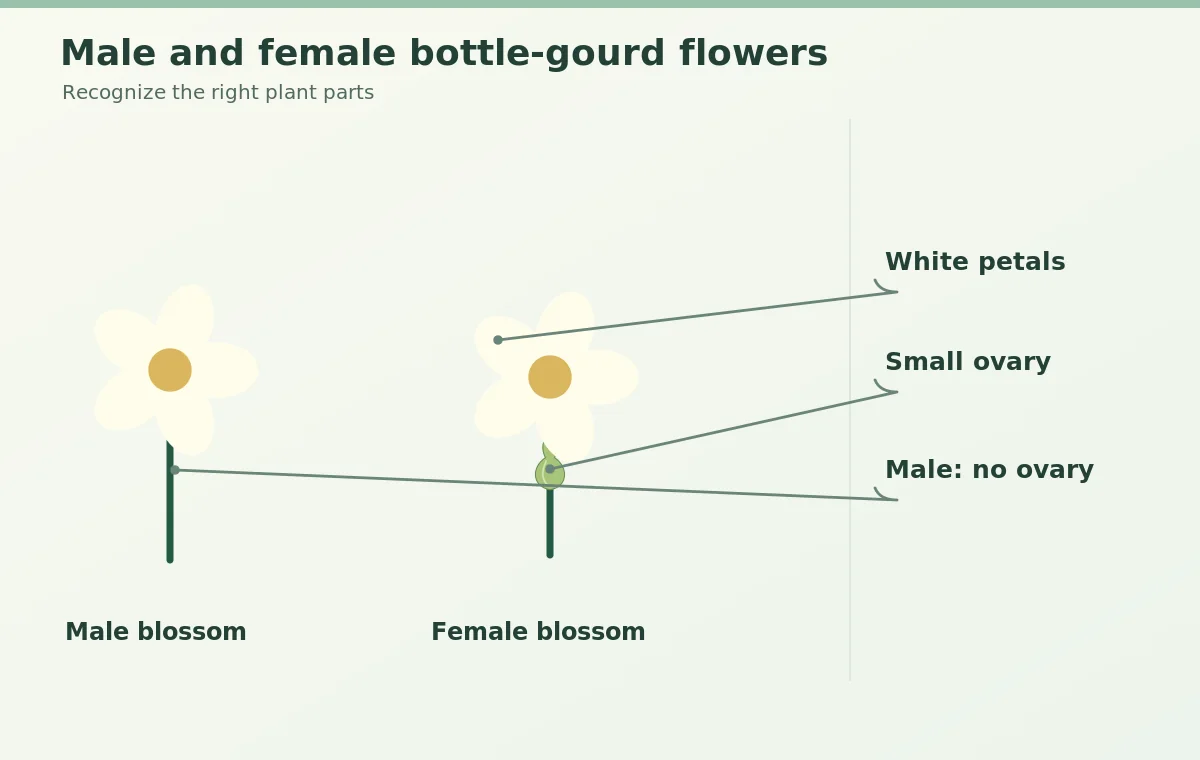
Tell male flowers apart from female flowers
Both sexes appear on the same vine and have large pale to white blossoms, many opening in the evening. A female flower has a tiny swollen ovary, like a miniature gourd, immediately behind the petals; a male blossom stands on a stalk without that swelling. Transfer of pollen is needed before the ovary expands into fruit. Keep pollinator access in mind, including insects that visit evening blossoms, before blaming fertilizer for every failed fruit. The presence of male blossoms before female blossoms is not by itself a disease symptom.

Water the soil without wetting the canopy each night
Rapid vine growth requires reliably moist soil, especially during establishment and fruit expansion, but the root zone should not stay saturated. Drip irrigation or a soaker line helps keep water at the roots while limiting prolonged wet foliage. Check soil several inches down before watering; surface appearance alone is misleading under a leafy canopy. Repeated heavy nitrogen feeding can produce vigorous leaves without a comparable fruit set. Use a soil test and local recommendations before adding fertilizer, rather than following a fixed weekly recipe.
Keep edible and craft harvests completely separate
Bottle gourd has food cultivars eaten while young and tender and hard-shell selections grown primarily to maturity. The names overlap, so verify both the cultivar and its intended food use with a reliable supplier. A mature hard-shell gourd is not handled like a young summer squash. Most importantly, discard any gourd that tastes bitter; do not attempt to make it safe by boiling or mixing with other food. Cucurbitacin poisoning from bitter gourds can be serious, and unknown decorative gourds should never be treated as edible.
Watch for disease without guessing from one spot
Cucumber beetles, squash bugs, aphids, wilts and foliar mildews can affect gourds. Examine both leaf surfaces, stems and neighboring plants, and note whether symptoms begin after drought, flooding or insect feeding. Powdery-looking leaves do not establish a diagnosis on their own. Remove badly damaged debris where appropriate, keep air moving around the canopy, and seek local Extension advice before using a pesticide. A support that holds foliage off the ground also makes inspection and careful watering easier, but does not guarantee disease-free vines.
Finish a hard-shell gourd without breaking the stem
When the purpose is a durable shell, leave fruit until fully mature and the vine and stem show appropriate drying, then cut with some stalk attached. Do not carry a heavy gourd by its stem. Cure or dry in an airy, sheltered place on a surface that allows monitoring, and discard fruit that softens or rots. Drying times depend on shell thickness and climate. This is a different workflow from harvesting tender food fruit; label growing and storage areas if both kinds are present to avoid a dangerous mix-up.

Use a simple troubleshooting sequence for low fruit set
If a vine produces leaves but no gourds, first check whether female blossoms have appeared. Then examine insect activity, day and night conditions, watering, and excessive nitrogen. A female blossom with a tiny gourd that yellows and drops may have failed to receive adequate pollen, but heat stress and other problems can also contribute. Avoid severe pruning while diagnosing, because flowers often form on laterals. Keep a few dated photos of blossom stages so you can compare conditions instead of inventing a single-cause explanation.
Related Guides
- When to Harvest Snake Gourd While the Long Striped Fruits Are Still Tender
- How to Germinate Birdhouse Gourd Seeds in Warm Soil Without Damaging Roots
How We Research and Check These Recommendations
We checked species identification, cultural requirements and cautions against plant profiles and research-backed guides, prioritizing horticultural universities and public botanical agencies. Recommendations here describe observed growth characteristics and practical decisions, not guaranteed results for every garden. Local weather, purchased variety and site drainage can change the right choice. For further reading see the first plant reference and the second detailed guide. This page contains no paid affiliate recommendation; read the VegWin affiliate disclosure for our site policy.
Wait for warm soil and frost-free conditions; cold, wet soil slows germination and increases losses.
No. Female blossoms need successful pollination, and a male flower does not have a miniature gourd behind it.
No. Discard bitter fruit immediately; cooking does not make suspected high-cucurbitacin fruit safe.
Not automatically. Use strong supports for smaller hanging types and ground culture or engineering-grade support for very heavy kinds.
No. Let craft gourds mature fully and dry; handle young food gourds separately and only when correctly identified.