
Learn when to pick cultivated snake gourd for eating, identify its lacy white flowers and long striped fruit, and avoid overmature gourds. The diagrams distinguish the actual plant structures, so a cutting line or sowing depth is never just a generic arrow. Check your variety and local conditions before choosing a season or handling method.
Check the Species Behind the Common Name
Snake gourd for the kitchen is cultivated Trichosanthes cucumerina, also called T. anguina in some references. It is a climbing cucurbit, not an ordinary cucumber with a long neck and not the dried snake-shaped ornamental gourds sold for crafts. Look for long, sometimes curved or twisting, green fruit often marked by lighter longitudinal stripes. Leaves tend to have several broad lobes. Large, delicate white flowers carry conspicuous lace-like fringes along the petals, a striking identification clue.
NParks describes separate male and female flowers on the vine; female flowers develop fruit when pollinated. Choose known edible cultivated seed or transplants, not an unidentified wild cucurbit. The edible culinary stage is the young fruit. This article is not a guide to eating mature seeds, wild plants or an unfamiliar ornamental variety. In regions with short growing seasons, warm weather and enough time for vine growth are important, but local temperatures and the cultivar determine when harvest actually begins.

Look for Green Stripes and Developing Tender Skin
As the female flower withers, a slender green ovary lengthens rapidly. At the preferred culinary stage, the fruit is still fresh green or green-and-cream striped and relatively tender rather than hardened and fully colored. Its exact useful length varies enormously across cultivars, so do not choose a universal number of inches. Compare fruits on the same vine, follow variety guidance, and test a representative young fruit rather than assuming the longest hanging gourd must be best.
Use the illustration of an immature cut fruit: the interior should not be dominated by hard fully mature seeds and stringy flesh. Some cultivars are naturally narrow and striped; others differ in markings. A fruit can be long yet still tender when conditions and cultivar favor rapid expansion. Conversely, a smaller fruit that has been left on a stalled, drought-stressed vine may be tougher than its size suggests. Appearance and texture matter together.
Distinguish Harvest Fruit From Seed-Ripe Gourds
As snake gourds ripen beyond the culinary young-fruit stage, they can change toward orange and red. NParks describes fully mature fruit with red pulp and seeds. FAO notes that ripening fruit becomes fibrous and may taste bitter. These are not the same end points: a seed saver may let healthy fruits reach full color, while a gardener cooking tender snake gourd usually picks well before that stage. The comparison drawing shows both, but only the young striped specimen is labeled for the kitchen.
A yellowing streak alone may not settle the question of ripeness, so combine color with firmness, seed condition and cultivar history. Do not taste a suspicious bitter cucurbit to check whether it is edible. An unusually bitter squash-family fruit should not be eaten, since bitterness can indicate potentially harmful cucurbitacins. Treat any unknown or cross-bred gourd cautiously and discard fruit with abnormal bitterness rather than trying to cook that problem away.
Cut the Hanging Fruit Without Tearing the Vine
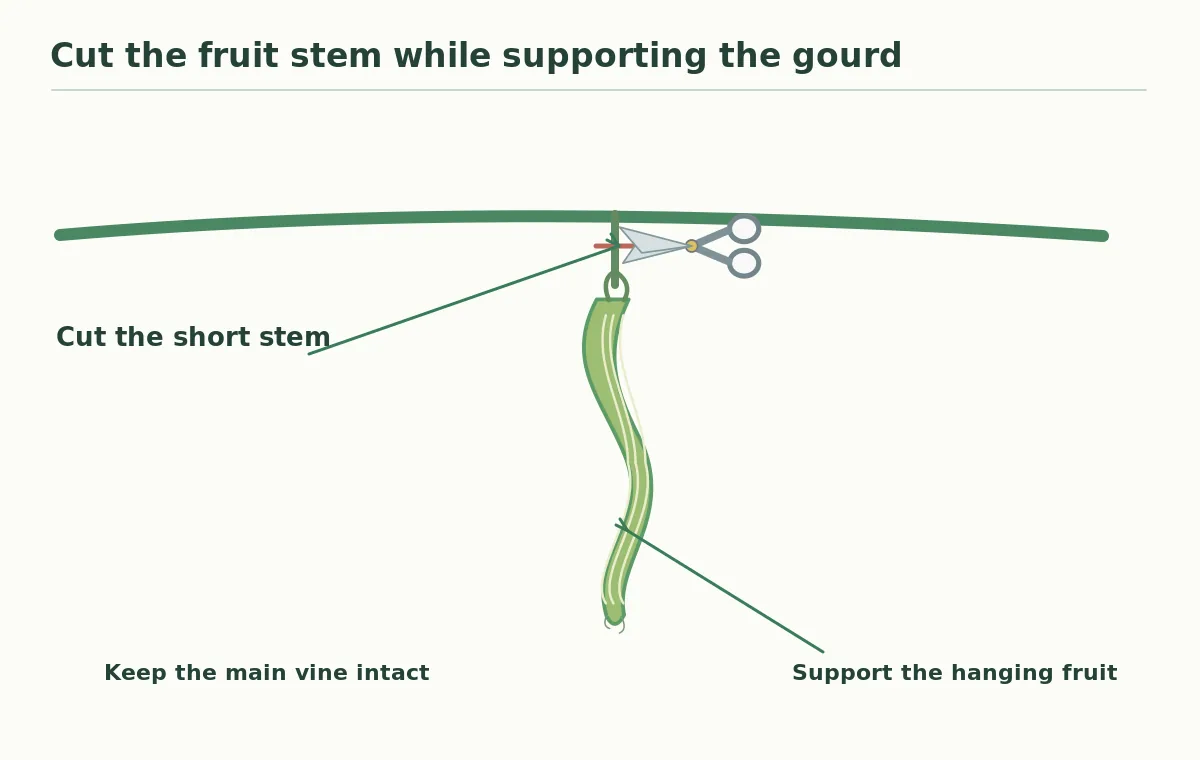
Support a long hanging gourd with one hand while using a clean knife or pruner to cut the short stem above it. Keep the tool away from fingers and tendrils; pulling or twisting a heavy fruit can tear the vine or loosen an entire trellis. The action diagram marks a cut on the slender fruit stem, not across the fruit, main vine or a healthy leaf node. Place harvested fruit gently into a basket where its long narrow tip cannot be crushed.
For the safest work position, harvest when there is good light and fruit is accessible without climbing on weak supports. Many growers choose early morning after foliage is dry enough for handling. In hot climates, long fruit can grow quickly, so check plants frequently rather than relying on a one-week interval. Wear gloves if the support structure has sharp wires, and keep clean harvested produce away from compost or muddy tools.
Protect the Vine and Trellis While Fruits Grow
Snake gourd vines climb and spread, so an adequately strong overhead arbor or vertical trellis gives long fruits room to hang and stay fairly straight. A fruit leaning against the ground may curve more sharply and be harder to assess for damage. Set the support before vines become heavy rather than forcing established stems through a new frame. Their tendrils hold to supports, but individual developing fruit should not be forcibly straightened by stretching the vine.
Flowers need pollination, and reduced pollination can leave young fruits aborting; check whether you have both flower types and pollinator visits before assuming a nutrient deficiency. NParks identifies clusters of male flowers and solitary female flowers in this species. Choose locally appropriate pollinator support, do not spray insecticides during bee visits, and avoid unverified hand-pollination claims. A vigorous vine with no fruit is a different problem from fruit that grows but is harvested late.
Compare Healthy Development With Failed Fruit Set
At flowering, the female blossom sits above a small ovary, while a male blossom sits on a slimmer stalk. Do not confuse this tiny ovary with a harvest-ready gourd. Inadequate pollination can cause the developing ovary to yellow or shrivel soon after flowering. That is not the same as an old full-sized fruit deliberately turning orange and red. In the botanical detail drawing, arrows distinguish the fringed petals, the tiny ovary and the older suspended fruit.
Inspect tendrils, leaves and stems as well. Wilt may reflect dry soil, damaged roots or disease; examine the root zone and obvious injury before assuming more fertilizer will fix it. If vine borers or other pests occur in your region, consult local IPM descriptions for correct identification. Avoid treating an edible crop with an unlabeled remedy. Gentle pruning of dead foliage and good air circulation can help make flowers and fruit easier to see.

Handle the Tender Harvest Promptly
Cook freshly harvested young fruits using a trusted recipe from a food-safe source; avoid making preservation claims about old, bitter or spoiled gourds. A clean, intact green specimen with firm flesh is a better culinary starting point than a bruised or leaking fruit. Keep the gourd dry during transport and refrigerate as appropriate for fresh produce, without relying on a promised storage lifespan across varieties and climates.
If saving seed is your goal, label a few healthy plants and leave a selected fruit to reach the documented mature stage. Do not present the orange seed fruit as a tender dinner gourd. Keep the two purposes separate: pick most fruits young for kitchen quality; mature only chosen fruit for seed if its cultivar and pollination history make seed saving worthwhile. Record which fruit stage worked in your household so next season is based on observations rather than a misleading single harvest date.
Related Guides
- How to Germinate Birdhouse Gourd Seeds in Warm Soil Without Damaging Roots
- How to Grow Bottle Gourd From Seed and Train Its Fruits Safely
How We Research and Check These Botanical Details
Source pages reviewed on 2026-10-27: gardeningsg.nparks.gov.sg — Singapore NParks GardeningSG describes long green-and-white striped immature fruit harvested for food and orange-red ripe fruit used for seed. www.nparks.gov.sg — NParks botanical record describes Trichosanthes cucumerina with deeply lobed foliage, lacy fringed female flowers and elongated cylindrical fruit. ecocrop.apps.fao.org — FAO EcoCrop records cultivated snake gourd as a warm-season climbing cucurbit eaten immature, becoming tougher and bitter when ripe. extension.oregonstate.edu — Oregon State Extension warns that intensely bitter cucurbit fruits can contain harmful cucurbitacins and should not be eaten. Plant morphology and growing steps were cross-checked against source descriptions, including which part is edible or retained after cutting. Recommendations that depend on variety, temperature or local conditions are qualified in the text.
No paid products or affiliate relationships are recommended in this article. Read our affiliate disclosure. Botanical drawings are explanatory teaching diagrams rather than photographs of a guaranteed cultivar. Use clean tools and follow current local Extension advice for pests, climate and edible-crop safety.
Not always; growth rate and cultivar vary. Look for tender green-striped skin and immature seeds, not length alone.
Cultivated snake gourd may turn orange to red as it ripens beyond the usual young-fruit culinary stage.
Cut the short fruit stem with clean pruners while supporting the gourd; do not pull on the main vine.
An immature ovary can abort when pollination or growing conditions are poor; it is not the same as a fully ripe seed fruit.
No. Do not eat markedly bitter cucurbit fruits; discard them rather than trying to remove bitterness by cooking.