
Elecampane (Inula helenium) is a very tall yellow-flowered perennial whose first season can look nothing like its mature display. It begins with broad, softly hairy basal leaves, then develops upright stems with yellow daisy-like heads composed of a central disc and many narrow ray florets. This is a plant to site deliberately: NC State Extension warns that it can be weedy and difficult to remove once roots spread. Treat the following as ornamental growing advice, not an endorsement of medicinal harvesting or consuming roots.
Confirm the species before accepting a plant
The name elecampane usually means Inula helenium, a Eurasian perennial in the daisy family. Do not assume every plant with tall yellow asters is this species; compare its enormous basal leaves, textured stems and flowerhead form with a verified reference. NC State notes a prominent pale midvein and hairy leaf surfaces. If you acquired a plant as a volunteer in a nursery container, its origin is particularly important because elecampane can arrive as a contaminant in other potted perennials. Confirm identity before letting a seedhead mature or planting root fragments.
Decide whether its spreading habit is acceptable
NC State describes elecampane as potentially weedy and difficult to eliminate completely from root pieces. Before planting, check local guidance for natural-area invasiveness and consider whether the bed borders wild land, a stream corridor or a neighbor’s garden. A small display garden with frequent monitoring differs from an unmanaged meadow where self-sowing can go unnoticed. If control is a concern, choose a locally appropriate native perennial with a similar height and yellow floral effect instead. Do not distribute unidentified seed or excess roots as a casual garden gift.
Give a very tall perennial room to mature
Expect an established elecampane to reach a height that can dwarf ordinary bedding plants; NC State lists stems up to roughly six feet under favorable conditions. Keep it away from narrow walkways, low windows and short delicate neighbors. Choose full sun to partial shade in soil that stays reasonably moist but drains between waterings. A deep, wide bed allows the large basal foliage to develop. Avoid assuming that a first-year rosette will remain that short, or that its roots can be kept in check by ordinary edging alone.
Raise seedlings with the species clearly labeled
Start from correctly labeled commercial seed using the supplier’s instructions. Keep the seed surface evenly moist without washing seed into a deep corner of the tray. As seedlings establish, pot them on before roots form a crowded mat. Hold a young plant by its rootball rather than squeezing its growing center. Garden soils and sowing conditions vary, so do not promise exact germination days without a source for the specific seed lot. Label every pot with the botanical name; a tray of tall daisy-family seedlings is especially easy to confuse with other ornamentals.
Recognize the first-year basal leaf rosette
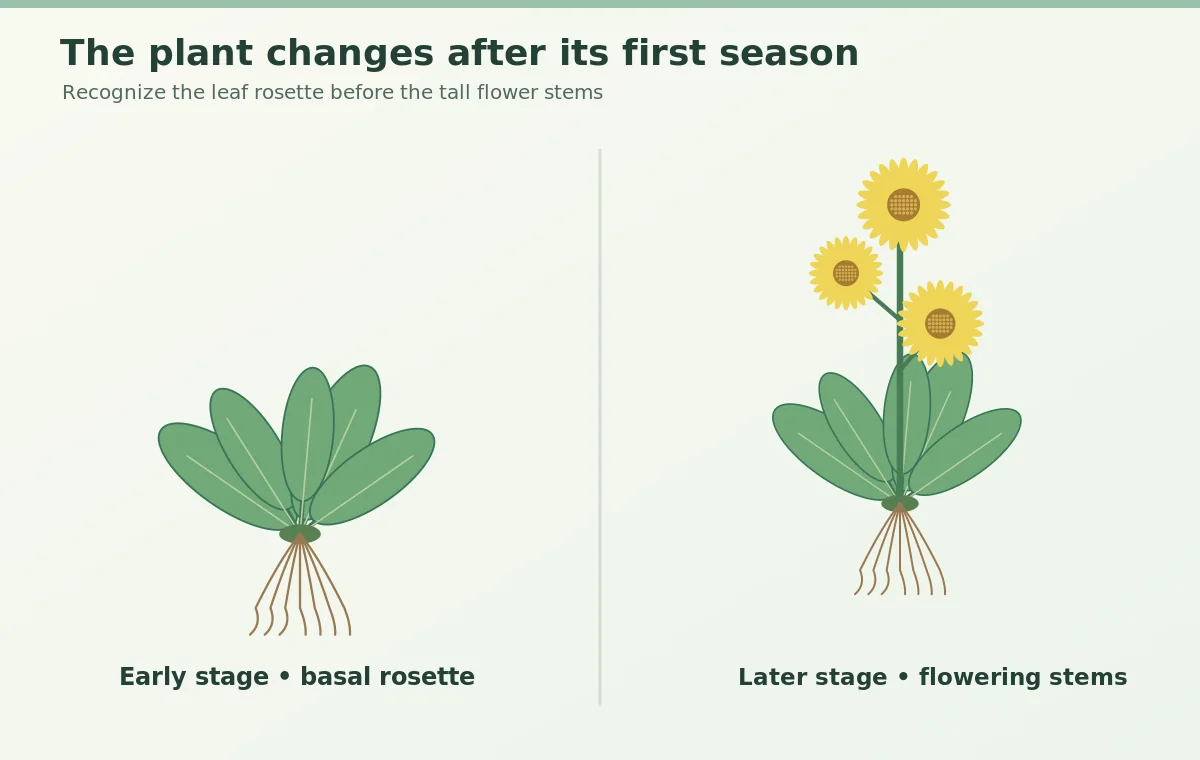
Elecampane can devote early growth to a basal rosette of large leaves arising at or close to its crown. The leaves are not merely miniature flower petals; they are long, broadly oval to lance-shaped blades with a conspicuous midrib and softly hairy surfaces. Keep the central crown visible and free of piled mulch. If a youngster has no flower stalk in its first year, that is not necessarily a growing failure. NC State describes a chilling requirement associated with later flowering, so the reproductive stage may follow a cold season rather than immediate sowing.
Understand the second-year flowering stem
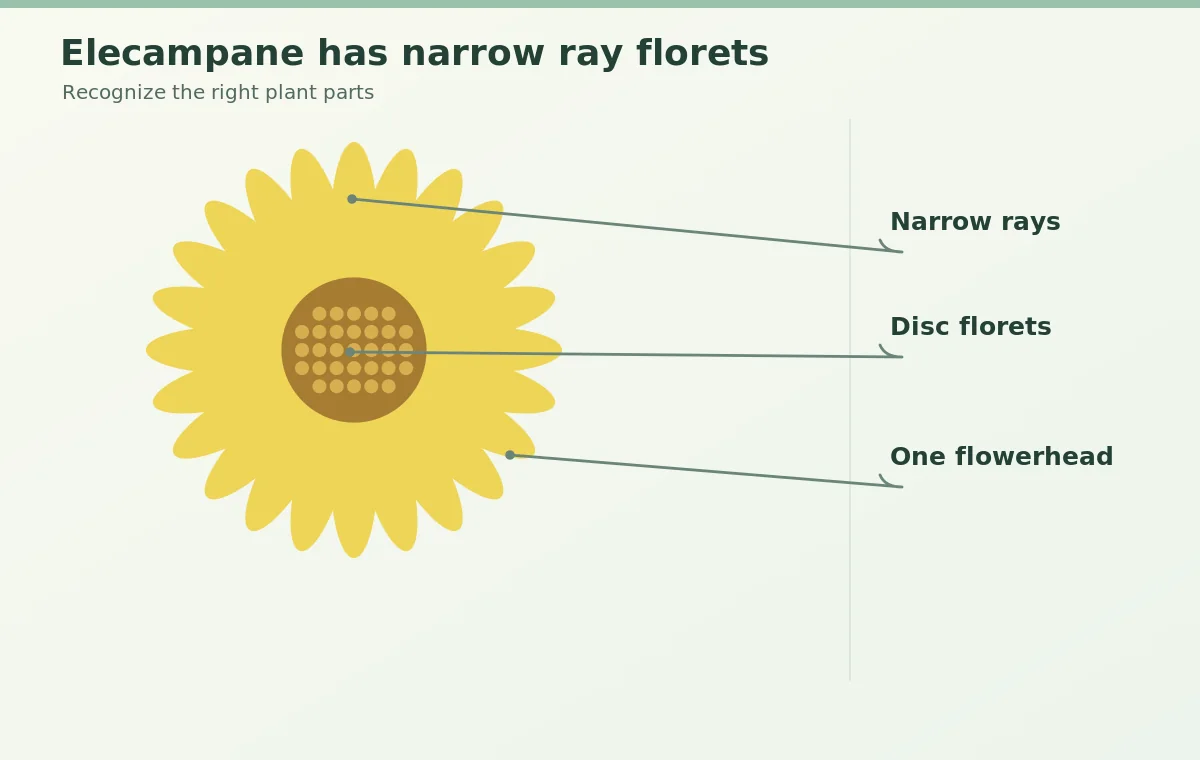
After establishment and appropriate seasonal cues, tall upright stems carry yellow heads above the large lower leaves. A true flower head has many narrow yellow ray florets surrounding a densely packed central disc, not one five-petaled yellow flower. The stem is attached to the crown below and the flowering branches occur above the foliage. Examine real stem connections before pruning. If a diagram shows a root floating away from the crown or a flower without a supporting stalk, it is not a reliable model of plant anatomy.
Water deeply but prevent stagnant soil
Established perennials need moisture through active growth, but roots must have adequate oxygen. Water the root area and check below the surface before irrigating again; wet topsoil alone can mask a dry deeper profile, and heavy clay can stay saturated after rain. A mulch layer may moderate evaporation, but leave the crown open. If leaves yellow after prolonged rainfall, investigate soil drainage and root health before fertilizing. Elecampane’s tolerance of fairly moist loam is not permission to leave its crown in a standing puddle.
Wear gloves when handling leaves and roots
NC State warns that contact dermatitis can occur with elecampane. Wear gloves and long sleeves when removing foliage or dividing root masses, and wash skin and tools afterward. Historical descriptions of medicinal use are not evidence that an unverified preparation is safe for your household. Avoid recommending root tea, tinctures or medicinal doses from a garden article. Anyone considering herbal use should consult qualified medical guidance; this growing guide concerns identification, site care and prevention of unwanted spread only.
Remove unwanted flowers before seed dispersal
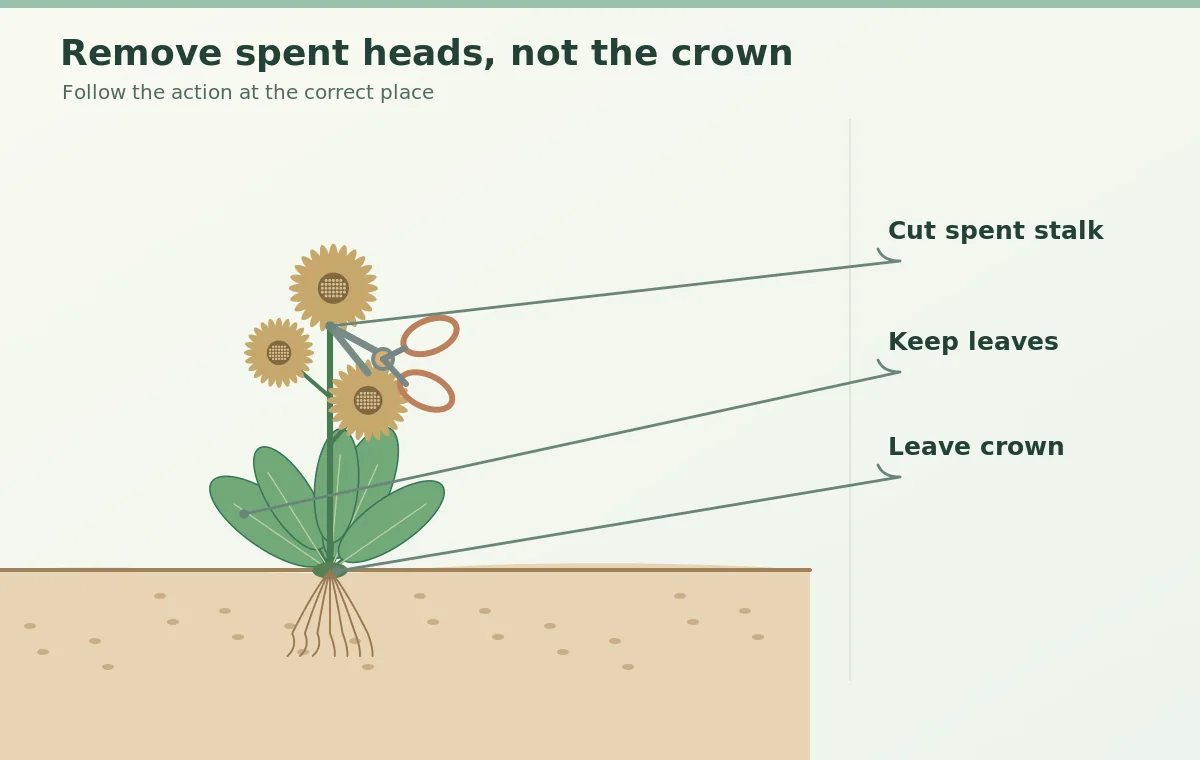
If the planting is near an area where volunteer plants would be unwelcome, remove finished flowerheads before viable seed drops. Cut with sharp pruners through the stalk at an accessible point while retaining the living crown if the plant is to remain. Collect seedheads into a bag rather than shaking them across paths. Do not rely on cutting flowers alone to remove established roots. If you want to remove the entire plant, monitor the bed for regrowth from remaining root fragments and follow local disposal guidance.
Do not confuse division with eradication
Propagation from rooted pieces can be possible, but the same trait makes control difficult. When digging, keep track of all substantial root pieces and never dump them into a natural area or an open compost pile that may not heat sufficiently. A divided crown intended for planting must contain viable buds and attached roots; a loose piece of stalk with no crown is not the same thing. Where the plant is already spreading outside a managed bed, seek local Extension or invasive-plant program guidance before moving any material.
Distinguish leaf injury from normal seasonal decline
A large outer leaf may age and collapse late in the season without indicating a systemic disease. By contrast, a suddenly wilted crown in soggy soil deserves inspection for poor drainage and decaying roots. Look at the underside and veins of affected leaves before assuming yellow spots identify a particular pest. Remove only clearly dead or badly damaged foliage until you understand the problem. Photograph the leaf, entire plant, root-zone conditions and recent weather; local Extension professionals can make a more useful diagnosis from context than from a close-up of one mark.
How We Research and Check These Recommendations
We checked species identification, cultural requirements and cautions against plant profiles and research-backed guides, prioritizing horticultural universities and public botanical agencies. Recommendations here describe observed growth characteristics and practical decisions, not guaranteed results for every garden. Local weather, purchased variety and site drainage can change the right choice. For further reading see the first plant reference and the second detailed guide. This page contains no paid affiliate recommendation; read the VegWin affiliate disclosure for our site policy.
No. Both are in the daisy family, but elecampane is Inula helenium, with its own leaf and flowerhead characters.
Not reliably. A basal leaf rosette may precede flowering, and a chilling period can be important.
Yes. NC State warns that it can spread and that remaining root pieces are difficult to remove.
This growing guide does not recommend medicinal use; seek qualified medical advice rather than self-prescribing.
Remove spent heads before mature seed drops, collect debris carefully, and monitor the bed for volunteers.