
Swamp milkweed (Asclepias incarnata) usually flowers during summer, but a single month printed on a plant tag cannot predict the first open flower in every climate. The plant forms narrow opposite leaves, rounded groups of pink to rose-purple flowers, and later slender follicles containing silky windborne seeds. Its role as a monarch caterpillar host is important, but the plant is not food for people or pets. This guide uses buds, flowers and pods as visible checkpoints so gardeners can tell normal seasonal development from a plant that is late, stressed or simply too young to bloom.
Identify swamp milkweed before judging the flowers
The botanical name Asclepias incarnata separates swamp milkweed from common milkweed, butterfly weed and unrelated swallow-worts. It typically grows upright from an herbaceous perennial crown, with narrow to lance-shaped leaves arising in opposite pairs on the stem. The familiar flowers form rounded umbels composed of numerous small pink blooms. Do not use flower color alone to identify the species, because other plants also bloom pink. Check the combined leaf arrangement, growth habit and habitat. If identification is uncertain, keep children and animals from tasting any part and consult a local native-plant guide.
Expect a summer window rather than one exact week
The University of Minnesota lists swamp milkweed among rain-garden species flowering roughly June through August in that region; other climates and seasonal weather can shift the window. NC State describes flowering from warmer spring into later parts of the growing season across its broad regional range. These are not contradictory instructions for a single garden: temperatures, planting age, day length and rainfall differ. Record the appearance of the first buds each year rather than promising the same date. A recently planted, small perennial may prioritize roots before producing a full dome of flowers.
Find buds at the ends of growing stems
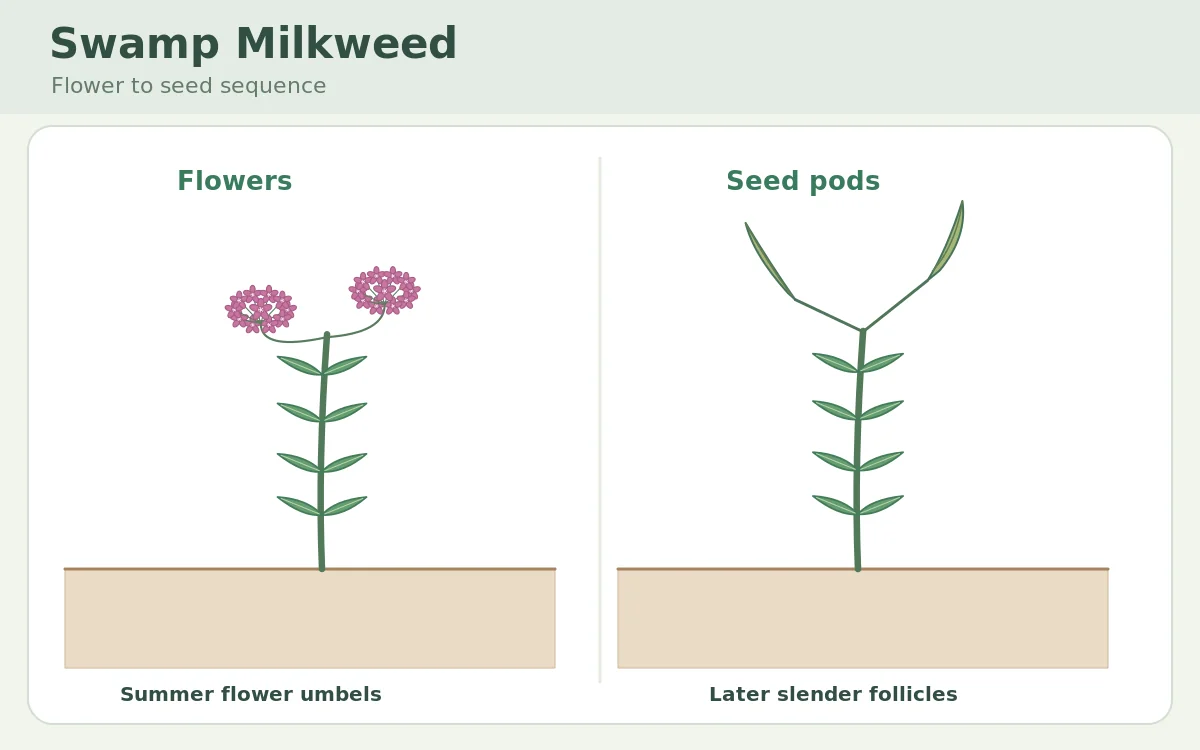
Before opening, the flower umbel looks like a compact rounded cluster near a stem tip or upper branch. Multiple individual buds sit on short stalks within that cluster. The narrow leaves below remain attached to the main stem in opposite pairs, and the whole structure should be upright rather than a trailing vine. Do not label a leaf axil or a small side leaf as a complete flower cluster. Use several days of observation to distinguish buds that are enlarging normally from those that have dried. A healthy developing umbel is not yet the long seed pod that appears after pollination.

Recognize the distinctive small pink flowers
Open swamp milkweed flowers have a specialized milkweed shape, with recurved petals and raised hood-and-horn structures rather than a simple five-petal flat daisy. A rounded umbel contains many separate flowers joined by their stalks. They are visited by butterflies, bees and other insects, but their presence is not a promise that every cluster will set fruit. Avoid treating flowers with broad-spectrum pesticide during pollinator activity. A photo showing the tiny flower parts close up can help with identification, especially when comparing swamp milkweed with plants carrying generic pink floral sprays.
Give the roots moisture without stagnant neglect
Swamp milkweed naturally occupies moist locations and can suit rain gardens where water infiltrates between storms. Full sun to partial shade can work depending on the climate and cultivar. A brand-new transplant may still require careful watering before its roots spread into surrounding soil. Do not place it in an undersized sealed pot with permanent standing water solely because its common name includes “swamp.” Its natural wetland adaptations do not guarantee tolerance of stagnant potting mix. Mulch can limit surface drying, but leave the live crown visible so it is not covered by decaying material.
Distinguish fruit formation from fresh bloom
After successful pollination, individual milkweed flowers can develop a green fruit known as a follicle. Swamp milkweed follicles are usually narrower and more pointed than the broad, often textured pods familiar from common milkweed. A stalk bearing one developing fruit does not mean the whole plant has stopped flowering; different clusters can be at different stages. Inspect the actual connection to the former flower position, not a loose green shape lying on the soil. The appearance of pods is a reproductive stage, not proof that the leaves are diseased or that the plant should be dug up.

Watch pods turn mature before seeds fly
A ripening follicle eventually splits along one seam and reveals many seeds attached to silky hairs. This material is designed for wind transport. Gardeners who want native milkweed seed may collect only fully mature material following local native-plant guidance and should never strip whole wild populations. If voluntary seedlings are not wanted, manage seedpods before they open, while retaining enough plant material for wildlife objectives. Do not mistake white silk emerging from an opened follicle for mildew on the leaves. Each seed attaches to its own coma of fine hairs, not to a dangling root.
Keep caterpillars and harmless leaf wear in context
Monarch caterpillars feed on milkweed foliage. Leaves with holes are not automatically a reason for pesticide treatment, especially in a pollinator planting. Identify the feeding organism and inspect the whole plant before acting; other insects can also use milkweed. If many stems are stripped, healthy established crowns may still recover, but outcomes vary with weather and growth stage. Avoid moving eggs or larvae casually because there may be disease and habitat concerns. The practical goal is to understand the plant’s role in a local ecosystem while keeping the root zone suitable for continued growth.
Diagnose a summer with few or no blooms
First ask how old the plant is and how much direct light it receives. An immature transplant in a shaded site may flower less than a well-established clump in strong light. Recent division, prolonged drought and saturated or compacted soil can also slow development. Check whether the shoot tips are forming buds rather than counting only opened umbels. Heavy fertilizer is not a reliable solution and may encourage leaves at the expense of flowers. Compare with local observations of the same species, not with unrelated garden milkweed species that normally bloom earlier.
Handle the plant as ornamental and poisonous
NC State labels swamp milkweed poisonous, even though it is ecologically valuable to monarchs and other insects. Do not suggest that its leaves, sap or pods are edible; avoid tasting them and wash hands after handling sap. Keep plant debris out of animal forage. Anyone with irritation after exposure should follow appropriate medical or poison-control advice rather than experimenting with home treatments. Its correct place in a garden is as a native wildlife perennial, not as a culinary herb. Clear identification and basic hygiene matter throughout budding, flowering and seed handling.
Record the full season for future predictions
Photograph one marked stem at bud stage, again when most pink umbels open, and later when a green follicle forms. This creates a reliable garden-specific timeline without relying on generalized zones as a planting calendar. Note rainfall, sun exposure and whether the plant was established or recently installed. When the shoots die back naturally, protect the perennial crown and avoid confusing dormant stems with a dead plant. A simple photographic sequence of opposite leaves, pink flower clusters and slender splitting pods provides much better identification than a standalone photo of a pink flower.
How We Research and Verify Garden Advice
This guide compares the practical recommendations of its principal expert reference with a second independent source. Species names, growth stages, and risks are described only to the extent supported by those sources. Because weather, jurisdiction, and growing conditions differ, check the latest local Extension advice before sowing, removing, or treating any plant. The diagrams simplify anatomy for identification and are not substitutes for a diagnosis of an unidentified specimen.
Sources and Editorial Disclosure for Readers
Sources consulted on October 30, 2026: North Carolina State Extension; University of Minnesota Extension; University of Minnesota Extension. VegWin provides informational gardening content, not an individualized diagnosis or legal ruling. This article includes no affiliate product recommendation; read our affiliate disclosure for site-wide policies. Do not mistake a botanical diagram for a pesticide label or permission to cultivate a regulated species.
It can in suitable regions; Minnesota Extension lists a June–August window, but local climate and plant maturity change timing.
Yes. Its follicles are generally slender and pointed compared with the broader fruit of common milkweed.
No. Younger or recently disturbed plants may spend much of the season establishing roots.
No. Treat it as an ornamental poisonous plant; its use by monarch caterpillars does not make it human food.
It is the silky seed hair that helps the mature seeds travel on wind, not a root or necessarily a disease.