
Horseradish is grown for the long, pale, pungent root beneath a leafy perennial crown. Harvesting is not like pulling a radish: mature roots can be deep, branching, and firmly anchored. A narrow tug at the leaves may snap the main root and leave fragments behind, and those pieces can make new horseradish plants. This guide walks through the actual anatomy, harvest timing, fork placement, and cleanup, so you can harvest a useful root without accidentally spreading the patch.
Confirm You Have an Established Horseradish Plant
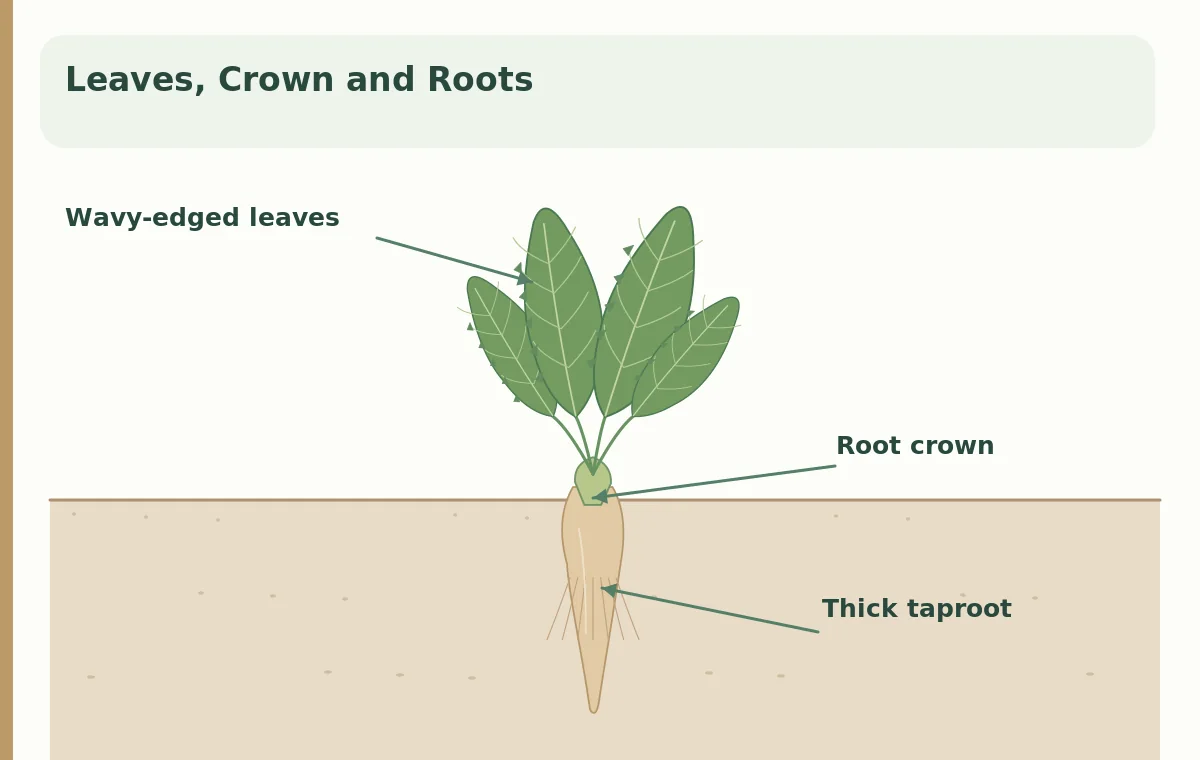
Look for a dense basal rosette of broad, elongated green leaves, often crinkled or wavy, rising from a crown at the soil surface. Below that junction is a cream to pale tan, fleshy root with thinner offshoots. The large edible root is below ground, not the thick green leaf stalk. Horseradish may send small white, four-petaled flowers on tall stalks, but it is primarily propagated from roots and often does not make useful seed. Distinguish it from dock and other similar-looking weeds before harvesting. Only eat plants you confidently identify and have grown for food.
Choose a Harvest Window by Root Growth Not Calendar Alone
University of Minnesota Extension advises delaying its main harvest until late fall, after most of the season’s root growth, while RHS notes that flavor is often stronger after cool weather or frost. In a temperate northern garden, harvest may fall in autumn or early winter before soil freezes solid. In milder climates, root growth and dormancy follow different patterns; use the condition of the established plant and the local season instead of translating a USDA hardiness zone into a specific date. Very young first-season plants may yield smaller roots than established clumps.
Find the Crown Before You Begin Digging
Clear fallen leaves and pull mulch away gently to see where the petioles join. That junction is the crown. Imagine a thick carrotlike root extending straight downward from it, often with side roots branching into the surrounding soil. Mark a generous circle around the plant before inserting a tool. Do not put a fork through the crown or directly under a leaf stem; it can split the plant into hard-to-collect pieces. The cutaway diagram locates the crown above the large pale taproot and the fine roots below the actual soil line.
Loosen Soil From the Outside and Lift the Root
Place a sturdy digging fork outside the visible root zone rather than hugging the leaf stems. Work down and inward carefully, loosening a section at a time until the soil releases. Large plants can need a trench beside the row, as the Minnesota guide explains. Ease up the fleshy root with the supporting soil instead of yanking on foliage. If resistance continues, dig farther down or around the sides. A fork tine or spade cut through the middle of the taproot can waste the useful portion and scatter fragments into nearby beds.
Separate the Main Root From Side Roots Deliberately
Once the clump is lifted, brush soil off to distinguish the thick central taproot from slimmer lateral roots. Select the largest sound, firm root for the kitchen; inspect thin side roots as potential propagation pieces if you intend to keep horseradish growing. Root cuttings should be labeled and planted deliberately, not thrown among compost piles or scattered in finished beds. Small root segments may resprout even when they look unimportant. Avoid mixing roots from an area where pesticides or contaminated runoff could make them unsuitable for food.

Control Its Spread During Cleanup
Horseradish is persistent because underground fragments can establish new shoots. Search the loosened soil for pale pieces, including broken side roots and sections near the edge of the digging hole. If you want to end the patch, revisit it in the following season and remove new sprouts promptly, recognizing that total eradication can take repeated inspection. Do not till root pieces into a wider garden. For an intentional planting, keep selected cuttings in one designated bed or a roomy container rather than letting accidental leftovers determine where next year’s horseradish grows.
Handle Fresh Roots With Care in the Kitchen
Wash soil off sound roots before peeling or grating them; refrigerate the harvest rather than leaving cut roots to shrivel. Horseradish develops intense, irritating fumes when crushed, so work in good ventilation and keep the prepared material away from eyes. Follow a tested food-preservation recipe if making a sauce rather than guessing storage conditions. Do not treat the foliage or an unknown ornamental lookalike as an interchangeable food. The long cream-colored storage root—not green stems or an insect-damaged crown—is the main crop described here.

Diagnose Broken or Small Roots
If many roots break, the soil may be compacted, rocky or insufficiently loosened before lifting. Start farther from the crown next time and open a trench alongside the taproot. If the plant is large but the main root disappointingly thin, examine establishment time, crowding, drainage, and the presence of multiple competing crowns before assuming a nutrient deficiency. Root rot usually comes with soft, discolored tissue and an unpleasant odor, whereas a fresh healthy cut is firm and pale. Discard suspicious material and investigate moisture problems rather than applying unverified chemicals.
Make a Harvest and Replanting Checklist
Before leaving the bed, count what you intend to keep: at least one intact main kitchen root, any clearly labeled propagation pieces, and a clean digging area with minimal overlooked fragments. Replace soil and mulch only around living horseradish you intentionally retained. Record the harvest month, plant age, and root quality for later comparisons; these observations beat a calendar copied from another region. Check the soil for resprouts during the next growing season. Good harvesting means both extracting a useful taproot and retaining control over where this vigorous perennial lives.
Related Guides
- Growing Horseradish Without Letting the Roots Take Over
- When to Dig Horseradish Roots in Fall Without Leaving Root Pieces
How We Research and Verify Botanical Details
The referenced university Extension and specialist horticulture guides were checked on October 28, 2026, for the particular plant anatomy, harvest or planting action discussed here. extension.umn.edu horticultural guide explains university of Minnesota Extension describes trenching and digging mature roots in fall, root-side development and replanting. www.rhs.org.uk horticultural guide explains rHS explains fall and early-winter root harvest, root cuttings and the persistent spreading habit of horseradish. The drawings illustrate crop features and techniques, rather than documenting the appearance of every cultivar. Adapt local timing to your weather, actual growth stage and regional growing advice.
Disclosure and Important Local Limitations
This educational article has no confirmed affiliate arrangements, sponsored endorsements or chemical treatment instructions. See the VegWin affiliate disclosure. When a root, tuber, seed or plant is not positively identified, do not eat it. For unexplained rots, insects or widespread symptoms, seek a diagnosis from your local Cooperative Extension or qualified plant specialist before applying products.
It is possible, but an established plant often supplies a larger root; RHS describes light harvests for younger plants.
No. Loosen soil with a fork or trench and support the root so it does not snap off underground.
They can be used as deliberate propagation cuttings, but unwanted pieces should not be left where they can resprout.
Yes. Horseradish develops a large deep taproot with branches, making careful digging more useful than pulling.
Yes. Forgotten root fragments can form new plants; check and remove resprouts if you want to contain it.