
At a glance: The first mistake with bulb fennel can happen before the seed is planted: the packet may contain common herb fennel, which will never produce the thick, crisp base you wanted. The second mistake is asking Florence fennel to swell that base while it is stressed by weather, dry soil or disturbed roots. Unlike an onion, the edible round part is not a true underground bulb. This guide begins with plant identity, then builds a weather and growth check so gardeners can tell the difference between slow bulbing, premature flowering and an ordinary herb-fennel plant.
Check the Seed Packet for Florence Fennel
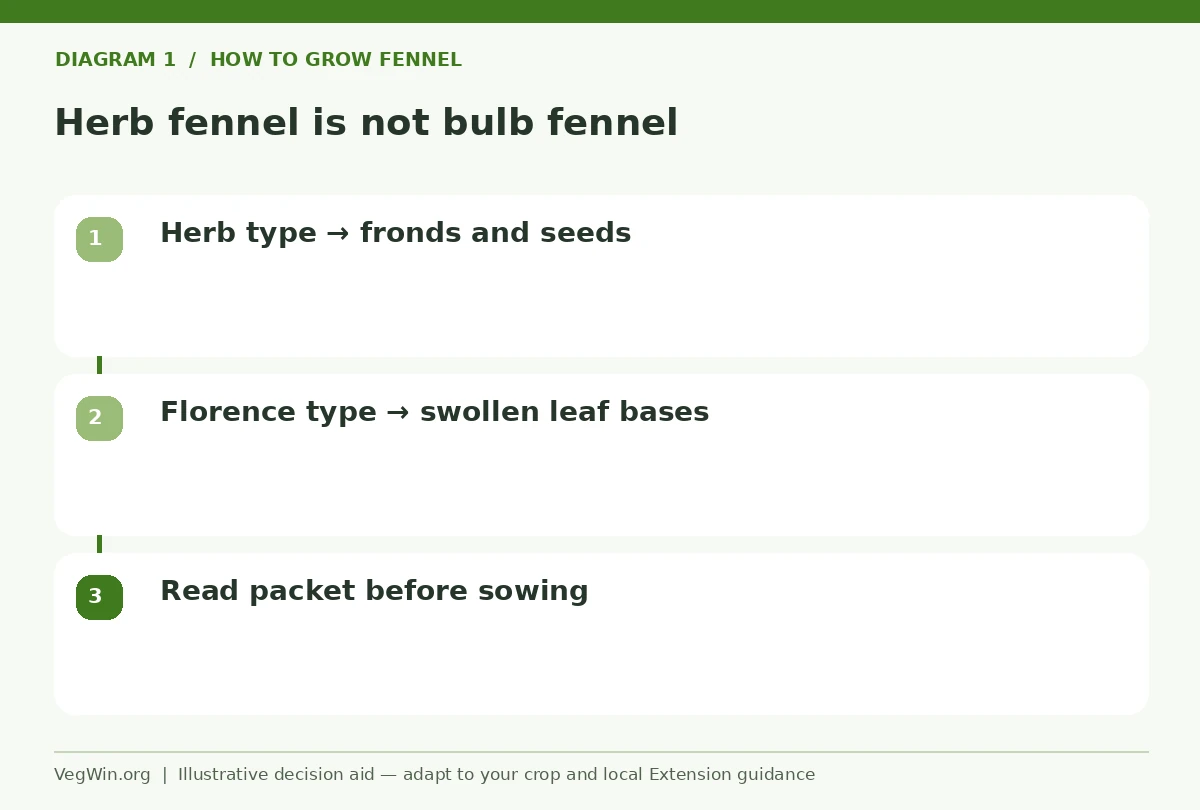
Fennel has multiple culinary forms. Common fennel is usually grown for aromatic leaves and seeds, while Florence or bulbing fennel is selected for a swollen base made from overlapping leaf stalks. Utah State Extension describes the distinction clearly. If a tall, feathery plant never thickens, read the scientific or varietal description before assuming that you failed to fertilize it. Herb fennel can be thriving normally while providing no bulb harvest at all. If you want the full process, read how to harvest fennel seeds when the umbels turn brown.
The swollen base of Florence fennel sits above and around the soil line; botanically it is not a true bulb like an onion. This matters when handling plants and interpreting damage. Avoid burying a young plant deeply because you expect the edible part to develop underground. Choose a cultivar specifically sold as Florence fennel, check its expected season, and record the source. Descriptions such as bolt-resistant may be useful but do not cancel severe stress from drought or unsuitable temperatures.
Match the Growing Window to Local Conditions
Bulb fennel responds strongly to temperature and other seasonal conditions. Utah State notes that cool-season growth can give tender bases while prolonged heat encourages woody texture or premature flowering. RHS also cautions that early exposure to cold, root disturbance and dry conditions may trigger bolting. These recommendations have different regional implications: the right outdoor sowing month in the UK is not necessarily right in the interior western United States.
Use regional Extension or an experienced local growing guide to choose a window when plants can establish without repeated severe stress and reach swollen-base maturity in relatively moderate weather. Local frost dates help with crop safety, but USDA winter hardiness zones do not determine a universal fennel planting day. If every previous early-spring sowing has flowered instead of bulbing, compare weather history and try a different local window rather than adding more fertilizer. If you want the full process, read how to grow sweet corn with better pollination and full ears.
Prepare a Well-Drained Yet Moist Bed
Florence fennel prefers steady access to soil moisture without becoming waterlogged. Loose, well-drained soil with suitable organic matter supports even growth. Utah State describes moderate fertility needs and explains that a soil test should determine added phosphorus and potassium. There is no justification for applying the same fertilizer dose to every garden bed, or for treating any slender plant as evidence of a nitrogen shortage.
Check the bed for compacted areas and standing water after rain. In a raised bed or container, do not confuse fast drainage with adequate moisture retention: the top can dry rapidly in windy weather. Add mulch around established plants if needed to reduce evaporation, but keep crowns visible and look for slugs near vulnerable seedlings. The goal is uninterrupted, moderate vegetative growth that builds broad leaf bases before the plant shifts into flowering.
Sow Carefully and Minimize Root Disturbance
Florence fennel can be directly seeded or started in individual modules where transplanting is useful. RHS emphasizes gentle handling because root disturbance can cause stress and bolting. If direct sowing, thin excess seedlings early without damaging the remaining plants. If using modules, move the intact root ball while it is young enough that roots are not tightly circling. Avoid deep cultivation around established stems.
How far apart to grow plants depends on whether you want tiny baby bases or mature swollen bases, and on the cultivar. Follow crop-specific seed and regional Extension instructions instead of packing fennel like fine-leaf herbs. Closely crowded plants can compete for light and water and remain narrow. Use a few test plants to assess the actual harvest size in your climate before committing a large bed to one calendar date.
Watch for a Thickening Base Before Flowers
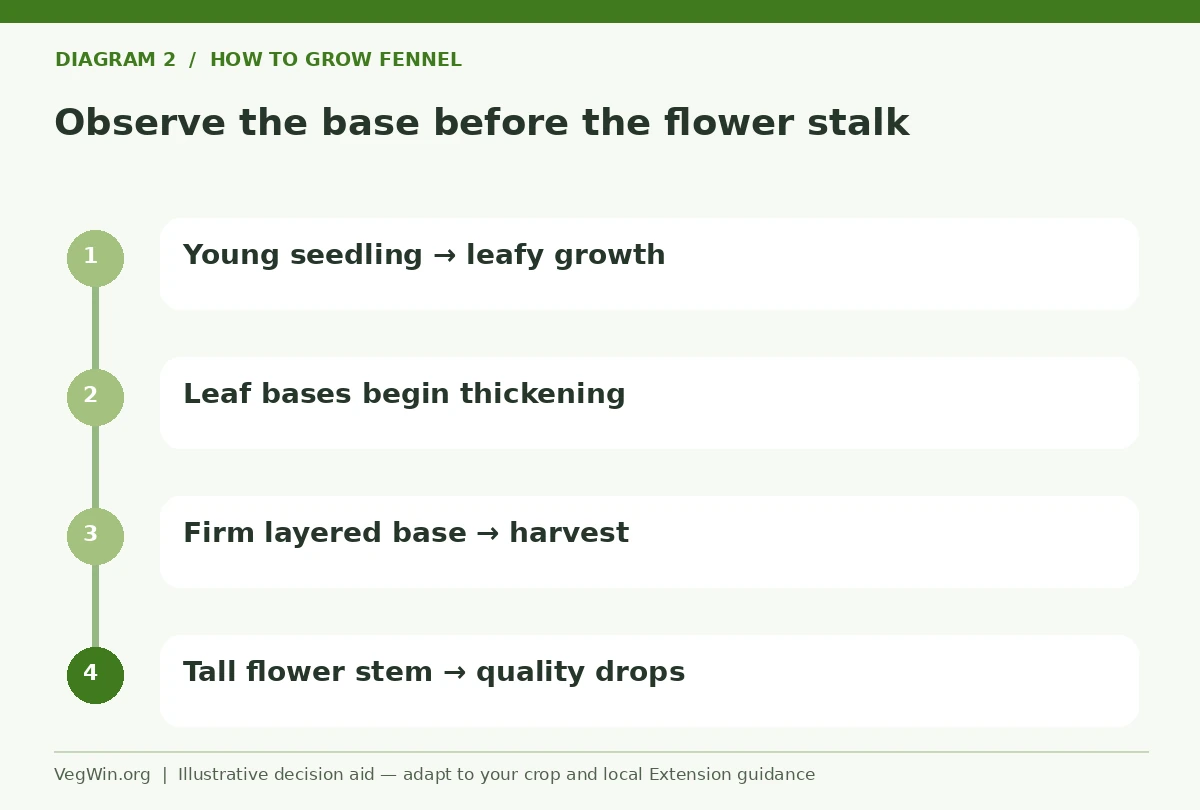
A healthy Florence fennel plant gradually forms a broad, layered pale base as leaf stalks expand. A stiff, rapidly lengthening central stem topped with developing flower structures indicates bolting, not the final stage of bulbing. RHS warns that early flowering commonly results in a small, woody or absent bulb. Inspect the crown every few days as harvest approaches and photograph the side profile of a representative plant to document change. If you are starting from scratch, read When to Harvest Florence Fennel Bulbs Before They Become Woody.
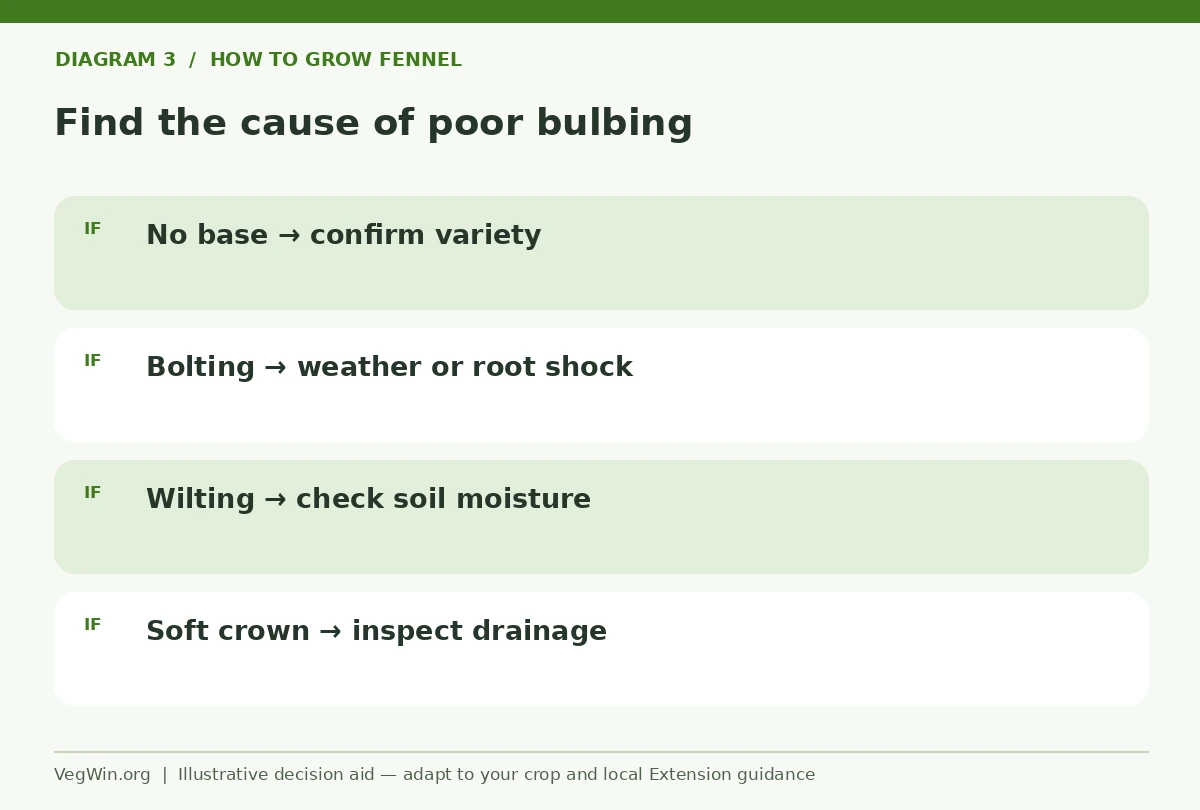
Long feathery leaves alone cannot answer whether the bulb is developing. The change occurs at the bases of the leaves, near the soil surface. If the variety is definitely Florence fennel but bases stay slender, review seasonal heat, irrigation fluctuations, crowding and transplant stress. If the plant is common fennel, you need different seed, not more water. This identity-versus-stress diagnosis is the main decision the grower should make.
| What you see | What to check first | Practical next step |
|---|---|---|
| Tall leaves with no swollen base | Check seed type and botanical designation | Switch to a true Florence fennel variety if needed |
| Central flower stalk rising early | Review cold, heat, root handling and dryness | Harvest any usable base; change next sowing window |
| Soft or stalled base in wet soil | Check waterlogging and root condition | Improve drainage; avoid reflex extra fertilizer |
| Small firm base, no flower stem | Review cultivar and intended baby size | Harvest baby fennel or let it enlarge while conditions suit |
Prevent Stress Without Overcorrecting Fertilizer
Regular moisture is a more defensible first response to drying soil than heavy feeding. Water into the root zone and assess drainage before watering again. Mulch and weed control can reduce competition, but neither can erase an extended heat wave or reverse a flowering stalk that has already initiated. Overly lush leaves after an excessive nitrogen application do not establish that a crisp edible base will form.
When plants start to bolt, assess their quality and harvest any usable swollen portion before it becomes tougher. Do not expect cutting the flower stalk to restart bulb formation reliably. Instead, record the stage at which plants changed growth pattern. For the next sowing, choose more suitable weather, maintain moisture and avoid damaging roots. A succession of modest plantings can test conditions without risking an entire season on one forecast.
Harvest the Swollen Base Before It Turns Woody
The edible portion should feel firm and be appropriate for the intended use, with no rapidly elongating flower stem. Utah State describes the ideal base as firm; RHS gives size-based harvest options for standard and baby fennel. Different cultivars and kitchens prefer different sizes. Cut the plant at the base or lift it carefully, trim leaves as needed and examine the layers for damage. Do not wait for a mythical fully underground onion-like bulb. If you want the full process, read how to grow globe artichokes for harvestable flower buds.
The feathery tops can also contribute aroma to food, but a Florence fennel plant harvested for its enlarged base has a different objective from herb fennel saved for seed. Store harvested vegetables cleanly and cool according to normal produce handling recommendations. If you want repeated use of fragrant leaves instead, choose herb fennel or plan separate sowings; do not expect the same cut bulb to regrow a second full bulb.
Keep a Bolting and Harvest Log
Track cultivar, sowing method, transplant date if any, unusual cold, hot spells, dry periods and the first visible thickening of leaf bases. After harvest, note whether the base was tender or woody and whether the central stem had started extending. This creates a useful comparison between spring and late-season windows in your own region. A date copied from another country is far less instructive than an observation of how your plants responded.
The next decision should follow evidence: use true Florence fennel seed, adjust the sowing season, protect roots from disturbance, stabilize moisture or plan smaller test plantings. If those cannot be achieved at the site, common herb fennel may still be worth growing for fronds, but it is a different culinary harvest. This guide treats reliable bulb production as a specific task rather than claiming every fennel plant behaves alike.
How We Research and Apply Local Evidence
We checked the linked sources on October 20, 2026. Recommendations are limited to the crop facts those sources support; they are not field trials by VegWin or guarantees for every U.S. microclimate. Seed packets, cultivar labels, local weather and Cooperative Extension recommendations take precedence for planting windows, spacing and any pest intervention. USDA perennial hardiness zones alone are not annual vegetable planting calendars. The local WordPress URL inventory was not independently accessible; an editor must compare canonical topics and internal link destinations before publication.
Verified sources (checked October 20, 2026): Differences between common and Florence fennel; soil, water, maturity and stress; Swollen leaf bases, disturbance, climate effects and harvest cues; Regional feasibility and bulb-fennel selections. Source descriptions summarize the narrow points used here; they are not claims that a source tested this exact VegWin infographic.
Disclosure: This independent gardening guide contains no paid placements, approved affiliate offers or claimed brand partnerships. Read the general affiliate disclosure.
No. Herb or common fennel is grown chiefly for foliage and seeds; select Florence fennel for a swollen edible base.
No. It is made of thickened, overlapping leaf stalk bases near the soil surface.
Early cold, heat, drying soil or root disturbance can promote bolting; check the local season and whether the seed was true Florence fennel.
Do not count on it. Review harvest quality and plan another sowing under better conditions rather than promising recovery.
Yes, with enough space, drainage and reliably moist potting media; containers can dry rapidly and stress the crop.