
At a glance: A globe artichoke looks like a giant thistle because it is one. The edible head is a flower bud harvested before its bracts separate and the purple bloom opens. The hardest decision is not how to cut the bud; it is whether your climate, space and planting material support annual production or a perennial crown that survives winter. Utah State and Oregon State Extension describe useful but regionally different systems. This guide helps make that choice, then follows a plant from establishment through bud inspection and safe overwintering decisions.
Decide Between Annual and Perennial Production
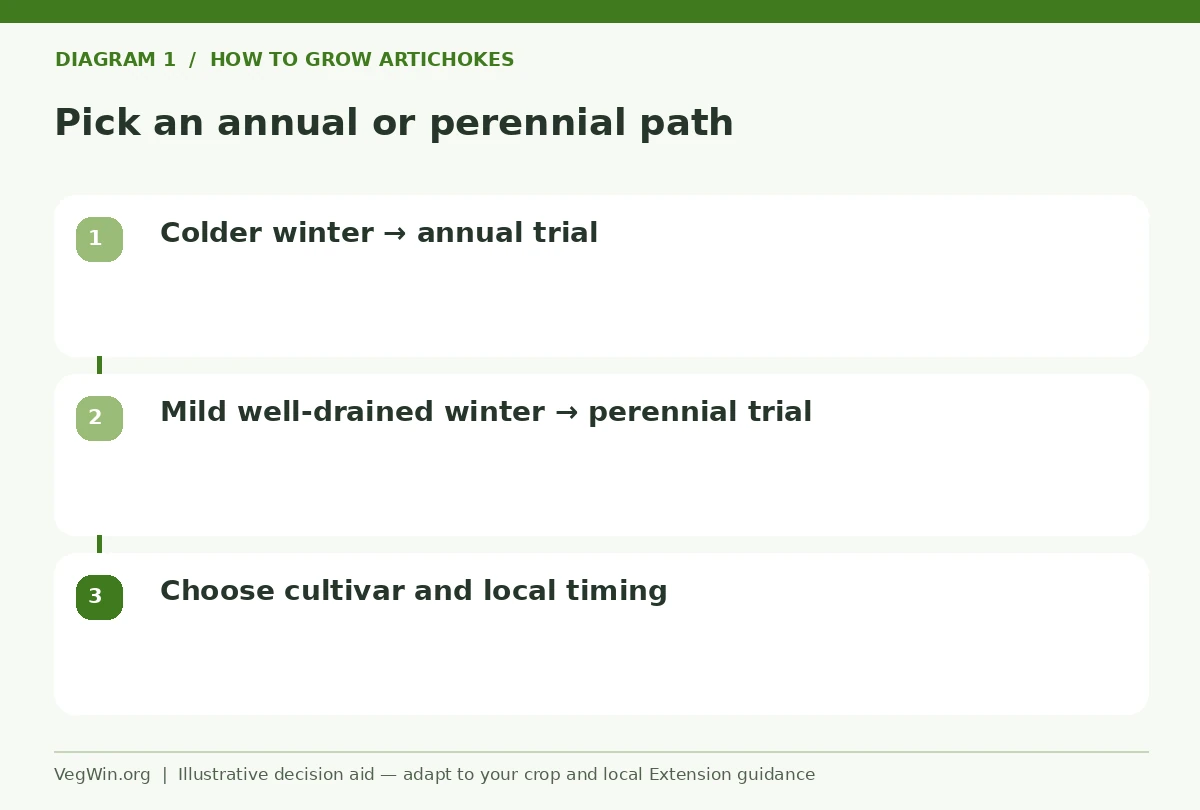
Globe artichokes are perennial plants in suitable conditions, but many gardeners treat them as annuals because winters or seasonal heat interfere with their growth. Oregon State notes that Western Oregon can support short-lived perennial plants while colder inland regions often require annual production or special protection. Utah State describes both annual-suitable varieties and overwintering approaches. Your local winter conditions and spring temperatures matter far more than an inspirational garden photograph.
An annual plan aims for buds in the first growing season and requires an appropriate cultivar and an early, healthy start. A perennial plan allocates permanent space for a plant that can return and spread into offsets over several years, but winter survival is never guaranteed. Use local Extension records, drainage observations and the seed or transplant description to decide which route is plausible. Do not promise that any generic globe artichoke variety will flower on the same calendar in every region.
Reserve Enough Sun and Room for Mature Leaves
An artichoke can form a broad rosette with large silvery leaves, and this size can surprise gardeners accustomed to compact herbs. Oregon State describes generous spacing and the shade created by established specimens. Choose full sun and a location where the spread will not crowd pathways or cover shorter crops. On a small plot, one healthy plant is a more realistic trial than several crowded plants planted simply to meet a yield goal.
Check drainage before planting. Artichokes prefer organic-rich soil that holds some moisture yet does not stay waterlogged; standing water around a crown undermines perennial survival. Prepare soil according to its actual structure and a soil test if nutrient additions are being considered. Raised beds can help where drainage is problematic, but also need irrigation management. Build access into your plan because the flower stalks can arise inside a wide mass of foliage.
Start Plants Early Enough for Your Production System
Seed-grown artichokes need time to develop before transplanting. Utah State notes that appropriate cool spring exposure contributes to flower-stalk initiation, and that planting too late can leave foliage without buds in some climates. Local recommendations for the date and method should prevail over a fixed national timetable. When using purchased transplants, choose healthy, well-rooted plants and acclimate them appropriately before setting them in the garden.
Do not place a frost-tender plant outdoors on the strength of its USDA hardiness-zone number alone. Soil conditions, recent weather and regional Extension guidance determine the appropriate transition. Established artichokes may be protected differently from tender seedlings, so do not copy perennial overwintering advice as a transplanting instruction. Record when plants were started, transplanted and first initiated flower stalks. The observation helps distinguish a climate-timing problem from ordinary first-year immaturity.
Manage Moisture Around Shallow Roots
Artichokes perform best when growth continues steadily rather than alternating between drought and saturation. Utah State describes their relatively shallow roots and preference for even moisture, especially while buds form. Check the soil within the root zone, not merely the surface, and irrigate according to your weather and soil texture. Mulch can conserve moisture and suppress weeds, but keep the crown accessible for inspection and reduce winter moisture problems.
Nutrient demand may be substantial in productive plants, but apply amendments on the basis of soil information and local guidance. Avoid taking Utah-specific fertilizer rates and repeating them across every U.S. soil. Excessive vegetative growth cannot replace the seasonal conditions needed for bud initiation. If leaves are large but flowering is absent, examine cultivar, starting date and temperature exposure before concluding the answer is another feeding.
Recognize the Edible Bud Before It Opens
The vegetable we eat is the immature flower head. A harvest-ready head is full sized for its cultivar with relatively tight, compact bracts; left alone it opens into a showy purple flower. Utah State and Oregon State both recommend cutting before the bracts separate. Choose a representative head and inspect it repeatedly rather than trusting a single length or date that may be wrong for your variety.
Artichoke flower heads can have spiny tips depending on selection, so use appropriate gloves and a clean cutting tool when needed. Cut the stalk with the head, leaving a practical length of stem for handling. Examine for insect injury and spoiled tissue. A head that has started flowering can be beautiful, but it is no longer equivalent in tenderness to a tightly closed culinary bud. Mark the stage with a photo so next harvest decisions are quicker.

| What you see | What to check first | Practical next step |
|---|---|---|
| Large leaves but no buds | Review cultivar, start date and cool exposure | Adjust annual timing or consider perennial trial |
| Tight, compact flower head | Check size and bract position | Harvest before the head begins opening |
| Purple flower visible | Bud was left to bloom | Enjoy flower ornamentally; pick other buds earlier |
| Crown soft after wet winter | Inspect drainage and winter conditions | Improve drainage; consider annual system |
| Side heads of varied sizes | Examine each head separately | Harvest tight heads at their own maturity |
Track the Central and Later Side Buds
A developed artichoke often produces a prominent central bud and subsequent side buds on branching stalks. The heads may not all reach harvest quality on the same day. Harvest the mature central bud when tight, then keep checking smaller buds as they enlarge. A plant weakened by drought may set fewer or smaller heads, but size variation alone is not proof of disease.
Keep harvesting visits regular enough to catch buds before they open. If an unopened head is damaged by insects, identify the actual organism rather than spraying the entire plant. IPM begins with observing the pest and severity; avoid invented home mixes and blanket pesticide claims. For harvest handling, use clean tools, reject spoiled heads and refrigerate appropriately. This guide does not give food-preservation processing times or untested recipes. If you want the full process, read how to grow sweet corn with better pollination and full ears.
Decide Whether to Overwinter or Replant
In a mild, well-drained climate, a crown may return after winter; in colder or wetter conditions it may die despite mulch. Oregon State describes cutting back and protective mulch in suitable regions but cautions that severe winters can still kill plants. Utah State also discusses protection or lifting in some circumstances. These are examples of region-specific strategies, not a guarantee that a certain zone number alone ensures survival.
Consider the value of the space for another crop. A perennial stand becomes large and may eventually need division when offsets crowd the parent. If winter survival fails repeatedly, an annual cultivar and fresh transplant program may be more efficient. If your location has very wet winter soil, improve drainage rather than relying only on more insulation. Keep notes on crown survival, emergence and bud yield to determine whether the perennial strategy is worth repeating.

Separate No Buds from Damaged Buds
A vigorous plant without buds invites a different investigation from a plant with heads that rot or open too soon. For no buds, review season, cultivar and time since planting. For poor or damaged heads, check moisture history, pests and whether harvest was delayed. A long flower stalk with a purple open flower indicates you missed the tender bud stage, not that the plant failed to bloom. Our walkthrough on how to grow Florence fennel bulbs without premature bolting sets out each step.
Compare results against the system you chose at the beginning. An annual-grown artichoke that stays leafy may simply be unsuitable for that timing or variety, whereas a surviving perennial might be expected to perform in a later season. Your local climate and source guidance determine the interpretation. Success means healthy plants, timely tight buds and a realistic plan for what happens after winter—not just attractive foliage.
Related Guides
- When to Harvest Globe Artichoke Buds Before the Bracts Spread
- How to Grow Globe Artichokes in a Large Pot and Keep Their Crowns Healthy
How We Research and Apply Local Evidence
We checked the linked sources on October 20, 2026. Recommendations are limited to the crop facts those sources support; they are not field trials by VegWin or guarantees for every U.S. microclimate. Seed packets, cultivar labels, local weather and Cooperative Extension recommendations take precedence for planting windows, spacing and any pest intervention. USDA perennial hardiness zones alone are not annual vegetable planting calendars. The local WordPress URL inventory was not independently accessible; an editor must compare canonical topics and internal link destinations before publication.
Verified sources (checked October 20, 2026): Seedling timing, bud development, climate needs and tender-bud harvest; Regional annual/perennial distinction, plant size and overwintering; Cultivar and annual/perennial growing pathway examples. Source descriptions summarize the narrow points used here; they are not claims that a source tested this exact VegWin infographic.
Disclosure: This independent gardening guide contains no paid placements, approved affiliate offers or claimed brand partnerships. Read the general affiliate disclosure.
They are perennial by biology, but often grown as annuals where winters, heat or scheduling make overwintering unreliable.
The immature flower bud is harvested before the bracts open into the purple thistle-like bloom.
Possible causes include insufficient suitable cool exposure, cultivar choice and planting time; verify these locally before altering fertilizer.
Sometimes in suitably mild, well-drained climates, but mulch does not guarantee survival through severe cold or saturated soil.
Inspect each separately and cut while compact and tight; they may mature later than the central head.