
A Black Spanish radish is easy to mistake for an oversized spring radish until you cut it open. The mature root often has rough, almost charcoal-colored skin surrounding crisp white flesh, and it is grown as a slower cool-season storage-type crop. The useful decision is not simply when to plant radishes: it is how to give a substantial winter-type root enough growing time before severe cold without making it sit through a hot, stressful stretch.
Recognize a winter radish before choosing seed
Look for the name Black Spanish or Spanish Black on the packet and check whether it describes a round or elongated selection. Root shape can differ, but a distinctly dark exterior and pale interior set this group apart from the small red spring radishes commonly sold in bunches. A seedling cannot be identified reliably from black skin: early leaves resemble other radishes. Label the row and keep the packet rather than guessing after germination.
Winter radishes develop larger roots and need a longer seasonal window than the familiar quick spring varieties. Do not apply a spring-radish three-week harvest promise to them. The firm skin and assertive peppery flavor may appeal to gardeners who want crisp grated or sliced roots, but flavor varies with variety, growing conditions and storage. If you want tiny, mild salad roots every few weeks, buy a standard spring-radish seed instead.

Choose fall timing from your actual climate
Oregon State University lists Black Spanish among winter radishes and describes July planting for winter harvest west of the Cascades. That is a regional observation, not a universal July rule. In a climate with earlier hard freezes, choose a sowing window that gives your packet’s winter cultivar time to bulk up before the ground freezes solid. In a mild coastal climate, harvest may be possible over a longer winter period.
Start with your local first-freeze pattern, the cultivar’s days-to-maturity range, and soil conditions rather than a USDA hardiness zone alone. Hardiness zones describe average annual extreme low temperatures, not the daily autumn sunlight and soil warmth radishes need to grow. An unusually hot late summer can still make seedlings stressed, and a cloudy cool fall can slow bulking even when the plant remains alive.
Prepare loose soil for a rounded taproot
Radishes are true roots, not swollen stems, and their enlarged upper taproot forms in the soil. Loosen compacted ground, remove stones and break large clods before sowing. University of Minnesota Extension recommends well-drained soil and adequate loosened depth for the chosen root type. In a dense bed, a short or oddly shaped radish may reflect physical resistance rather than a mysterious disease or lack of fertilizer.
Use a soil test to guide amendments; an excess of quick nitrogen is not a shortcut to quality roots. Avoid burying hard crusts under a thin cosmetic layer of compost because the developing root still meets that barrier. Make a level seedbed with a gentle rake, water if it is dry, and keep heavy foot traffic off the row. In containers, choose a deep enough vessel and real drainage rather than an ornamental shallow bowl.
Sow directly and thin while seedlings are young
Direct-sowing prevents a taproot from being bent or broken during transplanting. Follow the seed packet for its intended sowing depth and final spacing. Place seeds in the prepared soil, cover them as indicated and water softly without washing them into a heap. A labeled strip is especially useful when sowing winter radishes next to turnips, because the cotyledons can look similar until the first true leaves expand.
When seedlings have emerged, thin gradually to the packet’s final root spacing rather than leaving a crowded carpet. The leaf rosettes will spread beyond the tiny stems, and each dark radish needs room for a round shoulder. Snip unwanted seedlings near soil level if pulling them would disturb the selected roots. A broad empty gap is preferable to two neighboring seedlings competing so closely that neither forms a usable root.

Keep the root zone evenly moist while growing
Radish flesh becomes tough or excessively sharp when growth is repeatedly interrupted. Check moisture several inches into the prepared root zone rather than judging the soil by a dry-looking surface crust. Water deeply when needed, then allow drainage. A repeating cycle of drought followed by soaking can contribute to split or misshapen roots, and consistently waterlogged soil invites different problems.
Mulch lightly around established seedlings if it is useful for your site, but keep mulch from smothering the small crown. Remove competing weeds before their roots tangle with the crop. Flea beetles can pepper leaves with holes; cabbage maggots can tunnel into the actual root. Inspect the relevant part of the plant and use local Extension identification before treating anything. A cosmetic leaf hole by itself is not evidence that the entire root is ruined.
Check black shoulders without damaging the root
A mature Black Spanish radish shows its dark skin when the upper shoulder becomes exposed. Unlike a kohlrabi, that enlargement belongs to the root, not to the stem above the ground. Brush soil away from the top of one representative radish to assess width, then use the expected size and maturity information for your cultivar. Dark color alone does not prove that a small root has filled out.
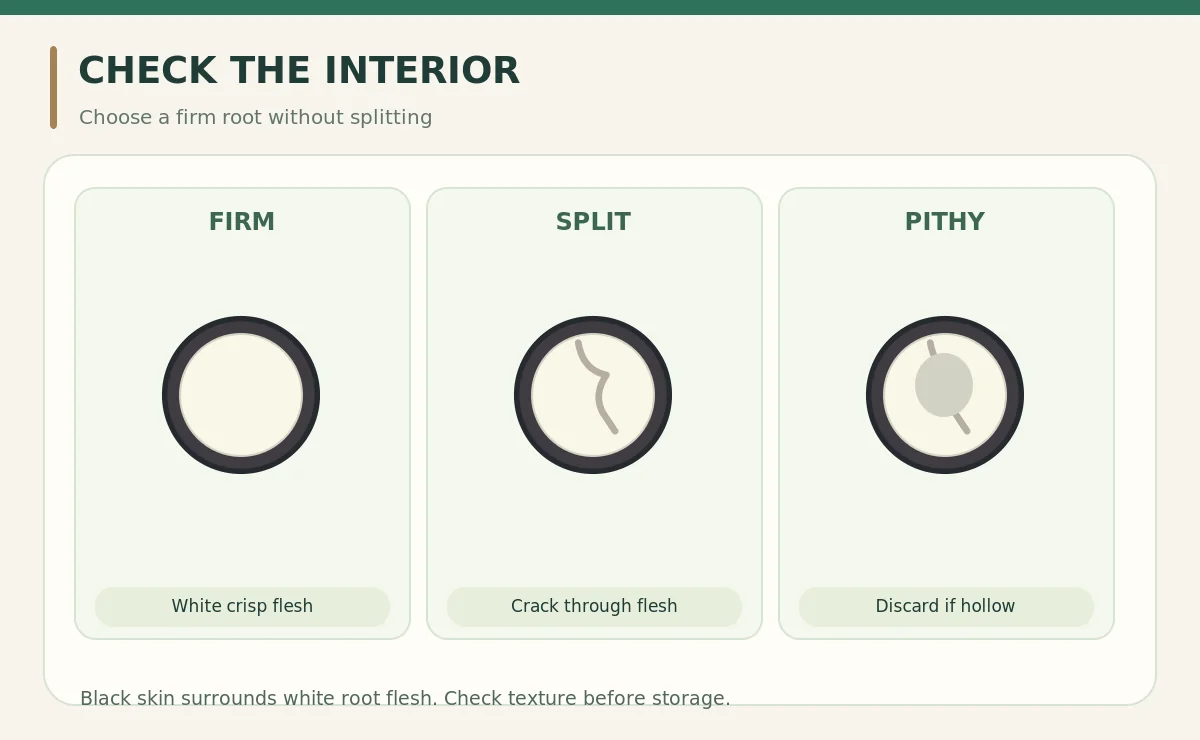
Before harvesting the whole row, lift one test root and cut it. The interior should be crisp, pale and solid rather than hollow, spongy or badly cracked. Strong flavor is normal for many black winter radishes; evaluate texture as well as heat. Do not keep every radish growing indefinitely in the hope that it will get sweeter, because oversize, stress and age may reduce eating quality. Record the size that tasted best for the next sowing.
Lift carefully and store only sound roots
Loosen soil beside a large root with a fork before lifting if the ground is dense. Pull steadily by the shoulders or supporting greens only after soil is released, avoiding snapped tips and gouged skin. Trim foliage without slicing into the root crown, brush away excess soil, and set aside any roots that are soft, badly wounded or visibly rotting. Never rely on a home storage bin to rescue produce that started deteriorating in the garden.
Storage advice depends on local conditions and cultivar. Keep sound roots in an appropriately cool, humid produce-storage setting rather than letting them wilt in warm air, and check them regularly. Store them away from diseased plant material and discard rotten specimens. For kitchen use, scrub the dark skin thoroughly; peel it if your preparation calls for a milder bite. The white interior is the distinguishing feature in a teaching cross-section.
Compare season, root and soil when results disappoint
A harvest of mostly leaves and little root should prompt a review of overcrowding, soil hardness, planting window and excessive fertility before you assume the seeds were mislabeled. A split or hollow root calls for a review of fluctuating moisture and overmaturity. Scattered tunnels or feeding damage point toward an insect question instead. Keep the causes separate; one symptom does not justify a broad-spectrum spray.
A simple garden log can include sowing date, weather during establishment, thinning date, root width at the first test harvest and texture after cooking or slicing. The same seed variety may perform differently across years with different fall weather. Compare it with a small spring-radish control planting if you want to learn the difference firsthand. The purpose is a firm usable winter radish, not merely a leafier plant.
Related Guides
- How to Grow French Breakfast Radishes in a Container
- How to Grow Daikon Radishes in Deep Pots Without Stunted Roots
- How to Grow Edible Radish Pods and Pick Them While Tender
- How to Thin Radish Seedlings Without Disturbing Nearby Roots
- Growing Radishes: Tender Roots Without Heat or Hollow Centers
How We Research and Verify Garden Advice
We consulted the following university Extension and research-based IPM sources on 2026-10-29: extension.oregonstate.edu; extension.umn.edu; extension.umn.edu. Our decision points focus on the actual plant anatomy, seasonal conditions and observations those resources support. We compared this intent with the full supplied VegWin WordPress title list, adjacent draft-batch topics and live search results to avoid duplicating an existing article. Garden schedules and cultivar traits depend on local conditions; these illustrations explain practices but are not diagnostic laboratory results.
This educational article contains no sponsored products or paid recommendations; no affiliate partnership is claimed. See the VegWin affiliate disclosure for current site policy. Before using any pesticide, rely on current local product labels and your Cooperative Extension guidance, not on a diagram or a general online list.
No. Both are radishes, but Black Spanish is a dark-skinned winter-type crop generally given more time and space to develop a sizable root.
No. Use local autumn weather, the seed packet and when the soil typically freezes; zone maps are not vegetable planting calendars.
The root shoulder can become exposed as the radish enlarges. The dark part is root tissue, not a separate aboveground bulb.
Review crowding, compaction, growth interruptions and harvest timing; use inspection rather than guessing one cause.
Check for firm texture, a crisp white interior and freedom from severe splits, rot or internal breakdown.