
A row of common flax can look like a cloud of small blue stars held over fine green stems. The sowing decision is less mysterious than it sounds: confirm that the packet is annual common flax, Linum usitatissimum, then work with your local soil and frost conditions instead of relying on a hardiness-zone number. This guide follows the seed into the ground, the thin leafy shoot into flower and the flower into its rounded capsule. It is intended for growing an ornamental annual patch, not for producing a commercial fiber or food-grade seed crop.
Identify annual common flax before choosing the seed
Look for Linum usitatissimum on the packet. Common flax is grown for linen and linseed as well as delicate garden flowers, but it is not identical to perennial ornamental flax sold under other Linum species names. NC State describes the common species as an annual with narrow, simple leaves and blue flowers. Plants can look fragile yet form fairly resilient upright stems when evenly established.
Flower color alone is not enough for identification because several flax species bloom blue. The flowers of common flax generally have five spreading petals, while the fruit that follows is a rounded capsule divided into seed-bearing compartments. The mature fruit is attached to a real slender stalk; it is not a free-floating bead. Identify the plant before saving or handling seed and keep crop seed away from ornamental mixtures of uncertain origin.

Choose an open sunny site with workable soil
Common flax performs best in full sun and soil that drains without becoming a hard crust. A loose but firm seedbed supports fine seedlings better than clods and weeds. Avoid the shade of tall perennials or a dense hedge, where the stems may reach toward light and lose their balanced habit. If heavy clay puddles for days, choose a different part of the garden instead of adding a fixed amount of fertilizer.
Plan a modest block or narrow row where the flowers are easy to see. Evenly distributed plants are attractive together; a very crowded sowing produces competition for light and air. Start by clearing weeds and removing debris likely to shelter slugs around young seedlings. Do not treat drought tolerance in a mature plant as permission to let just-germinating seeds dry out completely.
Time sowing to local weather rather than zone numbers
Sow when the seedbed is workable and local conditions favor the establishment of a cool-to-mild-season annual; the exact window differs by region. Check the packet for a suitable regional planting period and consult local Extension advice for frost and rainfall patterns. In regions with extremely hot dry summers, an early enough planting window matters more than a generic calendar statement copied from a different climate.
A USDA plant hardiness zone describes the typical winter minimum, not the date when an annual seed can be placed outdoors. Examine the ten-day forecast for severe storms and prolonged dry wind as well as frost. Mark the sowing date and make a small test row rather than committing all seed to an uncertain week. If your growing season is short, select a suitable local variety rather than promising one universal maturity interval.
Sow a clean thin row and keep seeds in contact with soil
Prepare a fine surface, place seed at the depth printed by the reliable seed supplier and cover evenly. The diagram deliberately shows an actual thin soil layer, rather than seeds placed on top of a label marked “depth.” Water with a fine rose or gentle spray so the light seeds stay in place. Label the row with the species name and sowing date; mixed flower beds are difficult to weed without identification.
Sowing more thickly does not guarantee more flowers. Once seedlings have a set of true leaves, reduce severe crowding by clipping excess seedlings rather than pulling against close neighbors. Keep the root zone lightly moist during establishment, then respond to rainfall and soil texture as the plants grow. Avoid planting into an actively waterlogged bed merely because the calendar looks favorable.
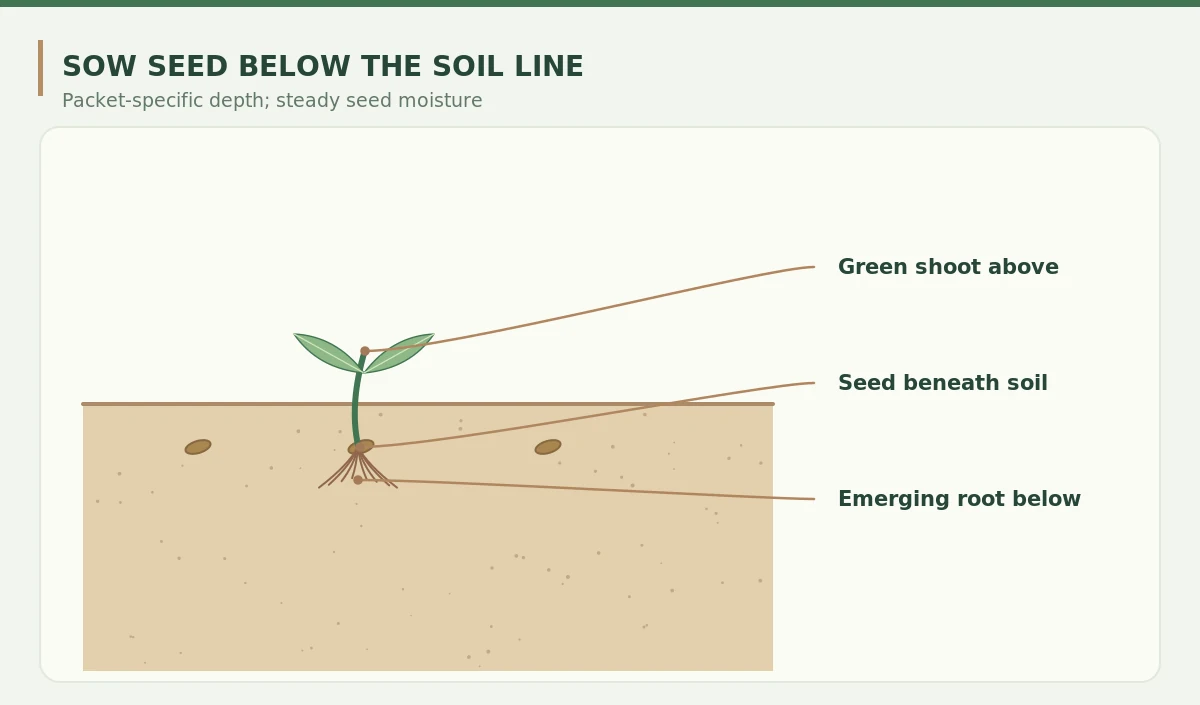
Distinguish narrow leaves from the first seed leaves
Seed leaves give little indication of the adult flower shape. As flax develops, true leaves become narrow, simple and arranged along slender stems. Follow one stem from the soil through its leaf attachments to the flower buds at the top. A drawing showing leaves as detached green needles would be misleading; the leaves are connected to living axes and serve the plant as it builds energy.
Assess seedlings by their color, attachment and spacing, not by height alone. Weak leaning plants often reflect shade or crowding rather than a fertilizer shortage. If the soil crusts after hard rain, loosen only the surface between rows and avoid disturbing small roots. Leave enough plants to make a natural-looking drift without treating every crowded cluster as a successful germination result.
Recognize fresh blue blossoms and the future seed capsules
Each typical blue flax flower has five broad petals supported by a fine flowering stalk. The petals may open and fall quickly, yet new buds can continue to appear on the plant. After a flower has finished, the ovary forms a rounded capsule; it is a fruit, not another unopened blue flower. NC State describes the capsule and the flat seeds it eventually contains.
Look carefully at the transition from flower to green fruit, then to dry brown capsule on healthy stems. The comparison illustration is an educational guide to the structures, not a guaranteed sequence of dates. Leave flowering stems for their display and pollinators if that is your priority. If producing viable seed matters, reserve a few plants and avoid cutting all the young capsules before they mature.
Support an even stand without unnecessary feeding
The best care is often restraint. Weed while weeds are small, give plants sun and avoid excessive nitrogen that could favor soft leafy growth. Water established plants according to actual soil dryness and regional weather. Do not apply pesticides because an occasional leaf has a hole: first identify the insect, check its abundance and consult an applicable Extension integrated-pest-management resource.
Flax stems have a naturally fine appearance. A stiff wind may bend an exposed group temporarily; inspect roots and living stems before assuming the patch is dying. Mulch should not be piled against the base of delicate seedlings. If a bed repeatedly fails, note whether the cause was dry surface soil, deep shade, weeds, stagnant water or wrongly labeled seed before changing several things at once.
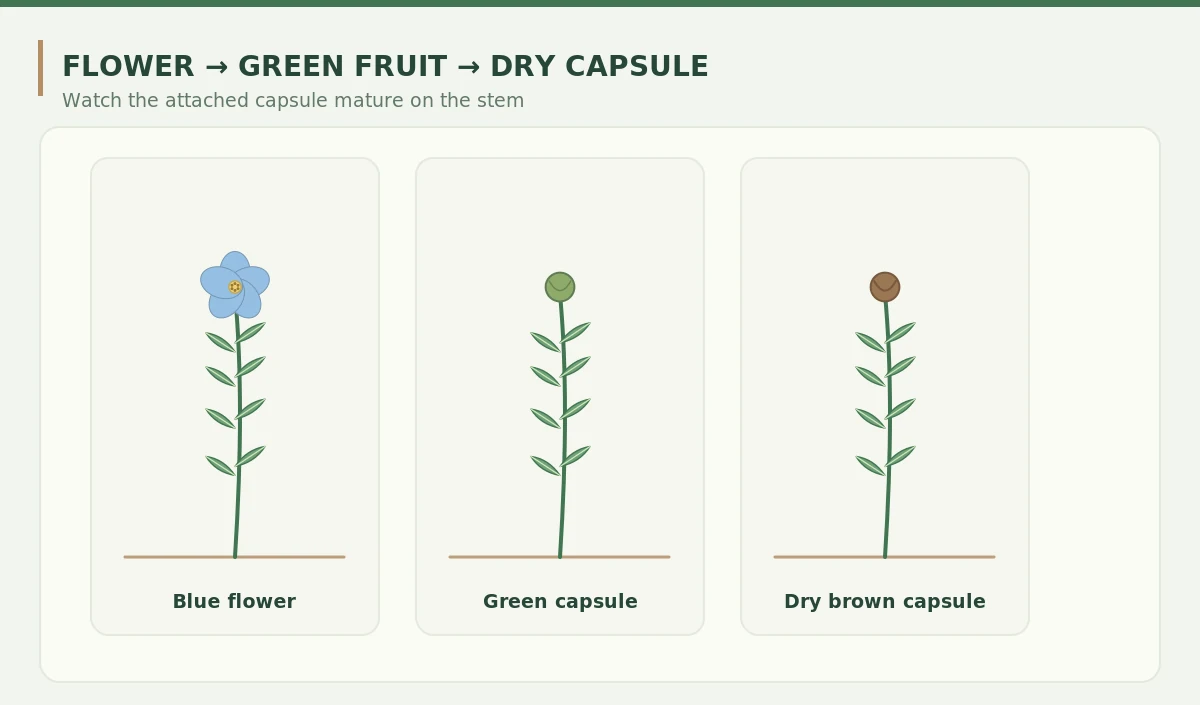
Collect or leave the mature capsules for the next cycle
When capsules become truly dry and brown, seeds within them may be mature; collect a small sample over a tray if seed saving is part of your plan. Keep the harvested heads away from damp storage conditions, label the species and harvest date, and never assume that a green capsule is ready just because its blue petals disappeared. Inspect any seed lot for mold or pest damage before saving it.
The article is about observing an annual flowering crop, not certifying seed for food or medicinal use. NC State lists toxicity cautions for plant material; do not recommend raw plant parts as snacks or substitute home-harvested material for regulated food products. Remove spent plants after the season as appropriate and keep clean reusable seed only from reliably identified, healthy plants.
How We Research and Check Plant Guidance
For this guide, we checked RHS and university Cooperative Extension material on 2026-10-29: plants.ces.ncsu.edu; www.rhs.org.uk; extension.uga.edu. We compared the plant identity, growth conditions, seasonal constraints and diagram anatomy with the named original sources. The drawings are original explanatory botanical illustrations, not photographs, and different cultivars and local climates can change the exact appearance and timing. We reviewed the supplied WordPress title inventory and the available VegWin batch history for overlapping search intent.
No product in this guide is sponsored and no affiliate purchase is being promoted. Read the VegWin affiliate disclosure for our policy. When a pest or disease is suspected, confirm its identity and use current locally applicable Extension/IPM recommendations before considering any treatment. This growing guide does not provide medical advice or authorize using unidentified plants as food.
No. Confirm Linum usitatissimum on the packet; perennial ornamental flax may be another species with different care.
Yes, NC State identifies full sun and well-drained soil as suitable conditions.
Use the depth on the seed packet for the particular lot; sow in a fine seedbed with even soil contact.
A flower is followed by a rounded green capsule that turns brown and dries as seed matures.
Do not treat unidentified or ornamental plant material as a food product; use properly sourced food-grade flaxseed.