
Cleome, often called spider flower, produces tall, airy blooms with long whisker-like stamens and, later, narrow seed capsules. The pods form along the stem beneath the newest flowers as blooming progresses upward. They are not large pea pods, and the fine brown seeds can scatter quickly when the ripe capsules split. The most reliable home method is to watch for a color change, collect on a dry day with a paper bag positioned below the pods, and dry the contents before storage. Some modern ornamental hybrids make little viable seed.
Recognize the spider flower plant
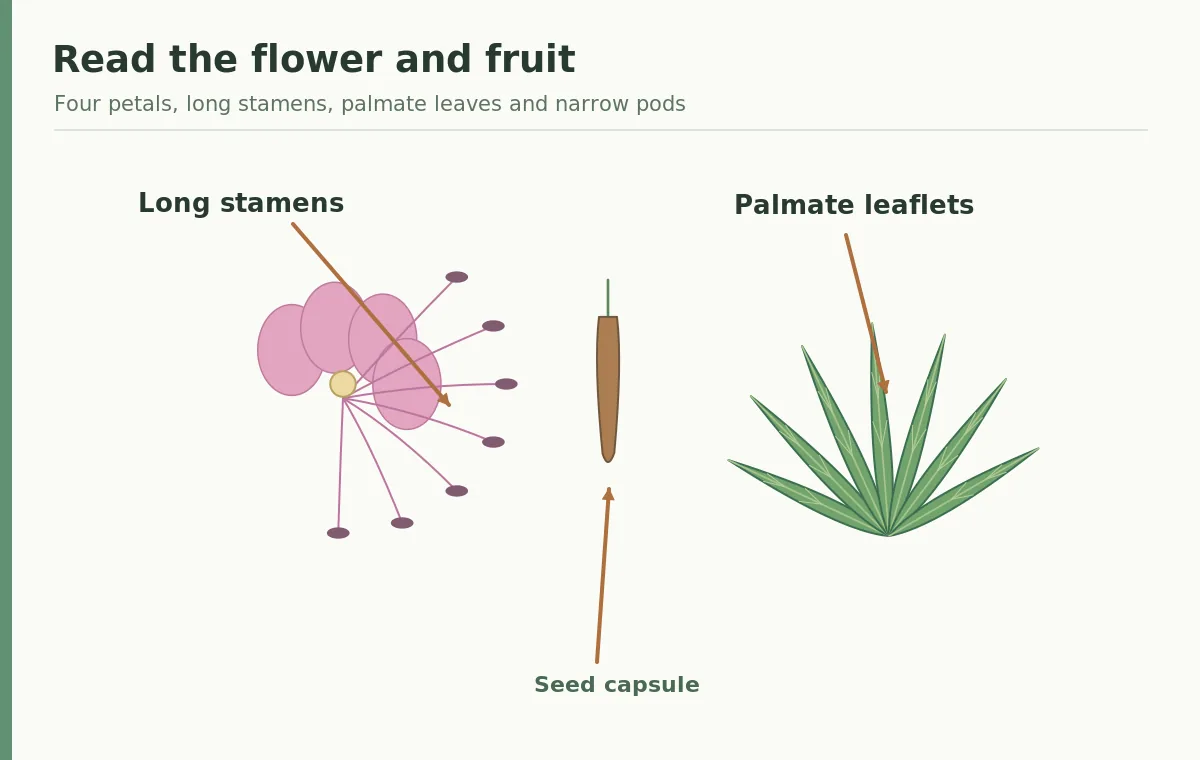
The familiar garden spider flower, often sold as Cleome hassleriana or C. houtteana, has an upright branching stem with palmate leaves of typically five to seven narrow leaflets. Flowers in pink, lavender or white have four petals and conspicuously long projecting stamens, giving the airy spiderlike appearance. The flowers are clustered near the top, with fruit forming below spent blooms. Certain varieties may have small prickles or sticky hairs. Do not confuse the plant with a daylily, whose strap leaves and different flower structure produce no cleome pods.
Locate pods below the freshest flowers
Each pollinated cleome flower can develop a slender, elongated capsule supported on a narrow stalk. The fruit often stands away from the central flowering stem rather than sitting directly inside the petal cluster. Wisconsin Horticulture describes it as a cylindrical, two-valved pod containing many small seeds. Newer buds and flowers occur higher on the inflorescence, while older pods occupy lower positions. The diagram should therefore place the brown capsules below the top flowers, not dangling from individual leaf tips. Watch several pods, as not all become mature on the same day.
Wait for pods to change from green to brown
Freshly formed pods are green and contain developing seed. As they mature, the capsules become yellowish or brown and begin drying. Wisconsin Extension notes that dried pods shatter easily, so waiting until every capsule has split means much of the crop may already be lost. Choose a dry period and target pods that are well-developed and beginning to dry but still largely closed. A pale green immature pod collected too early may not yield viable seeds. Check several plants because flower variety, sun exposure and seasonal moisture can alter ripening patterns.
Place a bag beneath the dry capsules
Carry a clean paper bag or shallow tray to the plant on a dry day. Hold the open container directly under the target seedpods before touching them. Gently clip a short fruiting stem or ease an individual capsule into the bag so released seeds fall into the container rather than the soil. Avoid shaking the whole plant outside the bag. A drawing that places the bag above the pod would not protect seed from falling; gravity is the key to the collection method. Keep flower colors or varieties separate if you want to compare their offspring.
Know the small mature seeds
Cleome seeds are small and often brown to nearly black, not long white feathered achenes like certain daisies. A pod can contain numerous seeds arranged along its inner walls. As the two pod valves separate, the seeds spill readily. Handle dried fruit over a paper surface so you can see the contents; a huge decorative bean drawn beside a cleome flower would misrepresent the crop. Discard obvious insect debris or moldy fragments, while preserving sound seeds. A light shake may release enough seed without crushing every capsule into fine debris.

Dry and clean before storing
RHS guidance recommends drying collected seedheads and separating seeds from chaff before storage. Spread pods and seeds in a thin layer indoors where air can circulate, away from rain or splashing water. Do not put damp capsules directly into a sealed plastic bag; trapped moisture encourages mold. When pods finish opening, tip the seeds onto a clean paper sheet and remove stalk pieces and husks by hand or a suitable sieve. Aim for dry, clean seed rather than a completely pulverized flower head. Keep pets and children away from unlabeled seed material.
Label seeds with realistic expectations
Write the name Cleome or spider flower, the parent variety if known and the collection year on a dry envelope. Garden cleome can self-sow, and seedlings from open-pollinated or hybrid plants may not look exactly like the named parent. Clemson Extension notes that some modern hybrids are sterile or produce little useful seed. That limitation matters more than a perfect storage container. Do not claim that every seed from a colorful hybrid produces an identical flower. Store the dry envelope in a cool, dry location until a suitable sowing season.
Decide which flower heads to leave
If you remove every faded cleome flower to encourage further blooming, you will remove the structures that would have matured into seed. Leave a few healthy late-season flower clusters to make pods while continuing normal care on the rest of the plant. The plant may shed mature seed naturally, and volunteer seedlings can appear in following seasons. Where cleome is unwanted or locally problematic, collect before dispersal and dispose of surplus pods responsibly. Consider your actual garden and local guidance rather than assuming self-seeding is always beneficial.

Separate insect injury from natural ripening
Brown pods do not necessarily signal disease; healthy fruit dries as its seeds mature. Holes, webbing, abnormal swelling or sticky decaying tissue may indicate a separate pest or pathogen problem. Inspect the plant before deciding whether seed is worth saving. High humidity may encourage mold on poorly dried collected material. Favor clean handling and air circulation; do not apply pesticide to seedpods without identifying a pest and checking local Extension IPM advice. Healthy leaves and later blooms can remain green even while the oldest pods turn brown.
Keep a photo sequence of development
Photograph the same section of stem when the top flowers are open, when green pods appear and when older pods begin to brown. The resulting sequence is a useful reference for identifying the brief window before shattering. Note local weather, whether a bag caught loose seed and which parent plants produced collectable capsules. In the next season, sow at an appropriate warm period for this annual rather than a fixed date copied from another climate. If the seed does not sprout, review viability and seed-starting conditions before assuming every capsule was defective.
Related Guides
- How to Start Cleome Seeds for Tall Summer Spider Flowers
- How to Save French Marigold Seeds From Fully Dry Flower Heads
- How to Save Gomphrena Seeds From Dry Globe Amaranth Heads
- How to Save Mexican Sunflower (Tithonia) Seeds From Dry Flower Heads
- How to Save Statice Seeds From Fully Dry Flower Clusters, Not the Papery Calyx
How We Research and Check Botanical Details
This VegWin guide was prepared by comparing the plant parts and growing steps with specific horticultural resources: hort.extension.wisc.edu, hgic.clemson.edu, www.rhs.org.uk. Source recommendations reflect their regions and publication contexts. We checked these pages on October 28, 2026 and distinguished plant structure from local timing and cultivar-specific details. Use site and packet guidance for your own climate; USDA hardiness zones do not determine a universal planting date.
No product partnership or paid placement is claimed. Our affiliate disclosure explains the site policy. For unexplained pest or disease damage, verify the cause before using any control, and follow local Extension integrated pest management and current labels. Illustrations clarify anatomy and the intended action, not exact proportions for every cultivar.
Inside narrow elongated capsules below the newest flowers along the upper stem.
When they turn yellowish to brown and start drying but before the two valves split and release seed.
Ripe capsules split easily; the bag catches seeds as they fall.
Not reliably. Hybrids may be sterile or produce variable offspring.
Yes. Fertile plants can drop seeds naturally, sometimes resulting in volunteer seedlings.