
Scarlet Nantes carrots are grown for relatively smooth, blunt-ended cylindrical orange storage roots. The important first step is not to start a large tray of carrot transplants. A carrot’s taproot begins developing early, and rough handling can redirect it or cause forking. Direct sowing into a fine seedbed provides the root a clear path down. Thin seedlings at the right stage, protect the row, and judge success by healthy roots rather than perfectly matched supermarket shapes.
Identify a Nantes-type carrot root
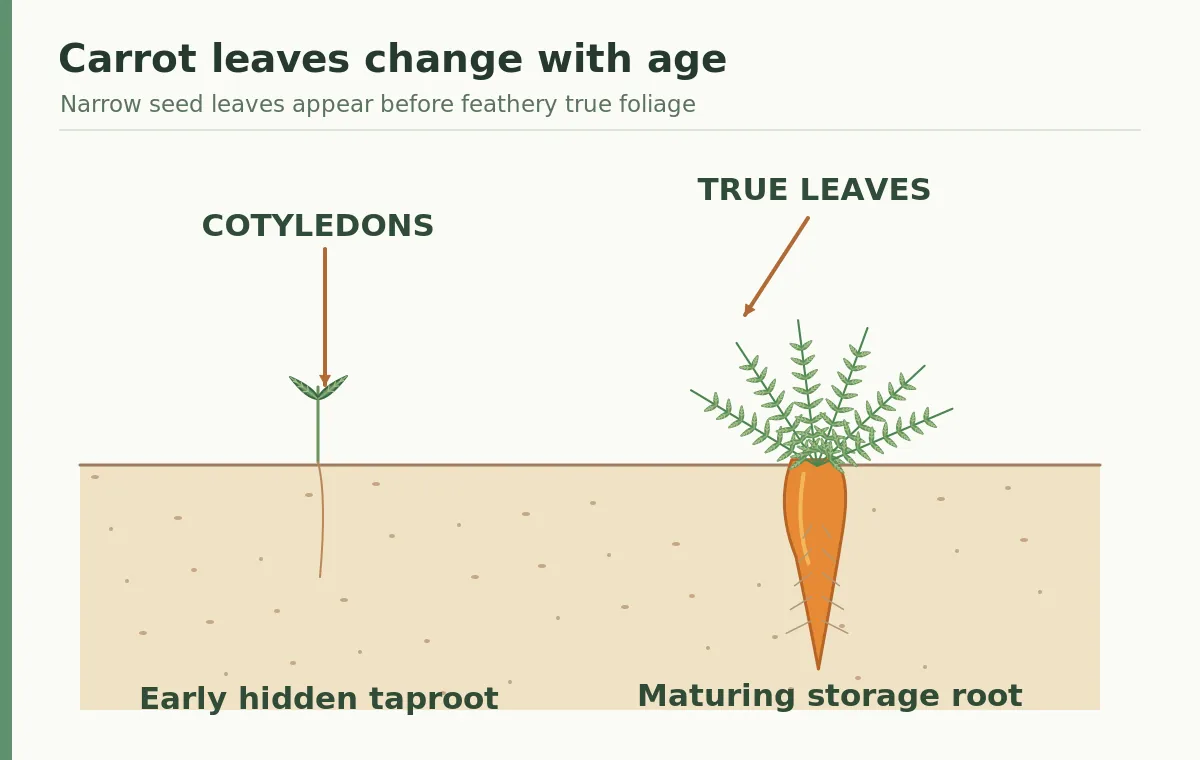
Nantes types are known for comparatively cylindrical orange roots with rounded or blunt ends, in contrast with some sharply tapered carrot shapes. Real roots still show variation according to genetics, soil, and growing conditions. The foliage is finely divided and feathery, borne on narrow petioles above the crown. The storage root sits beneath the soil surface and continues into a small taproot tip with fine laterals. Do not mistake the green leaf base for a bulb. Plant labels matter because many carrot varieties have similar tops but differ in root form and time to usable size.
Choose a fine stone-free growing bed
Clear weeds and loosen the surface enough to make an even, fine seedbed. Take out stones, uncomposted chunks, and dense clods that could deflect developing taproots. A deep bed is useful for a longer carrot, but soil type matters as much as depth; heavy shallow clay may favor short-rooted varieties instead. Avoid adding fresh manure directly before sowing. A container can work if it has drainage and enough useful depth for the roots. Pick a sunny location that you can water gently during the germination phase.
Sow small carrot seeds just under soil
RHS guidance for Early Nantes calls for a drill about 1 cm deep. Sprinkle tiny seeds thinly along the prepared row and cover with the fine soil from the furrow. A surface seed is vulnerable to drying; a seed buried far deeper than recommended may struggle to emerge. Firm only lightly and use a gentle watering rose. Label the row so the tiny green seedlings are not weeded away. Carrot seeds can germinate slowly, so a bare-looking row after a few days is not reason to dig it up.
Know the first leaves and hidden taproot
Carrots first emerge with two long narrow cotyledons that may resemble tiny grass-like leaves. The familiar finely divided true foliage follows later. Below them, the young carrot already has a developing taproot that is longer than the visible shoot suggests. This is why moving individual seedlings from pots is risky even when the leaf portion looks undamaged. Avoid repeatedly pulling up plants to check their length. The illustration of a baby carrot should show thin roots below the soil and the correct narrow first leaves above, not a miniature mature orange root at the seed stage.
Thin the row without ruining roots
When seedlings are large enough to identify and handle, reduce crowding so remaining roots have growing room. RHS Nantes guidance suggests around 5–7 cm between plants, while local Extension recommendations may vary with mature root size. Remove weeds at the same time. Snipping unwanted seedlings near the soil can reduce disturbance to retained plants, especially where roots are entwined. Do not tease apart a clump of carrot seedlings for transplantation. Work carefully and restore row covers promptly because exposed plants can attract carrot fly in regions where it is a concern.

Maintain moisture while seedlings emerge
The seed zone must not repeatedly dry out during the slow germination window. Apply water gently so it reaches the seed depth without washing the seeds into one end of a furrow. Once seedlings establish, give enough water for steady root development rather than flooding the bed every day. Uneven moisture and excessive competition can reduce quality. Check below the surface before watering and use local climate and soil observations instead of a universal schedule. Mulch only after the little seedlings are large enough that you will not bury or shade them.
Prevent forks and other root problems
A forked carrot is not always evidence of a bad seed packet. Stones, compacted layers, root injury, and transplantation can interfere with the main taproot. Crowding may yield narrow or bent roots as plants compete for room. Inspect the soil after harvest to see whether roots hit a hard layer at a similar depth. Do not discard an edible misshapen carrot solely because its shape is unusual. If roots carry tunnels or feeding damage, identify the cause locally; insect-proof mesh and crop rotation are often more useful than guessing at a spray.
Check a usable root rather than a date
Nantes carrots can be harvested young or left longer for a larger root. Packet maturity estimates are useful for planning, not a replacement for checking size and texture. When leaves are healthy and roots have had reasonable growth time, gently uncover a shoulder to judge diameter. Lift a sample carefully using the foliage with support from surrounding soil if needed. A blunt tip is part of the type; a long pointed tip is not a required indicator of ripeness. Keep remaining plants watered and remove weeds so staggered harvests can continue.

Keep a planting and thinning record
Record sowing date, variety, weather, germination window, final spacing, and whether carrots forked at a common soil depth. Next season, make one change at a time: finer bed preparation, gentler watering, thinner sowing, or better row protection. A state Extension calendar should drive seasonal timing; a hardiness zone indicates perennial winter survival, not when a carrot seed belongs in your row. Local late-season sowings may be possible, but warmth, day length, and frost risks differ. Let observations from your own garden determine the next adjustment.
Related Guides
- Direct Sowing Seeds Outdoors: A Crop-by-Crop Success Checklist
- How to Grow Carrots: Direct-Sow, Thin, Water, and Avoid Forked Roots
- When and How to Thin Carrot Seedlings Without Disturbing Their Roots
- How to Grow Purple Carrots From Seed Without Forked or Crowded Roots
- How to Tell When Carrots Are Ready to Harvest Without Breaking Roots
How We Research and Verify Growing Advice
For this article we compared visible plant anatomy with topic-specific advice from extension.umn.edu, www.rhs.org.uk, www.rhs.org.uk. Published recommendations explain general crop behavior, but your local weather, cultivar, soil and garden history govern the final decisions. We verified the sources on October 28, 2026. No commercial sponsor paid for or approved this article.
We do not present any product as a confirmed affiliate purchase. See the affiliate disclosure for site policy. Before applying pest controls, inspect the actual cause and seek local Cooperative Extension integrated pest management advice. Illustration arrows indicate the intended botanical position rather than replacing observation of your own plant.
Direct sowing is preferred because moving young carrot taproots can lead to forked or distorted roots.
The RHS Early Nantes guide uses roughly 1 cm of soil over the seed.
They begin with two narrow cotyledons, then produce the familiar finely divided true leaves.
RHS guidance suggests about 5–7 cm apart, adjusted for cultivar and desired harvest size.
Root damage, hard soil layers, stones, and transplantation can all divert the main taproot.