
Cilantro leaves and coriander seeds come from one plant, Coriandrum sativum. For leafy cilantro, gardeners often try to delay flowering. For coriander seed, allow the white-flowered umbels to develop small round fruits and wait until they dry to tan or light brown. Then collect them before they drop. This guide shows the proper seedhead, the correct point to cut over a bag, and how to dry a clean seed lot.
Know Which Part of Cilantro Becomes Seed
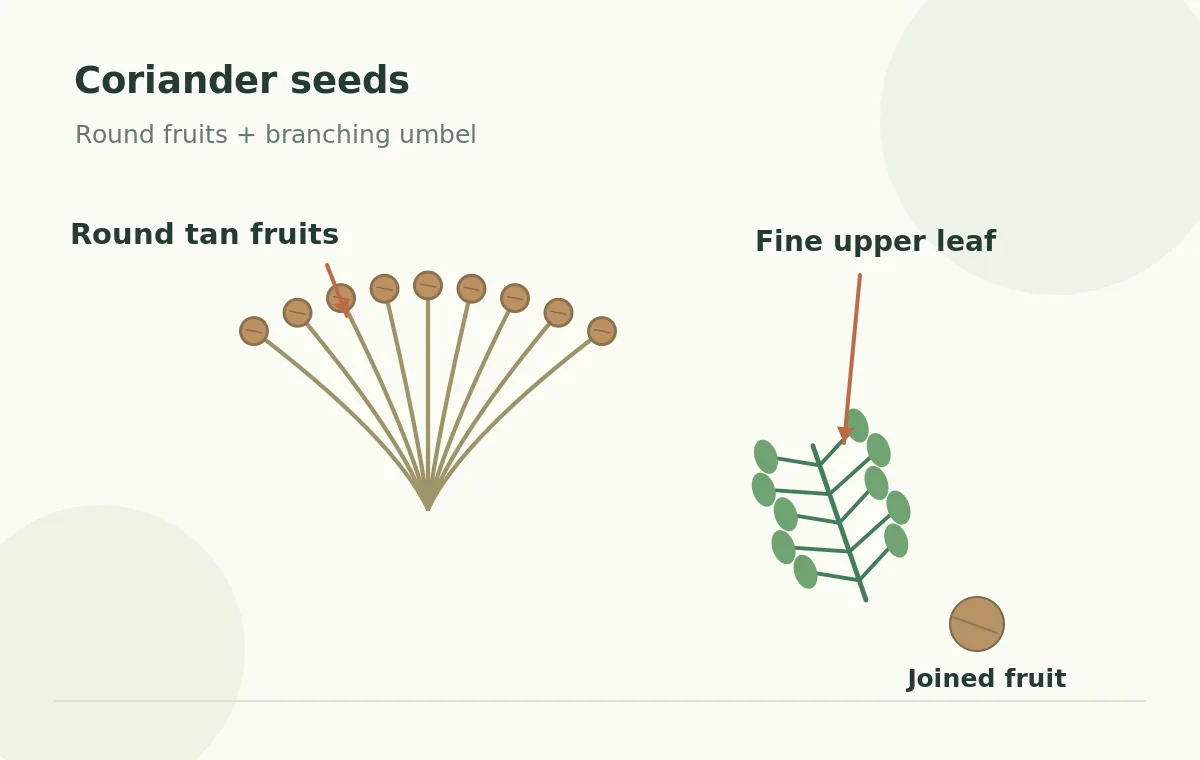
Coriandrum sativum begins with broad, parsley-like lower leaves and develops much finer divided leaves as it sends up a flowering stalk. Small white or sometimes pale pink-purple flowers form open flat umbels. After pollination, each flower can form a round fruit usually referred to in cooking as a coriander seed. Botanically the fruit is composed of two joined seed-bearing units, so it differs in shape from the flattened, oval fruits of dill.
Once flowering starts, the plant focuses on reproduction rather than producing tender leafy cilantro. If you want coriander, do not keep cutting flower stems to prolong the leaf crop. Set aside a clearly labeled section of the planting for seed. The close-up illustration compares lower divided cilantro leaves, finer upper leaves, an umbel of small flowers, and the globular fruits that appear later.
Let Flowering Umbels Mature Naturally
University of Maryland Extension notes that the seeds are collected after the flower heads turn brown. At first the fruits are green and relatively soft, then they progress toward tan and finally dry light brown. Do not harvest a whole batch when most fruits are still green just because the plant is tall. Pick a few sample fruits and compare firmness, color and whether they release with a light touch.
An umbel can mature unevenly. Some lower heads are ready while younger heads higher up remain green. Look at the seeds themselves instead of the exact date after sowing; weather and cultivar make calendar predictions variable. If strong wind or dry weather is causing seeds to fall, harvest brown heads promptly. The illustrated comparison shows three stages: a white floral umbel, a green fruiting umbel, and a brown one ready to collect.
Use Color Texture and a Rub Test
Wisconsin Extension advises harvesting when fruits turn light brown and plants dry, commonly after the flowering period. A ready fruit feels firm and dry, while an immature green one retains moisture. Rub a small fruit over a pale tray; ripe fruits should separate without turning into soft pulp. The crop is naturally uneven, so take a representative sample from several umbels rather than judging one exterior seed.
Do not wait for every umbel to become brittle and shatter in the garden. A practical balance is to collect the mostly brown heads, then finish drying them in a ventilated place. If a few seeds are still green, keep those separate or wait longer rather than combining them with the mature batch. Good identification and moisture control are more important than achieving a perfectly uniform shade of tan.
Cut Stems Over a Dry Paper Bag
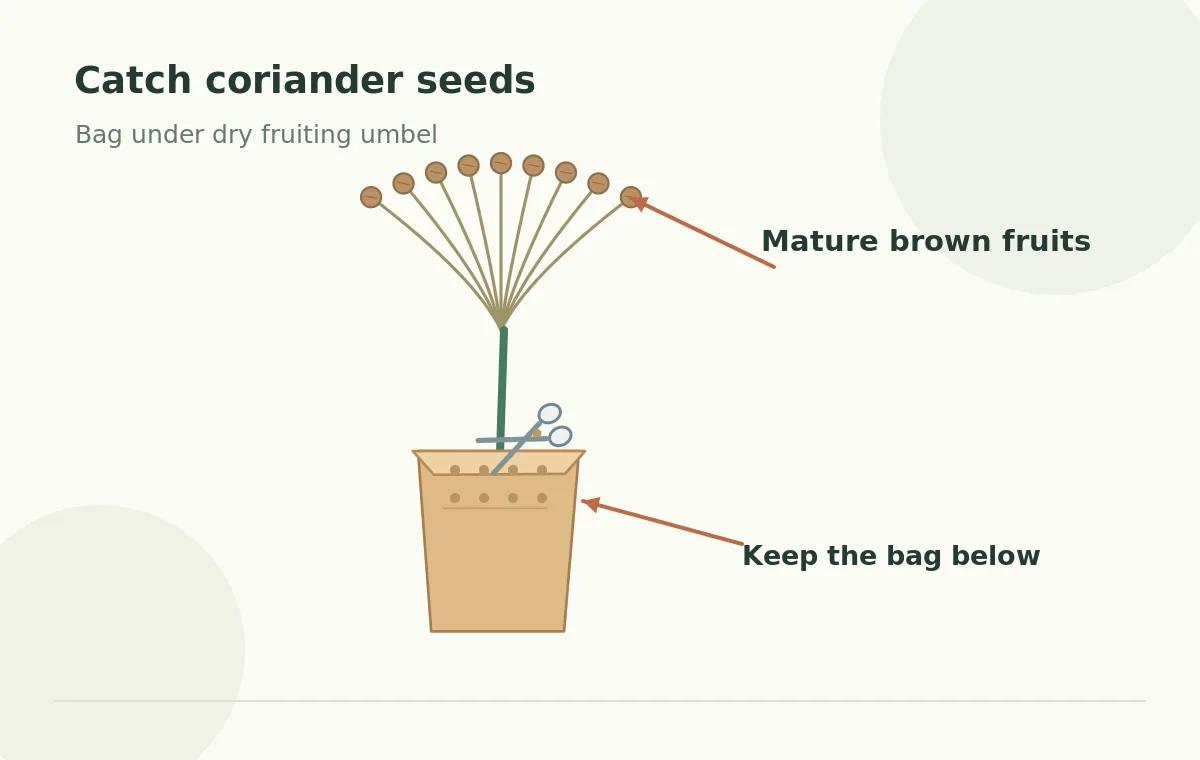
Place a wide paper bag directly beneath a mature brown umbel before reaching for the shears. Cut the slender flowering stalk a short distance below the cluster so the falling fruits land inside the bag. Oregon State Extension recommends collecting brown stalks in a paper bag and finishing drying in a cool dry area. Do not cut through the seedhead or put the bag above it where seeds would scatter onto the ground.
Our action diagram shows both the seedhead and the bag mouth in relation to the scissors. Work on a calm dry day when foliage is not dripping with rain. If you harvest several heads together, keep the bag loosely open at first so trapped moisture can escape. Clip only healthy-looking, nearly mature stems and avoid shaking the entire plant in the garden, where dispersed seeds become hard to recover.
Finish Drying With Airflow Before Storing
Keep the stalks in a dry airy spot, with the bag catching fruits as they loosen. You can also lay heads over a clean sheet or tray. Do not place damp green material in an airtight container because it can mold. When stems and fruits are thoroughly dry, rub gently to separate fruits from their stalks and remove large pieces of plant debris. A fine screen helps separate coarse chaff without crushing the seed.
For seed to plant again, record the botanical name, variety if known, collection year and any concerns about nearby flowering cilantro. For cooking, make sure the lot was collected from an identified safe edible herb with no questionable chemical treatment. Avoid improvised chemical washing or heating steps intended to sterilize garden seed. Storage should be cool, dark and dry, and a small germination trial is a useful way to assess planting viability later.
Do Not Confuse Coriander With Dill or Fennel
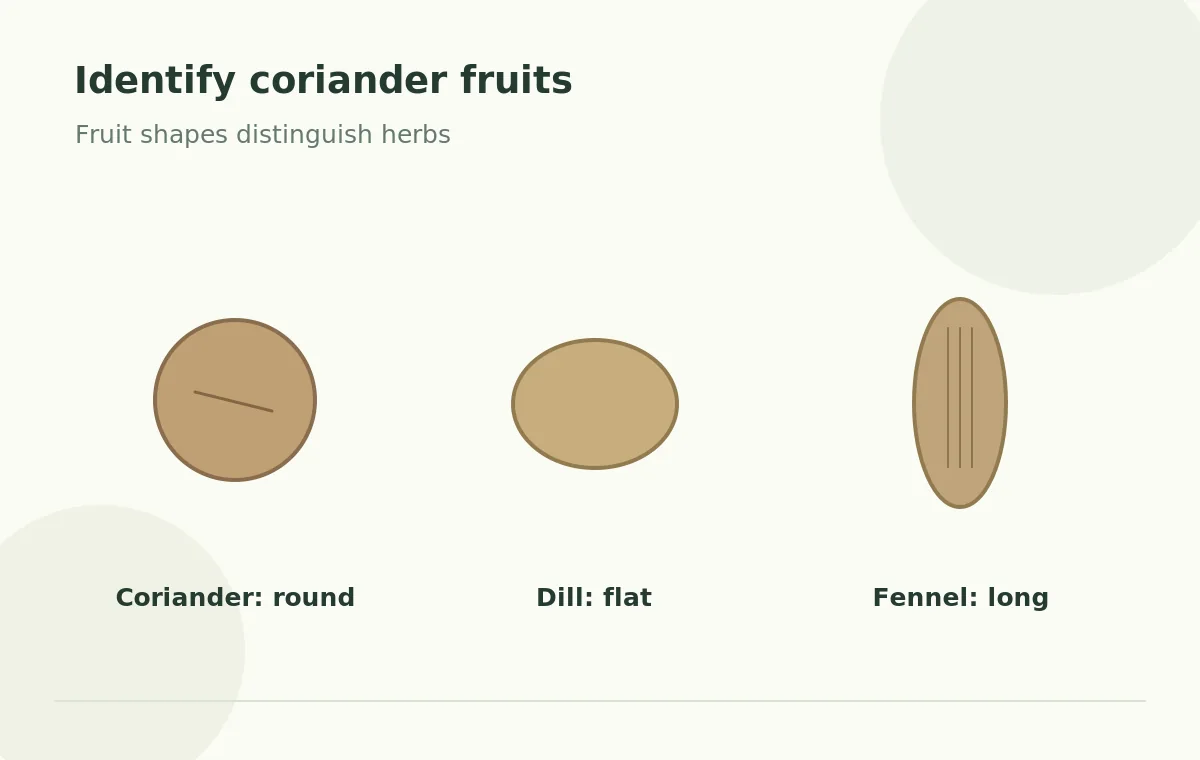
Cilantro, dill and fennel all belong to the carrot family and have branched umbels, but their mature fruits are not interchangeable. Coriander forms noticeably round fruits. Dill forms flattened oval fruits with a papery wing, and fennel produces elongated ribbed fruits. Compare the fruit outline close-up instead of assuming any brown umbel can be labeled coriander. These structures are particularly important when seed lots lose their paper labels.
The visual comparison places one round coriander fruit next to silhouettes of the flatter dill fruit and the longer fennel fruit. It does not imply that the species have the same flavor, life cycle, or use. If you are uncertain about a volunteer plant near carrot-family ornamentals, do not taste the seed. Some lookalikes in the broader family are poisonous. Identification from a known planted seed lot is essential before culinary use.
Decide Between Leaf and Seed Production
Warm conditions often cause cilantro to bolt quickly, according to Oregon State and Maryland Extension. To keep leafy cilantro available, gardeners may make succession sowings and select slower-bolting varieties. For coriander seed, bolting is a necessary developmental stage rather than failure. You can dedicate a separate planting to flowers and leave enough room for the tall branching stems and insect visitors around the white flowers.
Do not top the plant repeatedly once the seed crop is the goal. Instead, watch the transition from broad lower leaves to fine upper foliage and then to flowering. If the mature stalks are leaning or lodging, provide gentle support so the brown umbels stay above wet soil. Excess nitrogen or extreme water stress can interfere with balanced growth, but adding untested fertilizer rates is not a solution to natural seasonal flowering.
Make One Careful Final Harvest Pass
Walk the planting with a dry bag, snips and a clear label. Harvest brown umbels first, leaving green ones to develop if conditions allow. Check the bag contents for firm tan round fruits, not just dry stems. Move the collected heads to an airy sheltered spot and keep them over a seed-catching surface until completely dry. Finish by removing chaff, recording the harvest, and keeping separate lots if different varieties grew nearby.
If you want fresh cilantro leaves and coriander seeds at the same time, make separate plantings for the two goals. Regularly cutting flowering stems encourages leaves but takes away the seed crop; allowing every plant to ripen fruits ends most leaf production. With that division in mind, the timing is straightforward: identify rounded green fruits, wait for tan-brown mature umbels, cut over paper, and dry fully before storage.
Related Guides
- How to Harvest Coriander Seeds From Cilantro Before the Round Fruits Drop
- Growing Herbs by Type: Water, Harvest, and Winter Survival Guide
- How to Harvest Cilantro Leaves and Keep Plants Productive Longer
- Cilantro Garden Guide: Grow Tender Leaves and Harvest Coriander
How We Research and Verify Botanical Details
Sources reviewed October 28, 2026: hort.extension.wisc.edu — Wisconsin Extension recommends harvesting coriander fruits when light brown, drying the cut stalks with a cloth or paper bag to catch falling seeds. extension.oregonstate.edu — Oregon State Extension describes brown coriander harvest, cutting with a short stalk and placing the seedheads in a dry paper bag to finish drying. extension.umd.edu — University of Maryland Extension distinguishes cilantro leaf harvest from mature coriander seed harvest after white or pale purplish flower umbels turn brown. This guide distinguishes documented species facts from timing that varies by climate, weather and cultivar. Botanical diagrams simplify scale without changing the relevant structures. Consult your local Cooperative Extension for regional recommendations.
This independent educational guide does not include paid placements or verified product affiliate offers. Please read the VegWin affiliate disclosure. Identify pests and diseases before considering controls, and follow local integrated pest management guidance rather than untested recipes.
No. Coriandrum sativum provides cilantro leaves and round coriander fruits.
Mostly tan or light brown and firm rather than green and soft.
Mature fruits fall easily, so the bag catches them as the stalk is cut.
Not from flower stems that have been removed; reserve plants for seed production.
Mostly round, unlike flattened dill fruits or elongated fennel fruits.