
Cinnamon basil is a scented basil type grown for its warm, spicy leaves and often attractive flower spikes. Its name refers to aroma, not to a guarantee that every seedling will have purple leaves or a brown stem. For reliable results, start with a clearly named seed lot, use warm moist media, and recognize the seed leaves before the later opposite true-leaf pairs appear. Those paired nodes are the key to later pinching for branching. This practical guide follows the plant from small dark seed through harvesting and explains how to avoid confusing normal cultivar color variation with stress or disease.
Identify the Cultivar Without Trusting Color Alone
Look for cinnamon basil sold as a named culinary Ocimum basilicum selection, and label the tray with its seed supplier. University of Minnesota Extension lists cinnamon basil among scented types and describes its spicy flavor and pink flowers. UF/IFAS notes a pronounced cinnamon-like aroma in mature foliage. A seedling may begin entirely green; purple shading in veins or stems is variable and not a dependable single-plant identification test. Do not discard healthy green seedlings solely because they lack a catalog photograph’s coloration.
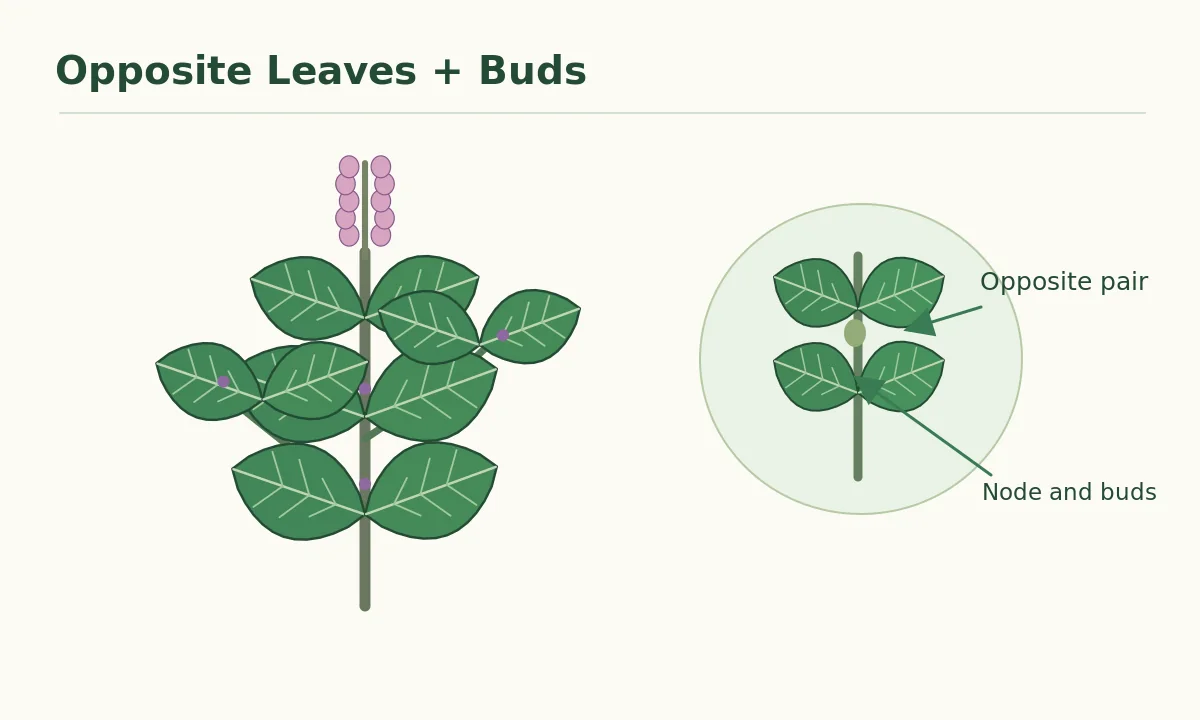
Basil belongs to the mint family, which commonly shows opposite leaves and square or angled stems. Seed leaves emerge in one pair, but later true leaves reveal the characteristic plant structure more clearly. Another basil variety can look similar until growth and fragrance develop. Seed-source labels and mature traits together are more reliable than judging the first two leaves. Never taste an unknown volunteer plant simply because it has four-angled stems and a familiar green color.
Fill Seed Cells With a Light, Warm Medium
Use clean cells with drainage holes and a fine seed-starting mix, pre-moistened so dry clumps are not left around the seed. Basil is frost-sensitive. Illinois and University of Minnesota guidance place basil in a warm-growing category, so start indoors only when you can provide sufficient light for the seedlings or sow directly after frost danger has passed. A warm seed tray does not need to be soaking wet: roots require air as well as moisture.
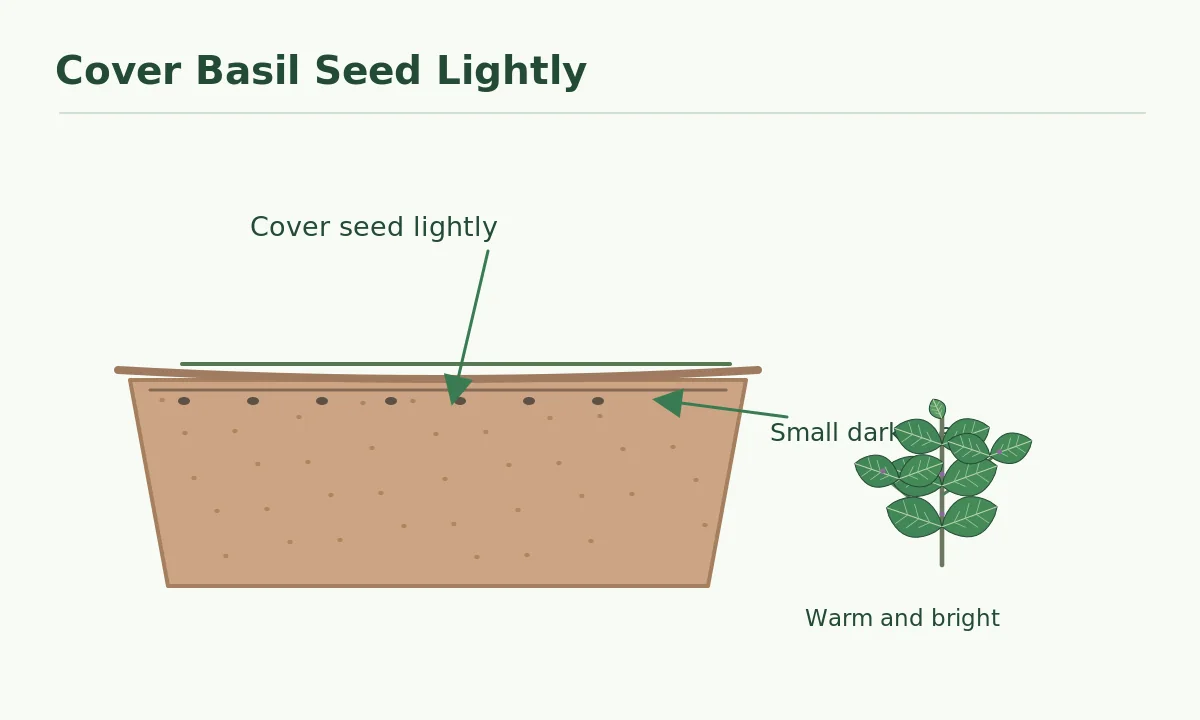
Make a shallow sowing depression and distribute the tiny, dark seeds sparsely. University of Minnesota recommends covering basil seed with about a quarter inch of mix for direct sowing. For small indoor cells, follow the seed packet’s modest cover depth rather than burying seeds at the bottom of an oversized hole. Gently settle the surface and water softly so seeds stay put. A label is especially important if you are sowing sweet, Thai and cinnamon basil beside one another.
Germinate Seed and Identify the First Leaves
Provide warmth, bright light and even moisture without exposing the tray to cold drafts at night. Basil seed often sprouts quickly in appropriate warmth, but actual timing depends on seed age and household conditions. University of Minnesota describes the seed leaves as a pair of broad blades resembling two capital D shapes. These are cotyledons, not the mature fragrant leaves you will harvest. Keep them intact while the seedling begins producing the next opposite pair.
Remove a humidity cover promptly as plants emerge and prevent tall weak growth with adequate light. Crowded sowings promote stretched stems and complicate transplanting. If two seedlings share a small cell, snip the weaker at the mix line rather than pulling both roots. Rotate a windowsill tray if one side leans strongly toward the glass. Do not apply fertilizer to a barely emerged seedling in the hope of making the seed coat open faster; correct light, warmth and water come first.
Move Seedlings After True Leaves Appear
Wait until seedlings show several true leaves and a cohesive root plug before potting up. Tip out the soil around the roots; avoid holding a plant by its only two seed leaves. Set the seedling so the original surface and new compost surface meet, and leave the growing tip visible. University of Minnesota recommends moving basil when two to three pairs of true leaves are present. Whether a pot is destined for a patio or a bed, acclimatize young basil gradually to outdoor light and wind.
Plant out only when frost has passed and nights are sufficiently warm for basil. A full-sun spot with draining soil is usually best, though occasional relief from very harsh afternoon heat may be helpful. Check moisture by touching the medium rather than repeatedly soaking the pot. At this size the opposite leaf pattern becomes clear: each pair arises at one node, often at right angles to the next pair. This pattern is essential for locating later pinching cuts correctly.
Pinch Above a Real Opposite Leaf Pair
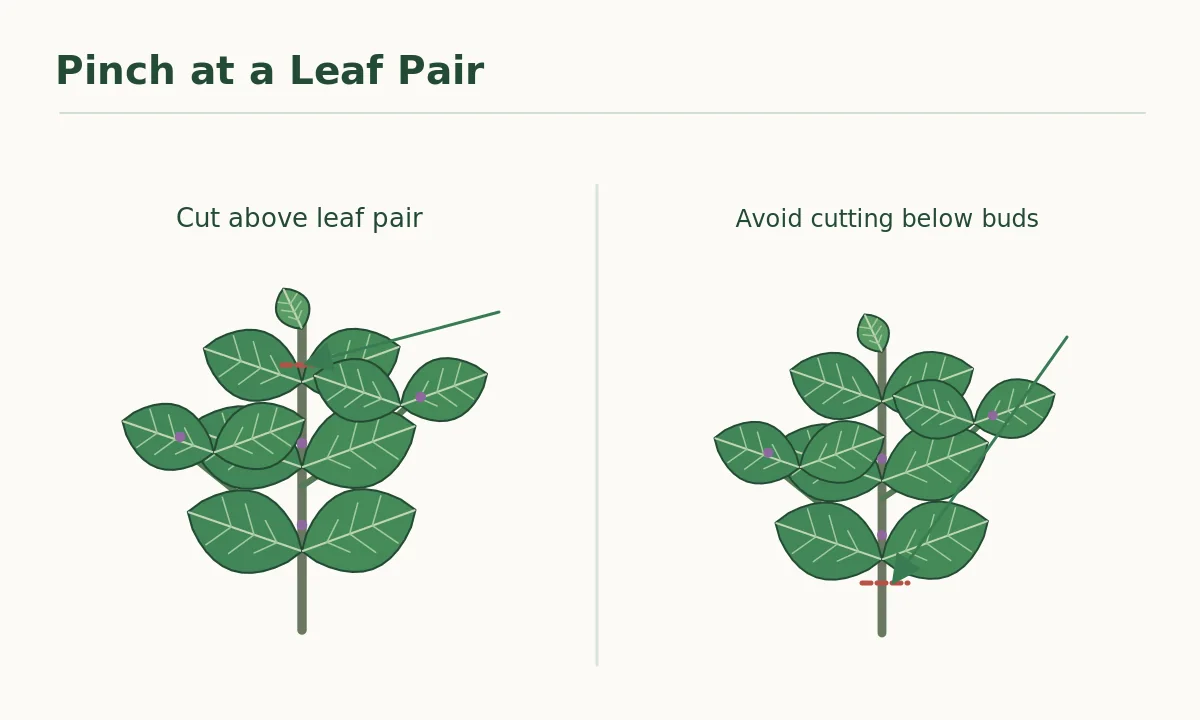
Once the plant is sturdy and carrying several healthy nodes, use clean fingertips or shears to remove the soft top just above a pair of well-formed true leaves. The two axillary buds adjacent to that pair can produce side branches, making a compact herb. Do not cut through the middle of a growing leaf blade, and do not pinch a tiny seedling that lacks enough foliage to recover. University of Maryland Extension recommends pinching lengthening basil shoots to encourage branching.
As new branches grow, repeat modest trimming when each shoot is strong enough. This is not an instruction to shear every stem to soil level or remove all leaf pairs. If flower spikes begin forming, take the tender tip when culinary foliage is the priority; leave some flowers if you are growing the plant for pollinators or seed. Cinnamon basil may show pink to lavender flowers, but individual plants can vary. The cut location, not the ornamental color, determines whether side buds remain intact.
Harvest Aromatic Leaves and Watch for Disease
Gather healthy young leaves and stem tips throughout active growth, keeping enough foliage to support recovery. Handle edible herbs with washed hands and clean tools. Basil foliage is susceptible to chilling, so do not assume a cold refrigerator is ideal for keeping cut tender stems indefinitely. Use fresh leaves promptly or follow established preservation guidance. The cinnamon-like scent is best assessed on an identified, healthy mature plant, not relied on to identify mystery leaves in an unlabelled tray.
Monitor for yellow blotches, gray or purplish growth under leaves, or collapsed stems. University of Maryland discusses downy mildew and the importance of airflow in basil crops. Do not diagnose a disease simply because a cultivar has a dark stem or naturally colored flower spike. First check leaf surfaces, canopy density and moisture conditions. Give plants space, avoid frequently wetting foliage in humid weather and remove heavily affected material according to local Extension recommendations rather than spraying invented mixtures.
Fix Common Germination and Harvest Mistakes
If little seed germinates, check whether the tray was cold, whether seed was buried too deeply, and whether watering displaced it. Compare fresh seed in a separate labelled cell under the same warmth. If cotyledons appear but growth stops, review light and root moisture before increasing nutrients. A dense cluster of seedlings is not evidence of a productive planting; thinning early gives each stem room to become a branching herb.
If a plant becomes lanky, inspect whether light is too weak or whether you repeatedly harvested only lower leaves while leaving a long unbranched tip. Pinching at a healthy opposite pair encourages a different shape. If stems appear blackened after cold exposure, remember basil is tender. Keep records of the exact cultivar, sowing dates and how the leaves actually smell. Those notes are more useful than assuming purple-veined catalog art defines the plant in every environment.
Related Guides
- Growing Herbs by Type: Water, Harvest, and Winter Survival Guide
- How to Grow Purple Basil From Seed and Keep Its Leaves Colorful
- How to Pinch Basil Flower Buds and Keep Tender Leaves Growing
- Growing Basil for Repeat Harvests: Plant, Pinch, and Prevent Problems
- How to Harvest Thai Basil Above Leaf Nodes for Fresh Branching Shoots
How We Research and Verify These Steps
The linked horticultural references were checked on 2026-10-27: extension.umn.edu — University of Minnesota Extension describes cinnamon basil as a spicy scented type and gives basil sowing, seedling and growing guidance. blogs.ifas.ufl.edu — UF/IFAS distinguishes cinnamon basil as a specialty Ocimum basilicum cultivar with a distinctive aroma and growth form. extension.umd.edu — University of Maryland Extension provides warm-weather basil planting, pinching, disease and harvest advice. Each guide separates confirmed growing practices from climate- and cultivar-dependent choices. A diagram illustrates the physical action, not a guarantee of identical results in every garden.
No paid product placement was used in preparing this article. For the site-wide policy, review the VegWin affiliate disclosure.
No. Color varies; use named seed and developing basil morphology rather than purple color as a mandatory test.
Basil guidance commonly uses a shallow covering of around one-quarter inch; follow the packet for the lot.
Two broad cotyledons emerge first; later true leaves grow in opposite pairs.
Cut the soft stem tip immediately above a healthy opposite pair of true leaves, leaving the axillary buds intact.
No. Basil is frost-sensitive and should be grown outdoors only in suitable warm conditions.