
A parsnip row often appears empty long after neighboring radishes or lettuce have emerged. That delay is not automatically failure. Parsnip (Pastinaca sativa) seed is unusually short-lived, needs sustained seed-zone moisture and takes time to send a small shoot to the surface. The successful approach starts with truly fresh seed and a prepared outdoor bed, not a tray of seedlings waiting to be transplanted. Here is a practical way to judge the sowing conditions, monitor the row without digging up every seed and protect the straight taproot that will eventually become the edible vegetable.
Start With Fresh, Clearly Labeled Parsnip Seed
Purchase seed intended for the current sowing season. Unlike many vegetable crops that retain reasonable germination over multiple years, parsnip seed deteriorates quickly in ordinary storage. Utah State University Extension and the University of Saskatchewan both urge gardeners to use fresh seed each year. If the packet is old or spent a hot summer in a damp shed, replace it before blaming the soil. Label the packet with its purchase date and sowing row so you can compare germination outcomes later. Avoid mixing older and newer lots in the same test row: uneven results make troubleshooting nearly impossible.
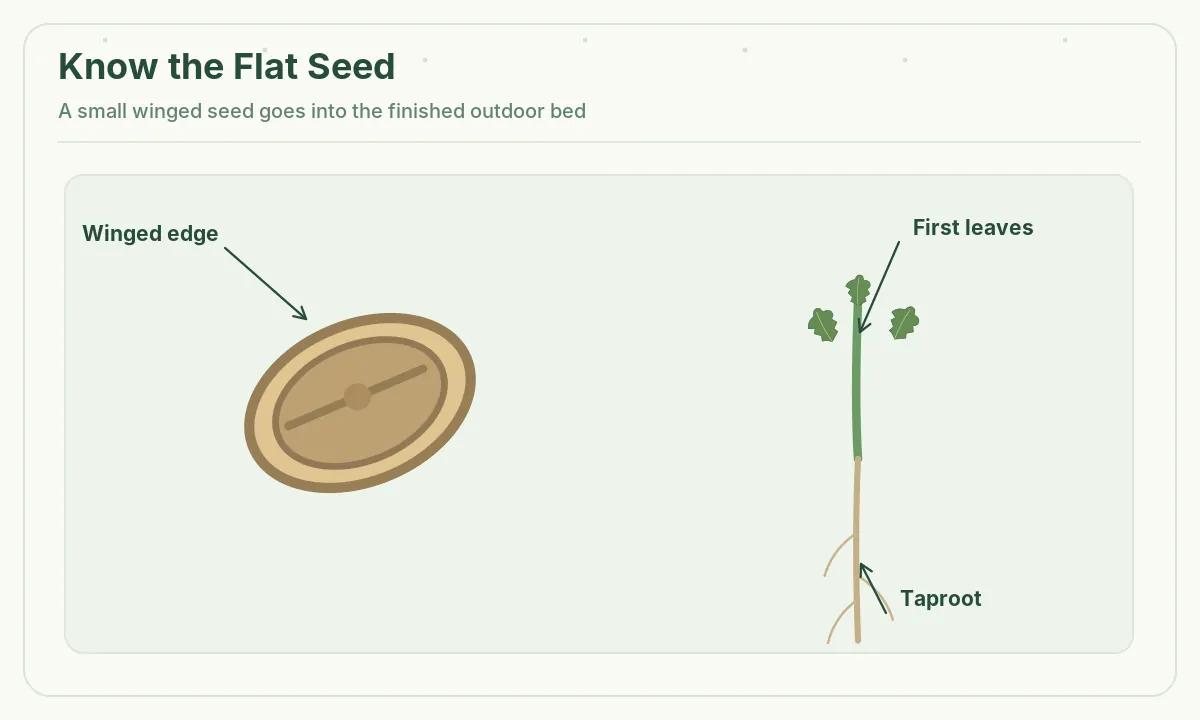
Parsnip seed is a small, flattened, tan to brown, wing-edged fruit segment rather than a black sphere or a large bean. Handle the delicate flat seeds gently. A close-up visual should emphasize that real seed shape; another should show what the tiny emerging shoot looks like in relation to a future tapered white root.
Choose Outdoor Soil That Is Warm Enough
Parsnips form long taproots and do not appreciate ordinary bare-root transplanting. RHS specifically favors direct sowing into the final growing position. Wait for your local soil to become workable and reasonably warmed in spring, rather than following a hardiness-zone date as though it predicts soil temperature. Utah State Extension notes that seed germination is best in comparatively cool-to-mild soil, approximately 55–65°F, and that very hot conditions decrease germination. A soil thermometer is more informative than the calendar printed on another gardener’s seed packet.
Choose a sunny, well-drained bed. Loosen compacted layers and remove rocks, root debris and large clods where a straight storage root will grow. Avoid adding fresh manure or strong fertilizer under the row; fertilization should follow a soil test, not a germination guess. Keep the planting line accessible for gentle watering.
Sow in a Shallow, Continuous Outdoor Drill
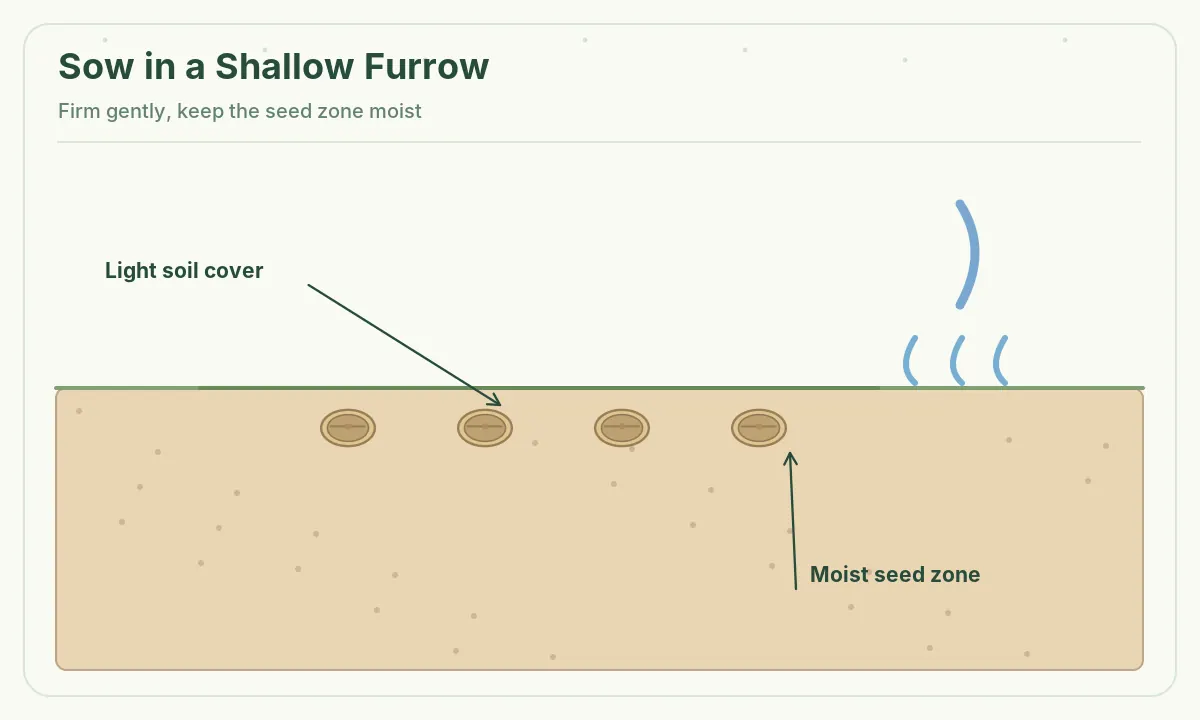
Make a modest, even furrow and follow the packet’s specified seed covering. Illinois Extension gives approximately one-half to three-quarters of an inch as its sowing depth, while local recommendations may vary with soil texture and climate. Do not drop the seeds into individual deep holes or cover them with several inches of compost. Scatter fresh seeds more generously than you would vigorous large-seeded crops because emergence may be uneven, then lightly firm the surface to make contact between seed and moist soil.
A cross-sectional diagram should show the flat seed under a thin measured cover, with the future taproot going downward. A prepared fine-textured surface does not mean a crust of pure dry dust. If your soil hardens after watering, consider a very light, suitable protective surface treatment that will not smother emerging seedlings.
Keep the Seed Zone Evenly Moist, Not Flooded
The long wait for emergence creates a management problem: the soil surface can dry repeatedly before you see anything green. The University of Saskatchewan emphasizes that drying during germination can kill emerging parsnip seedlings. Check with a fingertip beside, not through, the row and water gently when the upper seed zone begins to dry. Use a fine rose, mist or other low-impact flow so you do not wash seeds into depressions or expose them. Good drainage still matters; permanent saturation can cause rot and deprive roots of air.
One option in dry weather is a temporary breathable cover to moderate surface evaporation, but check beneath it daily and lift it immediately when shoots appear. Never leave an opaque board or mat in place where tender shoots will be crushed or shaded. A clear label stops accidental weeding of the seed line.
Recognize a Normal Slow Emergence Window
Under suitable soil conditions, Utah State Extension indicates that parsnips often require about 14–21 days to emerge, while colder or inconsistent conditions can extend the wait. Do not assume a week without green shoots means that all seeds are dead. Record the sowing date, soil conditions and how often the surface dried. Compare with a small control pot or a short extra row if you have genuinely fresh seed to spare, while still preserving the direct-sown bed as the primary crop.
The first seedling is small and green, later producing divided or compound-looking true foliage. It will not arrive already carrying a thick white parsnip root. Thin the stand when plants can be handled with care rather than jostling the long taproots of those you want to keep.
Thin Gently While Protecting Future Taproots
Once seedlings have emerged and developed recognizable foliage, assess the spacing required by your particular variety and bed design. Crowding increases competition and can reduce root size or quality. Illinois Extension suggests thinning parsnip seedlings to a few inches apart after emergence. Cut unwanted seedlings at the surface with small scissors when pulling could disturb a neighbor’s anchoring root. Leave the remaining plant upright and firm the soil if neighboring work has shifted it.
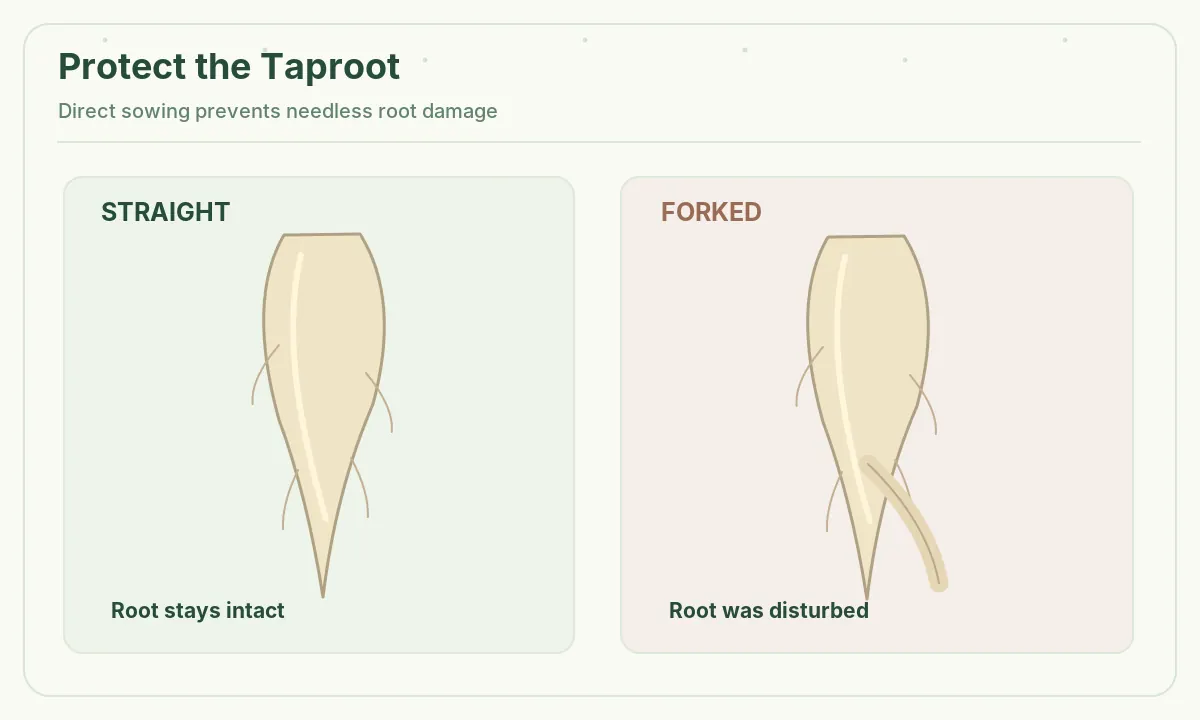
Resist transplanting the thinnings into gaps as a standard strategy. Disrupting the young taproot can produce forked or malformed edible roots later. A diagram contrasting a continuous undisturbed taproot with a bent, transplanted root explains why the early seedling stage matters more than it appears above ground.
Diagnose Empty Spots Without Digging Up the Row
If most of the row stays blank beyond the expected window, examine the likely causes in a deliberate order: seed age, temperature, drying, washout, crusting, animal disturbance and waterlogging. Look for crusted ridges or obviously washed-out gullies. Gently investigate only a small marked section rather than destroying the whole sowing line. If the seed was old, a carefully labeled fresh-seed resowing is more useful than escalating fertilizer or plant treatments. If heat or cold is the problem, a different local sowing window may be appropriate.
Do not mistake a stray radish row marker or nearby weed for a parsnip. Some growers use a few fast-germinating radishes as markers, but these must be removed promptly so they do not crowd the parsnip crop. Judge seedlings from their developing leaves and plant label rather than just one tiny green hook.
Protect Seedlings Until They Become Established
After emergence, make the transition from fine seed-zone watering to deeper but appropriate irrigation as roots extend. Weed carefully by hand or by very shallow cultivation; the new seedlings compete poorly with large weeds and can be uprooted by a vigorous hoe. Avoid letting a protective cover shade foliage after shoots appear. Check for slug damage, crust formation and standing water before assuming an insecticide is needed. Regional Extension guidance should determine any specific treatment.
As plants mature, their leaves become larger, divided and celery-like, while a pale conical storage root develops below. Keep soil contact around the shoulder, and monitor growth rather than repeatedly lifting roots just to see progress. This article is about germination: later harvest timing will depend on cultivar, season and exposure to cool weather.
Related Guides
How We Research This Guide
We reviewed specialist sources on October 27, 2026, including extension.usu.edu (Utah State Extension explains fresh parsnip seed, soil warmth, slow emergence and reducing root disturbance.); www.rhs.org.uk (RHS recommends direct sowing fresh seeds in warmed soil and explains why transplanting disturbs the long taproot.); extension.illinois.edu (Illinois Extension describes spring sowing, sowing depth, generous seeding and subsequent thinning.); gardening.usask.ca (University of Saskatchewan explains even seedbed moisture and the short viability of parsnip seed.). These references describe typical botany and cultivation, not a promise that every cultivar and climate will perform identically. Check current regional Extension recommendations where applicable.
No affiliate products or paid placements are recommended in this article. Review our affiliate disclosure for site-wide policy. Follow any local regulations and applicable label directions before using gardening treatments.
They commonly take roughly two to three weeks in favorable soil; stale seed and dry or poorly warmed soil can delay or prevent emergence.
Direct sowing is preferable because a developing taproot can be damaged, bent or forked when moved.
Follow the seed packet and local Extension guidance; Illinois Extension describes a shallow furrow about one-half to three-quarters of an inch deep.
Yes. Parsnip fruits used as seed are flattened and wing-edged, not round black beads.
Check seed age, soil moisture and temperature before a targeted resowing; cold conditions can make emergence slower.