
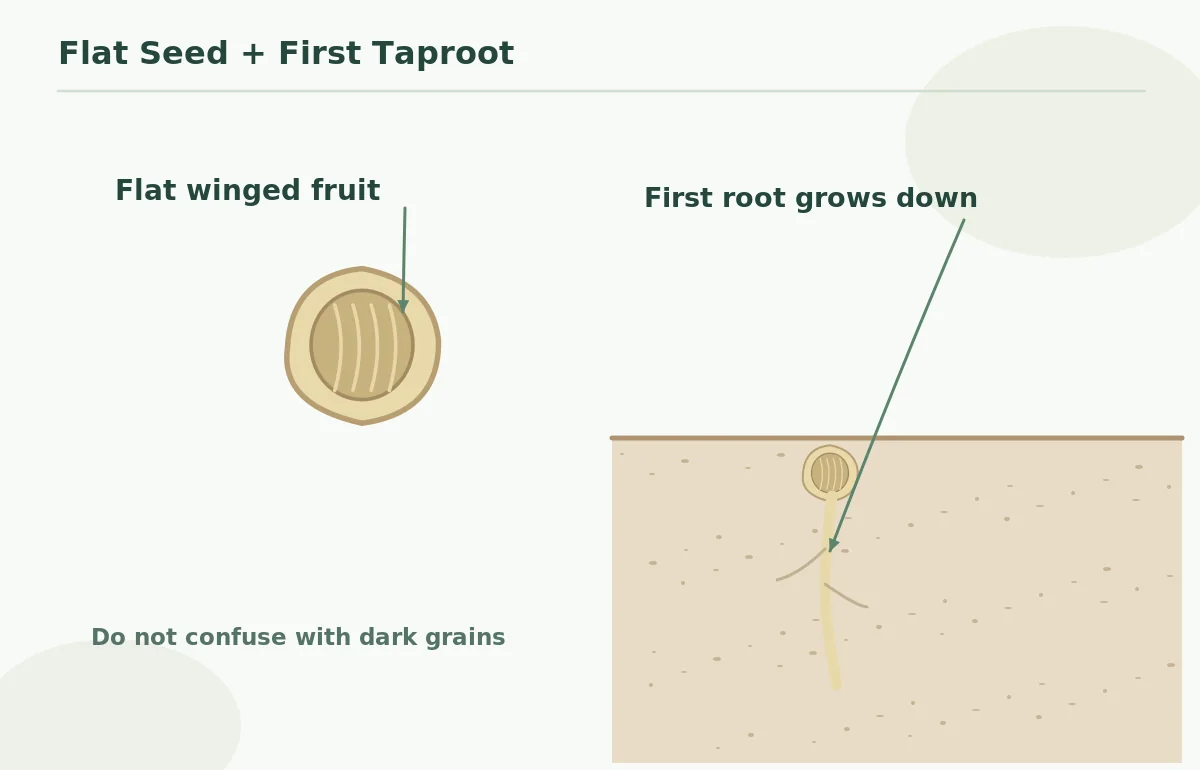
Parsnips develop a long tapered storage taproot, not a compact bunch of shallow feeder roots. The first young primary root grows down soon after the seed germinates, and its direction becomes the future shape of the vegetable. Starting seeds in shallow trays and then moving the seedlings can bend or damage that early root. Both the University of Minnesota Extension and RHS recommend direct sowing. Make the sowing place the permanent growing place rather than expecting a later transplant to straighten.
Why Parsnips Should Start in the Ground
A healthy mature root is usually pale cream to ivory, wide at the shoulders and increasingly narrow toward the tip. Leafy tops have several toothed leaflets arranged along a central stalk. A forked root can still be edible, but the divided shape is a useful clue about growing conditions. A plant with healthy foliage does not always have a straight root beneath it, which is why the soil cross-section matters more than a picture of leaves alone.
Start With Fresh Seed and Realistic Germination Time
Parsnip seed loses reliable germination sooner than many other garden seeds, so buy a fresh packet for the current growing season and store it dry until sowing. Seeds are flat, rounded and often slightly winged around the edge. They are not the narrow dark grains pictured in some generic seed diagrams. Use the species and packet description to confirm what you have, especially when sowing several umbellifer crops in adjacent rows.
Emergence is slow even with good seed. The Minnesota guide notes that it can take up to three weeks, while RHS allows that some sowings may need longer depending on weather. Do not dig up the entire drill after a week because the surface still looks empty. Mark each row at sowing and check moisture below the crust. A fast-growing weed seedling will often show before the parsnip, so correct identification protects the crop from being removed accidentally.
Make a Shallow Drill in Deep Loose Soil
Choose a well-drained bed that can accommodate the cultivar’s expected root length. Work the surface into a fine tilth while leaving the deeper profile free of large stones and compacted clods. Do not add lumps of fresh manure immediately before sowing; both overly rich pockets and physical obstructions can contribute to irregular roots. If your bed is shallow or stony, consider a shorter-rooted cultivar described for those conditions rather than fighting the soil with the longest type available.
RHS describes a shallow sowing drill about 1 cm deep. Lay seeds within the drill and cover with a thin layer of fine soil; in the diagram, each seed is BELOW the real ground line, not resting on top of it. Water carefully if rain is absent so the seedbed remains evenly moist without sealing into a hard crust. Avoid burying seeds deeply merely because you expect their eventual taproot to grow far underground. Seed depth and final root length are separate measurements.
Thin Young Plants Before Roots Become Crowded
Because germination may be uneven, growers sometimes place several seeds at a chosen station and later retain the strongest seedling. RHS suggests thinning to around 6 inches between plants, but cultivar size and row spacing matter. Identify true parsnip foliage before thinning: the early leaves are followed by divided foliage that differs from the first seed leaves. Remove extra seedlings while small so roots do not compete as they enlarge beneath the surface.
Snip unwanted seedlings at the soil surface when pulling them would disturb a neighboring root. Keep the selected seedling and its taproot fixed in place. Do not try to divide or pot on crowded parsnip seedlings as if they were lettuce plugs. A seedling that has already branched after root disturbance cannot be made straight later by packing soil around the top. Record the final spacing so you can compare root quality at harvest with any crowded sections left as a trial.
Water the Root Zone Without Sudden Dry Spells
Even moisture supports steady growth and helps prevent roots that are tough, rough or undersized. The right amount depends on weather, soil texture, rainfall and how well the bed drains. Check below the top inch instead of judging moisture only by the surface color. Drying during germination can reduce stands; a flooded seedbed can deprive seeds and roots of oxygen. Drainage and water consistency are more important than a universal daily watering number.
Once leaves cover the row, mulch around established plants can help conserve moisture while keeping the crowns visible. Pull weeds carefully instead of dragging a hoe deeply beside the developing roots. Parsnips can develop long below-ground roots well before the tops look large enough to compete. Repeatedly cutting through the shallow side roots or compacting wet soil with footsteps makes later harvest harder and reduces the value of the deep loose bed prepared at sowing.

Understand the Difference Between Straight and Forked Roots
A smooth parsnip forms one dominant primary root that tapers continuously. A forked parsnip has two or more large branches, often beginning at the point where its tip encountered an obstruction or was damaged. Stones, hard clods, transplanting and other root injuries can all contribute. Do not confuse thin normal feeder roots with the large secondary storage branches shown in the comparison picture. A few tiny side roots are not a defect.
If you harvest several misshapen roots, examine their fork points and the soil surrounding them. A single sharp bend at a stone suggests a physical problem; many shallow roots in a compacted layer suggest insufficient depth. Irregular moisture may add stress but cannot explain every forked root on its own. Keep these observations alongside your soil notes, especially if part of the same garden bed produced well-shaped parsnips. Do not apply a fertilizer or pesticide merely because roots have branched.
Leave Enough Season for Storage Roots to Develop
Parsnips are commonly a long-season cool-weather crop, and the right sowing date depends on when soil is workable and warm enough for emergence. RHS recommends waiting until spring conditions have improved instead of sowing into very cold wet ground. Some climates allow roots to remain outdoors into late autumn or winter, but freeze intensity, soil access and local pest conditions affect whether that is practical. Check local Extension guidance rather than assuming one national harvest month works everywhere.
A root’s usable size and condition matter more than a rigid day count. Carefully lift one test parsnip when the season is appropriate, using a fork placed well outside the root to avoid stabbing or breaking it. If the shoulders are still narrow, give healthy plants additional time when weather permits. Protect harvested roots from drying out promptly. If the soil is frozen hard, do not wrench on foliage and expect an intact long taproot to emerge.

Review the Row Before Your Next Sowing
At the end of the crop, compare the germination gaps with the seed age and the condition of your marked drill. Was the soil crusted after heavy rain? Did the bed dry repeatedly? Were weeds removed before parsnip seedlings were easy to identify? Keep a photo that shows the shallow sowing depth and the shape of one mature root, rather than only a general view of the garden. These records expose problems that vague labels such as poor seed cannot explain.
Plan the next bed to make the root’s path simple: fresh seed, shallow placement, fine surface tilth, deep loose soil, prompt thinning and steady water. If the variety has naturally short or broad roots, judge it against that description rather than against an idealized long exhibition parsnip. Always identify the crop from seed packets and reliable plant characters; avoid collecting or tasting unknown wild umbellifer roots, because similar-looking relatives can be dangerous.
Related Guides
How We Research and Check Botanical Diagrams
This guide was checked against University of Minnesota Extension carrot and parsnip guide; RHS parsnip growing guide. The illustrated anatomy, timing decisions and positions of tools or plant parts were compared with those references. Growing seasons and results can change by cultivar, weather, location and soil.
This is an independent educational guide without product endorsements or confirmed paid partnerships. Please read our affiliate disclosure. The listed horticultural references do not substitute for local diagnoses or pesticide label directions.
Direct sowing is recommended because their early taproot is easily disturbed by transplanting.
RHS recommends a shallow drill around 1 cm deep, covered with fine soil.
Parsnip emergence may take two to four weeks depending on conditions; fresh seed and moisture matter.
Stones, compacted soil or injury to the growing root tip can cause branching.
While small, keep an appropriate spacing for the cultivar and avoid tugging on neighboring roots.