
Square foot gardening replaces long rows with a small bed divided into one-foot planning squares. That makes it easy to draw a layout and keep track of what was planted where. It does not, however, make every vegetable one square foot in size. A sprawling squash plant, a trellised tomato, and a small leaf crop have very different light, root and airflow needs. The most useful way to use the grid is as a record of space you allocate, not as permission to force one plant into every marked cell. This guide walks through a reach-first plan and a crop-by-crop check.
Check Site Access Before Drawing Sixteen Squares
A familiar square-foot layout is a four-foot by four-foot bed divided into sixteen one-foot squares, as described by UF/IFAS Gardening Solutions. The size is convenient because most gardeners can reach the center from the edges without stepping on the growing soil. It is not mandatory. If mobility or arm reach makes four feet uncomfortable, make a narrower bed. Place it where appropriate sun, safe footing and water access already exist, rather than choosing an attractive border that cannot be maintained.
Leave a comfortable path for watering, harvesting and carrying compost. Paths that look wide on graph paper can become cramped when squash leaves and support stakes intrude. Raised bed height alone does not fix poor drainage or contaminated soil underneath. Where you use a bed on pavement, provide drainage and adequate root volume rather than assuming a shallow layer of media acts like an in-ground garden.
Draw the Grid as a Mapping Tool, Not a Spacing Law
Mark the interior into one-foot squares with twine, thin battens or a pencil drawing. Label rows and columns so a note such as B3 describes an exact location. A 4-by-4 grid has sixteen planning cells, but the number of actual plants is determined by the mature crop and growing method. Some quick greens occupy part of a cell; a larger crop may need two or more cells or a separate trellis footprint.
Cornell Extension presents examples of intensive vegetable spacing while warning that dense foliage can encourage disease by keeping leaves damp longer. Do not copy an internet chart without deciding whether the goal is baby-leaf harvest, full-sized mature plants or compact cultivars. Packet and regional Extension guidance remain important. Your drawing should reveal conflicts instead of hiding them behind a tidy checkerboard.

Allocate Space by Mature Canopy and Harvest Habit
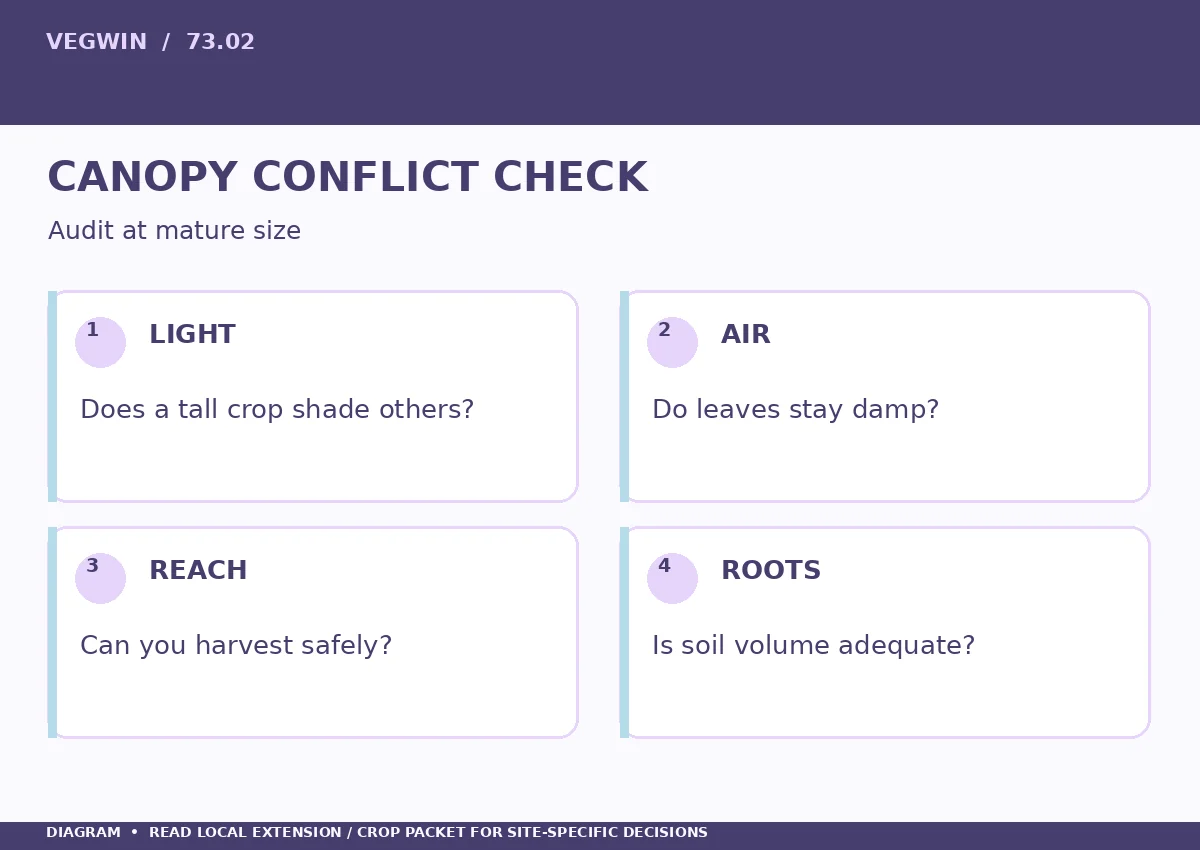
Place crops that stay compact and are harvested early where they can be accessed without crushing neighbors. Tall vegetables and climbing vines require support in a position that does not unnecessarily shade lower crops. A large tomato may occupy more than one nominal square and cast shade into adjacent squares; reserving one tiny box simply because the plant stem fits is not a realistic mature layout.
Work outward from your biggest plants. Sketch their expected mature canopy and route for picking, then fit small crops into remaining light. A crop with broad leaves overhanging a walkway may require pruning or a larger allotment, depending on species and advice. If the plant spreads beyond the bed, ask whether the support and traffic plan are still sensible. A small grid should improve access rather than disguise overcrowding.
| Situation | Practical choice | Important check |
|---|---|---|
| Small greens | One or part of a planning cell | Check harvest stage and packet |
| Trellised tomato | Often needs multiple cells | Allow roots, canopy and access |
| Spreading squash | Likely extends past one cell | Reserve large footprint or separate area |
| Tall crop near south-facing edge | May shade neighbors | Verify sun path in your garden |
Use Regional Spacing Rather Than a Single Universal Chart
Extension spacing recommendations vary by crop, variety, harvest size and growth conditions. A chart written for tightly harvested greens cannot automatically be applied to root crops grown to full size. If one square seems too crowded after you check the packet, give the crop two squares or reduce the number of seedlings. This is not wasting garden area: airflow, water access and the ability to harvest are part of productivity.
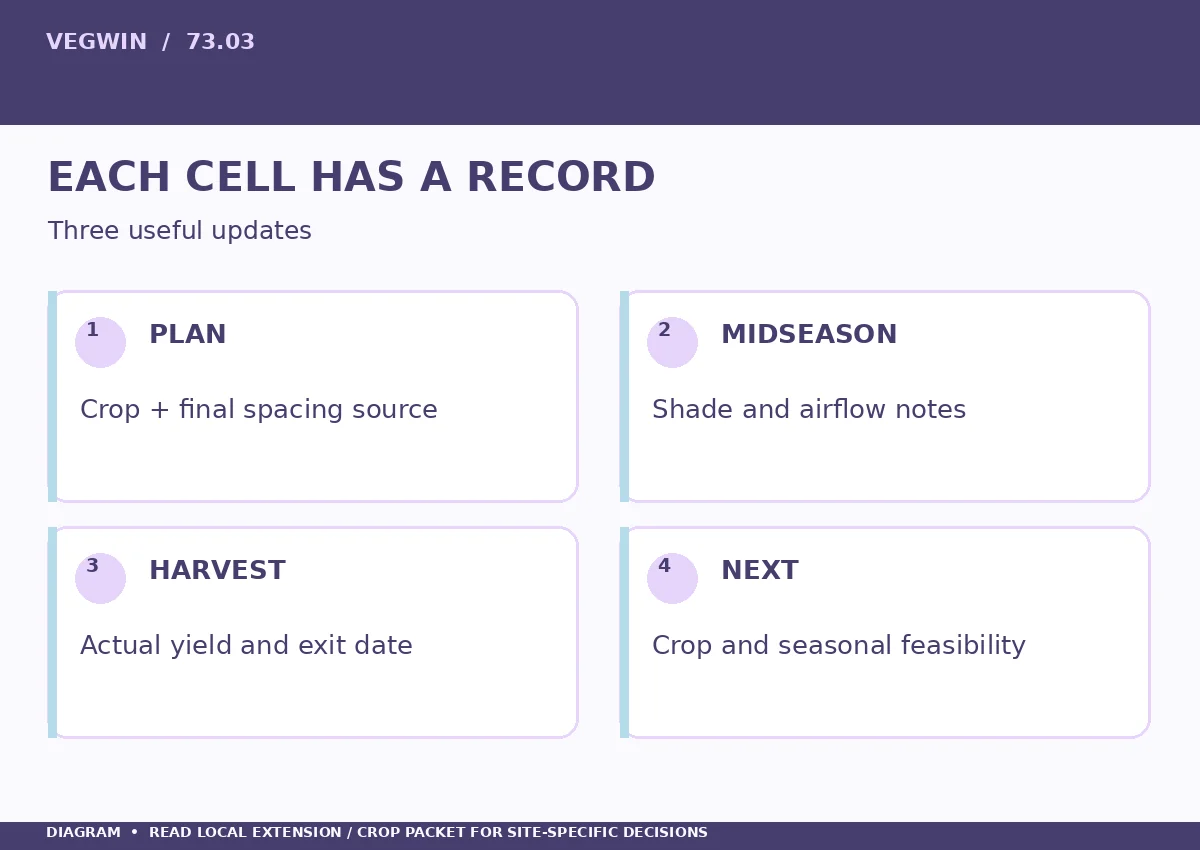
Make a three-column planting note: intended harvest stage, source-backed final spacing, and the space it actually requires in this bed. Update the row after the first season if you see shaded neighbors or persistent wet leaves. Avoid inventing a high-density plant count as a substitute for a cultivar recommendation. The grid remains useful even when your planting does not match a popular sixteen-cell template.
Plan Irrigation, Soil Care, and Paths Together
Intensive planting can create greater demand on the small volume of soil that supports it. Inspect moisture beneath the surface, not just the color of mulch. Use compost and fertilizer based on a soil assessment; a raised bed is not automatically deficient or safe to fertilize repeatedly. When the soil was recently imported, note its contents and drainage rather than assuming every bag labeled garden soil has the same structure.
Consider water delivery before a dense canopy makes the bed hard to reach. A watering wand or drip line can deliver moisture to root areas without walking through growing spaces. Keep paths usable for carrying a full watering can, and do not plant directly into areas where feet will compact soil. This is one reason square-foot grids are most successful when the bed is truly reachable from outside.
Make a Light and Airflow Audit Midseason
Once the canopy closes, walk around the bed in morning and afternoon light. Record where taller crops shade shorter ones, where stems are bending toward an edge and where wet foliage stays in contact. Cornell Extension notes that reduced airflow in closely packed plantings can promote plant disease. A crowded canopy is not automatically a disease outbreak, but it does justify reviewing next season’s spacing.
The most actionable corrections are simple: give tall plants their own supported edge, harvest quick crops before they are shaded, or allocate more room when replanting. Do not cut leaves aggressively without understanding the crop; foliage produces the energy needed for growth. When you find spotting or collapse, identify the problem with Extension/IPM support rather than assuming a tight layout explains every disease.
Keep a Cell-by-Cell Record for a Second Crop
As one crop finishes, write down the harvest date and whether roots or plant residues remain. A square-foot plan helps find open cells for another suitable crop, but the replacement must match the season, available light and root competition. Use local frost dates and crop growth requirements to decide what fits, rather than replanting simply because a square is empty. Soil moisture, pests and past disease also affect whether a second crop is wise.
A durable record has three layers: initial cell assignment, midseason canopy corrections and next-crop suitability. If you record only the seed name, you lose the information that makes the next layout better. Treat the grid as a living plan that responds to growing plants rather than a one-time puzzle in which every box must always be filled.
Related Guides
How We Research and Check These Recommendations
This article was reviewed against public university Extension materials on 2026-10-20: University of Florida IFAS Cornell University Extension University of Maryland Extension. We compared crop-specific recommendations, the circumstances behind them, and where different regions may advise different practices. Verify local weather, soil tests, cultivar packet details, and updated Extension guidance before making irreversible decisions. An automated preflight checks formatting, not biological accuracy or website intent overlap.
Disclosure: This is an educational article, not a paid product recommendation. See our affiliate disclosure. The destination page and existing WordPress URLs require live verification before manual publication; the informational source links were separately checked.
No. The grid is a planning and recordkeeping aid. Space plants according to mature size, harvest stage, packet and local Extension advice.
No. A narrower bed may be easier to reach. UF/IFAS describes four-by-four feet as a common layout, not a biological requirement.
A trellised tomato often needs more canopy room and access than one nominal cell, even if its stem emerges from one spot.
It can be an efficient use of small space, but yield depends on crop choices, light, water, airflow and maintenance.
Sometimes, if crop timing and remaining conditions are suitable. Check regional seasonal guidance and any plant-health concerns first.