
Pole beans climb by twining their own growing stems around supports. They are not tendril-climbing peas, so winding a brittle old bean stem through a mesh by force can do more harm than good. The simplest approach is to have tall supports ready before seedlings emerge, then guide only the flexible leader toward a reachable string or pole. The following steps show how to find the leading shoot, keep the stem free of pinches and recognize when a climbing plant is already doing the job without help.
Confirm Pole Beans Rather Than Bush Beans
Read the seed packet before planning support. University of Minnesota Extension distinguishes pole beans, which develop long twining vines, from compact bush beans that usually stand without a tall trellis. Half-runner types fall between the two and may benefit from moderate support. A vigorous bush bean is not automatically a climbing cultivar merely because its leaves spread. If you planted a mixed assortment, label each row before building a structure that shades shorter plants. Pole bean vines can grow six feet tall or more in suitable conditions, so a small decorative stake may be inadequate for mature foliage, pods and wind load.
Build a Stable Structure Before Sowing
Install a sturdy trellis, a teepee of well-anchored poles, or strong strings supported at the top before sowing. Minnesota Extension recommends setting pole bean supports in place at planting time, rather than pushing posts through established roots later. Check that the structure will not fall inward when wet leaves and pods add weight. Smooth twine and bamboo are useful when securely fixed; sharp wire ends and loose broken mesh can snag stems and hands. Leave access to both sides for harvesting and inspection. Secure the base against wind without tying a young plant so tightly that the stem is constricted.
Wait for a Flexible Growing Leader
A young bean first establishes its seed leaves, true leaves and then a lengthening growing stem. Once its leader reaches close to the support, examine its direction. Act while the tip is still pliable, not after the lower stem becomes stiff or bends sharply away. Do not pull a freshly emerged seedling by the top to make it reach a string several inches away. If the support is too far from the planting row, reposition a small guide string rather than stressing the seedling. Healthy leaf color and active shoot extension are more useful cues than one calendar day after germination.
Guide the Tip Toward a String, Do Not Pull It Tight
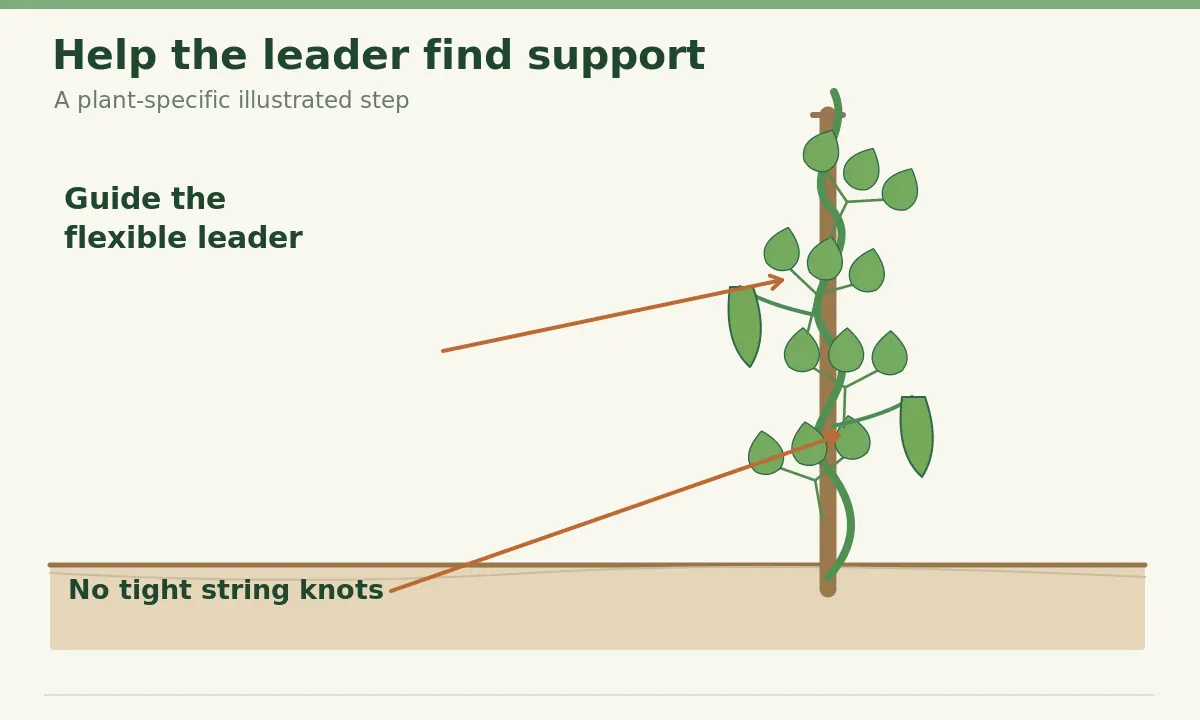
Use one hand to steady the plant at its lower stem and the other to lay the growing tip gently against or partly around a nearby string or pole. A flexible stem can begin twining naturally as it grows. Avoid tight knots, wire loops and repeated forceful winding. The plant should remain upright without any crushing force on its soft stem. If it continually reaches the wrong direction, check whether the support is reachable and secure rather than forcing the vine into a hard right angle. Revisit after a day or two to confirm the tip has found the support.
Look for True Twining Instead of Pea Tendrils
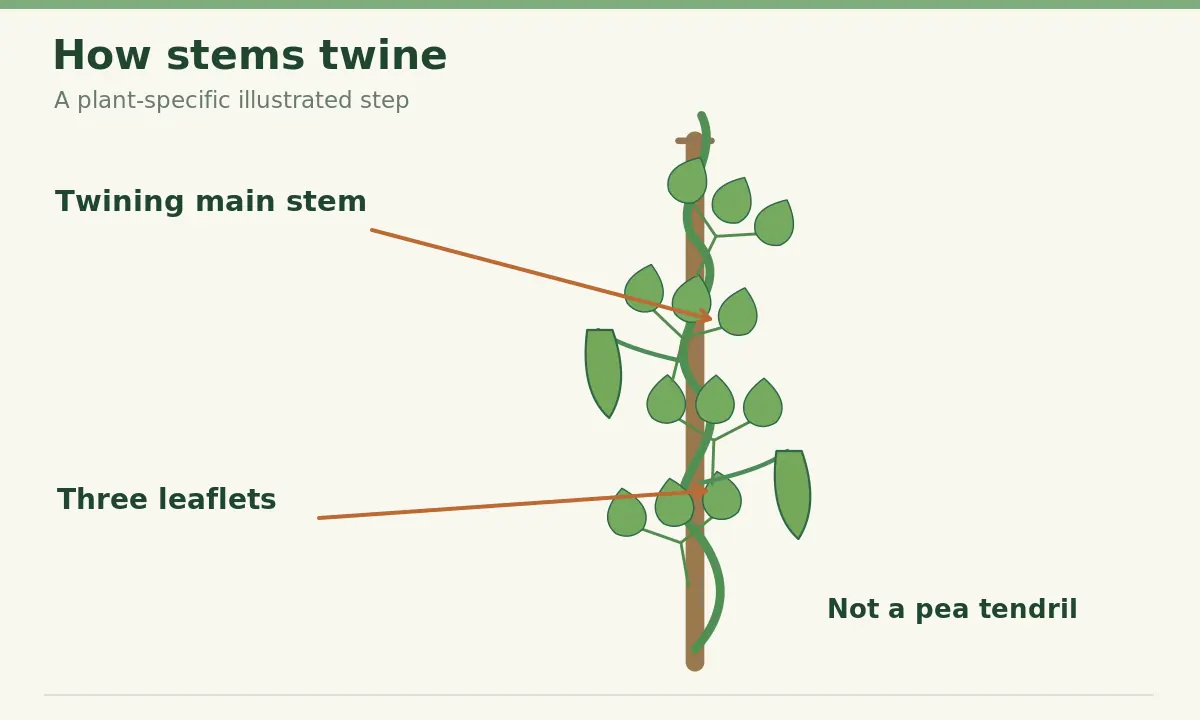
Pole bean climbing is driven by a long stem that curls around a support, not by separate forked tendrils like many peas produce. This distinction matters in a teaching diagram: the vine should visibly wrap its stem around the stake. Young trifoliate bean leaves consist of three leaflets on a shared stalk, and mature bean flowers and pods develop at nodes along the vine. Do not mistake a leaf petiole for the main climbing stem when repositioning. A leaf stalk may break without losing the entire plant, but snapping the active shoot tip can delay upward growth and branching.
Keep Multiple Vines from Becoming One Tight Knot
At a teepee base, several seeds may grow close together. As vines lengthen, direct adjacent leaders toward available poles or separate strong strings instead of allowing one thick bundle to twist around a single weak cord. Do not unwind a firmly attached established vine to make a symmetrical garden display. A healthy canopy can cross supports without trouble; the goal is good support and reachable pods, not a perfectly straight architectural drawing. Keep access open for checking leaves and picking beans. Repeated aggressive rearrangement can tear tender stems, detach flowers and increase handling damage.
Check the Trellis After Wind and Heavy Rain
Beans grown vertically expose a tall green surface to wind and storms. Recheck stake anchoring, top cord tension and any sharp snags after bad weather. If a support has loosened, brace it without pushing stakes into the root zone. Gently lift a fallen flexible upper vine onto a new string, but do not try to bend a snapped, woody section back into its original shape. A broken piece will not rejoin by being taped tightly like a plumbing fitting. Where an entire structure leans, stabilize it first and handle the crop second so its weight does not suddenly fall onto you or neighboring plants.
Water the Root Zone Without Drenching Leaves
Pole beans require suitable warm growing conditions; seeds put into very cold wet soil may rot rather than emerge. Once established, water according to rainfall and soil, directing moisture toward the root zone where practical. A tall trellis does not make the crop drought-proof. Avoid applying arbitrary nitrogen amounts in hope of producing a longer vine. Beans are legumes, and excessive lush growth can differ from productive flowering and pod set. Mulch can help reduce splashing and weeds if used appropriately, but keep the main stem visible for inspecting mechanical injury and soil-level pest damage.
Harvest Pods without Stripping the Vines
When pods reach the tender harvest stage for the chosen snap-bean cultivar, support a pod-bearing node with one hand and detach the pod gently with the other or use clean snips. Pulling downward on a hanging pod can tear the twining stem away from the trellis. Several pole bean cultivars continue producing new pods over an extended season under favorable conditions. Check the vines often so older pods do not obscure younger harvestable ones. Distinguish snap beans from cultivars intended for dry seed or shell beans; appropriate maturity for those uses is not the same. Keep footing stable when harvesting tall structures.
Make the Support Check before Plants Get Heavy
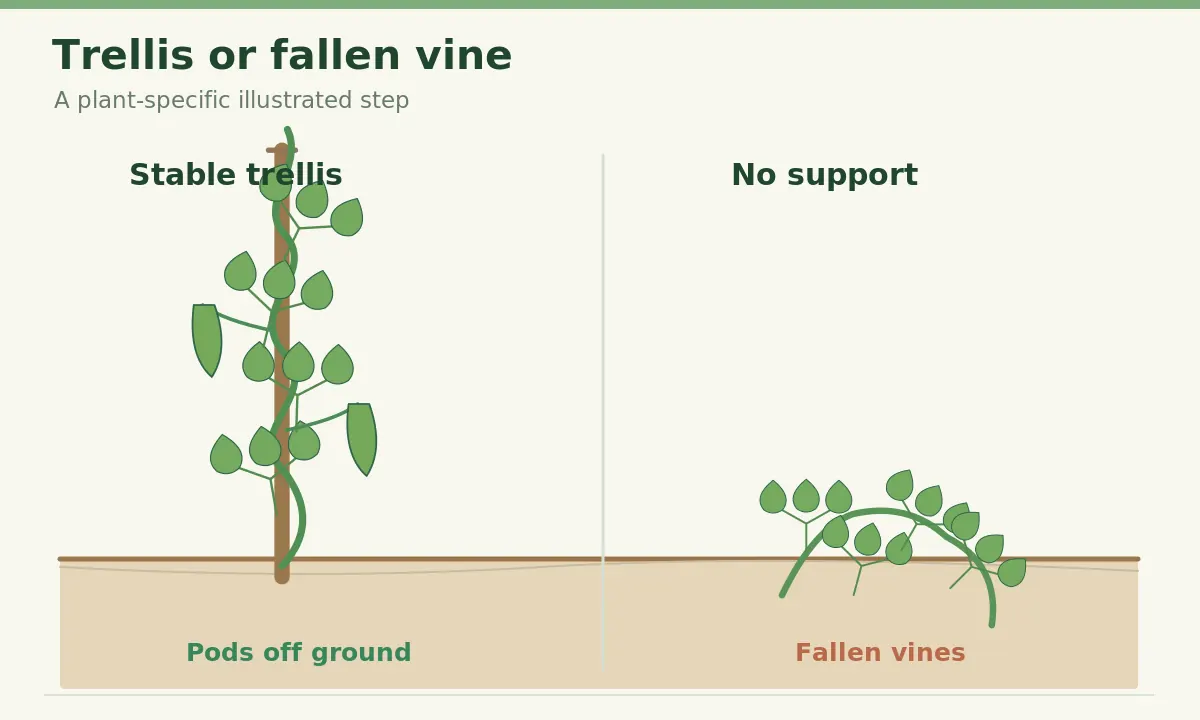
Stand at the base and inspect four things: firm post anchoring, a reachable line for the leader, a visible twining stem without a strangling tie, and room to access mature pods. If a leader has wrapped naturally, leave it alone. If it is loose and soft, guide just the tip rather than rethreading the whole plant. If a stem is already damaged, avoid pulling it across the mesh and evaluate whether side shoots can continue growth. Set up the next planting with supports in place from the start; prevention is easier than rebuilding a vine-covered framework.
Related Guides
- How to Grow Yardlong Beans From Seed With a Tall Trellis and Warm Soil
- How to Grow Yardlong Beans on a Trellis and Pick Slender Pods Early
How We Research and Verify Plant Advice
Sources checked on 2026-10-26: extension.umn.edu; extension.oregonstate.edu; extension.umn.edu. We reviewed each institution’s plant identification, correct growth stage and relevant cultural recommendations before adapting them into an independently written step-by-step guide. Where sources are region-specific, their calendar details are not applied universally. Pictures use simplified teaching shapes and should be compared with living specimens; they are not a substitute for laboratory disease diagnosis or local climate guidance. The relevant advice is paraphrased rather than reproduced.
Safety and Independent Editorial Disclosure
This independently prepared educational article does not claim sponsorship or affiliate approval. Our category reading links are informational, not product endorsements. See the VegWin affiliate disclosure. Clean sharp tools before cutting plants, protect hands from thorns and blades, and keep cut plant material away from children and pets where appropriate. Use only locally registered plant treatments labeled for the actual crop, and observe the product label. Do not rely on unsupervised home remedies or unverified harvest-safety promises.
No. Their main growing stem twines around a string, stake or other support.
At or before sowing, so posts and supports do not injure established roots.
No. Guide a flexible growing tip gently and allow it to twine naturally.
Pole beans may exceed six feet, so choose strong support appropriate to the variety and the garden site.
Usually not; most bush types grow compactly and do not need a tall climbing structure.