
Yardlong beans, also called asparagus beans or Chinese long beans, are climbing cowpea relatives—not unusually stretched common green beans. A productive plant grows trifoliate leaves, pea-like flowers and remarkably slender dangling pods that are eaten before the seeds swell. Starting from seed works best when the ground is warm, the bed drains and a sturdy support is in place before vines start wrapping. Texas A&M AgriLife Extension advises direct planting into warmed soil, while UF/IFAS describes their strong heat preference and twining form. This guide follows the seed, vine and actual pod so the harvest timing is not confused with dry cowpeas.
Choose True Yardlong Beans and Know the Leaf Shape
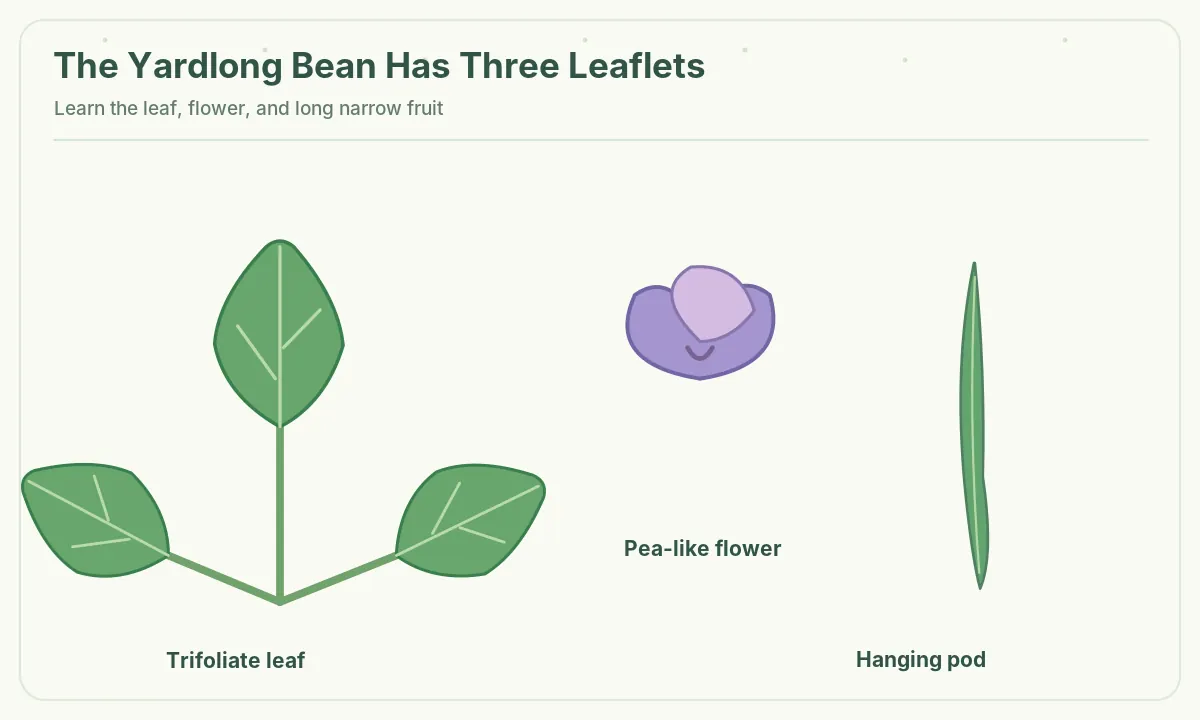
Find the botanical name Vigna unguiculata subsp. sesquipedalis, or a supplier’s equivalent yardlong bean identification. It is closely related to black-eyed peas, not the Phaseolus common snap bean. The mature leaves occur in groups of three leaflets; many cultivars have broadly pointed oval or somewhat triangular leaflets. The flowers resemble a small pea blossom and may be pale purple, violet or another light color according to variety. Long green, red or purple pods hang from flower stalks.
Seed colors also vary, so don’t identify a crop by a black or reddish seed alone. If purchasing beans for sowing, choose labeled viable planting seed, not cooked or packaged food beans. Record the cultivar because advertised pod length and color can differ greatly. Plant identity matters when deciding how tall to make a trellis or when a slender pod is edible.
Wait for Warm Ground and Prepare Drainage
UF/IFAS calls yardlong bean a vigorous warm-season crop and notes that cold and waterlogging hurt growth. Delay outdoor sowing until local frost danger has passed and the soil has genuinely warmed. A USDA cold-hardiness map does not predict last frost for a given garden and should not replace local observations. The planting area should receive good sunlight and drain after watering or rain, with enough space for a tall climbing structure.
Do not fill the bed with rich nitrogen products simply because fast growing vines look impressive; bean crops may produce excessive leaves at the expense of pods in overfertilized soil. Improve drainage and soil structure with ordinary mature organic matter when needed, ideally based on a soil test. Avoid planting in a puddled or compacted path where roots lose oxygen.
Install the Support Before Sowing the Beans
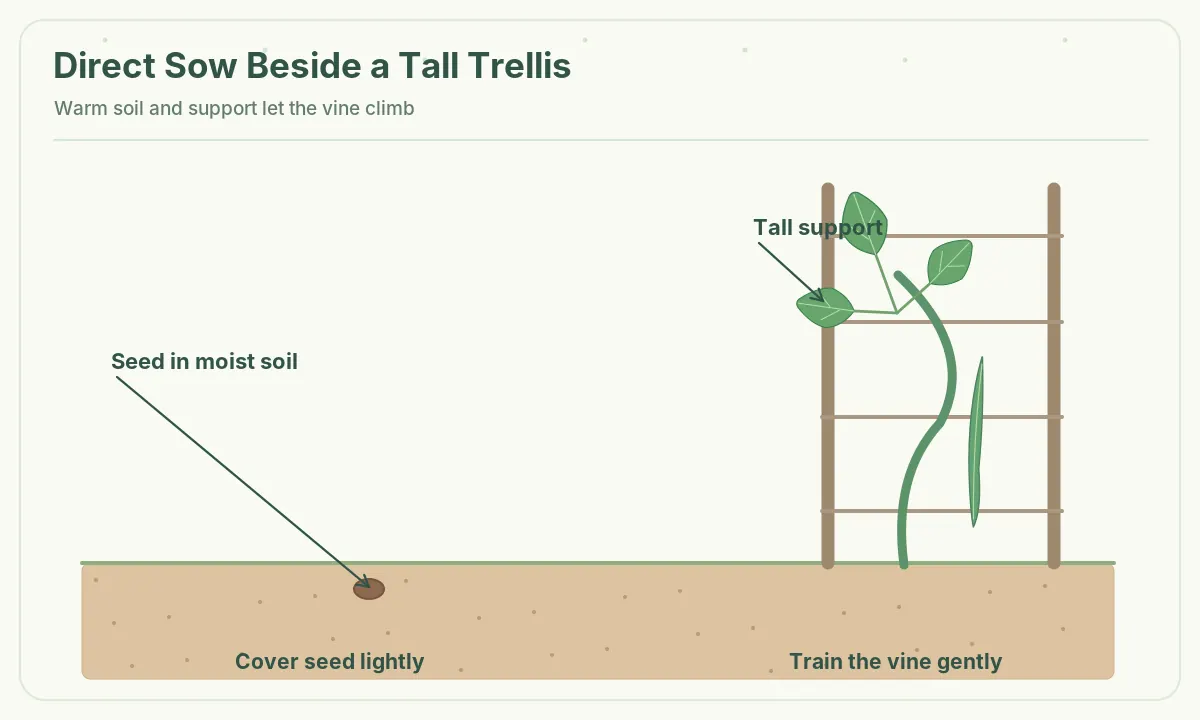
Yardlong beans twine as they climb. Texas A&M Extension emphasizes providing a support system for long, straight hanging pods, while UF/IFAS describes tall vines and trellises. Erect a stable trellis, woven net or pole structure BEFORE the plants are large. The structure must support vigorous foliage in wind and be placed where a gardener can harvest pods without dangerous overhead climbing. Use the recommended spacing on the cultivar packet and a layout that lets air move between rows.
A simple diagram should show the vine winding around a support, with pods hanging downward unobstructed. It must not portray yardlong beans as short unsupported bush plants that routinely produce straight long pods on bare soil. A low trellis can bend pods against the ground and makes them difficult to find.
Plant at a Modest Depth Into Moist Soil
Texas A&M lists about one-half to one inch deep for direct-sown yardlong bean seed in warm soil; UF/IFAS documents a deeper Florida raised-bed system used commercially. Those are different production systems, not a reason to combine the numbers into an arbitrary universal rule. For an ordinary home row, follow your cultivar supplier’s depth and the local extension context, keep soil moisture even, and avoid disturbing germinating seeds to inspect progress.
A yardlong seed is a substantial bean-like seed, not a dust-fine seed for surface sowing. Do not bury it six inches deep or leave it baking uncovered on the surface. Water gently after sowing. If two plants emerge in an overcrowded spot, thin carefully rather than pulling strong neighboring stems or injuring both root systems.
Recognize Climbing Growth and Guide It Gently
Early plants first make seed leaves, then true leaves that soon become the characteristic three-leaflet compound foliage. The stem will begin elongating and looking for support. Guide a loose vine toward twine or a mesh opening without cinching it tightly. Avoid tying a strangling knot around the growing stem; as the vine thickens it needs room to expand. Watch where pods and flowers form so you can preserve productive nodes.
A photographically accurate schematic shows the three leaflets attached to one common petiole and the long pods descending from a flower-bearing point, not an unrealistic cluster of single leaves grafted to the pod tip. Inspect the growing vines for aphids and distorted tips; a strong water stream or physical monitoring may be enough for small infestations, but check plant damage before any treatment.
Harvest Pencil-Slim Pods Before Bulges Develop
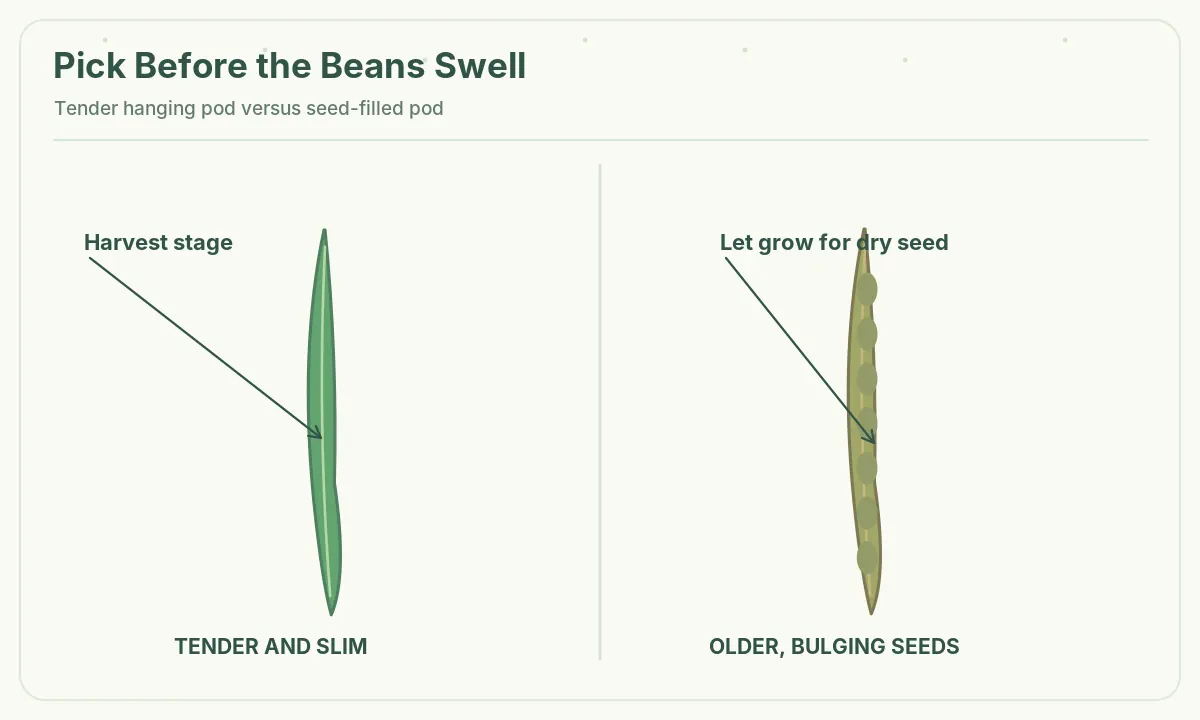
Texas A&M Extension says consumers commonly prefer pods roughly ten to twelve inches long and pencil-sized, though cultivars vary. UF/IFAS similarly recommends immature harvesting while seeds are not fully developed. For eating, look for a firm flexible pod that does not show pronounced bulging seed outlines; do not wait until the pod dries and turns leathery. Harvest frequently during productive weather because many pods grow quickly.
Support the stalk or peduncle with one hand and cut or snap the individual pod at its attachment with the other. Avoid yanking the whole vine off its support or slicing through the next young bud. A useful harvest comparison displays a slim hanging pod alongside an overmature bulging pod, not just an abstract green bar with the word READY.
Differentiate a Mature Seed Pod From a Tender Cooking Pod
A pod left long enough to fill with large seeds is a different crop stage. It can be saved for dry beans or planting seed when properly matured, but it is not the same tender vegetable used in stir-fries. Pods may become tougher, fibrous and visibly swollen with beans. Harvesting immature pods regularly encourages the plant to continue developing additional flowers and pods; do not claim that a single fixed weekly picking interval works for all climates.
Because beans are food, discard slimy or diseased portions, wash harvests in potable water and refrigerate promptly as appropriate. Identify disease before spraying a crop eaten so soon after picking. If a pod develops a few rust-colored marks, distinguish superficial damage from serious rot rather than labeling everything spoiled.
Troubleshoot Flowers With Few Pods
Poor pod set can involve cool weather, exceptional heat, root stress, lack of water, inadequate light or inconsistent pollination. First verify that the crop is actually yardlong bean and the vine is healthy and supported. A lush tower of leaves with very few flower clusters may reflect unsuitable conditions or excess nutrients rather than the need for another commercial bloom booster. Check soil, temperature and pest pressure before drawing conclusions.
As the season cools toward frost, pod production will decline. Plan the next sowing for a genuinely warm period. The practical sequence is identify Vigna, direct-sow in warm draining soil, install a strong support early, guide the twining shoots and harvest slim pods before the individual beans become prominent.
Related Guides
How We Research This Guide
We checked the following horticultural and botanical sources on October 27, 2026: aggie-horticulture.tamu.edu — Texas A&M Extension describes yardlong bean planting depth, spacing, climbing supports and harvesting pencil-sized tender pods.; ask.ifas.ufl.edu — UF/IFAS identifies yardlong bean as Vigna, explains trifoliate foliage, warm-season growth, trellis use and immature green pod harvest.; gardeningsg.nparks.gov.sg — Singapore NParks describes long bean as a twining edible climber with sun and soil needs.. These references support the cited plant traits and growing steps; specific results depend on cultivar, local weather and site conditions.
No paid product or manufacturer endorsement appears here. See our affiliate disclosure for the site-wide policy. We do not imply a sponsorship or a special vendor agreement.
No. Yardlong beans are Vigna cowpea relatives, distinct from common Phaseolus snap beans.
Climbing varieties need strong vertical support for vigorous vines and straight hanging pods.
Avoid it. They grow best in warm conditions and are susceptible to cold and frost.
Pick when pods are slender and flexible before internal seeds swell noticeably.
Check warmth, sunlight, water, plant vigor and possible overfertilization before adding inputs.