
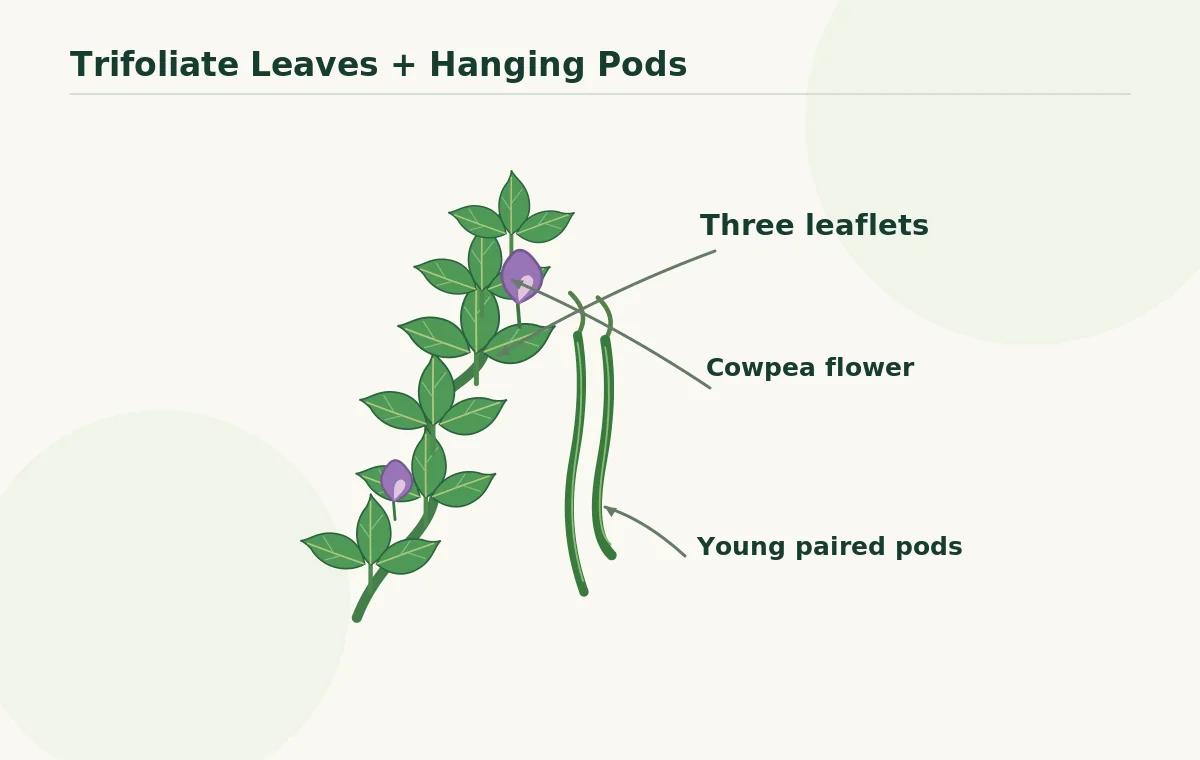
Yardlong beans, sometimes called asparagus beans or Chinese long beans, are a climbing form of cowpea rather than the ordinary common snap bean. Their leaves are divided into three leaflets, and their slender pods hang down in conspicuous pairs or clusters from the vine. Flowers may be pale lavender or violet depending on variety. A pod can be impressively long and already too fibrous for the tender snap-bean stage.
Know the Cowpea Vine Behind the Long Pod
The botanical distinction makes a practical difference: choose a variety sold specifically as yardlong bean and allow vertical growing room. The vigorous vines twine around strings or poles; the harvested part is the immature pod, not a fully developed dry bean seed. If you are saving seed instead, that is a different crop endpoint and should not be confused with picking tender cooking pods.
Plant After Soil Has Warmed
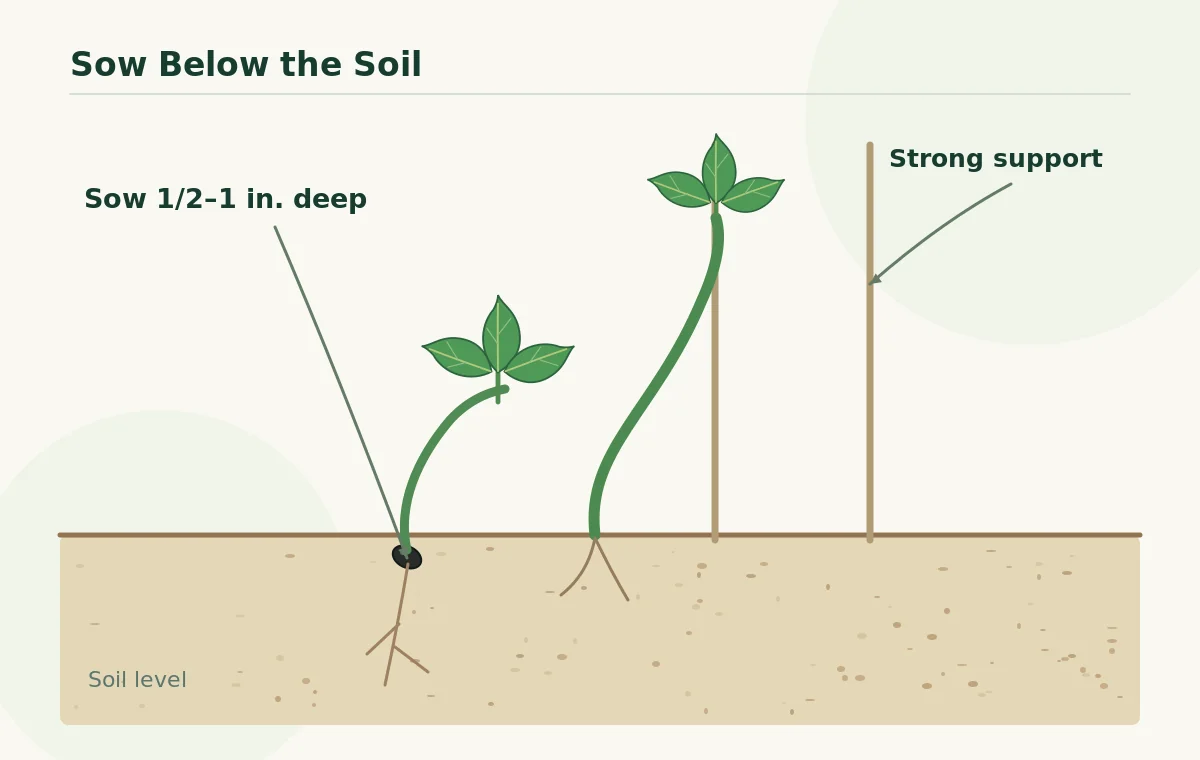
Yardlong beans favor warm growing conditions and do not establish well in cold wet soil. Prepare a sunny, well-drained site after local frost danger has passed and the soil is genuinely warming. Texas A&M Extension suggests direct-sowing seed about one-half to one inch deep in prepared soil. That means the seed belongs below the surface, not pressed onto dry mulch with its upper edge visible.
Plant the seeds close to the support they will climb, using the spacing recommended for your cultivar or your local Extension guide. Heavy clods, crusting and deep burial can hinder emergence. If a cool spell follows planting, the best remedy is often patience and appropriately timed reseeding, not repeated heavy watering. Local weather, soil temperature and drainage matter more than a calendar copied from another region.
Build the Support Before Vines Take Over
Purdue Extension recommends sturdy poles and twine, and Texas A&M notes that the vines can climb many feet. Set up a secure trellis at sowing so you do not disturb the roots later. A fence panel, well-anchored frame or taut strings can work, provided the structure safely carries a mature leafy vine, wind load and long hanging pods.
Guide young shoots gently toward twine without tight knots around the growing stem. The tips will wrap and find new support. Keep pods free to hang straight rather than trapping them against mesh where they can twist. Site the trellis where you can reach both sides for frequent picking and where it does not shade your other sun-loving crops more than expected.
Recognize Blossoms and Developing Pods
A flowering yardlong vine may carry delicate cowpea-like blossoms followed by very narrow green pods. Early pods are slim and extend rapidly in favorable warmth. Rather than insisting every pod reach an advertised maximum length, inspect one regularly and learn the texture preferred for your kitchen. Market-length recommendations vary by growing region, variety and buyers, so a flexible young pod is a better check than length alone.
Look along the stem for a pair of hanging pods attached at their stalks. Do not mistake a flower stalk for the main vine or pull on the entire cluster. Newly set pods can be damaged by rough handling, while old swollen pods left on the plant may redirect resources into mature seed. Check developing pods more often once flowers and the first harvest arrive.
Pick Thin Pods Before Seed Bulges
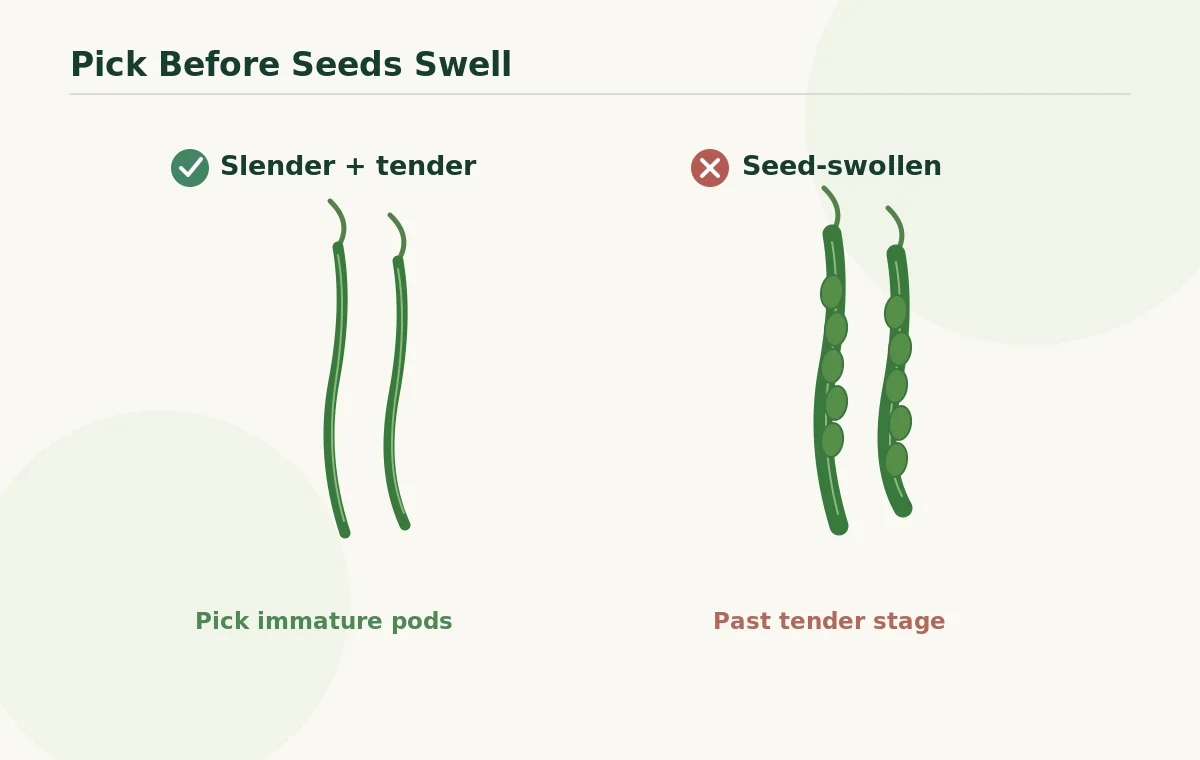
For tender green eating, the best cue is a relatively narrow pod whose seeds have not enlarged into prominent beads. Purdue lists approximately ten to twelve inches as a typical harvest target in its guidance, but some cultivars produce longer tender pods. Texas A&M advises frequent picking for quality. The dramatic fully elongated pod is not necessarily the best one to cook.
Support the pod with one hand and pinch or snip its small stalk with the other. Leave the vine and nearby flowers intact. Avoid yanking downward; pulling hard can tear a flowering spur or break tender stems. A clean cut above the individual pod is a useful habit even when a mature pod releases easily with a gentle twist.
Keep Plants Growing in Summer Heat
The bean’s heat tolerance does not mean that dry roots are harmless. Keep moisture relatively even while avoiding persistent soggy soil. Mulch can reduce crusting and rapid evaporation, but leave air around the base and watch for stem damage. The plant can tolerate soils that are not excessively fertile; an automatic large dose of nitrogen may encourage leafy growth at the expense of flowers and pods.
Inspect the undersides of leaves and pods periodically for aphids or other insects rather than spraying on a fixed schedule. Hot humid periods can also encourage foliage problems when vines are densely packed. Improve airflow through trellis placement, remove severely affected material when justified, and ask local Extension for a diagnosis before considering any pesticide.
Compare Slender and Seed-Swollen Beans
A good harvest comparison uses two pods from the same general type of plant. The eating-stage pod is narrow, relatively smooth and flexible with only faint seed outlines. The overmature pod is thicker, with obvious bumps marking enlarged seeds, and is more likely to be fibrous. The comparison is about texture and seed development, not about a magical absolute length that fits every variety.
If a few pods pass the tender stage, mark them for potential dry seed rather than mixing them unnoticed into the cooking harvest. Dry seed saving needs an adequately mature dry pod and appropriate storage, whereas fresh cooking pods are picked green. Do not harvest green pods then assume the seeds are mature enough to store for the next planting.
Finish the Season and Record Results
In a climate with a reliable warm season, repeated harvest encourages a succession of tender pods. As nights cool and vine growth slows, quality may change. Remove badly diseased material according to local garden sanitation guidance and do not carry over suspect seed without understanding the issue. If frost ends the season, the vine is an annual crop in the garden and must be replanted.
For next year, write down the cultivar, planting date, first flowering, trellis height you could comfortably reach and the pod size your household liked best. Those observations help distinguish a variety problem from an unsuitable sowing window. A shorter accessible support that still holds the vine safely is often better for a home gardener than an impressive but unharvestable tower.
Related Guides
How We Research and Check the Drawings
We compared university Extension and horticultural guidance with the plant’s visible structures rather than assuming all varieties behave alike. Sources checked October 28, 2026: Texas A&M AgriLife Extension; Purdue Extension bean guide; UF/IFAS climbing bean guidance. Where climate, variety, or growing conditions can change the answer, the observations below take priority over a single fixed calendar date.
This independent educational article contains no sponsored product endorsements or confirmed affiliate links. See our affiliate disclosure. Use local Cooperative Extension recommendations when your weather, soil, or pest pressure differs from the examples shown.
Yes. These are vigorous twining cowpea vines; a sturdy support helps pods hang and lets you harvest without tangling the plants.
Texas A&M suggests roughly one-half to one inch in warmed, prepared soil; adjust for the seed packet and local soil conditions.
No. Pick while slender and tender, before prominent seed bulges develop; the preferred length varies by cultivar.
It is safer to support the pod and snip or pinch its stalk so flowering shoots and developing beans remain undamaged.
They are a cultivated form of cowpea, Vigna unguiculata, eaten young like snap beans but botanically different from common beans.