
Disclosure: Independent educational gardening content, not an advertisement. There are no confirmed affiliate approvals for this guide; review the site disclosure. The recommendations that follow distinguish crop biology from universal shortcuts. This article addresses herb care is not one-size-fits-all, and links to source-specific Extension and federal guidance before the FAQ.
Identify Each Herb’s Life Cycle Before Planning Care
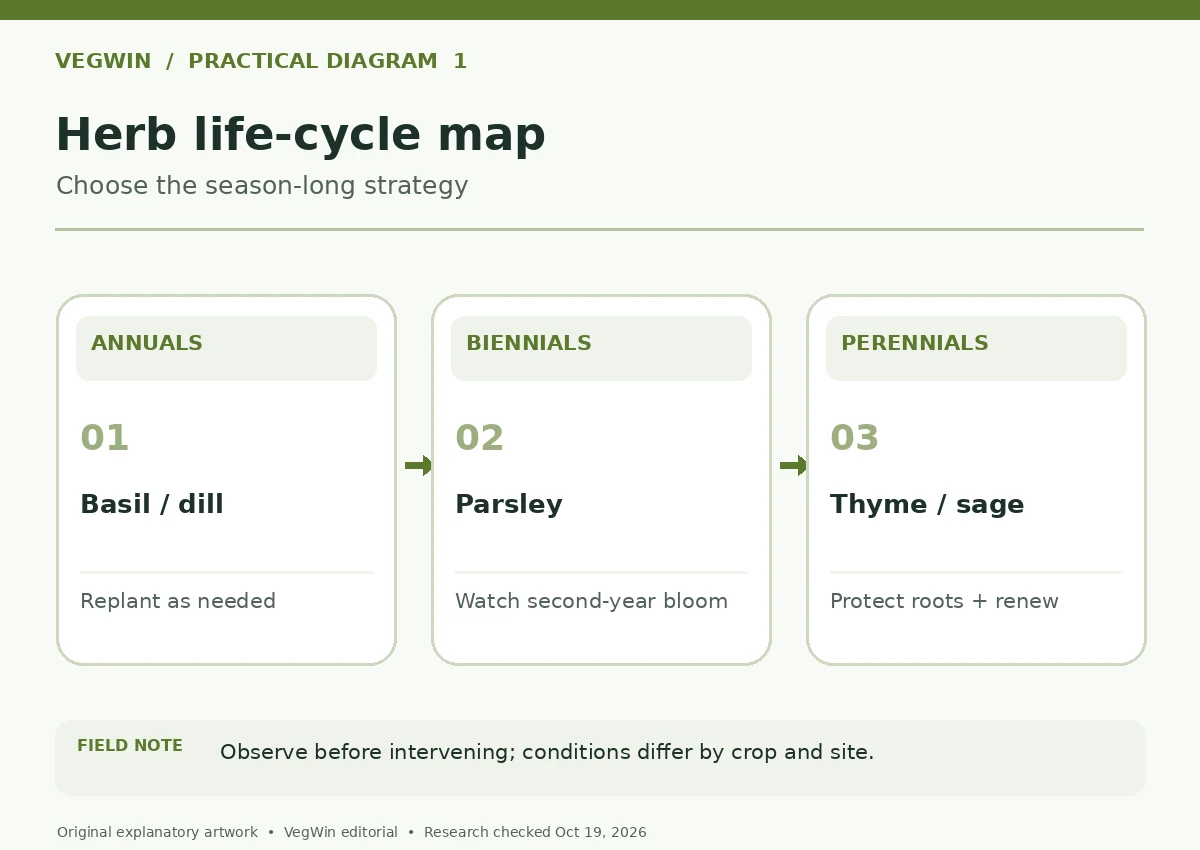
The phrase growing herbs covers plants with very different schedules. Basil and dill are commonly treated as annuals; parsley is often a biennial grown for foliage; thyme, oregano, sage and chives can live across seasons where winter conditions suit them. A plant that naturally flowers and finishes its life cycle needs a different response from a long-lived clump that can be lightly trimmed and carried into another year. Iowa State University Extension groups herbs by growth habit, propagation and harvest stage, which is more useful for maintenance than one generic watering rule. Our guide “Herb Garden Planning” goes into more detail.
Make a simple inventory: herb name, annual/biennial/perennial status in your region, edible part, typical harvest stage and winter tolerance. The status can change with local climate; a tender perennial may be grown as an annual in a cold region. Do not assume a USDA hardiness zone provides a complete care calendar. Local winter exposure, site drainage and the particular cultivar all matter. Annual herbs can be reseeded as needed; perennial herbs need enough leaves and root reserves to survive trimming and environmental stress.
Group Plants by Root Moisture Behavior
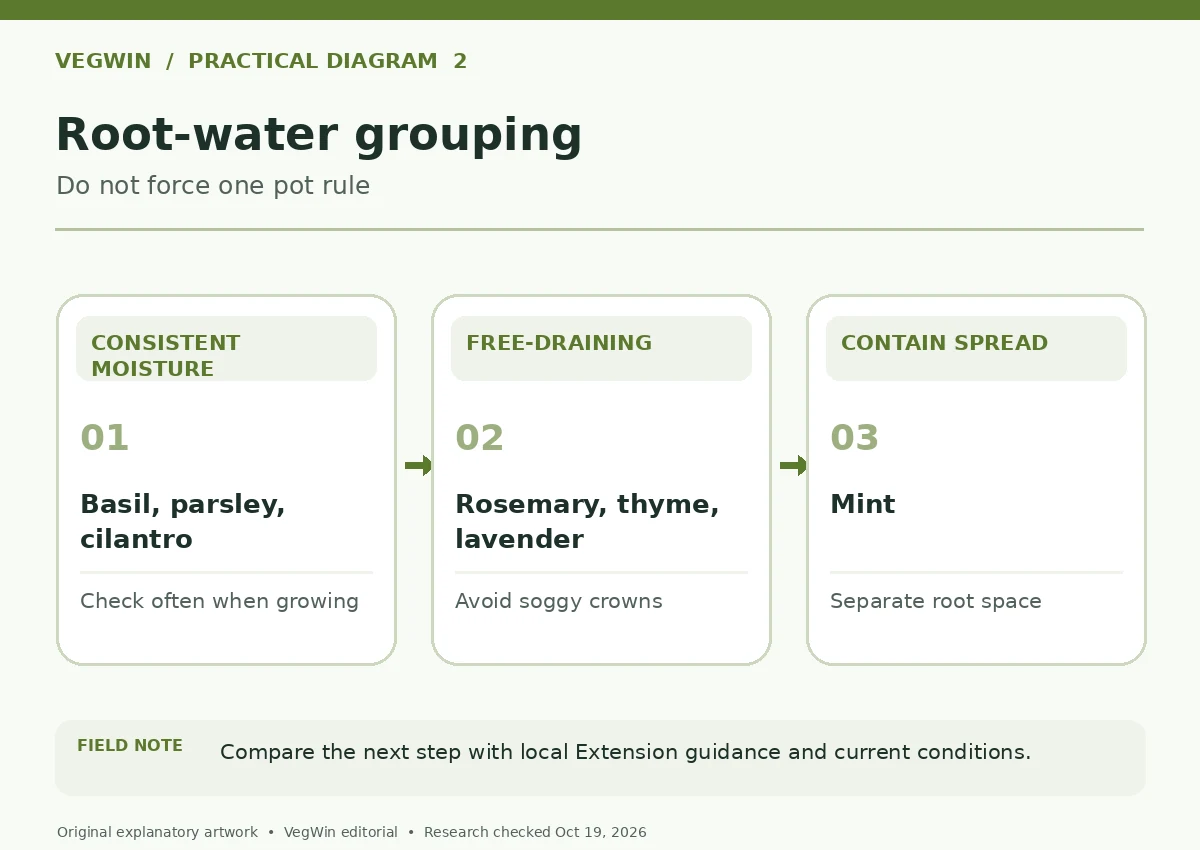
Herbs do not all prefer the same level of root-zone moisture. Basil, parsley, cilantro and many leafy herbs usually need more consistent water while actively growing. Rosemary, thyme, oregano and lavender often suffer when roots remain wet in poorly drained media. Their requirements vary with plant size, heat and soil texture, so these are comparison groups, not instructions to let any plant wilt severely. Minnesota Extension places strong emphasis on drainage and avoiding rich wet soils, and Maryland Extension distinguishes container herb groups by their water behavior.
If two herbs have conflicting root requirements, give them separate containers or distinct bed areas. A mixed planter that keeps rosemary constantly soggy while cilantro is comfortable will eventually create a predictable maintenance problem. Check soil below the surface before irrigating. During hot weather, a light pot may need closer observation than a large in-ground clump; during prolonged rain, the same pot may need improved drainage rather than another watering. Mulch can conserve moisture, but keep a clear view of the crown where stem rot would first be visible.
Give Adequate Light Without Promising Identical Results
Most culinary herbs perform well in bright positions, but the exact number of direct sun hours and acceptable partial shade varies. Iowa State Extension offers a general bright-sun range and notes that containers and windowsills can work for some herbs. Dense shade tends to cause stretched, sparse growth, particularly in leafy herbs that are repeatedly harvested. At the same time, sun exposure reflected from a wall or dark patio can increase moisture stress for small containers. Observe new growth and water demand rather than copying a sun diagram from a different latitude.
Plan for the mature size of each herb. Mint spreads vigorously by stems or rhizomes; chives form clumps; dill can be upright; sprawling oregano can spill over paths. Extra spacing improves air movement and makes inspection easier. Avoid automatically trimming every plant to the same height; some produce flower heads or seeds you may want, and others need woody structure preserved. Indoor herbs often require supplemental light in darker months; growing a small winter cutting garden is different from expecting uninterrupted outdoor growth where winter freezing is severe.
| Care group | Example herbs | Key management decision |
|---|---|---|
| Tender leafy annuals | Basil; often cilantro | Succession / remove flowers for leaves |
| Leafy biennials | Parsley | Expect seed stalks in later season |
| Woody perennials | Rosemary, thyme, sage | Drain well; avoid hard old-wood cuts |
| Spreading perennials | Mint; some oregano | Contain rhizomes and divide if needed |
Harvest Annuals and Perennials Differently
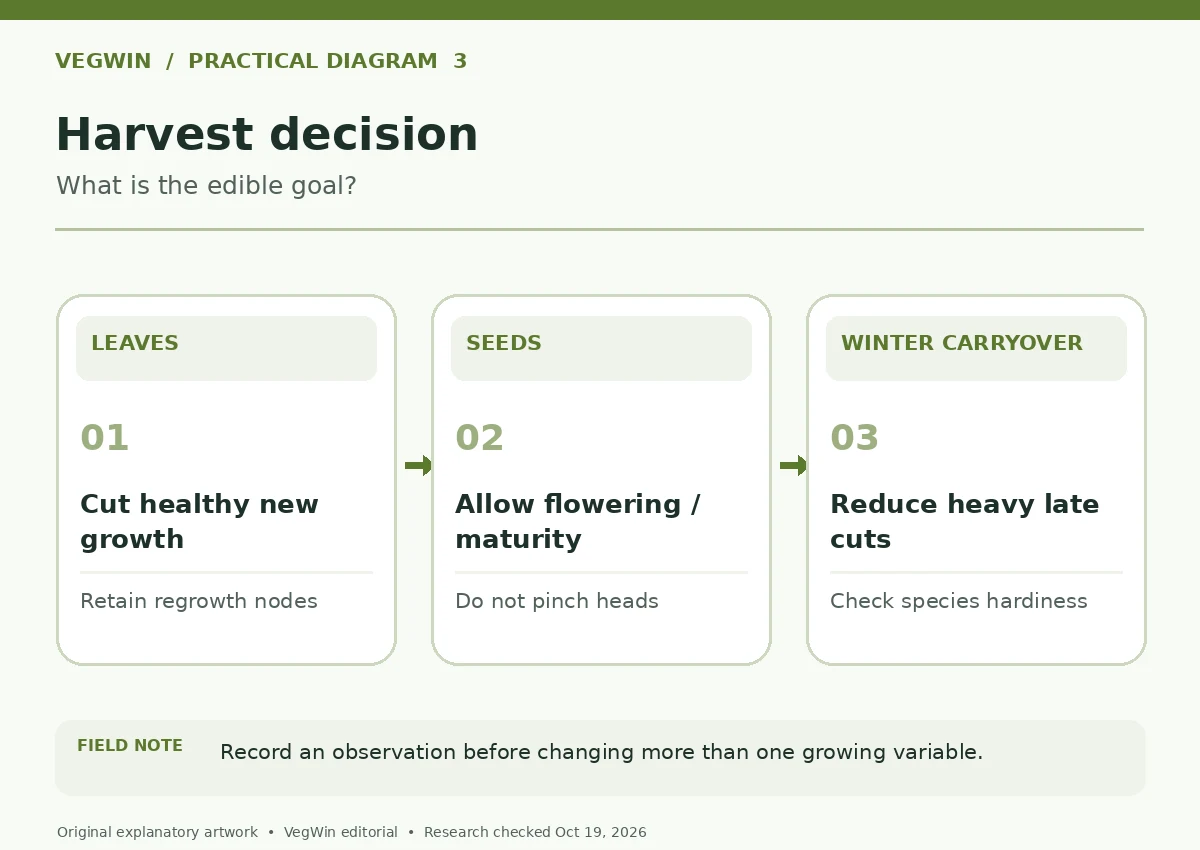
Repeated harvesting is one of the joys of herbs, but the correct cut depends on the plant and your goal. For leafy annual basil, picking above living nodes can encourage branching, and removing flower buds is useful if leaves remain the priority. For dill grown to harvest seeds, cutting the plant back repeatedly defeats the goal. Iowa State Extension distinguishes leafy annual harvests from the lighter cuts recommended for many perennials. Strong new growth is a better harvesting signal than a rigid monthly date. For the fuller picture, see our guide to growing basil for repeat harvests.
Use clean scissors or pruners and avoid stripping a struggling plant. Harvesting after dew dries and before peak heat can improve handling quality for many herbs. Do not assume every herb should be heavily sheared: rosemary and lavender may not regrow well from old bare wood, and perennial plants need time to restore energy. For chives or parsley, observe whether fresh leaves appear after the cut; for coriander, determine whether you value foliage or mature seed. A repeated-cut plan should name the target edible part first. Our guide to growing parsley for repeated harvests goes into more detail.
Know When to Replace, Divide or Protect a Plant
Cilantro often shifts quickly toward flowering in lengthening, warming days; a succession of younger plants may be more successful than repeatedly forcing one bolting plant back into leaves. Parsley is commonly grown for first-season foliage and may send up seed stalks in its second year. Perennial thyme or chives can sometimes be divided or renewed where local guidance supports it. Mint can become root-bound in containers and should be managed to limit its spread. The correct replacement signal depends on species and plant health, not a promise that all herbs will regrow forever.
In climates with freezing winters, determine which perennials are actually hardy at the site and which need protection, pot relocation or replacement. Drainage during cold wet periods can matter as much as the winter minimum. A pot on exposed paving can experience more temperature fluctuation than an established bed. Before moving a plant inside, check for insects and available light; a dark kitchen window cannot compensate for every outdoor growing requirement. Plan next spring’s replacements in advance rather than overwintering obviously declining, diseased stock.
Investigate Leaf Trouble Before You Fertilize
Pale leaves, weak aroma and poor regrowth can result from shade, aging, temperature, water stress or insects, not simply nutrient shortage. Minnesota Extension notes that overly rich conditions can cause lush foliage at the expense of concentrated flavor in some herbs. Start with the root zone: is water draining, do roots smell unhealthy, and has the container become packed? Then check the plant’s life stage. A parsley plant naturally entering its reproductive season is not an iron-deficiency problem because its leaves change shape.
Look carefully for leaf miners, aphids, fungal growth or physical damage; identify the organism rather than using a general treatment across mixed edible herbs. Keep foliage dry when appropriate for disease prevention, improve spacing and remove severely unhealthy material as advised locally. Do not invent pesticide mixtures or apply a product labeled for ornamentals to a culinary herb. If a crop-specific treatment is genuinely needed, consult current Extension IPM advice and the registered label, including harvest restrictions. Often the safest option is to replace a small annual herb plant.
Track Harvest Value Instead of Counting Herb Pots
An effective herb collection is the one that supplies the flavors you actually cook with. A modest amount of thyme may serve a household for months, whereas frequent basil dishes require several actively growing plants. Track what you cut, what flowers, what dies back and what you need to reseed. Mark harvests as leaves, tender stems or seeds, because those goals can conflict. Compare each herb’s performance in its own care group rather than ranking mint against rosemary on one watering schedule.
At season’s end, preserve only sound herbs using tested, crop-appropriate drying or freezing guidance; this is not a home-canning procedure. Renew labels and identify which perennial plants were resilient, which containers dried too fast and which annuals were replaced successfully. This article is intended as an ongoing maintenance guide rather than another general herb-bed blueprint or a substitute for the site’s detailed basil, dill, mint, parsley and cilantro instructions. The best improvement may be fewer, better-matched herbs rather than more pots.
Related Guides
How We Research and Set the Scope
This guide is seasonal maintenance by life cycle, water behavior, replacement and harvest. Live site overlap must be reviewed before publishing. A web attempt to access the active VegWin.org article inventory did not succeed; therefore this is an editorial overlap screening, not verification that all live WordPress URLs are unique. Check the site and category assignment in WordPress before manually publishing. Biological claims depend on the crop, variety and region. No unverified affiliate program, product rating, pesticide recipe or fertilization rate is implied.
Sources checked 2026-10-19: Iowa State University Extension: Growing, Harvesting, and Drying Herbs; University of Minnesota Extension: Growing Herbs in Home Gardens; Penn State Extension: Growing Herbs in the Garden; University of Maryland Extension: Growing Vegetables in Containers and Salad Tables. Each institution supports a specific claim in the source record below; these sources do not sponsor VegWin. Their evidence should be interpreted in its own geographic and crop scope. For sponsorship policy, see the affiliate disclosure.
No. Leafy herbs such as basil often need more consistent moisture, while many woody herbs require especially good drainage.
It depends on species, cultivar, local winter cold, drainage and exposure. Use region-specific guidance for perennial survival.
Only if it supports your harvest goal. Dill or cilantro grown for seed must be allowed to flower and mature seed.
Cilantro naturally bolts as conditions and plant age change; replacing plants or timing a new sowing often works better than severe cutting.
No. Determine species, growth, soil test and container conditions first. Overfeeding some herbs can cause unwanted lush growth.