
An overnight frost forecast is not a reason to throw plastic straight onto every vegetable. First identify what is growing, whether the forecast is a brief calm-night frost or a deeper wind-driven freeze, and whether the plants are in containers, beds, or a tunnel. A cover can reduce heat loss under some conditions, but it does not make a warm-season crop frost-proof. This guide is a short-term protection procedure, not a substitute for selecting crops suited to your season. Hardiness zones describe typical winter extremes for perennials, not a planting calendar for annual vegetables. Use local forecasts, your crop’s tolerance, and actual garden conditions.
Assess the Forecast and Crop Vulnerability First
Check your local hourly forecast for the overnight low, the hours near freezing, expected wind, and the temperature at your garden if you have a reliable thermometer. Colorado State University Extension separates radiation frosts, commonly associated with clear calm nights, from advective freezes brought by much colder moving air. A cover that helps on a marginal radiation-frost night may offer insufficient protection during a prolonged cold outbreak. Weather services forecast air temperatures at standardized locations; a sheltered patio or exposed low bed can behave differently.
Sort plants into cool-season crops that tolerate some cold, tender transplants such as tomatoes or basil, and containers that can be moved to suitable shelter. Crop variety, stage of growth and health affect injury risk. A newly transplanted tender vegetable is not interchangeable with an established cool-season leaf crop. If forecast severity exceeds what a cover can reasonably mitigate, protect movable plants indoors if conditions allow and accept that an outdoor cover may not prevent damage. Do not promise a universal degree of protection from one product. Our guide “Vegetable Garden Shade Cloth” shows how to reduce heat without losing needed light.
Choose Breathable Fabric or a Supported Cover
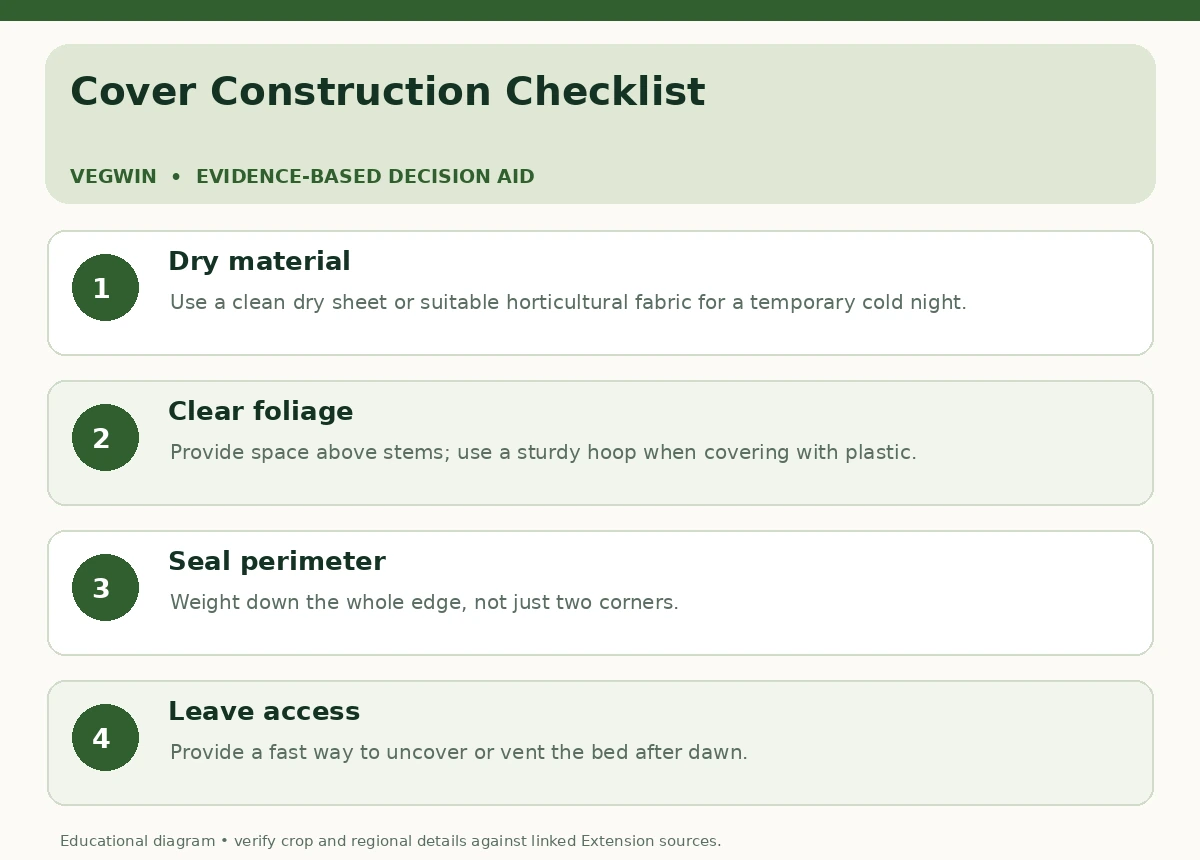
Use lightweight horticultural fleece or a row-cover fabric when you need an airy covering that passes some light and water; check the product grade because frost performance varies. For a single cold night, clean dry bedsheets or lightweight blankets can help when installed securely. Colorado State notes that wet fabric can lose effectiveness and that opaque temporary materials must come off in daytime so the soil can regain warmth. Avoid material heavy enough to crush soft stems or snag leaves when wind rises.
If using clear plastic, suspend it over hoops or a stable frame rather than letting plastic press directly against foliage. Contact points can create cold injury, and plastic traps heat surprisingly fast when sunshine returns. A tunnel is not an unattended insulated box. Material, frame height and whether pollinators need access also influence selection. A row cover used for insect exclusion has a different seasonal role from a blanket used for one night; record which job this cover is doing before leaving it installed.

Secure the Bed Before Temperatures Fall
Put covers in place while the ground still holds daytime warmth, before leaves are chilled. Drape with enough slack for plants to stand without abrasion. Anchor every edge with soil, appropriate clips, sandbags or smooth weights so wind cannot lift the fabric and strip out the warmer air beneath. Inspect the perimeter for gaps, especially around stakes and irregular raised-bed corners. Do not tie material so tightly around stems that it bends tender shoots.
For containers, compare the effort of constructing individual shelters with moving pots to a safe, sufficiently lit sheltered location for the event. A covered pot outdoors still has a smaller root-zone thermal buffer than surrounding garden soil. Keep covers clear of outdoor heaters, wiring or flames; an improvised heat source can create a greater hazard than the frost. Take a photo of how you secured the edges so you can reproduce the arrangement quickly during the next forecast event.
Set a Morning Removal and Venting Alarm
The job is only half finished when the bed is covered. As sunlight reaches a sheet-covered planting, remove the opaque blanket or sheet once the immediate freezing risk passes, allowing light to reach leaves and the soil to recover stored heat. With a clear plastic frame, open vents early enough to prevent a sudden temperature spike. Colorado State warns that sunny sealed frames can overheat dramatically even when outdoor air still feels cool. If freezing air persists, adjust gradually while monitoring the space inside the cover. Our guide “Build a Raised-Bed Hoop Tunnel That Can Vent and Open” goes into more detail.
Breathable row fabric can often remain in place for longer periods than a blanket, but it still needs checks for plant growth, high temperatures and pollinator access. Uncover insect-pollinated crops when flowers require pollination. After an extended cold spell, do not assume a cover’s printed insulation claim translates directly into your garden’s realized protection. Wind, soil moisture, grade of fabric, gaps and crop tolerance all matter. A small thermometer under a test cover provides useful local observations without being a guarantee. Our walkthrough on how to cover young citrus trees for frost without trapping heat or moisture sets out each step.
Troubleshoot Common Frost-Cover Mistakes
Several failures look alike the following morning. Scorched leaves despite a cover may indicate frost beyond the material’s capacity, fabric displacement, plastic contact or sun-related overheating after the frost ended. A soaked blanket left in place can work against protection. Torn corners reveal windy spots that should be reanchored. If stems have been physically broken by a heavy wet covering, the material itself may be the problem, not the cold. Inspect the pattern before buying a stronger cover.
Photograph the crop at first light, then again after a warm recovery interval. Do not prune all wilted foliage immediately unless clearly rotting tissue needs removal; some leaves may recover, and waiting can reveal the true extent of damage. Clean or dry covers before storage so the next event does not begin with muddy, waterlogged fabric. Treat repeated frost injury as a signal to reconsider transplant timing, crop choice or site exposure instead of repeatedly increasing cover thickness.
| Situation | Preferred first step | Critical follow-up |
|---|---|---|
| Calm, borderline-frost night | Dry sheet or suitable row fabric | Anchor edges; remove opaque sheet after risk |
| Clear plastic over tender crops | Use hoops to avoid foliage contact | Vent promptly as sun warms enclosure |
| Windy, deep or prolonged freeze | Check realistic protection limits | Move containers if suitable; accept possible loss |
| Cover over flowering crop | Check pollination requirement | Open when flowers need insect visits |
Use a Simple Three-Point Frost Log
For each event, note three observations: expected overnight low and wind, cover method and anchoring, and the morning result. Also note whether the cover touched the plant and when it was opened. Comparing these records helps separate material failures from an exceptionally cold site. If one row is consistently injured while another is not, check shading, exposure, cold-air drainage and planting stage before concluding that one variety has a special cold tolerance.
Write a removal reminder at the same time you set the cover. A family member who does not garden should still be able to read the card and understand when the frame needs inspection. For recurring shoulder-season gardens, plan a sturdy reusable frame instead of rebuilding an unstable plastic tent each week. For a single forecast night, the safest effective solution may be an appropriately anchored simple fabric. Choose based on a clear protection goal, not marketing promises. For more detail, our guide “Cold Frame Vegetables” looks at a practical venting and harvest plan.

Keep Frost Rescue Distinct From Seasonal Planning
A separate fall or winter vegetable-garden plan answers which crops to sow and when to expect useful growth; this article answers what to do when an existing planting faces an imminent frost. Covering a summer tomato in October cannot create enough winter sunlight to sustain it indefinitely. Likewise, a frost warning does not justify moving every hardy kale plant indoors. Protection is a short tactical decision layered over a regional growing plan and the crop’s own biology.
For future plantings use local last- and first-frost information together with current forecasts, soil temperature, specific crop tolerance and Extension guidance. Do not turn a USDA hardiness-zone map into annual planting dates. When the event is over, decide whether the plant remains worth protecting, whether a planned harvest should happen earlier, and whether a more season-appropriate crop is the better next use of the bed. This is measured risk management, not a promise to defeat weather.
How We Research and Maintain This Guide
We checked the linked sources on October 19, 2026. Claims below are tied to specific university Extension or National Center for Home Food Preservation guidance, not to invented trials, a product endorsement, or universal regional conditions. These original graphics are simplified decision aids, not diagnostic photographs. The site owner should check local Extension recommendations, crop identity, packaging instructions and WordPress overlap before manually publishing. Actual protection depends on local conditions and the material; no universal temperature buffer is implied. Independent access to site URL, WordPress category and current published overlap remains unavailable.
Evidence and further reading: [1] Colorado State University Extension [2] University of Maryland Extension [3] Penn State Extension
All three buttons lead to independent educational sources and are not paid recommendations. We checked sources including affiliate disclosure.
Avoid direct plastic contact. Suspend clear plastic on hoops, secure the perimeter and vent it as soon as sun can heat the enclosed space.
Remove opaque household sheets and blankets when the immediate freezing risk passes. Breathable horticultural row cover has different light and ventilation characteristics but still needs monitoring.
It depends on grade, wind, installation and soil conditions. Do not promise the product maximum or translate a trial result into a guaranteed garden temperature.
No. It is a winter-hardiness indicator, not a short-range freeze forecast or annual vegetable planting schedule. Check local weather and crop tolerance.
Check for cold damage, mechanical abrasion and heat buildup. Document symptoms, correct an ongoing hazard and allow time to assess recovery before drastic pruning.