
A strawberry runner is a slender aboveground stem that travels out from the parent crown and can form a new daughter plant. Gardeners sometimes call these vines, but a strawberry does not climb like a cucumber. Runners are useful if you want June-bearing plants to fill a matted row or to propagate a selected healthy plant. They are less welcome when a bed is crowded or a day-neutral plant is grown primarily for a continuous fruit crop. The right choice is based on plant type and your plan for available space, not a single calendar date that applies everywhere.
Find the Parent Crown Runner and Daughter Plant
At soil level, the strawberry parent has a compact crown with leaf stems, flowers and roots emerging from it. A runner is a narrow horizontal stolon stretching away from that crown. Along the runner, a small rosette of leaves forms and may develop roots where its base touches moist soil; that rosette is a daughter plant. Strawberry leaves generally have three leaflets, unlike many garden weeds. Trace the connection visually so you do not cut a productive fruit stem by mistake. A runner does not produce the same structure as a flower stalk, and a daughter plant is not independent until its own roots can support it.
Choose Between Filling a Row and Focusing on Fruit
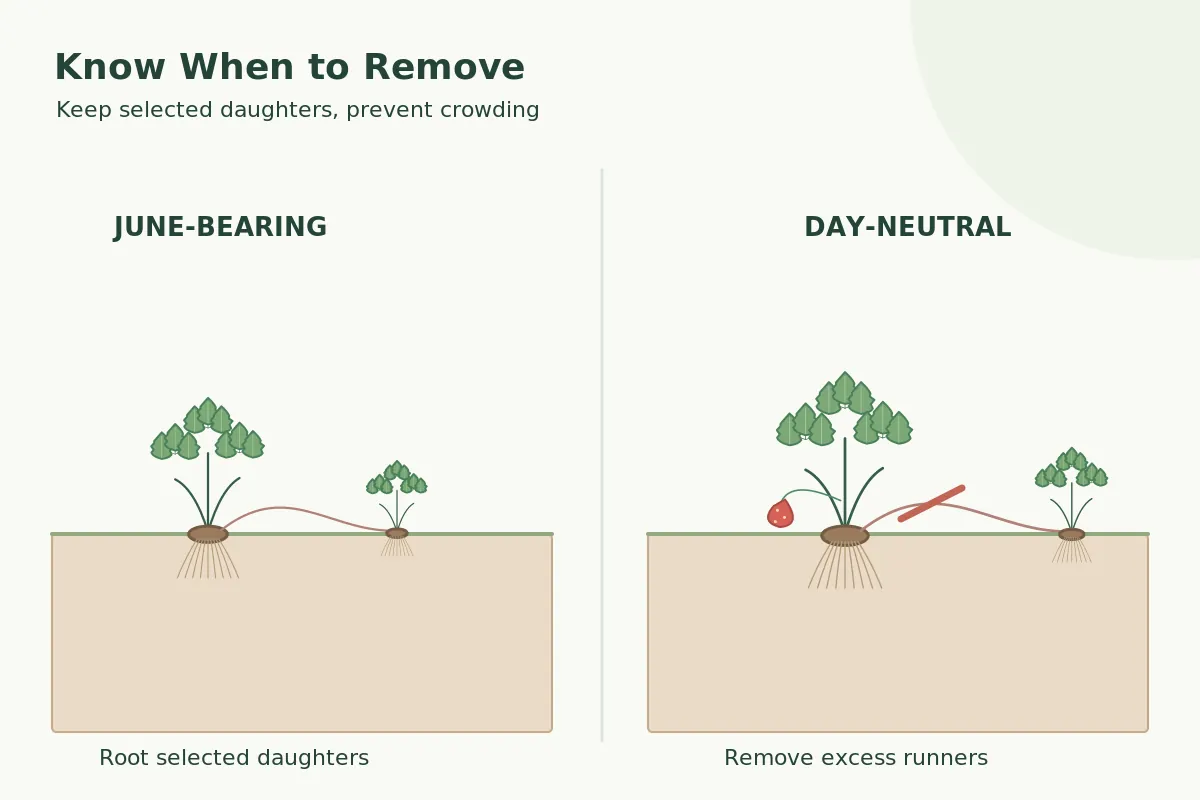
University of Minnesota Extension describes June-bearing strawberries grown in a matted-row system, where selected runners root to establish the row for future production. Day-neutral production commonly removes runners to direct growth toward fruiting instead. Everbearing varieties vary in runner production; use cultivar guidance and garden objectives rather than assuming they behave exactly like June-bearers. If you want more plants, keep a limited number of healthy daughters in designated space. If you want easy picking and airflow in a small container, removing most runners is usually simpler. Assess whether the parent is strong enough before deciding to propagate.
Select Healthy Daughter Plants Before Rooting
Look for a vigorous parent without suspicious mottling, wilting, or severely distorted growth. Vegetative propagation also copies disease problems from infected stock, so do not deliberately spread weak runners. Choose a developing daughter with fresh leaves and a visible crown. A rosette that is still tiny may need additional time connected to the parent before being handled. If an older bed has had chronic disease, buying clean nursery stock may be a better expansion plan than multiplying its runners. Keep variety labels with planned daughter positions so you can tell productive cultivars apart next year.

Place the Daughter Crown at the Soil Surface
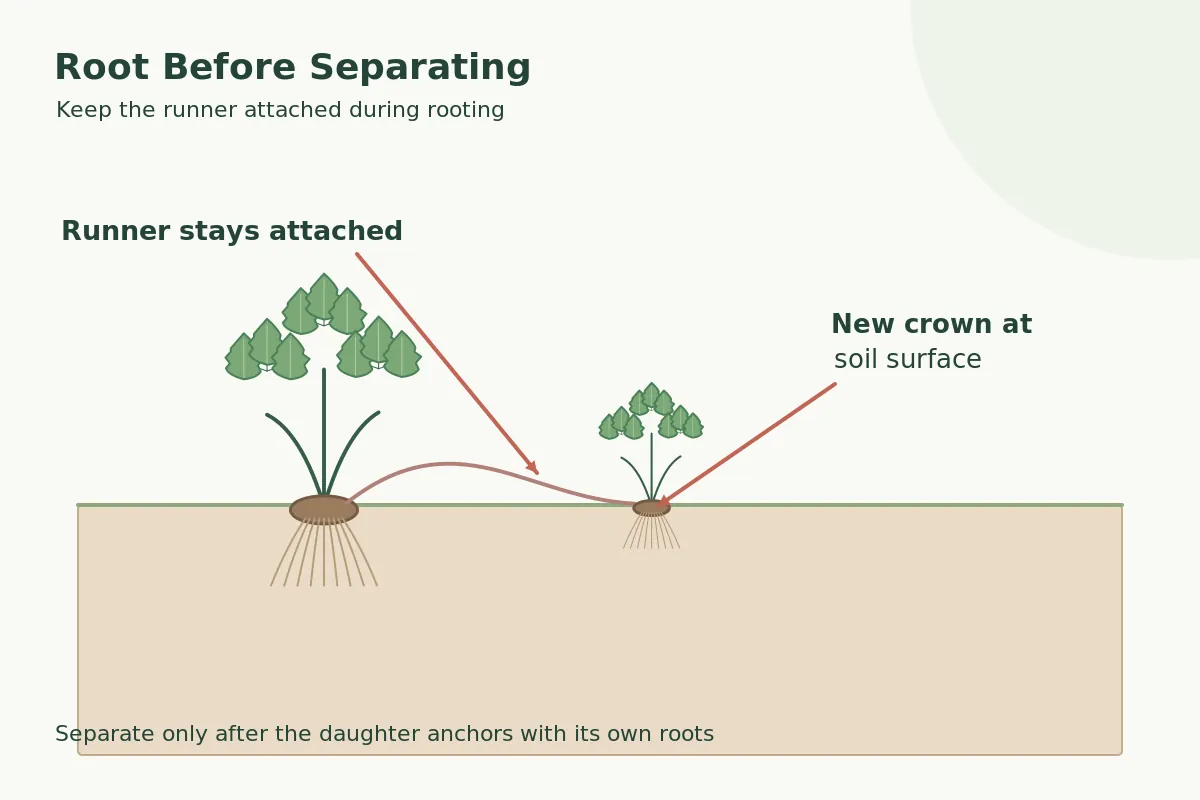
Loosen a small patch of clean, weed-free soil or place a pot of suitable moist mix beside the mother plant. Bring the runner gently to the rooting site without kinking the connecting stem. Set the base of the daughter rosette on the medium and lightly secure the runner or soil around it to hold contact. Do not bury the leaves or growing crown. Strawberry crowns must remain positioned correctly at the surface while roots descend below; forcing the daughter deeply into soil invites trouble. Keep the rooting area evenly moist rather than saturated, and check the rosette has not lifted away after wind or watering.
Keep the Runner Attached Until New Roots Hold
The connecting runner can continue supporting a daughter while roots establish. Resist snipping the connection the same day you press the rosette onto soil. After a period of growth, gently test whether the daughter is anchored; avoid tugging hard enough to break small roots. Look for healthy new leaves as a second encouraging sign. Rooting speed depends on warmth, moisture, cultivar, and plant vigor, so there is no one-week promise. Only after the daughter has its own functioning root system should you cut the connecting runner and treat it as an independent transplant. A rooted daughter still needs aftercare.
Cut Unwanted Runners Near the Parent Without Tearing
If you are removing runners, find the thin stolon that leaves the crown and cut it cleanly with scissors or small pruners. Do not yank the runner; pulling can disturb shallow strawberry roots or detach growing crowns. Work carefully around developing berries and flowers. If a runner already rooted in an unwanted path, remove the daughter and roots without pulling up the mother. In matted rows, trim growth extending into walking aisles to keep harvest access and airflow. Recheck beds through the growing season because vigorous June-bearing cultivars may produce many runners, particularly after fruiting. If you are starting from scratch, read When to Remove Strawberry Runners and When to Keep New Plants.
Treat Day-Neutral and June-Bearing Rows Differently
In a day-neutral fruiting bed, runner removal is part of regular crop management, according to University of Minnesota guidance. For June-bearing plants intended to form a matted row, selected daughter plants are welcome within the planned row width but not everywhere they can reach. A strawberry planting grown for nursery stock has a different goal from a small patio pot managed for berries. Ask whether the new rosette occupies a useful position and has space to mature. If a small bed has closed up into an unmanageable mat, thin overcrowded plants rather than protecting every runner in the name of propagation.
Match Rooting Plans to Climate and Season
Strawberry runners tend to form during active growth, with timing influenced by type, day length and local weather. In colder regions, newly rooted daughters need enough growing time to establish before winter. In warm climates, heat, drought and disease pressure can change propagation success. Use local Extension planting dates and winter protection guidance rather than interpreting USDA hardiness zones as a runner calendar. A new daughter rooted in a pot may need shade from extreme afternoon sun and careful moisture monitoring. Never assume that rooting a daughter in late fall will provide adequate cold hardiness without establishment.
Keep Water and Mulch Around Crowns Sensible
Strawberries have shallow roots, so the upper soil needs attention during daughter establishment. Water the rooting area without leaving the crown submerged in mud. Keep straw or other mulch from completely covering a tiny daughter rosette. In an established bed, mulch between rows helps reduce splash and fruit contact with bare soil, but a thick mat around new crowns may prevent runner tips from reaching rooting medium. Inspect under mulch for weeds and roots before lifting a daughter. Soil contact at the daughter node matters more than simply looping the runner somewhere dark and damp. Our guide “Plant Bare-Root Strawberries Without Burying the Crown or Bending Roots” adds more detail on this.
Watch for Crowding Before It Becomes a Fruit Problem
A fresh young daughter initially looks harmless, but many runners can fill the bed and compete for light, air and nutrients. Walk the row after harvest and map where the next productive plants should stand. Remove old unhealthy or overly crowded plants according to local renovation practices and keep selected young ones that fit the row. UMN Extension notes June-bearing matted rows need ongoing thinning. Do not let runner production conceal problems such as waterlogged crowns or foliar disease. A healthy strawberry patch needs deliberate renewal, not unlimited expansion in every direction. For the basics, see our guide: When to Cut Strawberry Runners and When to Root Daughter Plants.
Use This Runner Keep or Remove Decision
Identify the strawberry type and your immediate objective. For a June-bearing matted row with gaps, guide healthy daughters into those spaces and keep them connected until anchored. For a day-neutral fruiting system, cut runners regularly unless you have a separate propagation plan. For a pot with no growing space, removing the stolon is generally more useful than permitting a tangled hanging chain. If the mother plant is weak or diseased, avoid propagating it. The photograph or drawing should always show the crown above the soil and roots below, since that placement governs whether the daughter survives.
Use This Quick On-Plant Decision Table
| Planting system | Runner choice | Why |
|---|---|---|
| June-bearing matted row | Root selected daughters within the row | Replace and establish plants |
| Day-neutral fruit bed | Remove most runners | Focus on fruiting and access |
| Crowded container | Remove excess stolons | Avoid tangled weak crowns |
How We Research and Verify Garden Instructions
We checked the specific plant-care procedures on 2026-10-25 using original horticultural sources: University of Minnesota Extension; University of Minnesota Extension; University of Minnesota Extension. Each recommendation was compared against the plant type, growth stage and regional context rather than being converted into a universal calendar rule. The accompanying diagrams are simplified instructional drawings that show relevant plant parts and cuts; they are not photographs or laboratory diagnoses. Where Extension and RHS recommendations vary, use the source matched to your climate and growing system rather than generalizing.
Plant Safety and Independent Editorial Disclosure
This guide is independent horticultural education, not paid placement or a representation of affiliate approval. Read the VegWin affiliate disclosure. Use clean sharp tools, follow basic garden hygiene, and keep tools or plant materials out of reach of children and pets where appropriate. If a crop looks infected or a regional weather extreme complicates your decision, contact local Cooperative Extension for specific help. Any pesticide decisions must follow a currently approved local product label; no off-label treatment or dosage is recommended here.
Not always. Keep chosen runners for propagating daughters, but remove unwanted runners that create crowding.
After it has established its own roots and is growing well, not simply because leaves have appeared.
No. Runner removal is usually advised in systems designed for repeated day-neutral harvests.
Yes. Set its daughter crown at the mix surface and keep the runner attached until roots establish.
No. Poor rooting conditions or disease in the parent can undermine daughter plant health.