
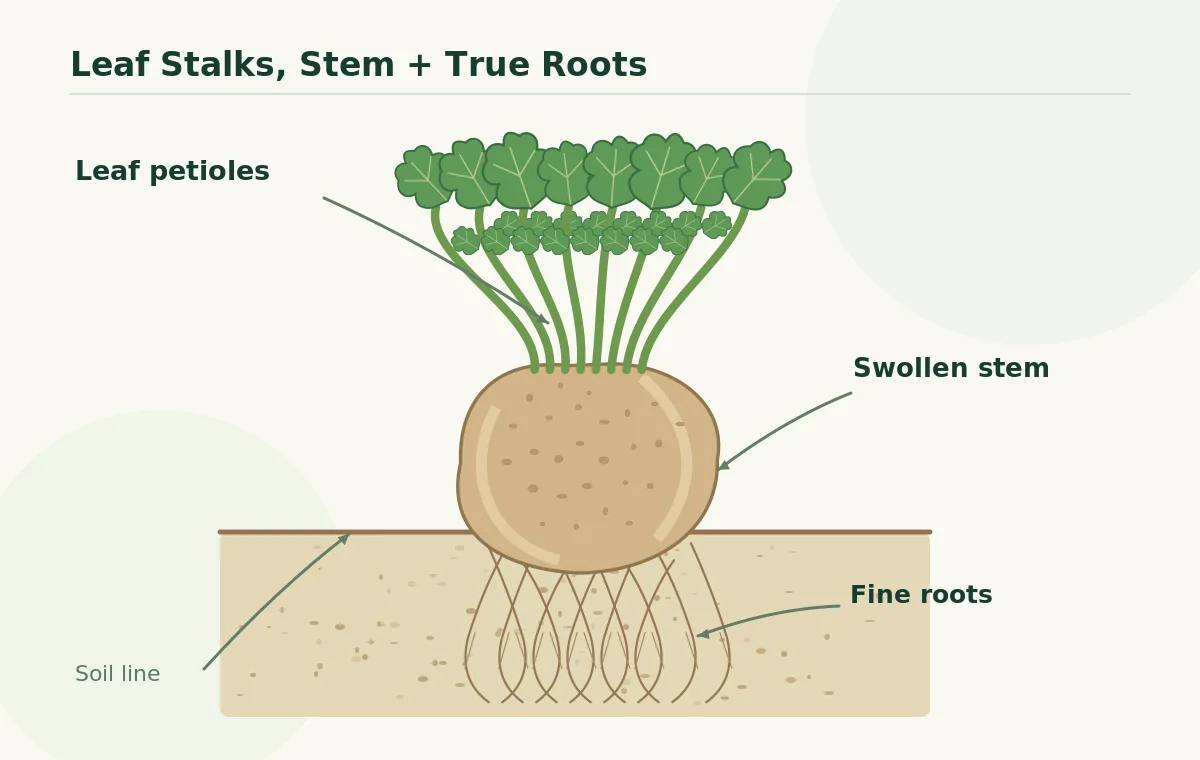
Celeriac is a celery relative selected for a rounded, knobbly edible base rather than for long crisp leaf stalks. The leaves look celery-like: multiple deeply divided leaflets sit above a cluster of upright green petioles. At their base is a rough tan bulb-like mass with irregular dimples and attached fine roots. It can look like a root vegetable, but the RHS explicitly describes the edible swollen part as a stem.
Identify the Storage Organ Under the Leaves
This distinction matters when you harvest. A cluster of true roots extends beneath and around the swollen storage organ, and soil can be trapped in its crevices. The knobby surface does not necessarily mean the crop is diseased. Do not cut into it while searching for a hypothetical smooth central taproot. You want the sound swollen base, not just the tops or the loose fibrous roots.
Use Crop Size and Season Together
Celeriac develops slowly, generally needing a long growing period and steady moisture. Early in the season the plant can look mostly like leafy celery; substantial swelling comes later. A reliable harvest decision therefore combines an established swollen base, crop condition, and the season remaining. If a plant has a tiny base in midsummer, do not dig it simply because a generic seed packet maturity date has passed.
RHS guidance allows autumn and winter lifting in climates where the soil remains workable. In a colder continental garden, deep freezes may demand earlier harvesting or protective storage, while milder maritime areas may hold celeriac longer. Follow local Extension experience rather than copying British winter dates into every U.S. garden. Check individual plants instead of harvesting the entire row on an arbitrary day.
Understand Why Moisture Controls Swelling
Consistent soil moisture supports celeriac growth across its long season. Dry soil followed by sudden soaking may reduce quality or interrupt steady development; continually saturated soil can encourage root problems. Prepare a fertile, moisture-retentive but well-drained bed and replenish water as local rainfall and soil conditions demand. Mulch may limit evaporation, but keep it from burying the leaf bases.
A healthy celeriac plant needs its green leaves to keep producing energy while the lower stem expands. Do not strip all foliage early because it looks leafy instead of round. Remove clearly senescent or damaged leaves when necessary but retain the functioning canopy. If growth stalls, inspect moisture, crowding, soil condition, and plant health before applying an untested fertilizer recipe.
Locate the Soil Line Before You Dig
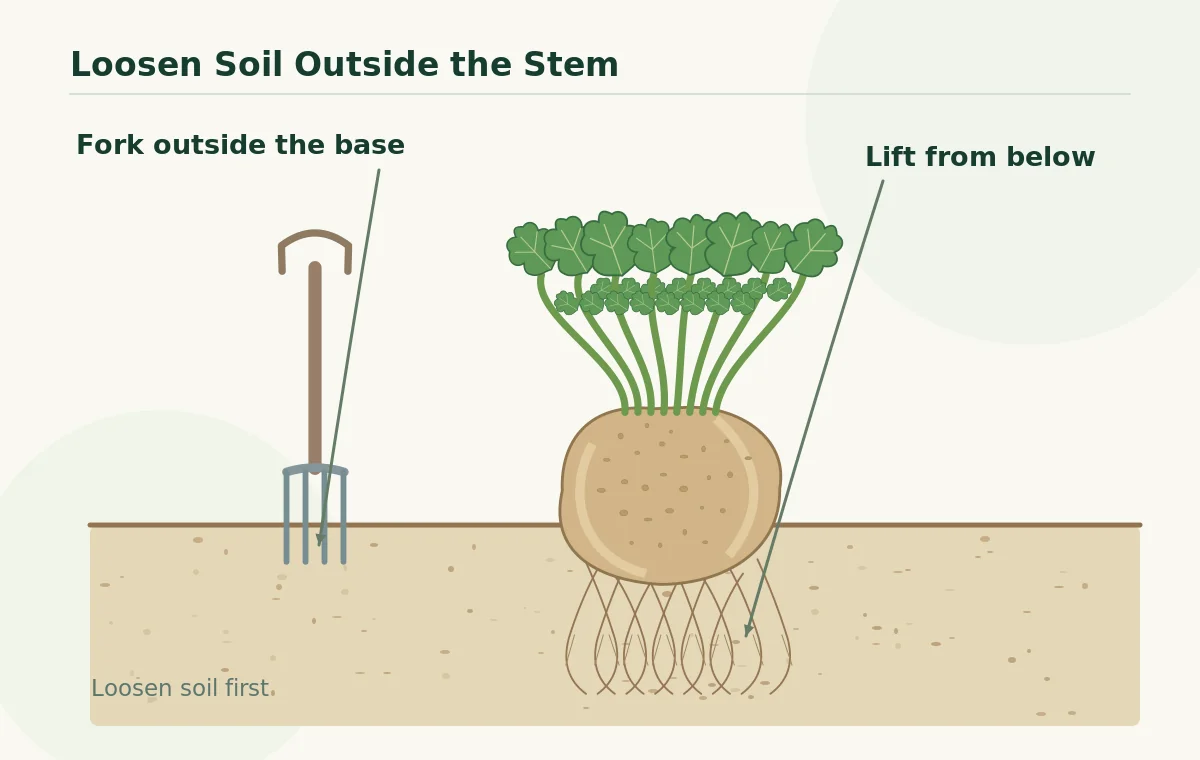
The top of the swollen stem and petiole crown stand near or partly above the soil surface. Below, fine roots extend into the surrounding earth. Clear any obscuring loose mulch so you can judge the size of the storage organ. Choose a garden fork and set its tines outside the likely spread of the celeriac, not directly through the tan knobby mass.
Begin by gently loosening soil at a distance from the plant, then work around it and lift from below. Never pry hard against the swollen base with a fork tine. In compacted or dry soil, moisten and loosen a wider area first. A patient lift is better than a clean-looking but deeply stabbed harvest, especially if you want the crop to store well afterward.
Lift, Separate Roots and Keep the Crown Intact
Grasp the petiole cluster and lift only after the soil has loosened enough to release the roots. Shake off loose soil carefully and look for the knobbly swollen stem, slender roots and remaining leafy top as distinct structures. For storage, follow the preparation guidance that suits your conditions; trimming roots too aggressively in the field creates unnecessary wounds.
If you plan to cook the celeriac promptly, wash soil from crevices and trim away tough outer rootlets and the rough outer skin during preparation. If it will be stored, avoid leaving a wet, scraped surface in a warm place. Handle it like a freshly lifted storage vegetable, keeping the sound base protected from bruises and dehydration.
Plan Around Hard Freezes and Local Conditions
Celeriac is relatively cold tolerant, but soil that freezes solid can be impossible to dig without damage. RHS describes leaving the crop in place through much of winter in its conditions, and Oregon State discusses winter vegetable systems specifically for the maritime Pacific Northwest. Neither is a universal guarantee for an unprotected inland bed.
For severe winter regions, harvest before prolonged frozen soil or use site-appropriate insulation and a practical access plan. A light frost does not automatically ruin the swollen stem; evaluate soundness, texture, and local weather exposure. Do not use USDA perennial hardiness zones as a literal harvest-calendar formula for this biennial crop grown as an annual.
Distinguish Sound Celeriac From Damaged Bases
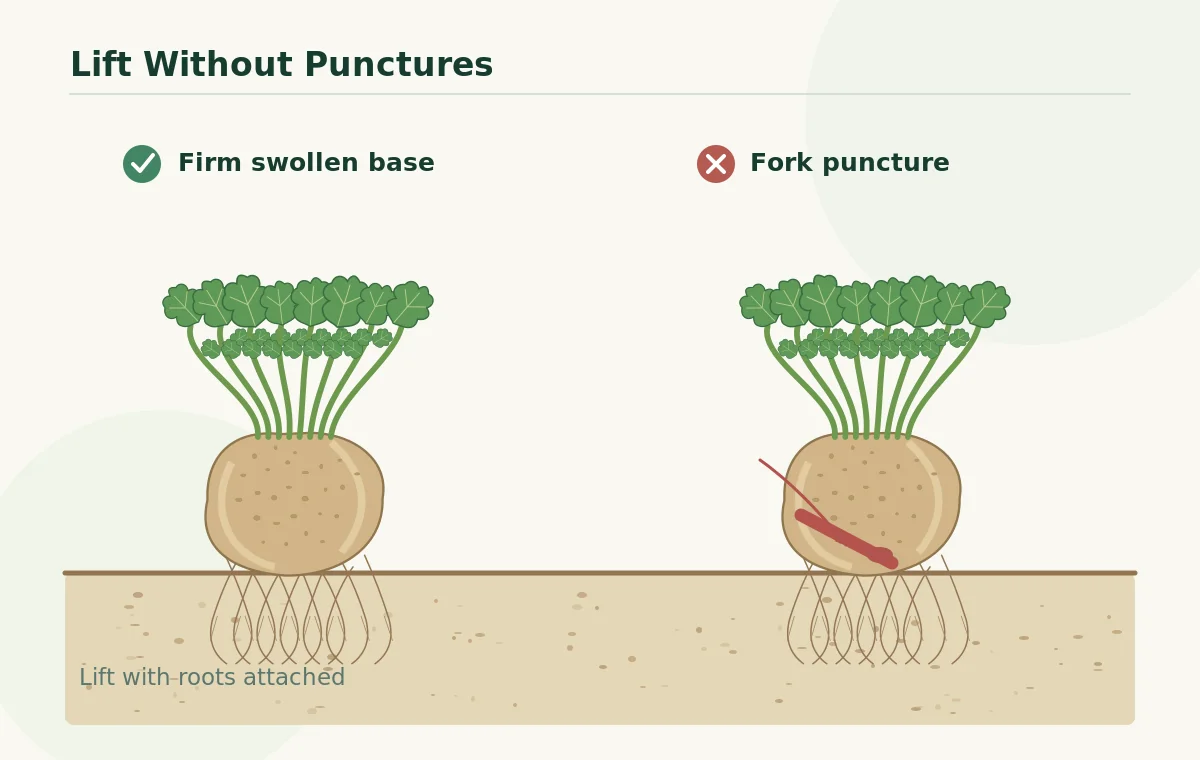
A marketable celeriac base feels firm and shows its characteristic irregular tan surface. Some fine roots and harmless exterior soil are normal. A deep cut, soft water-soaked patch, unpleasant odor or spreading decay is different; separate suspect material and investigate before storing. Drawing a perfect spherical bulb can mislead readers because real celeriac is lumpy and carries rootlets from its underside.
The fork should travel down outside the swelling and then lift the surrounding soil. In the “avoid” example, tines pierce the storage base itself. The simple distinction explains why pulling celery-like foliage is not a substitute for loosening the root mass. Damage that is easy to prevent with careful technique can reduce storage quality and waste much of a slow-growing crop.
Store Carefully or Prepare for the Kitchen
After a sound harvest, remove excess soil gently and sort out bruised or decaying bases for immediate assessment rather than long storage. Some growers keep trimmed, unwashed celeriac cool and humid; exact storage methods depend on the available space, sanitation, and temperature. RHS discusses lifting and storage after the winter growing period, including keeping the crop in a cool sheltered place.
For meals, peel the coarse outer surface and remove small roots and remaining soil from every indentation. The white interior can be cooked in soups, mashed, or roasted, or used raw when the produce has been cleaned and handled appropriately. Record variety, whether the base swelled reliably, and how well your site held moisture; next year’s success starts with this season’s harvest notes.
Related Guides
- When to Harvest Celeriac: Check Root Size, Weather, and Storage Needs
- How to Store Root Vegetables: Sort, Cool, and Prevent Spoilage
- How to Germinate Tiny Celeriac Seeds Without Burying Them Too Deep
How We Research and Check the Drawings
We compared university Extension and horticultural guidance with the plant’s visible structures rather than assuming all varieties behave alike. Sources checked October 28, 2026: RHS celeriac growing guide; Oregon State Extension winter vegetable guide; Celeriac harvest field notes. Where climate, variety, or growing conditions can change the answer, the observations below take priority over a single fixed calendar date.
This independent educational article contains no sponsored product endorsements or confirmed affiliate links. See our affiliate disclosure. Use local Cooperative Extension recommendations when your weather, soil, or pest pressure differs from the examples shown.
The swollen edible structure is largely a stem base, with true fibrous roots attached underneath and around it.
Look for a firm, substantial knobbly swollen base near soil level, and consider your variety and the onset of persistent freezing.
Loosen the soil with a fork outside the storage organ first. Forceful pulling can tear foliage or leave the plant stuck.
Not necessarily. In some climates it can remain in the bed; in severe winters, inaccessible frozen soil makes earlier lifting sensible.
The storage stem often swells late. Consider season length, variety, consistent moisture and crowding before assuming failure.