
A spring vegetable garden is easier to manage when planting is divided into waves rather than rushed into a single warm weekend. Peas and spinach may succeed while tomatoes and peppers still need protection indoors, and early radishes can leave room for a later crop. The goal is to match each bed to changing soil and weather conditions, then plan where the next crop goes. Every example here must be adapted to local frost risk and soil conditions. This informational guide has no paid product recommendations. See our affiliate disclosure for our site-wide policy.
Treat Spring as Several Planting Windows
Spring is not one agricultural temperature. A garden can be workable in one week, threatened by a frost the next, and warm enough for heat-loving seedlings much later. Divide your plan into three rough waves: vegetables that can start as soon as soil is suitable, additional cool-season crops as conditions stabilize, and tender warm-season plants after their own temperature requirements are met. Exact dates differ by county, elevation, soil texture and year, so label these as conditional windows rather than calendar months.
Iowa State Extension emphasizes that cool-season crops perform well in spring conditions and can lose eating quality when summer heat arrives. Colorado State Extension likewise separates hardier and less-hardy vegetables. Make a simple map of beds A, B and C; assign an early crop to each space only if you know when it is likely to finish and what, if anything, will follow. The target is an orderly handoff to summer crops, not maximum density at the first available weekend.
Wave One: Use Workable Soil for Early Crops
Early spring can suit peas, spinach, radishes and some lettuce, depending on soil condition and regional guidance. “As soon as soil can be worked” means the soil is neither frozen nor waterlogged and can be prepared without smearing and compaction. A few sunny days do not guarantee that the root zone has warmed. Check moisture and a soil thermometer at the depth recommended by your Extension source. Avoid sowing into heavy mud that will crust when it dries.
Use a small area for the first wave so you can observe emergence and adjust, rather than using every bed at once. Peas require support where the variety climbs; radishes need enough room to develop, and spinach can lose quality in heat. Each crop has its own packet depth and spacing. A cover may protect against limited weather exposure when used correctly, but not every covering or crop has the same cold tolerance. Consult the local forecast before each early planting.

Wave Two: Add Crops With a Longer Spring Stay
As the soil becomes more consistently workable and the frost risk changes, add appropriately timed carrots, beets, chard, brassica transplants or other cool-season crops recommended locally. Not all of these are sown or transplanted in the same way. Check the packet, and make space for the mature plant rather than only the tiny seedling. New Hampshire Extension lists crop-specific transplant and direct-sow approaches, which demonstrates why the phrase “plant spring vegetables” is not a sufficient instruction by itself.
A longer-season spring vegetable can occupy a bed while the quick radishes are already finished. Place it deliberately so you do not have to disturb its roots to clear the next sowing. If starting brassicas indoors, harden transplants and inspect plants for pests before setting them out. Follow crop-specific Extension guidance to protect against cold injury. When a packet or a regional chart names a calendar date, treat it as a local example, not a universal date for every state.
Wave Three: Reserve Places for Warm-Season Crops
Bell peppers, tomatoes, beans, cucumbers and many squashes belong to a different planting decision than cold-tolerant peas. Later spring transplanting depends on local frost risk, upcoming nighttime lows, warm enough soil and the specific crop. A pepper does not benefit from a cold transplant just because the lettuce is flourishing. Use New Hampshire or your own state Extension crop guide to separate direct seeding from transplanting, and account for the needs of the particular variety.
Leave room on your spring map for mature summer plants. An early lettuce bed might be cleared before a tomato transplant expands, but this only works if the crop finishing date is realistic. Do not wedge a pepper into a crowded bed simply because the summer plant is small in its nursery pot. Support structures, irrigation access and airflow need to fit the plant at maturity. A successful three-wave system reserves time and space as well as seeds.
| Wave | Example role in bed | Evidence to check before planting |
|---|---|---|
| 1: earliest workable soil | Peas, spinach, radishes | Drainage, workable soil and cool-crop guidance |
| 2: established cool season | Carrots, beets, chard or brassicas | Crop-specific sow/transplant window and space |
| 3: warmed soil and nights | Peppers, tomatoes, beans, squash | Local frost risk and each crop’s temperature needs |
| Between waves | Clear a mature early crop | Real harvest timing and undamaged soil |
| Weekly review | Plant, maintain or wait | Forecast, soil and available growing space |
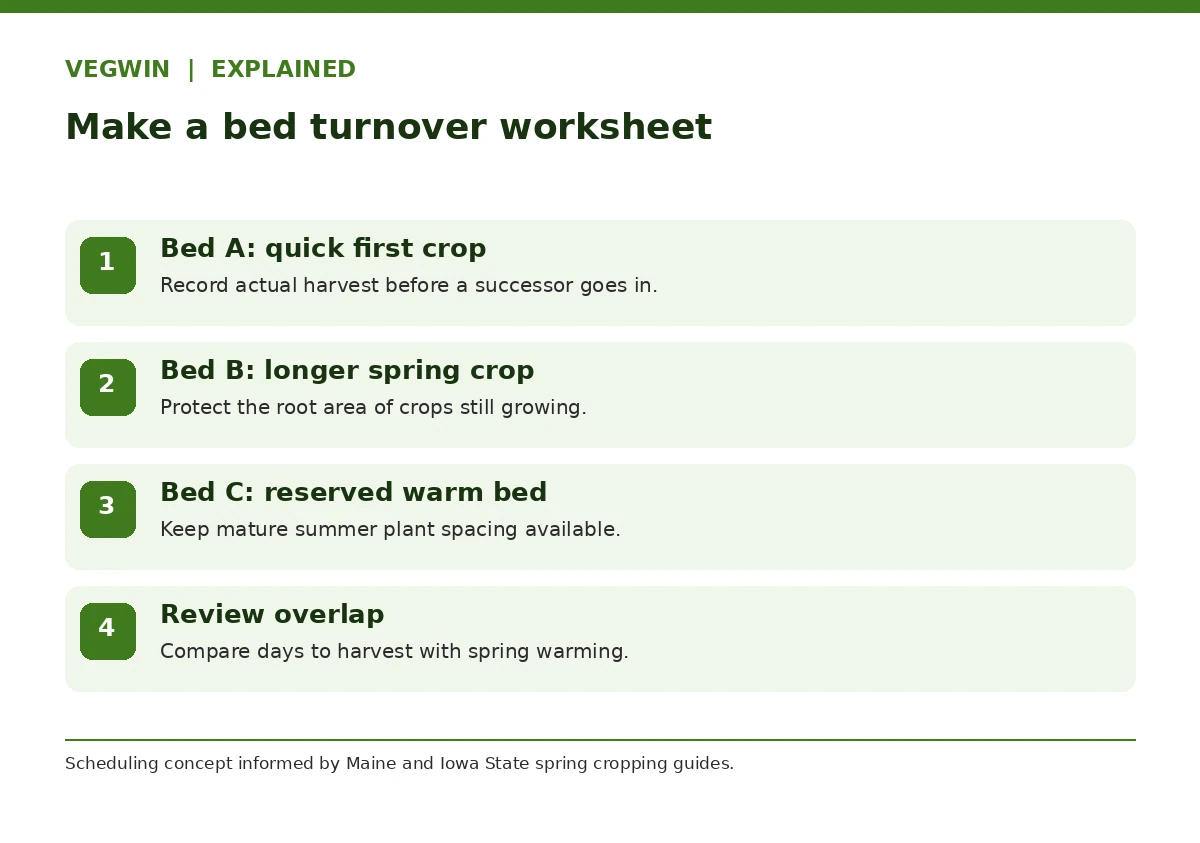
Make a Small Bed Turnover Plan
Draw three rectangles and give each a primary spring crop plus a possible successor. For example, bed A may start with quick radishes and later hold a warm-season crop, while bed B carries peas and bed C supports a longer cool-season vegetable. These are sample roles, not guaranteed pairings: actual crop duration and local temperatures will decide whether turnover is possible. Write down packet days-to-maturity and allow for slower growth during cool weather instead of assuming the printed number is exact.
A transition is not successful if clearing one crop damages the roots of another that is still producing. Avoid digging around established stems. Once a short crop ends, remove its residues, inspect for diseases, and amend the soil only when soil testing or observed structure calls for it. Then confirm the next crop’s planting readiness. This is distinct from a year-round planting calendar: the spring map is specifically about negotiating a limited bed area between two different temperature groups.
Use Temperature and Forecast Checks, Not Zone Numbers
USDA plant hardiness zones describe average extreme annual winter minimums for perennials. They cannot tell you the last spring frost or whether your vegetable seedbed is adequately warm. Find a local Extension frost-risk reference or reputable weather record, then check the forecast, soil condition and crop tolerance before acting. Colorado State provides general cool-season classifications; Iowa State gives regional spring context. The combination is useful, but neither should be copied as a planting date for the whole country.
Soil moisture matters alongside temperature. Seed sown into waterlogged ground can rot, fail to germinate or emerge unevenly even if the air has warmed. Later in spring, heat can make cool-season crops bolt or turn bitter before a planned harvest. Reassess the bed every week. If the early crop is already declining in quality, remove it instead of trying to preserve a few leaves while a new planting misses its suitable weather window.

Keep Transplanting and Food Safety in Their Own Lanes
Seed starting indoors can buy growing time but does not replace outdoor readiness. Harden transplants properly, assess root condition and move them according to crop-specific cold tolerance. A robust seedling still suffers if set into an unsuitable outdoor environment. This guide does not duplicate the indoor sowing, seedling troubleshooting or hardening tutorials; use those when that narrower problem occurs. Here, the decision is which spring bed receives the plant and in which planting wave. For the fuller picture, see our guide “Companion Planting That Makes Sense”.
Clean tools, avoid handling damaged or rotting produce as if it were sound, and follow fresh-produce safety practices when harvesting early greens. A garden plan also needs routine monitoring: early tender foliage attracts pests, while wet conditions can encourage some diseases. Identify the problem before using controls. Avoid a blanket pesticide or fertilizer schedule for all spring crops. Correct identification, local Extension advice and any applicable product label must precede a treatment.
Run a Weekly Five-Minute Spring Review
Once a week, record the status of each bed: soil workable or not, soil temperature trend, predicted frost risk, current crop size, harvest stage and planned successor. Mark one of three actions—plant, maintain or wait. This short check makes the three-wave plan flexible and reduces the temptation to plant all seeds on a fixed calendar date. If the weather changes suddenly, the plan should change too. A “wait” decision is useful when it prevents cold injury or ruined soil structure. If you are starting from scratch, read When to Plant Vegetables.
At the end of spring, record which early crops produced a harvest before summer heat, which stayed too long and whether any reserved warm-season space became overcrowded. Next year, adjust bed assignments using those observations and the regional Extension guidance rather than expanding the total crop list automatically. A useful small spring garden is an ordered progression of edible crops, not a single picturesque bed filled on the first sunny Saturday. Our guide to starting a vegetable garden covers a first-bed plan for beginners.
How We Research and Check Local Exceptions
We reviewed an October 19, 2026 search-results sample for this precise query and read the cited primary university or government guidance. This is the spring bed turnover and three-wave layout for a small plot. Before manual publication, an editor should search WordPress for the same intent, verify category placement and any claims that depend on local conditions. We did not treat advertisements, seed packet promises, or general garden myths as scientific sources.
Sources reviewed October 19, 2026: Iowa State early spring vegetables; Colorado State vegetable planting guide; New Hampshire planting-window table; Maine spring-to-fall crop sequence. Our editorial approach distinguishes evidence from local decisions and avoids implying that sources endorse VegWin. This is general garden education, not a pesticide label, local planting schedule, or food-preservation processing instruction. Affiliate relationships for this article are not confirmed; our disclosure page describes site policy.
Depending on local soil and weather, peas, spinach, radishes and some lettuce are common cool-season examples; check regional guidance.
No. USDA hardiness zones describe winter cold extremes, not exact spring frost timing or vegetable seedbed temperature.
Reserve space early but transplant only when local frost risk and the particular crop’s soil and air temperature needs are met.
Often this is possible when the spring crop finishes in time and the successor has enough space, but it is not guaranteed in every region.
It is a small-bed spring handoff plan: three conditional crop waves and turnover decisions instead of year-round date lists.