
Sweet alyssum (Lobularia maritima) is easiest to manage when each decision follows something visible on the plant. This guide tracks the real leaves, growing points and transitions that matter, not an invented nationwide planting date. Use your cultivar packet and local weather to adjust the steps; a regional Extension schedule is an example for that region, not a guarantee of equal performance everywhere.
Choose true sweet alyssum and the desired flower color
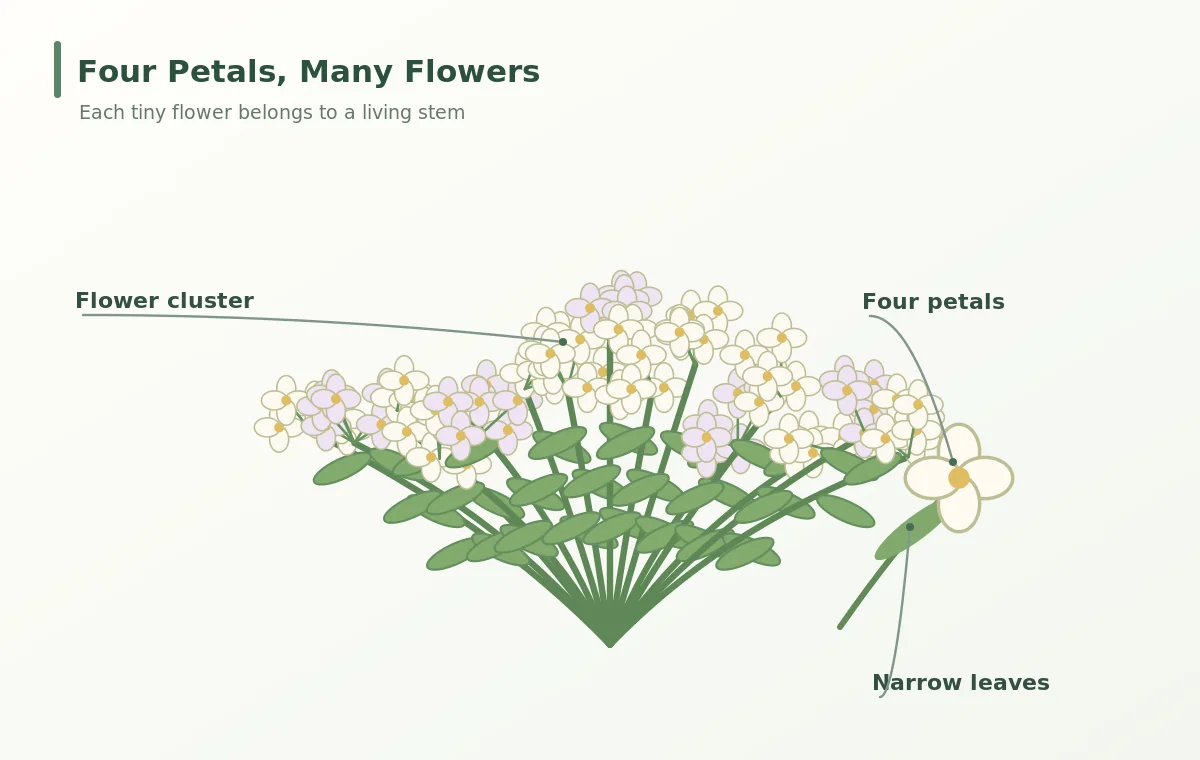
Sweet alyssum is Lobularia maritima, a low, spreading flowering plant with narrow leaves and clouds of tiny flowers. It is not the unrelated tall yellow-flowered perennial often sold under the broader name alyssum. Look for Lobularia on the seed packet. The individual flowers have four petals, a useful visual clue that becomes obvious under magnification even though a whole flower cluster can look like a rounded white puff.
White is common, but seed-grown varieties may bloom in pale lavender, pink or deeper purple. Their low mounding habit makes them useful for path edges, containers and gaps between taller plants. Some vigorous trailing hybrids are sold as vegetative plants rather than true-to-type seed. If a catalog promises a named hybrid, check whether it is offered as seeds or transplants before deciding how to start it.
Work backward from a mild outdoor window
Clemson Extension says sweet alyssum can be started indoors roughly six to eight weeks before planting outside; Wisconsin likewise recommends indoor sowing several weeks before average last frost. The precise week depends on your growing region and the cultivar, so read the seed packet and choose a period when hardened seedlings can establish without severe cold or sustained heat. In mild climates, autumn sowing may be suitable where local guidance supports it.
Sweet alyssum often flowers most generously in cool weather. It may slow or pause flowering through a hot stretch and return with more temperate conditions. That seasonal response matters when planning a flowering border: starting a tray at the last minute in midsummer may produce green plants that do not immediately make the carpet of blooms shown on the label. Avoid using USDA winter hardiness zones as a daily seed-sowing forecast.
Press small seeds onto a bright surface
Alyssum seed benefits from light during germination. Clemson and Wisconsin Extension both advise barely covering it, rather than burying it deeply. Fill clean seed cells with a fine, moistened seed-starting medium. Scatter a few of the tiny seeds where you can see them, press them into contact with the surface and, if necessary, sprinkle only a very thin dusting of material. Never cover the seeds with a thick opaque layer of potting soil.
Water using a fine mist or from below so that small seeds are not washed into a corner. A humidity cover can reduce evaporation before emergence but should be vented and removed when seedlings show. Place the tray in a bright suitable germination area and follow seed packet temperatures. Good seed-to-medium contact and stable moisture matter more than elaborate germination additives. If seed disappears into deep cracks in a coarse mix, start again with a finer surface.

Recognize the first narrow true leaves
The earliest leaves are tiny and simple; later true leaves on sweet alyssum stay relatively narrow and oblong rather than turning into large rounded cabbage leaves. A developing seedling forms a low tuft before branching into a cushion. Once several plants are growing together, separate them at the right stage so each has room for roots. It is easy to overlook overcrowding because the stems are delicate and the plants remain small for a while.
Keep seedlings under bright light with enough airflow to prevent drawn-out, collapsed stems. Moisture should reach the young roots but move through the tray, not sit stagnant beneath it. If many seedlings form a tight cluster, cut out extras or gently move rooted plugs instead of wrenching the whole group apart. A more compact, rooted plant generally transitions to the garden better than a tall tangled collection of pale stems.
Harden plants and plant at the original depth
When plugs have useful roots, gradually expose them to protected outdoor light, breeze and normal temperature changes. This is hardening, not an overnight test in harsh conditions. Wisconsin Extension says transplants should be hardened before moving outside, with protection when cold risk remains. Water the plug before lifting so it holds together. Plant it with the same surface level as in the cell, with foliage and crown above the soil.
Space plants according to the chosen cultivar and desired carpet effect. Alyssum spreads laterally as stems branch, so do not bury the growing tips to force it into a wider mound. Set plants in soil with good drainage, and consider afternoon shade in hotter climates. Wisconsin and Clemson describe full sun in cooler regions with some shade helpful in heat. A container should drain freely rather than hold a permanent puddle around the fine roots.
Read a real alyssum flower cluster
Individual sweet alyssum flowers are small and cruciform, each with four petals surrounding a tiny central reproductive structure. They cluster near the shoot tips; narrow leaves remain below along branching stems. A useful diagram should show a real cluster attached to a shoot, not disconnected circles pretending to be flowers. White-flowered mounds can almost hide their foliage at peak bloom, but the leaves and branching stems are still present under the canopy.
The plant is not a miniature baby’s breath or a daisy. It does not produce large five-petaled blooms or an obvious sunflower-style yellow disc. If a seedling makes broad, deeply lobed leaves, double-check the label and weed identification. When flowering, observe how the little clusters emerge from growing tips and how spent blossoms are replaced by new growth. This helps you choose a gentle trim without removing the entire plant.

Encourage repeat flowers without overselling it
Keep the root zone evenly moist during establishment, and let well-drained soil recover between irrigation events. Clemson advises watering regularly and removing spent flower growth to encourage further bloom. On a very hot spell, bloom decline may reflect the weather rather than a sudden fertilizer shortage. Shearing a tired plant lightly can encourage fresh branching when conditions improve, but a severely drought-stressed specimen may need recovery first.
Avoid piling rich fertilizer onto a compact flowering groundcover. Excessively lush, floppy growth can conceal stems and make airflow poorer. A modest, soil-informed nutrient program is better than claiming that monthly feeding guarantees constant flowers in all climates. Remove faded clusters where practical and inspect stems for rot or pests. In wet containers, check the drainage holes and the root condition before misting the foliage again.
Use failure clues rather than resowing blindly
If no seedlings emerge, inspect whether the seeds received sufficient light and contact with the moist surface. A deep covering, desiccated surface or poor seed viability can all interfere. If stems collapse at soil level, look closely at air circulation, saturation and disease symptoms; do not assume that every fallen seedling needed more water. If healthy green plants produce few flowers, compare their growth stage with the season and temperature.
If alyssum blooms briefly and then fades in summer heat, document the conditions and see whether cooler weather brings renewed flowering. Some hybrids tolerate heat differently, but general species guidance does not guarantee a cultivar-specific performance. Record the sow date, first true leaves, first open flowers and the direction of light in the growing area. A compact, well-rooted start and realistic seasonal expectations make a better flowering border than a more elaborate but less accurate planting chart.
Related Guides
How We Research and Verify This Advice
We checked the horticultural details in these primary university and botanical-education resources on 2026-10-29: hgic.clemson.edu; hort.extension.wisc.edu; plants.ces.ncsu.edu. We compared their species descriptions, sowing practices, crop stages and seasonal risks with the diagrams, and separated regional dates from widely useful principles. We checked the available local archive history and publicly indexed VegWin pages for overlapping search intent; private WordPress drafts cannot be verified by public search. Consult regional Extension advice where conditions differ.
This is independent educational material, not a sponsored product recommendation. No commission relationship is asserted. Read the VegWin affiliate disclosure for the site policy. Illustrations are explanatory diagrams, not a substitute for checking an actual plant, crop label or current local safety recommendation.
Only barely, if at all. Extension sources say this tiny seed benefits from light during germination.
Clemson gives about six to eight weeks before planting out; use your local mild-weather window and packet details.
Four small petals form each typical Lobularia flower; many flowers create a dense cluster.
Strong summer heat can slow flowering. Maintain water and drainage, then reassess in cooler conditions.
No. Plant a rooted plug at roughly its existing level and keep the low growing crown above the soil.