
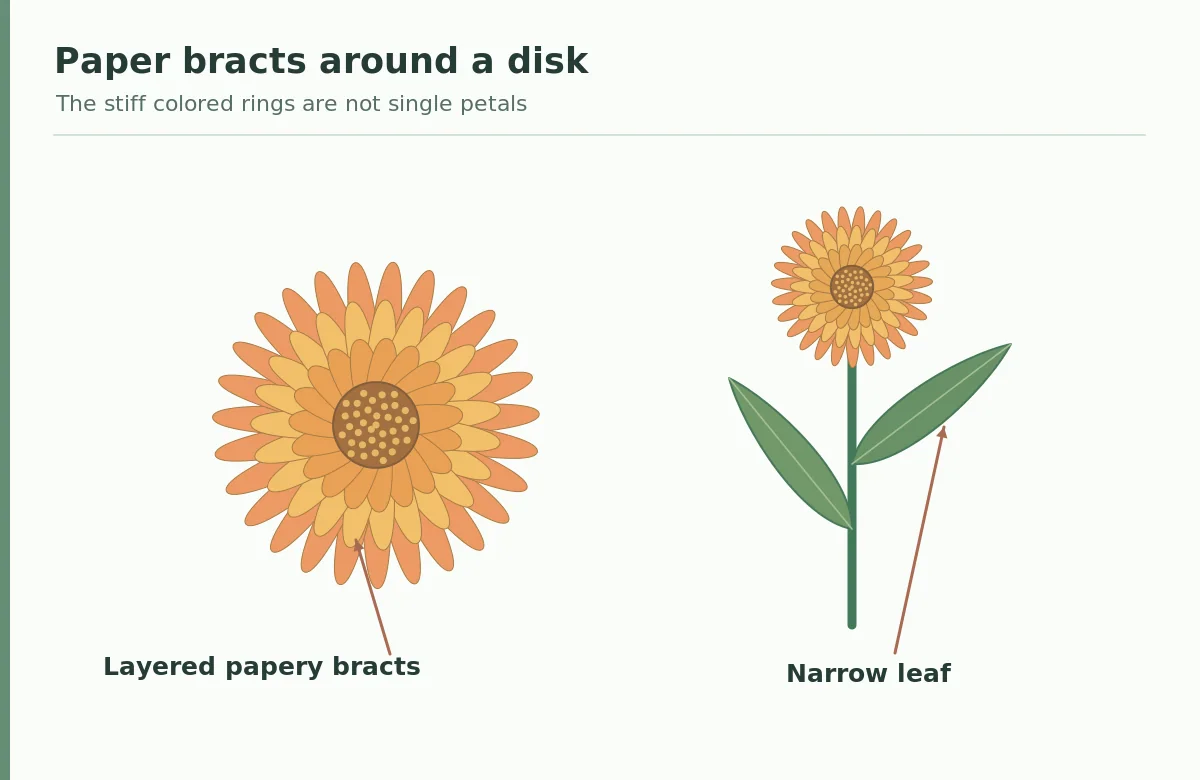
Strawflower, Xerochrysum bracteatum, grows into an upright plant with lance-shaped leaves and long-lasting daisy-like heads. The bright colored structures look like petals but are actually dry, papery bracts around a central disk. Starting these plants from seed is straightforward once a very small detail is respected: Utah State Extension reports that seed needs light to germinate, so it should not be buried under a thick layer of mix. This article follows a seed from the tray surface to a rooted transplant, then shows how to recognize an authentic strawflower head rather than a generic text-filled gardening card.
Confirm the plant is strawflower, not a generic daisy
Look for the name Xerochrysum bracteatum on the packet; older names include Helichrysum and Bracteantha bracteata. Mature plants develop relatively narrow, simple leaves along upright stems. The flower heads contain a central disk surrounded by many overlapping colored papery bracts that retain their shape when dry. That dry texture is a key difference from soft, ordinary daisy ray florets. Colors range from yellow and orange to white, rose and red depending on the selection. Keep the seed packet until the first flowers open so any unexpected species can be recognized instead of assumed to be a different cultivar.
Choose the starting window for your region
Utah State trials recommend beginning strawflowers indoors weeks before transplanting for a longer local flower harvest; direct sowing after freezing weather has passed can also work in a sufficiently long warm season. These are strategies, not a universal calendar. Use your local last-frost estimate, transplant weather and the likely outdoor growing window. Strawflower is often cultivated as an annual where winters are cold. Do not convert a regional research result directly into an exact date for every garden. Allow time for seedlings to develop good roots without leaving them in a too-small cell so long that they become severely pot-bound.
Prepare fine seed-starting medium and cells
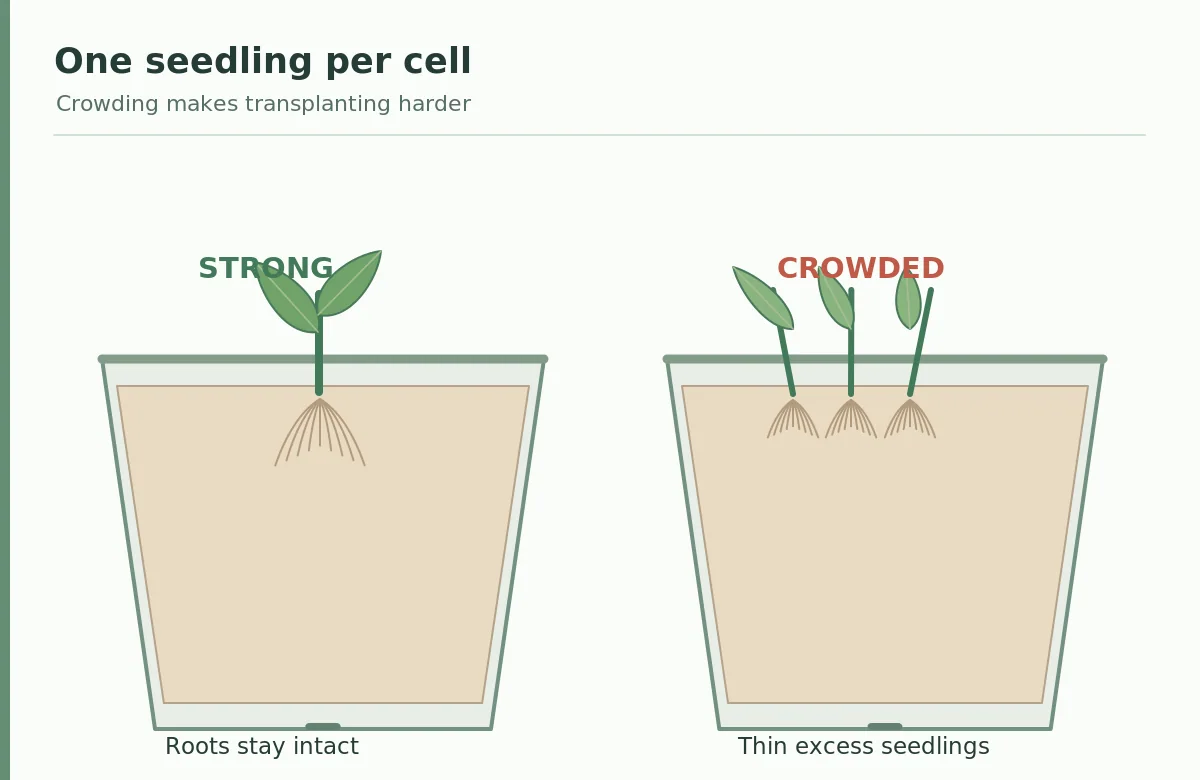
Fill a clean cell tray with a fine well-drained starting mix and moisten it before sowing. Level the top gently so tiny seeds remain in contact instead of falling into deep cracks. Trays with drain holes are preferable to water-filled cups. Utah State research describes sowing a few seeds per cell before thinning to the strongest seedling. You can also use individual cells more sparingly when seed is limited. Keep a label with the variety, sowing date and expected plant height. A clean tray reduces confusion about whether the first emerging plants are strawflowers or accidental weeds.
Surface sow so light still reaches each seed
Strawflower seeds are small and light-sensitive during germination. Press them gently into the moist surface rather than digging a deep hole. Utah State permits a light dusting of fine vermiculite, not a thick opaque cap of compost. The practical soil-section illustration shows the tiny seed on the actual growing surface and a very thin covering that admits light. Water by gentle mist or from below so you do not wash all the seed to one corner. Do not place a seed several inches down and label the topsoil line somewhere else; the visible position matters to the instructions.

Maintain moisture without a sealed swamp
Seed needs consistent moisture while germinating, but waterlogged medium reduces aeration and can encourage decay. Check the surface daily and water gently enough not to dislodge seed. A temporary clear cover may retain moisture if vented and monitored; remove it or increase airflow as seedlings emerge. Strong overhead streams can move seed, produce uneven distribution and lead to a falsely patchy germination rate. Do not compensate for every slow seed by adding liquid fertilizer or pesticides. First check light, dryness, media quality and the species-specific instructions in the packet.
Identify seed leaves and later true leaves
Early seedlings carry simple seed leaves that are unlike the mature plant in size and shape. Later leaves lengthen into the lance-shaped foliage typical of strawflower, attached singly along the developing stem. The cotyledons should not be illustrated as orange paper bracts; flowers only appear much later. Under good light the stem stays reasonably sturdy. If seedlings become thin, pale and elongated, assess insufficient light and crowding rather than blaming a random insect. The seedling comparison depicts separate root systems, not multiple independent plants joined to a single artificial root.
Thin carefully to reduce root competition
Once several seedlings share a cell, keep the strongest appropriate plant and remove the excess without pulling apart the roots of the survivor. Snipping competitors at the surface is often less disruptive than yanking them up. Give the retained plant light and airflow so leaves can expand. Monitor root development before transplanting rather than waiting until all cells contain dense coils. Avoid aggressive fertilizer rates unsupported by your soil or medium. A compact plant with functioning roots generally withstands later moving better than a tall weak stem that must be tied immediately.
Transplant after cold risk has eased
Harden indoor seedlings off gradually, increasing exposure to outside sun and air while watching for wind damage and wilt. Move them into sunny, freely draining ground only when local conditions are suitable; the RHS and NC Extension profiles describe a preference for sunny sites and sound drainage. Hold the intact root ball and plant at the previous soil level. Do not bury the crown or expose the roots in a bare-root operation. Provide enough spacing for mature branching according to the particular variety. Water to settle surrounding soil, then assess actual moisture conditions in the days afterward.
Distinguish bracts, flowers and spent heads
The final strawflower head has concentric layers of stiff paper-like bracts around a central disk composed of many small florets. Those bracts are not separate stems and are not the same as seed heads that have already dispersed their contents. The detail diagram points separately to the center and colored outer rings. Plants may bloom over an extended period in favorable conditions, and removing flowers can help keep display tidy. For drying, follow an appropriate harvest-stage guide rather than assuming every closed bud is ready. Record the flower color and shape for comparison with next year’s seedlings.
Related Guides
- How to Start Strawflower Seeds Indoors and Transplant Strong Plants
- When to Transplant Strawflower Seedlings Without Burying Their Crowns
How We Research and Check Botanical Details
The planting method and plant anatomy described here were checked against extension.usu.edu, plants.ces.ncsu.edu, www.rhs.org.uk. These sources were opened and reviewed on October 28, 2026; they are linked here to make each technique independently checkable. Local growing seasons and the behavior of named cultivars may differ, so use current regional Extension guidance where the instructions rely on climate. Original diagrams explain visible plant parts and actions, not an invented guarantee of results.
VegWin provides independent gardening education and does not claim a commercial endorsement from these institutions. No affiliate links or unconfirmed partner recommendations appear in this guide. See the VegWin affiliate disclosure for site policy. If the illustrated cut, seed position or plant stage does not match your particular specimen, identify the plant before following the action.
Yes. Utah State recommends a very light covering of fine vermiculite rather than burying them deeply.
Yes, in a long warm season after frost risk, but indoor sowing usually allows earlier blooms.
No. Thin to one vigorous seedling per cell to reduce competition and root tangling.
The stiff colorful outer layers are papery bracts surrounding tiny disk florets.
After local frost risk and gradual hardening off, into a sunny spot with well-drained soil.