
How to Recognize Slug Damage on Lettuce and Protect Young Plants is a practical guide for identifying what you see on a living plant before taking action. The recommended method comes from the university Extension sources linked below; variety, weather, plant age and local conditions can change the best timing. Use the photographs or botanical diagrams as a guide, but examine the actual stem, root, leaf or seed head in your garden rather than relying on a caption alone.
Recognize Ragged Holes Instead of Guessing the Pest
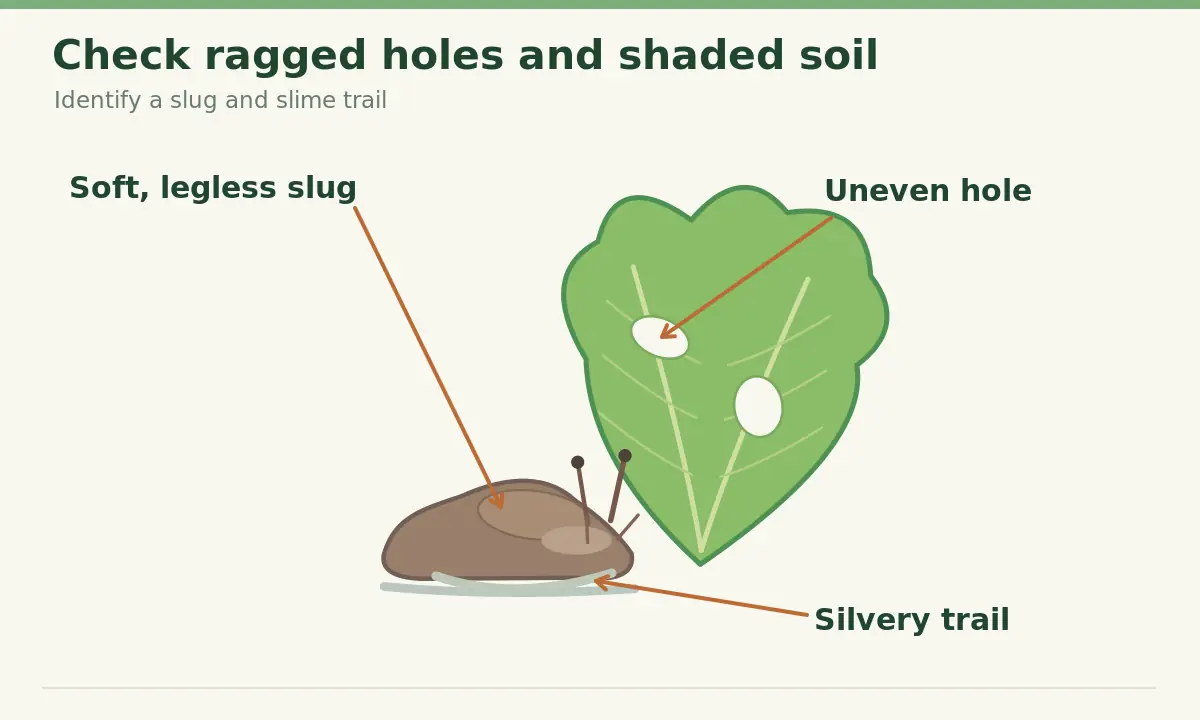
Slugs scrape tender leaf surfaces with a rasping mouthpart and can leave irregular holes in the center of lettuce leaves, not just tidy bites from the edge. They may also graze soft areas into thin translucent patches. The shape is a useful clue but not a definitive diagnosis because caterpillars and other pests can also chew leaves. Look for several signs together, especially fresh slime trails, nighttime activity and hiding places near the crop. Maryland Extension specifically associates slugs with ragged interior holes in leafy vegetables. Confirming the animal first will save you from applying a control that cannot address the real cause.
Look Under Leaves After Dusk or Rain
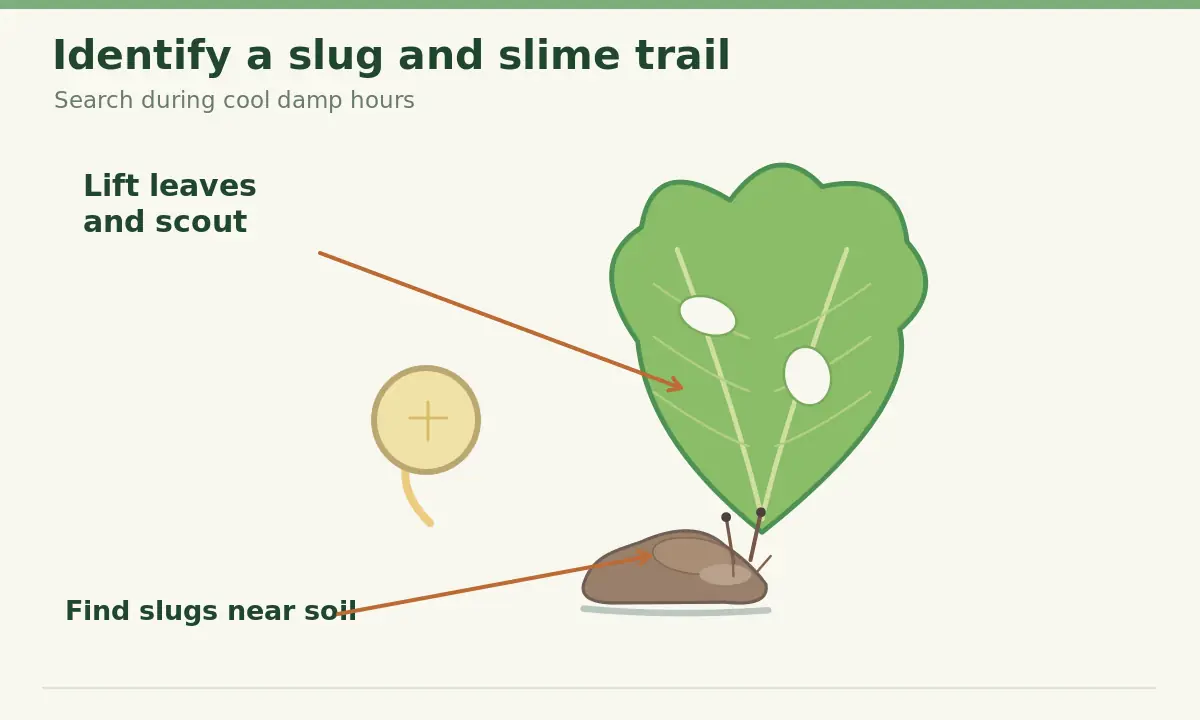
Slugs often avoid hot dry daylight, sheltering under leaves, debris, boards or dense mulch. The University of Minnesota recommends looking in cool damp conditions or using a flashlight in the evening. Lift the outer lettuce leaves carefully without tearing the crown, and inspect near the soil line. Search both the underside of leaves and the damp ground next to the plant. A slug is soft, legless and usually has two pairs of feelers at its head. Do not mistake earthworms or beneficial beetle larvae for slugs. Return after another damp evening if there is damage but no confirmed animal.
Follow Silvery Slime Trails to Hidden Shelters
A dried slime trail can shine silver on a leaf, the rim of a raised bed, soil or nearby stone. Trace the trail toward shaded, damp places rather than immediately scattering chemicals over the lettuce. Trails alone may show activity without revealing how many slugs remain. Move a few hiding objects carefully and replace useful habitat elsewhere if it does not threaten the crop. Keep children and pets away from any traps or discarded pest-control materials. When multiple vegetables share a bed, inspect them too; University Extension notes that slugs eat a wide range of tender leaves and seedlings, not only lettuce.
Protect Seedlings More Than Established Heads
Small lettuce seedlings have very little leaf area to spare and can be destroyed by a modest amount of feeding. Larger lettuces may tolerate scattered holes while remaining harvestable after appropriate cleaning. Judge the urgency by plant stage and actual damage, not by the mere presence of one slug. On newly planted rows, inspect frequently during wet spells and protect vulnerable plants with suitable physical barriers or properly managed row covers where supported locally. Covers should not trap excessive moisture or create a permanent shaded hiding place. The risk calculation changes once lettuce heads are large enough to replace a few damaged leaves.
Reduce Damp Hiding Places Without Drying the Roots
Remove unnecessary boards, stones, dense weeds and piles of rotting debris immediately beside the lettuce. Thin overly crowded plantings as appropriate to improve air movement. Excessively thick mulch touching leaf crowns can create a cool damp refuge for slugs; move it back slightly while still protecting soil where needed. Improve poor drainage rather than letting soil remain soggy. However, do not deliberately drought-stress lettuce to repel slugs: the crop still needs regular moisture. Water the soil early enough for surface wetness to diminish before nighttime when practical. These steps target the habitat that helps slugs survive.
Handpick Confirmed Slugs During Active Hours
When slugs are visibly feeding, collect them by hand with gloves or a tool and dispose of them according to your local Extension’s directions. Search after dusk with a flashlight and revisit the same bed over several nights because additional slugs may emerge. Work carefully among lettuce leaves so you do not crush crowns or contaminate harvest baskets. Hand removal is most practical in home gardens and small beds; it cannot guarantee elimination from a wet landscape. University of Minnesota Extension lists handpicking as part of an integrated approach. Do not claim that one collection round will prevent all future feeding.
Use a Shelter Trap to Confirm Night Activity
A flat board or folded damp newspaper laid where slugs travel can serve as a temporary daytime shelter. Check underneath in the morning and remove collected slugs, then decide whether the trap is helping you monitor activity. Maryland and Minnesota Extension both describe simple shelters as a way to find slugs. Do not leave a trap untouched for weeks; it can become a protected breeding or feeding refuge. Keep traps off tender crowns and away from walkways where they cause trips. A trap is evidence-gathering and collection, not proof that the surrounding bed is pest-free.
Separate Slug Damage From Caterpillars and Disease
A caterpillar may leave ragged holes too, but it often produces dark pelletlike droppings and may be found directly on the leaf. Slugs lack legs and leave mucus trails. Leaf spot diseases more often produce lesions with discolored margins or tissue collapse that later falls away; they do not create the same fresh rasped pattern every time. Before assigning a cause, inspect leaf surfaces, the ground and nighttime activity. Also remember that weather, mechanical damage or handling can tear soft lettuce. Multiple clues matter more than a single photograph. This prevents wasting resources and unintentionally harming beneficial garden life.
Treat Baits as a Label-Restricted Last Step
If severe damage persists after confirmation, habitat changes and hand collection, contact your local Cooperative Extension for current legally registered bait options. Some formulations use iron phosphate, while others may contain ingredients hazardous to pets and wildlife. The product label, crop listing, harvest interval and local regulations must control any use. Never scatter unspecified bait onto edible lettuce leaves or rely on home-made mixtures with unverified safety. Minnesota Extension emphasizes label instructions and warns about toxic metaldehyde products around animals. This educational guide does not recommend an off-label dose or a product with unconfirmed approval.

Inspect Food Leaves and Harvest Hygienically
Remove visibly damaged outer leaves when harvesting, rinse lettuce thoroughly with clean running water and follow appropriate food-handling practices. Slugs are garden animals, and visible damage is an additional reason to inspect produce rather than eating it unwashed. Do not treat a garden pesticide application as a substitute for hygiene or extend the harvest interval beyond what the actual label states. If the lettuce is heavily decayed, slimy or otherwise spoiled, discard it rather than salvaging damaged parts for a salad. Keep tools and harvest containers clean when moving between soil and food preparation areas.
Track Rainfall and Repeat an Evidence-Based Check
Mark the date, weather, affected rows, observed slime trails and how many slugs you actually removed. Recheck after rain or a cool damp night, then compare new feeding with the previous inspection. If the plant continues growing and fresh holes stop appearing, continue monitoring rather than escalating immediately. If seedlings are being lost, adjust sanitation and protection promptly and ask local IPM staff for crop-specific advice. This short observation loop distinguishes an old scar on a leaf from active feeding. A well-supported decision starts with the animal and the new damage, not the appearance of one imperfect leaf.
Compare the Most Important On-Plant Clues
| Where to check | What to look for | Next step |
|---|---|---|
| Lettuce leaf | Irregular inside holes | Search for slug and slime |
| Soil surface | Damp refuge or board | Check at dusk and clean up |
| Seedling | Fresh feeding continues | Protect and rescout promptly |
Related Guides
- How to Stop Slugs on Lettuce With Scouting, Shelter Traps, and Safe Decisions
- Growing Lettuce: Choose the Right Type and Harvest Before Bolting
- How to Save Lettuce Seeds From Flowering to Clean Storage
- How to Grow Romaine Lettuce for Crisp, Upright Hearts
How We Research and Check Garden Advice
Sources checked on 2026-10-26: University of Minnesota Extension; University of Maryland Extension; University of Maryland Extension. We compared specific claims about plant parts, growth stage, safe handling, and regional limitations across the cited horticultural guidance. The drawings are simplified teaching illustrations, not proof that every cultivar has the same shape or every garden has the same season. Always prioritize local Extension guidance when it differs.
Safety and Independent Editorial Disclosure
This independent educational article is not sponsored and does not claim any affiliate approval. Internal reading links are educational only; review the VegWin affiliate disclosure. Use clean garden tools, keep hazardous products from children and pets, and handle edible harvests hygienically. Any pesticide use must follow the currently registered product label for your specific food crop and location. No homemade pesticide dosages or unverified safety guarantees are supplied.
They are often irregular, ragged holes within leaves, sometimes accompanied by scraped patches or slime trails.
After dusk or during cool wet weather, including under outer leaves and debris near the soil.
Reducing wet hiding places can help, but lettuce still needs healthy soil moisture and repeat scouting.
Yes. Use gloves or a tool and avoid injuring fragile lettuce crowns while collecting confirmed slugs.
No. Confirm the pest and try nonchemical measures first; any bait must be registered and labeled for the crop and location.