
Foxgloves reach their most dramatic stage just before the gardener faces a tricky choice. Removing fading flower spikes makes the border neater and reduces a cloud of seedlings. Leaving them allows seed to ripen, which can help replace a biennial plant. Neither action guarantees that the original plant will return, and a casual pile of discarded pods can scatter seeds exactly where they are not wanted.
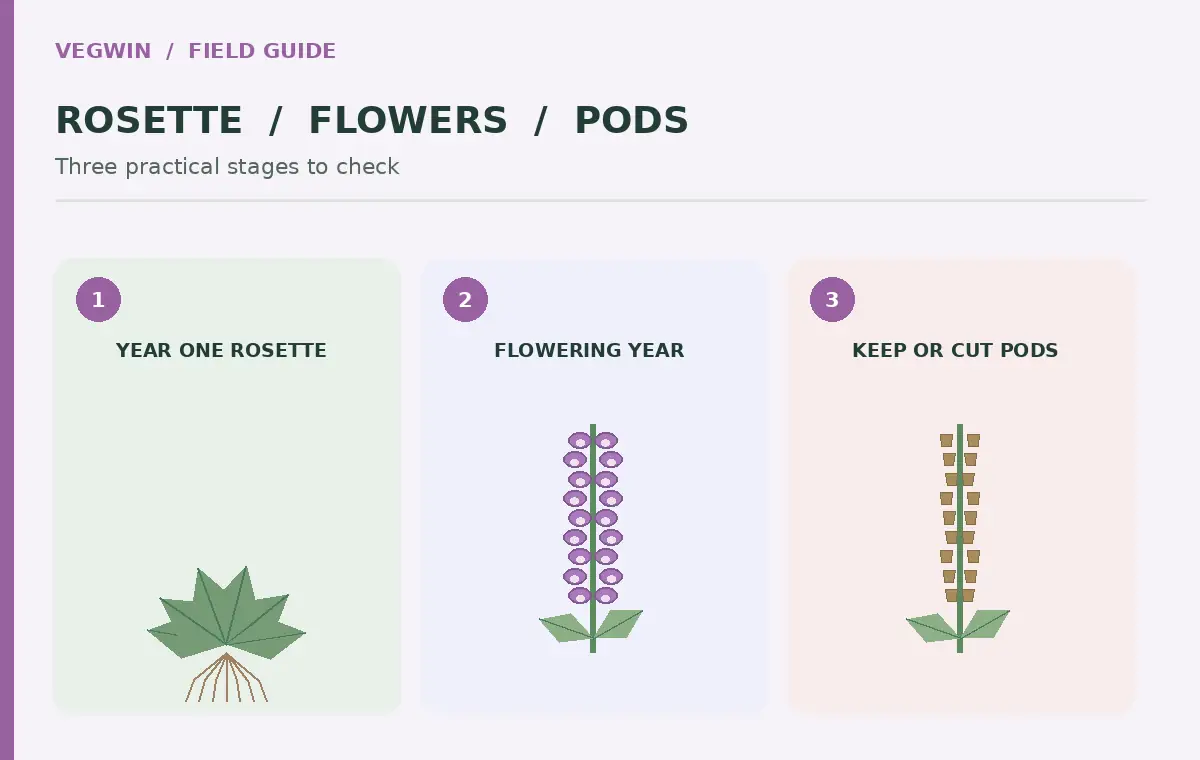
The familiar common foxglove, Digitalis purpurea, is usually a biennial: a leaf rosette grows in year one, followed by flowers and often death in year two. Other Digitalis species and hybrids behave differently. All foxgloves contain dangerous cardiac glycosides. Treat every part as poisonous, wear gloves, keep children and pets away from cuttings and never use foxglove as a home remedy or edible plant.
Identify the foxglove and its growth cycle
Find the Latin name on a plant label or reliable local identification page. Digitalis purpurea typically spends its first season as a low rosette, then sends up a tall spike in its second season. Some named cultivars flower in their first season, while various perennial foxgloves survive and return for several years. These differences affect what pruning can accomplish. A single botanical name is more useful than a nursery tag that says only foxglove.
RHS describes both biennial and perennial foxgloves, and notes that some cultivars produce little or no viable seed. If a plant bought in bloom dies afterward, cutting a flower spike is not proof that you harmed it; a biennial life cycle may simply be complete. Before deciding how many heads to leave, ask whether you want a reliable next generation, a tidier bed or prevention of seedlings outside the original area. If you are starting from scratch, read When to Sow Hollyhock Seeds and Why Some Bloom in Year Two.
Decide whether self-seeding is welcome
A biennial patch can perpetuate itself by dropping seed, although resulting plants are not guaranteed to have the same color or pattern as a cultivated hybrid. If the garden has space for new rosettes and local regulations allow this species, leaving a few healthy spikes to mature may be reasonable. If seedlings might enter paths, natural areas or neighboring beds, removing heads promptly is the safer management choice.
Do not assume any Digitalis is harmless in the wild because it has pretty flowers. Minnesota Extension identifies Digitalis lanata, Grecian foxglove, as a poisonous invasive plant in that state. Species identification and regional invasive-plant guidance matter before allowing seed to disperse. When unsure about a volunteer foxglove in a restoration or conservation area, use regional Extension or natural-resource identification rather than collecting seed from it.

Deadhead whole spikes once flowers fade
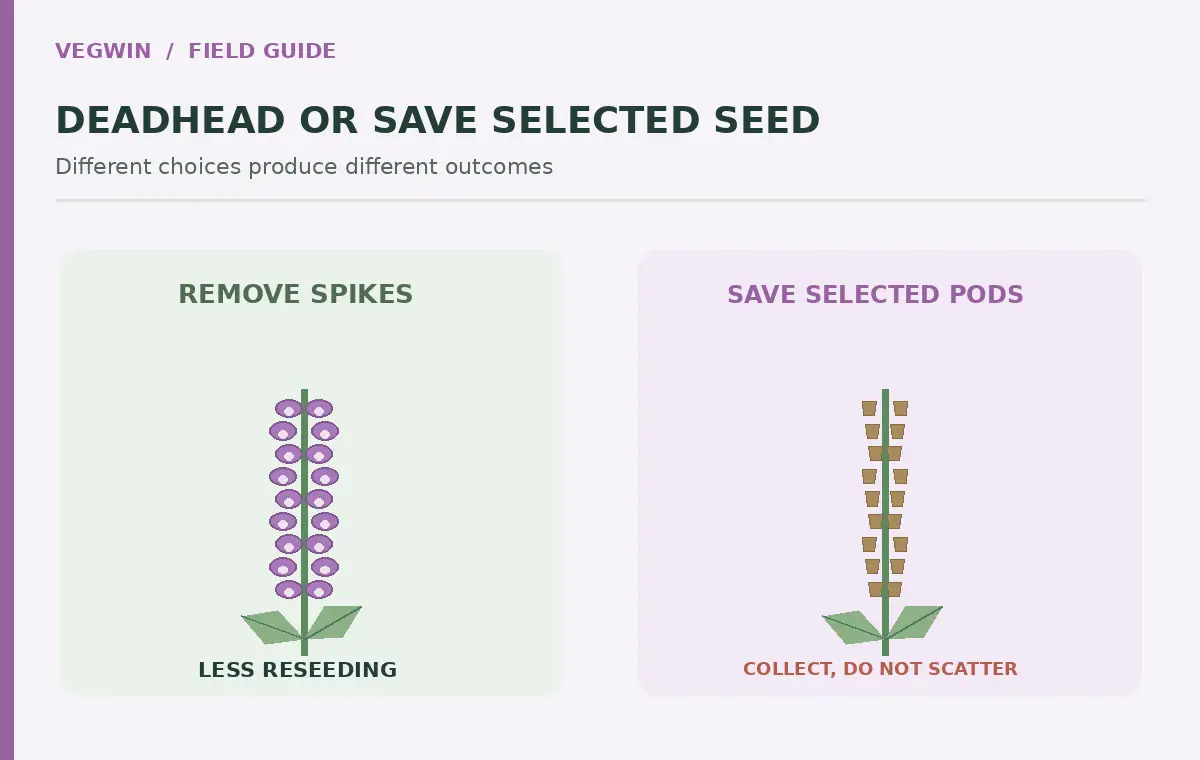
For deliberate deadheading, wait until a particular spike has finished its floral display, then use clean sharp pruners to remove that flower stem near its origin while leaving healthy basal leaves. RHS recommends removing the entire spent spike at its base if you do not want seed production. Cutting the tiny tubes one by one is unnecessary and can create more contact with toxic plant material.
Wear gloves and closed shoes, and wash hands after working. Keep removed stalks out of reach of children, livestock and pets, including while they are waiting for disposal. Don’t use the attractive hollow stalks as play objects or feed. Dispose of seed-bearing material through a route that prevents accidental redistribution; never promise that an ordinary cool compost pile will sterilize seeds reliably.
Keep only a controlled number of seed spikes
If seed is wanted, choose one or two healthy, clearly identified plants and label them. Leave selected spikes until capsules develop and dry rather than harvesting flowers while still fresh and green. Other faded spikes can be removed to limit seed spread. A paper bag held underneath an almost ripe capsule can catch small seeds as you collect, reducing loss into the bed.
Foxglove seeds are tiny; do not clean or dry them in a kitchen food-preparation area. Clearly mark the sealed container with the botanical name and a conspicuous ‘POISONOUS — NOT FOOD’ warning. Store away from children, animals, food seed packets and medications. If controlled collection is not possible, cutting all seed spikes is the better decision. Safety and containment take priority over keeping a continuous ornamental display.
Protect first-year rosettes from accidental cutting
After the tall flowering stems are gone, inspect for young leaf rosettes close to the ground. Some will belong to the spent parent or to new seedlings; do not treat every low cluster as a weed without confirming its identity. Rosettes that remain healthy may form next season’s flower display depending on species and winter survival. Seedlings need an appropriate well-drained location, not a buried crown under heavy mulch.
Weeding aggressively around a labeled foxglove patch can erase the next generation you deliberately saved seed for. At the same time, allowing uncontrolled volunteers near play spaces can create an avoidable toxic-plant hazard. Decide how many plants and which positions are acceptable. Mark retained rosettes on a simple bed map so spring cleanup does not depend on vague memory.
Do not mistake deadheading for rejuvenation
A common garden myth says removing the main spike will automatically keep every foxglove alive for many years. RHS allows that deadheading may sometimes extend flowering or life, but biennial foxgloves still tend to be short-lived. When a plant has completed its life cycle and dies back, replace it with safely grown seedlings or a new nursery plant rather than repeatedly cutting lifeless stems. If you want the full process, read how to sow foxglove seeds on the surface and grow healthy first-year rosettes.
For perennial Digitalis, deadheading may help maintain appearance, but species and cultivar response varies. Never cut all foliage to ground level on an unrecognized rosette merely because a photo on the internet shows a bare crown. Look for intact, living leaves and consult a local specialist if there are unusual symptoms. Pruning cannot solve chronic saturated roots or a plant unsuited to the site.
Set a safe end-of-season cleanup routine
At season’s end, walk the patch and classify each plant as a retained young rosette, a finished flowering plant or a seedling to remove. Wear protective clothing and bag unwanted plant pieces before moving through public parts of the garden. Remove fallen seed pods where practical, especially around patios, schools or areas used by pets. Do not burn plant waste or handle it in ways that aerosolize fine dry material.
Record the botanical species, where seedlings appeared and whether the plant performed well in that microclimate. If the patch is sending volunteers into places you did not intend, remove seed spikes earlier next year. If no new plants appear, consider starting a small quantity of labeled seed in an appropriate controlled area. Reliable succession is a planned replacement cycle, not a promise that one flower spike will bloom forever. For the basics, see our guide: When to Cut Back Delphiniums After Bloom for Healthy Regrowth.
Match Your Observation With the Next Step
| What you see | Why it matters | Next action |
|---|---|---|
| Want no volunteer seedlings | Seed heads cause future spread | Remove spent spikes promptly |
| Want controlled seed supply | Some capsules must mature | Retain selected labeled spikes |
| First-year leafy rosette | May flower in a later season | Protect it if placement is safe |
| Unknown or invasive Digitalis | Seed dispersal may be harmful | Identify first; do not spread seed |
How We Research These Garden Recommendations
The biological and horticultural guidance was reviewed against the following independent institutional references on October 22, 2026. We compared real plant species, growth stages and practical regional limits. That is a title-and-intent check, not a complete full-text audit of all historic VegWin posts. The diagrams are original simplified teaching illustrations; they are not photographs or measurements of actual specimens.
References checked October 22, 2026: RHS explains flower-spike deadheading, biennial life cycles and differences among foxglove cultivars.; North Carolina Extension identifies Digitalis purpurea as a mostly biennial and highly poisonous plant; seed set causes self-seeding.; Minnesota Extension documents toxic invasive Digitalis lanata as distinct from ordinary garden foxglove and the need for species identification.. No commercial sponsorship or approved affiliate relationship is claimed in this article; see the VegWin affiliate disclosure for site policy.
Remove finished flower spikes if preventing seed is your goal, but preserve healthy leaves and confirm whether your plant is biennial or perennial.
Sometimes it can extend growth, but it does not guarantee survival; many common foxgloves finish their life after flowering.
Only from a correctly identified, legally appropriate plant, using gloves, controlled collection and clear poisonous-plant labeling.
Yes. Foxgloves contain toxic cardiac glycosides; no part should be eaten or used medicinally at home.
Common biennial Digitalis may grow a basal rosette first and flower the following growing season.