
Shrubby potentilla—often called shrubby cinquefoil and now commonly classified botanically as Dasiphora fruticosa—has small leaves, wiry stems and many simple flowers. Older shrubs can look like tangled nests under their outer green growth. A tempting response is to shear the whole plant into a rounded outline, but repeated shearing hides dead stems and does little to renew the structure. A better approach is to identify the oldest canes and remove a limited number at their origins.
The key biological distinction is that shrubby potentilla flowers on growth produced in the current season. That makes late winter or early spring a suitable time for most routine pruning, before substantial new growth begins. This guide deals with the multi-stemmed ornamental shrub, not the herbaceous perennial species also sold under the older Potentilla name. Confirm what is growing in your yard before following woody-shrub instructions.
Identify shrubby cinquefoil before making cuts
Look for a low to medium woody shrub with many stems arising near the base and small leaves divided into narrow leaflets. Flower colors and overall size vary among cultivars. The important trait for pruning is the woody framework that persists through winter. Herbaceous cinquefoils die back differently and should not be renewed with the same cane-removal plan.
Before cutting, observe the shrub from every side. Mark dead, broken, crossing and excessively crowded canes. Look where healthy younger stems emerge: that tells you whether replacement growth is already present. A plant that is extremely weak, badly shaded or suffering root problems may not rebound from aggressive cutting. Pruning can improve a viable plant’s structure, but cannot correct chronic waterlogging or a dying root system.

Time the main pruning before spring leaf-out
A University of Minnesota Extension response explains that shrubby potentilla flowers on new growth made in spring. It recommends late-winter to early-spring pruning rather than waiting until the last frost date has passed. Calendar dates vary geographically; the useful stage is before substantial new growth and while the branching structure is visible. Avoid working when stems are brittle with deep cold or a dangerous ice condition. For the basics, see our guide: When to Prune Shrubby Potentilla and Restore a Natural Mounded Shape.
If the plant is already covered with flower buds and blooming shoots, the benefit of major shaping is smaller and the immediate loss of display greater. Remove a truly broken or diseased stem when appropriate, but postpone larger structural renewal. Keeping one main pruning window each year makes growth response easier to evaluate and limits accidental overworking of an established shrub.
Thin whole old canes instead of clipping every tip
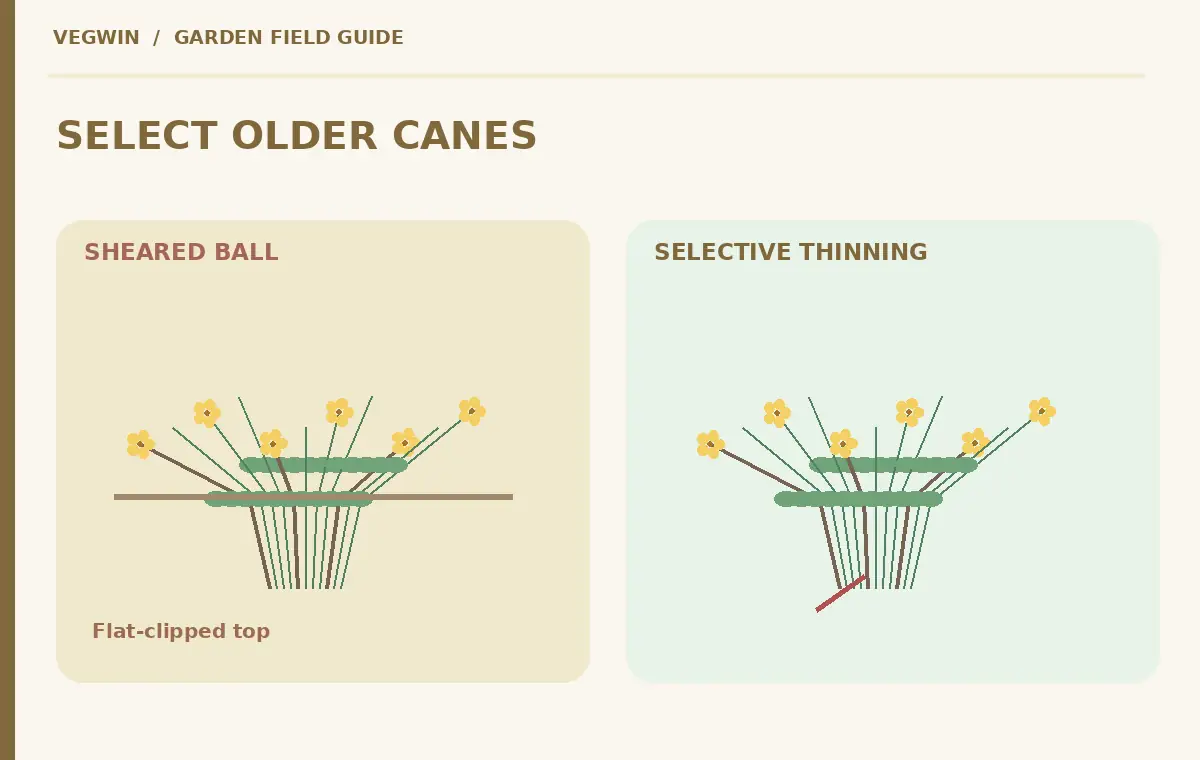
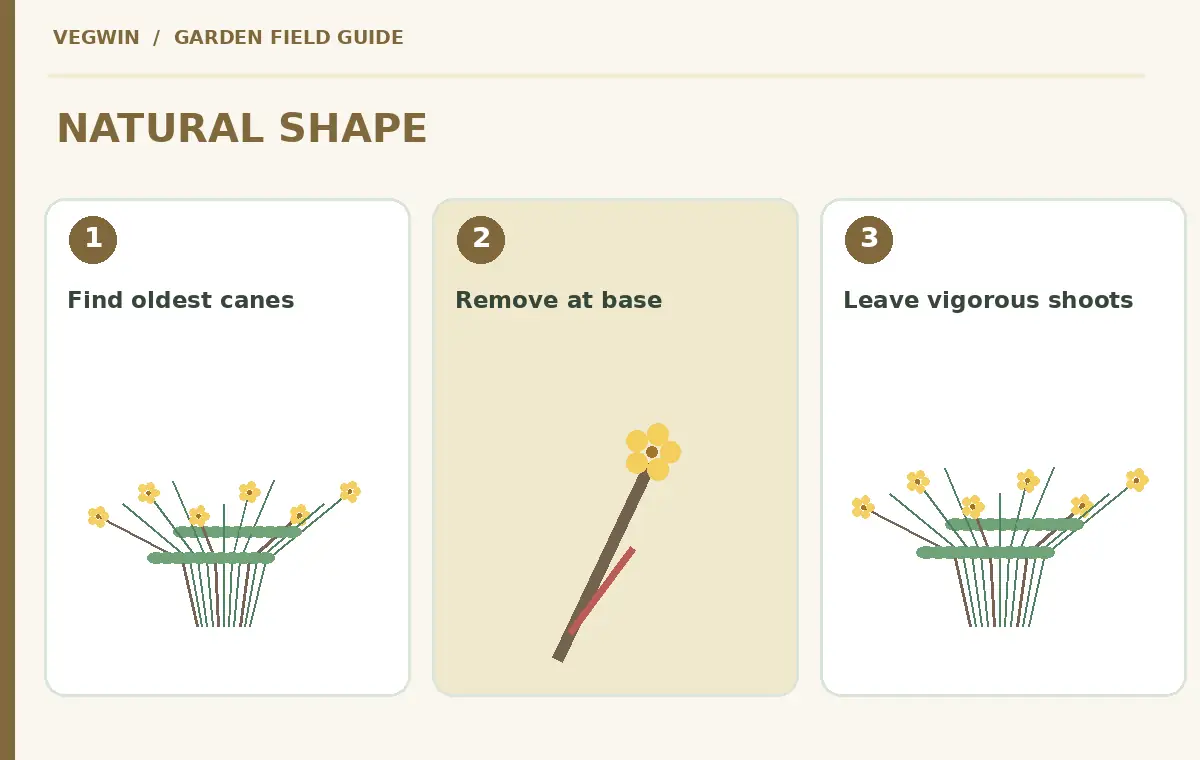
Follow a few of the thickest, oldest, gray woody canes downward. Cut selected stems at or very close to their point of origin without leaving long dead-looking stubs. Minnesota Extension advises not removing more than about one-quarter to one-third of older canes in a routine renewal year. Such selective removal opens the center to light and creates room for vigorous young shoots.
Next, remove obviously dead or damaged wood. If two branches rub tightly, choose the weaker one for removal. Use sharp clean pruners suitable for the stem diameter rather than a blunt tool that crushes bark. Step away after each group of cuts and reassess the outline. The goal is not an empty middle with all foliage left in a ring; it is a balanced set of living stems at different ages.
Know the difference between renewal and rejuvenation
Renewal is an ongoing process: remove a modest share of old stems and keep the rest growing. Rejuvenation is a much more severe reduction of an overgrown shrub. Colorado State Extension lists potentilla among species that can respond to hard renewal, but also notes important limits: very old woody crowns, severe decline and poor root vigor may reduce the chance of recovery. Treat drastic cuts as an exceptional response rather than standard maintenance.
If you have inherited an enormous shrub, ask whether it is worth rehabilitating over several seasons. Thin a limited set of canes this year, then observe the strength of new shoots before committing to more. A shrub that produces little new growth despite acceptable conditions may be a better candidate for replacement than repeated severe pruning.
Preserve a natural outline during the growing season
After the main pruning, new shoots develop and the shrub fills in. A few awkwardly long stems can be redirected with selective cuts if needed, but regularly shearing the outer surface encourages a tight green shell over older interior wood. Minnesota Extension explicitly discourages hedge shears for routine potentilla maintenance. The open, soft outline generally suits the plant’s natural flowering habit better.
Watch for shading from neighboring vegetation, irrigation leaks or compacted wet soil rather than assuming every yellow leaf reflects an incorrect pruning date. In a sunny border with suitable drainage, new shoots can flower during the normal growing season. Keep notes on cane removal and the later bloom so that the next year’s decision is based on results.
Use a short inspection before each pruning season
Once a year, photograph the framework before leaves expand. Compare the number of vigorous young stems with the count of heavy aging canes. Remove obvious dead wood, then choose only as many older canes as necessary to open congested areas. The most useful measure is not how many inches shorter the shrub becomes, but whether next summer brings healthy growth and accessible flowering shoots.
If a shrub looks very woody but still blooms freely, one or two careful renewal cuts may be enough. If growth is thin everywhere, examine light, drainage and root condition before attempting a dramatic rescue. Clear tools, simple records and moderate cuts make it far easier to understand what helped than a single all-over trim that removes every useful clue.
Match the observation to the next action
| What you observe | Practical next step |
|---|---|
| Healthy shrub with light crowding | Remove dead wood and a few oldest canes. |
| Many thick gray woody stems | Selectively renew up to roughly one-third of older canes. |
| Blooming actively | Avoid major structural pruning until a suitable dormant window. |
| Weak shrub with little new growth | Check roots, drainage and light before severe cutting. |
| Rounded sheared exterior, dead interior | Stop routine shearing and thin from the base instead. |
Keep this table with the planting records rather than converting it into rigid rules. Local weather, the actual species or cultivar, growing conditions and the condition of the plant all influence how a recommendation should be applied. When observations conflict with a general schedule, identify the cause before cutting, planting or watering more.
How We Research and Verify This Guide
Research checked October 22, 2026. We compared plant-specific guidance from established university Cooperative Extension programs and the Royal Horticultural Society, distinguished general growing principles from regional details, and used the sources to check the practical choices in this article. Our diagrams are simplified teaching illustrations and are not scaled planting plans.
Sources reviewed: University / Extension horticulture reference; University / Extension horticulture reference; University / Extension horticulture reference. Consult local Extension advice for climate-dependent timing, unusual plants or unresolved symptoms.
Editorial disclosure: This guide provides independent education and does not claim any verified paid partnership or commercial recommendation. See our affiliate disclosure for the site policy.
Shrubby cinquefoil generally flowers on new growth, so late winter or early spring pruning is commonly suitable.
No. Routine pruning is usually selective renewal; extreme rejuvenation carries more risk and is not an annual requirement.
A conservative renewal plan removes about a quarter to a third of older canes, adjusting to plant vigor.
Selective hand-pruning is usually better for exposing and removing aged woody canes.
Check sunlight, soil drainage, overall vigor and root health before making additional cuts.