
Purple coneflower (Echinacea purpurea) provides pollinator blooms in summer and prickly, seed-filled cones later in the season. Saving seed requires a different decision from deadheading for more flowers: you must allow selected blooms to mature completely. A dark, brittle cone and drying flower stem are better clues than the calendar or fading petal color. Not every small fragment shaken from a cone is a filled viable seed, and named hybrids may produce offspring that look unlike their parent. This guide shows the cone structure, how to gather dry heads without making a moldy bag, and how to leave enough standing for seed-eating birds.
Identify Purple Coneflower Before Saving Seed
Echinacea purpurea usually carries a prominent dome-shaped, bristly center with drooping pink-purple ray florets on a sturdy stem. Leaves are generally rough, ovate to lance-shaped, and may have toothed edges. Penn State Extension notes the spiny central disk and seedhead value for goldfinches. Do not substitute a black-eyed Susan or blanketflower cone simply because it has a similar daisy-like outline. Different plant families or cultivars can have different seed structures and harvesting details. Take a picture of flower, leaves and stem before petals fall if an older planting lacks a label; identifying only a dry brown stalk is much harder.
Let Selected Flower Heads Mature Beyond Petal Drop
For seed saving, choose healthy flowers and stop deadheading those particular blooms. Ray petals will fade or fall before the central cone finishes drying. Wait for the head and supporting stem to turn distinctly brown and feel dry. Illinois Extension cautions that immature green or soft heads often yield poor seed. The process is not accelerated reliably by simply snipping every attractive flower after its first bloom. If heavy rain threatens nearly mature heads, a breathable paper bag can capture shed material while allowing further drying. Never store damp cones in sealed plastic immediately after harvesting.

Share Seedheads With Birds and the Garden
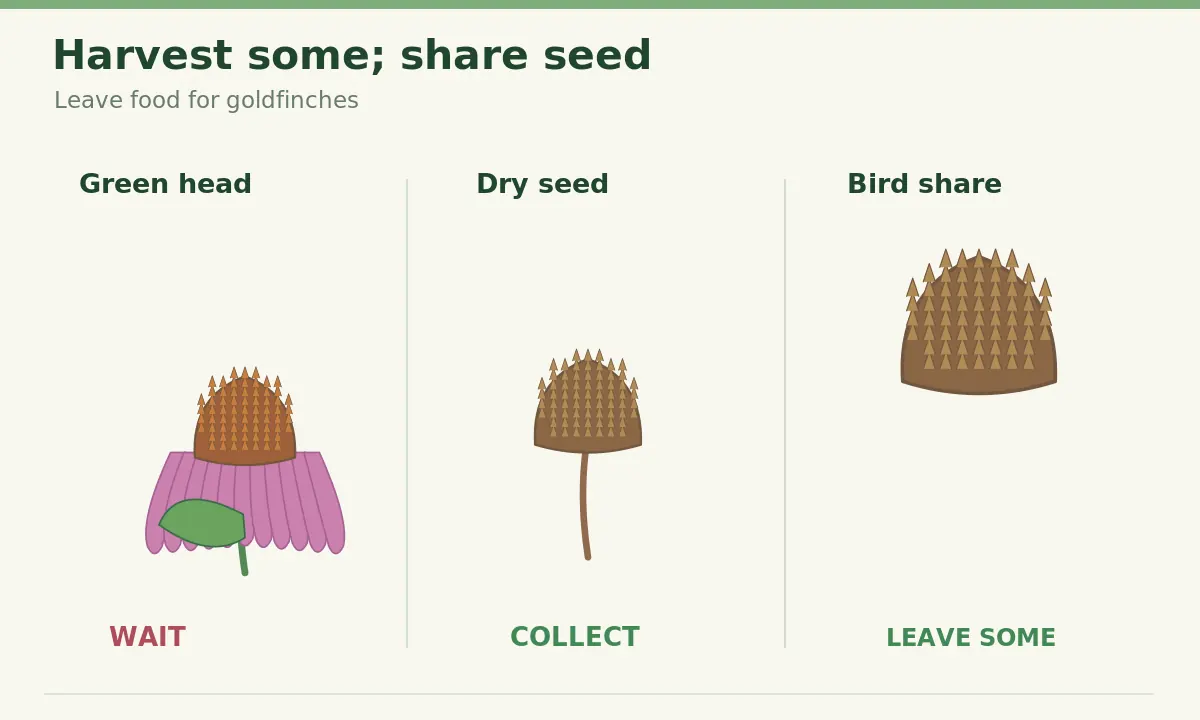
Goldfinches feed on standing coneflower heads; Penn State specifically mentions their value in a wildlife garden. Rather than harvesting every cone, take a portion from healthy plants and leave the rest for seed-eating birds and natural reseeding. Illinois Extension’s native-seed collection guidance recommends taking no more than a portion of available seed and keeping plant populations in mind. In a compact ornamental garden, choose a few cones for one labeled envelope and leave the remaining decorative stalks standing through winter. On public land or another person’s property, obtain permission before collecting any native seed.
Choose a Dry Day and Clip Stems Below the Mature Cone
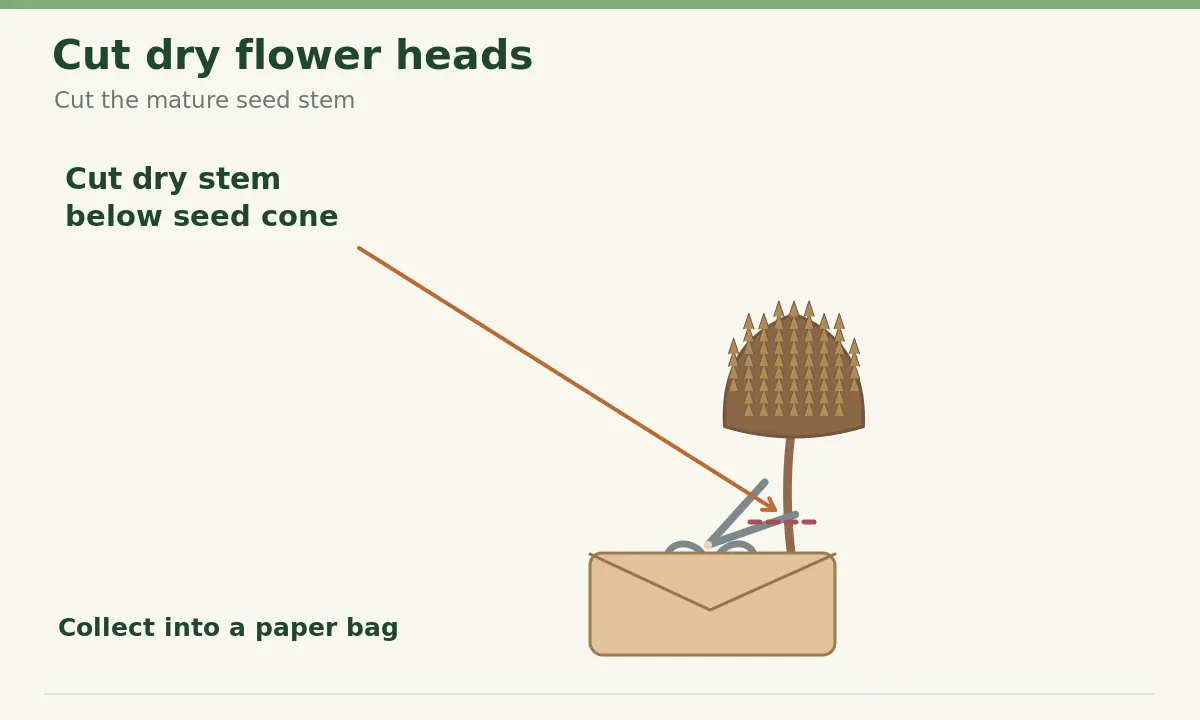
Harvest after dew has dried and avoid wet weather. Use clean pruners to cut a mature cone with a short length of supporting stem, keeping the prickly head over a paper bag or tray so loose achenes are not lost. The cut goes below the head on the flower stem, not through the crown or leaves. Wear gloves if the cone prickles your skin. Gather seedheads of one known species or cultivar into its own container and write the name and date immediately. A dry sunny collection period reduces storage risk, but the interior of a cone may still need further drying.
Dry Harvested Heads Before Removing Seed
Spread harvested cones in one thin layer on a paper-lined tray, screen, or well-ventilated paper bag in a dry sheltered location. Do not pack fresh heads tightly where moisture is trapped. Check periodically for condensation, mold, or insect activity. Illinois Extension recommends letting seedheads dry thoroughly before cleaning and storage. A fully dry head should feel brittle enough to rub apart, rather than soft or sticky. Avoid placing seed on scorching hot surfaces or in damp sheds; rapid extreme heating and mold can reduce viability. If a head smells musty or becomes visibly moldy, discard it and clean your work surface.
Separate Filled Achenes From the Prickly Chaff
Purple coneflower produces dry single-seeded fruits called achenes within the central cone. Gently crumble or rub a fully dry head over a tray or paper; separate recognizable firm seed-bearing pieces from sharp scales and other chaff. Use a sieve or cautious hand sorting rather than expecting every fragment to look like the dark striped seeds of a sunflower. The cone is bristly, so gloves may improve comfort. You do not need a laboratory-grade cleaning step for a small home batch, but large pieces of moist plant tissue should not be mixed into storage. Reject obvious hollow fragments when possible.
Label and Store Only Dry Seed in a Cool Place
Place completely dry seed in a labeled paper envelope or appropriately dry airtight container, following local seed-storage guidance. Mark Echinacea purpurea, the mother plant or cultivar when known, location, and collection year. Store in a cool dark dry setting free of condensation and pests. Illinois Extension stresses keeping seeds dry to prevent mold. Avoid leaving envelopes in a humid outdoor greenhouse or hot sunny window. If you plan to sow later, check recommended cold-moist stratification requirements for your particular seed source or cultivar. A packet may be viable without every seed germinating.
Expect Variation From Hybrids and Cross-Pollinated Plants
A packet marketed as a named ornamental hybrid may not reproduce the same color, double flower form, or height from saved open-pollinated seed. Illinois Extension notes that hybrid seed offspring commonly vary from parent appearance. Purple coneflowers can also receive pollen from nearby compatible plants, so even nonhybrid named selections may produce mixed seedlings. Use purchased, correctly labeled seed or vegetative propagation when exact cultivar traits are essential. Saved garden seed is especially useful for learning and naturalized plantings where some variation is acceptable. Do not promise genetically identical blooms from a mixed pollinator border.
Distinguish Mature Seed From a Wet or Empty Cone
A mature harvestable cone is dry and brittle, usually brown rather than green. A faded blossom with a still-green moist central head is not yet a storage-ready seed source. Conversely, a head that birds have thoroughly emptied may yield little despite looking perfectly dry. Rub a small test sample over a white tray and inspect for filled achenes before clipping the whole plant. This check prevents packing chaff and empty scales as seed. The comparative illustration shows an immature green cone, a brown dry head containing seed, and an overpicked cone with little remaining material.
Prepare a Small Seed-Saving Record for Next Spring
Record which plants produced the dry cones, how many heads you collected, whether the garden contains hybrids, and any storage or germination problems. Keep a few labeled heads aside for a quick comparison in spring. Do not remove the entire planting for a small packet of seed: sturdy standing stems can support overwintering wildlife, and remaining heads feed birds. Before sowing, follow a reputable species-specific guide for any pretreatment, appropriate depth, and local season. The key workflow is simple: identify the coneflower, wait for dry heads, share with birds, finish drying, clean and label.
Related Guides
- How to Save Coneflower Seeds From Dry Heads Without Losing Them
- Start Echinacea Seeds With Cold Treatment and Avoid Moldy Seed Trays
How We Research and Verify Plant Advice
Sources checked on 2026-10-26: extension.illinois.edu; extension.psu.edu; extension.illinois.edu. We reviewed each institution’s plant identification, correct growth stage and relevant cultural recommendations before adapting them into an independently written step-by-step guide. Where sources are region-specific, their calendar details are not applied universally. Pictures use simplified teaching shapes and should be compared with living specimens; they are not a substitute for laboratory disease diagnosis or local climate guidance. The relevant advice is paraphrased rather than reproduced.
Safety and Independent Editorial Disclosure
This independently prepared educational article does not claim sponsorship or affiliate approval. Our category reading links are informational, not product endorsements. See the VegWin affiliate disclosure. Clean sharp tools before cutting plants, protect hands from thorns and blades, and keep cut plant material away from children and pets where appropriate. Use only locally registered plant treatments labeled for the actual crop, and observe the product label. Do not rely on unsupervised home remedies or unverified harvest-safety promises.
Collect when the cone and flower stem are completely brown and dry, not merely after the petals fade.
Yes. Goldfinches and other seed-eating birds use standing heads, so leave some intact.
Not reliably. Hybrid or cross-pollinated offspring can vary in color, form and other traits.
No. Dry them thoroughly in a ventilated environment and store only dry material.
No. Many fragments are chaff or empty pieces; inspect and separate firm seed-bearing achenes.