
A packet of purple coneflower seed can appear slow or stubborn compared with lettuce. One reason is that many native perennial flowers benefit from a moist cold period before their seeds wake up.
The safe way to avoid wasting the packet is to read its sowing directions first, then choose a controlled cold-moist treatment or an outdoor winter-sowing approach. Neither method requires burying seeds in a waterlogged jar. This guide is about producing ornamental garden plants, not using echinacea as a medicine.
Check species and seed packet before choosing a method
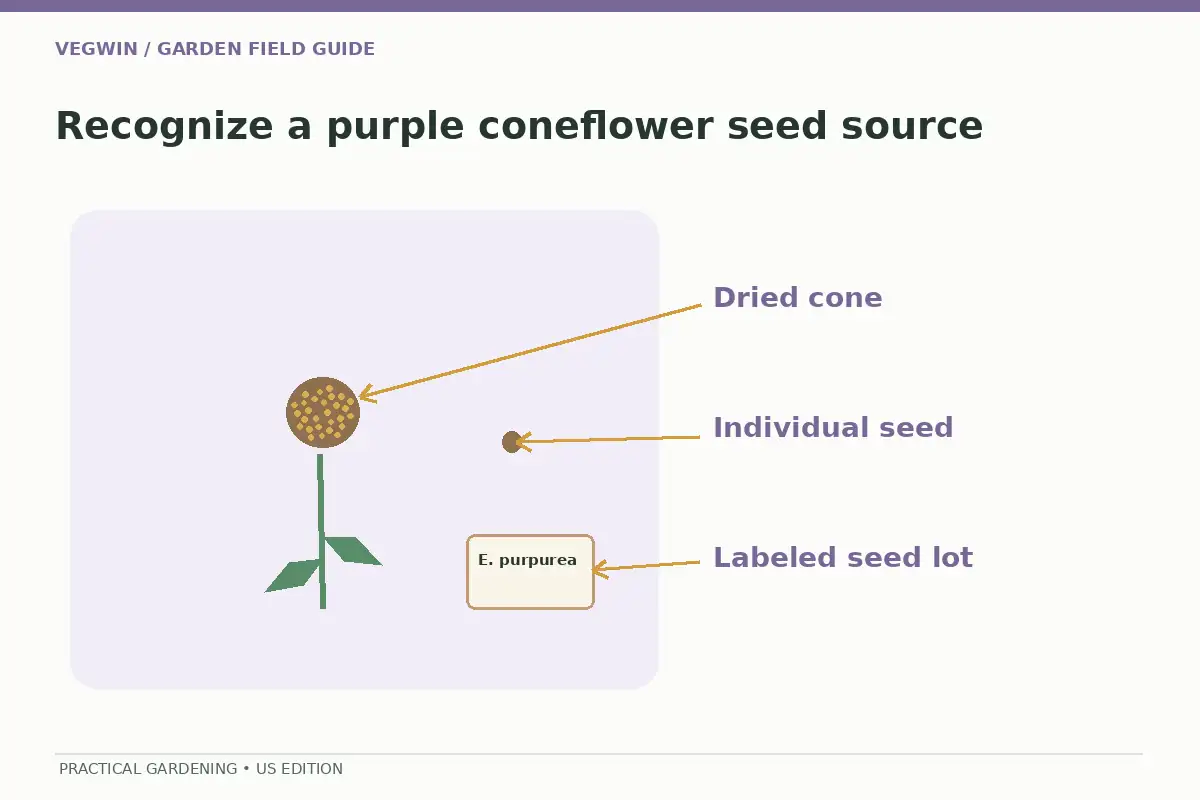
Echinacea is a genus, not a single uniform seed lot. Purple coneflower, often labeled Echinacea purpurea, differs in some propagation characteristics from pale purple coneflower and modern ornamental hybrids. Do not assume seed collected from a hybrid bloom will produce a plant identical to the parent. Penn State Extension describes cold stratification for purple coneflower; Illinois Extension lists it among plants that commonly need a moist cold period. Yet commercial lots, species and treatment history can vary, so follow the seed supplier’s specific instructions when they are credible and complete. Write down the Latin name and any pre-treatment noted on the packet. This small step avoids putting already treated seeds through another unnecessary long delay.
Decide between the refrigerator and outdoor winter sowing
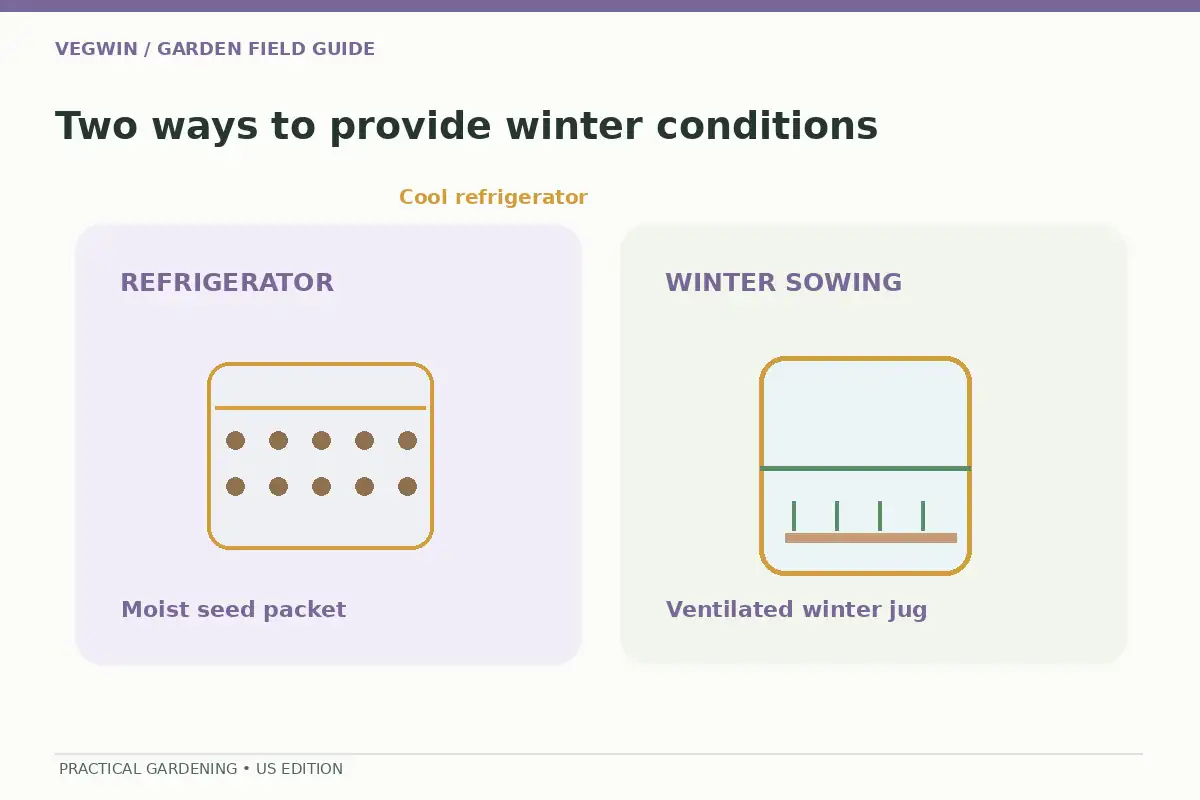
There are two useful routes. For a controlled start, place seeds into a clean, barely moist medium in a labeled sealed bag or container and provide the cold treatment appropriate to the species. For an outdoor start, sow in a ventilated, drained container that experiences winter conditions and check it as spring warms. University of Minnesota recommends winter-sown milk jugs with ventilation and drainage, including purple coneflower among flowers to try. Illinois Extension explains the purpose of refrigerated cold-moist stratification. One approach gives you more timing control; the other uses the local winter but depends on sufficient natural cold and careful container placement. Neither is a guarantee in an unusually warm winter.
Prepare a moist but never dripping cold-treatment packet
Illinois Extension describes moistened paper towel, vermiculite, peat or sand held in a sealed container or bag, refrigerated for a species-appropriate period. Moist means it should not release water when squeezed gently; free water promotes mold and oxygen stress. Label the plant, start date and planned check date, and place the packet where food handling stays clean and undisturbed. Illinois gives a general refrigerator range of 33 to 40 degrees Fahrenheit and notes that many species vary from one to three months of treatment. Do not present that general window as an exact number for all Echinacea lots. Check periodically for drying, mold or early sprouting. Plant a seed that begins growing rather than leaving a vulnerable root to tangle in a towel. For a step-by-step method, see how to start eastern columbine from seed with the right cold period.
Make winter-sowing containers that can drain and breathe
A washed translucent jug or suitable container can function as a miniature cold frame, but it needs drainage holes in the bottom and a way for warm air to escape at the top. The University of Minnesota winter-sowing guide uses a hinged cut jug, a moistened soilless mix, a label and ventilation such as an open cap. Do not use regular garden soil that compacts into a wet brick, and never seal an outdoor jug with no drainage. Leave the container outdoors where it receives winter exposure but will not repeatedly blow away or fill with runoff. If snow or rain is scarce, check moisture; if a bright spring day makes the jug overheat, provide more ventilation. Labels should survive outdoor moisture and sun.
Sow at the depth the particular seed packet specifies
After cold treatment, sow into clean, moistened seed-starting mix and use the depth and light directions supplied for that seed lot. A covering suitable for one species may be too deep for another. Seeds need moisture contact without being submerged, and seedlings need adequate light as soon as green shoots appear. The purpose of stratification is to help address dormancy; it does not replace the ordinary requirements for oxygen, light and suitable growing temperature afterward. Avoid adding fertilizer to the germination packet, watering with unknown home remedies, or piling on more mix when nothing appears after a few days. Compare the actual sowing date with the packet’s expected germination window before declaring the lot bad. If you want the full process, read how to sow native milkweed seeds in fall or after cold treatment.
Watch for condensation and early seedlings
Refrigerated packets and winter jugs both need observation. In a bag, look for a small white root tip and transfer sprouted seed gently to mix without snapping it. In a jug, as outside temperatures rise, seedlings may appear on different days; open ventilation progressively so the container does not become a hot, wet chamber. University of Minnesota advises gradually opening winter-sowing containers before transplanting seedlings. Remove visibly moldy media or collapsed seedlings using clean tools, and avoid spraying unnecessary chemicals. In indoor trays, provide sufficient light to prevent leggy growth and use drainage holes that actually release water. Healthy seedlings must eventually adapt to outdoor light and wind, regardless of how their dormancy was broken.
Transplant with the species and site in mind
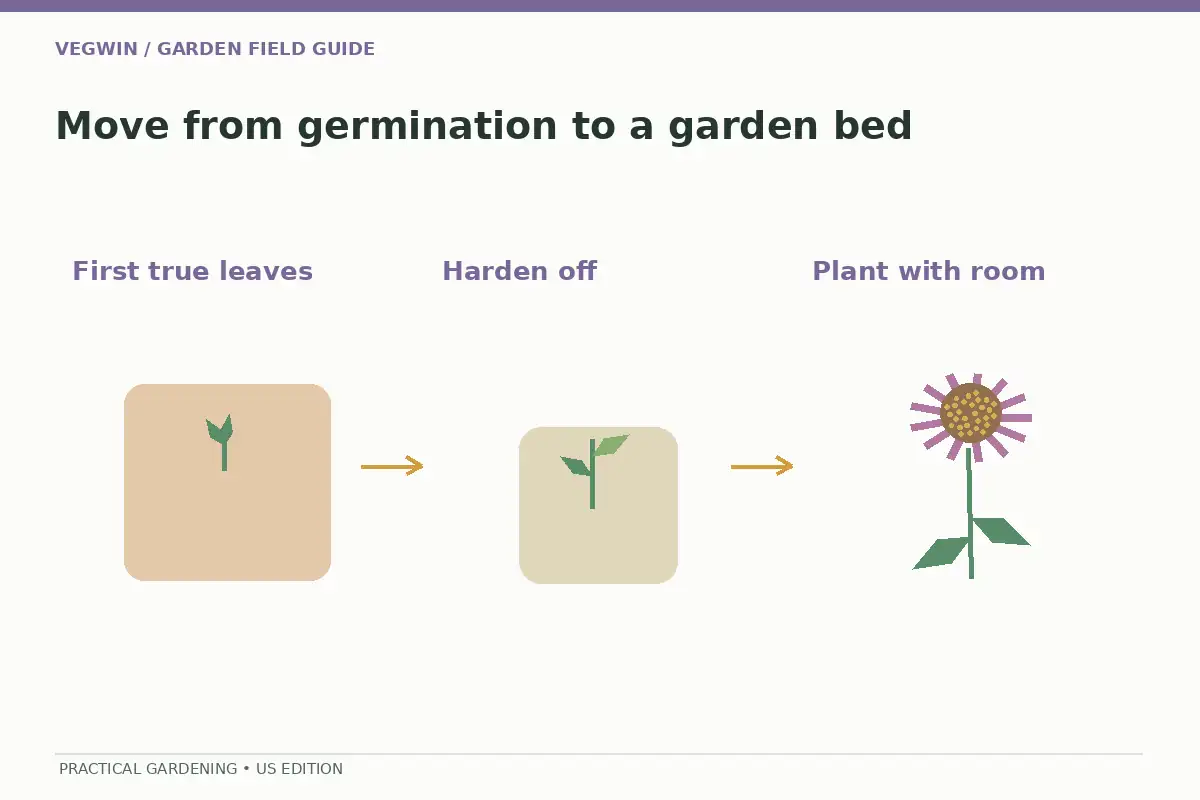
Echinacea seedlings are not instantly drought resistant. Give roots time to fill a small cell or pot, then harden plants off before transplanting into a suitable bed. Compare mature plant size and drainage preferences instead of assuming every coneflower thrives in dry gravel. Native or straight-species E. purpurea used in gardens can differ from other Echinacea species in growth habit, roots and site tolerance. Illinois Extension discussions of coneflowers note such differences, and regional Extension is the best source for local placement. Keep pots labeled until the plants are established; if you started several seed lots, a mixed tray can make later comparisons impossible. Allow space for mature airflow rather than overcrowding seedlings because they look small in spring.
Troubleshoot failures without guessing a universal cure
If no seeds germinate, inspect the packet age, storage history, seed quality, cold-treatment requirements and whether the media alternated between bone dry and saturated. Some kinds of seed need more time or light than a generic seed chart implies. Illinois Extension notes that purple coneflower is among plants where omitted stratification can explain poor germination; that is one possibility, not evidence that a particular packet has dead seed. If seedlings emerge and then collapse at the soil line, assess overwatering, contaminated mix and airflow rather than repeating cold treatment. Keep a small record of treatments and germination numbers so next year’s plan is based on your actual seed lot and growing conditions.
Related Guides
How We Research and Verify the Instructions
We checked the linked sources on October 21, 2026. The distinct practical result is: A two-route seed-starting decision for Echinacea: cold-moist refrigerator stratification versus outdoor winter sowing, with a species-and-packet check to avoid one-size-fits-all timing. That comparison is a title-and-tag overlap review for the older published list, not a full-text audit of every historical or unpublished WordPress article. The drawings simplify real plants to teach identification and workflows and are not measurements to scale. Local Extension recommendations, seed packet details and climate conditions take priority where they differ.
Sources reviewed October 21, 2026: 1. University of Illinois Extension — Cold-moist stratification concept and refrigerator medium, temperature range and species-dependent period. 2. University of Minnesota Extension — Winter sowing containers, drainage, ventilation and purple coneflower as candidate. 3. Penn State Extension — Purple coneflower ecology, self-seeding and cold-treatment guidance. This educational guide contains no paid product endorsements or verified affiliate placements. Read the VegWin affiliate disclosure for the site-wide policy.
Many coneflower seeds benefit from it, but treatment depends on species and seed-lot preparation. Follow credible packet directions.
Yes. Keep seeds in labeled, barely moist material at an appropriate cold temperature and inspect for mold or early roots.
Yes. Minnesota Extension lists purple coneflower as a candidate; use drainage, ventilation and an appropriate seed-starting mix.
There is no single period for all species and seed lots. Illinois describes a general one-to-three-month range for plants needing cold stratification.
Inadequate light or crowded, damp conditions may contribute. Improve light, ventilation and watering without abruptly scorching seedlings.