
After the spring spear harvest, asparagus grows tall branching stems covered with fine, needlelike green structures commonly called ferns. That summer canopy is not spent clutter; it feeds the underground crown and next year’s spears. Cutting it green may take away energy the plant still needs. Wait until it has naturally turned yellow and then brown, decide whether the bed is accessible in late fall or early spring, and remove dry tops without disturbing the root and bud system below soil. This walkthrough distinguishes ordinary dormancy from disease-related early collapse and shows exactly which plant parts are removed during winter sanitation.
Know What Asparagus Ferns Really Are
A fern is the bushy aboveground growth that develops when asparagus spears are allowed to mature. It has branching stems and fine green cladodes rather than the broad leaves of many vegetables. These green structures photosynthesize through summer and fall, moving carbohydrates to fleshy storage roots and the crown. The spears harvested next spring depend in part on that stored energy. A bed whose ferns were cut down green can lose vigor and future yield. The technical name fern is a common gardening shorthand, not a sign that asparagus belongs to botanical ferns. Identify the lacy green canopy before treating it as garden waste.
Wait Until the Canopy Is Fully Brown, Not Simply Tall
University of Minnesota Extension advises removing asparagus ferns only after they have turned completely yellow or brown. Tall ferns are not automatically ready. During natural senescence, the plant shifts stored food to its roots. A few yellowing tips while much of the growth remains green do not establish that the job is finished. Examine several stems throughout the bed, including sheltered or irrigated sections that stay green longer. After a freeze, verify that the fern really has browned rather than cutting immediately while shoots remain partly green. The safe trigger is plant condition, not a single date.

Choose Late Fall or Early Spring According to Access
Dead ferns can be removed in late fall or early spring. Extension guidance generally favors removing fully brown ferns in late fall when practical because insects and some plant pathogens can persist in old debris. In colder regions, snow may arrive while foliage is still green. Rather than cutting live growth before snowfall, wait and remove the dry stems when the garden is accessible in spring. Complete the work before new edible spears emerge to avoid breaking them. Do not impose a Minnesota fall deadline on climates where asparagus continues growing or goes dormant at a different time.
Locate Soil Level and Keep Cutting Tools Above the Crown
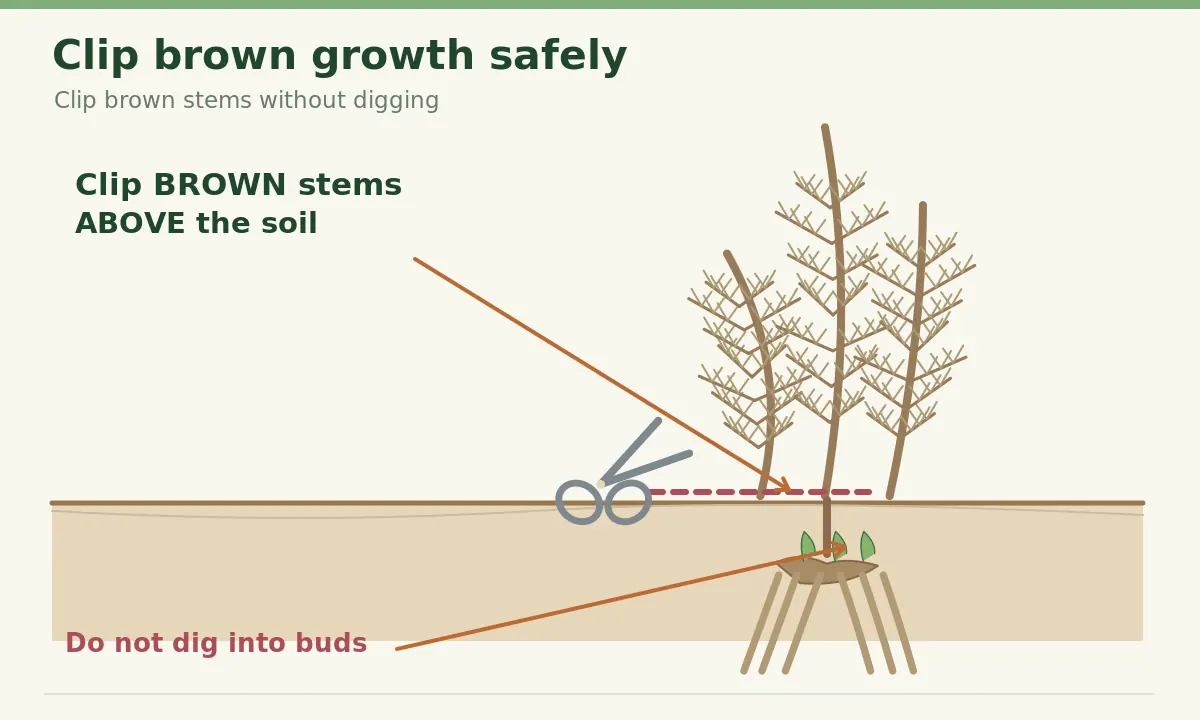
Asparagus crowns are thick, living underground structures attached to storage roots and buds. The dry ferns are the aboveground stems, not the crown itself. Use snips or loppers to clip each dead stem close to ground level while keeping blades away from the soil and emerging buds. On a large established planting, some guidance discusses mowing; in a small home bed, hand cutting provides better control. Avoid digging, deep hoeing, or slicing into the top of the crown during cleanup. The section drawing shows the soil line, dead stems above it, and intact buds below it.
Handle Dry Stems as Potential Insect Habitat
Asparagus beetles can overwinter in debris near an asparagus patch. University of Minnesota recommends removing old dead ferns from the growing area to reduce these overwintering sites. Gather dry stalks rather than chopping them into the bed and forgetting them. Local compost handling depends on disease risk and your municipality’s permitted yard-waste methods. Do not burn stems in the garden unless burning is explicitly permitted, safe, and appropriate under local rules. Remove old stems without removing soil or tugging at live crowns. Cleaning up can reduce some pest pressure; it does not prevent beetles from flying in later.
Do Not Treat Premature Yellowing as Normal Dormancy Automatically
Asparagus ferns can turn yellow early because of drought, injury, nutrient stress or disease. Rust, purple spot and crown-rot disorders can also weaken plants. If much of the canopy discolors in mid-growing season, first examine timing, watering and symptoms rather than calling it ordinary fall dormancy. Rust may show orange pustules, while other diseases have differing lesions and decline patterns. A brown stalk alone is not a reliable diagnosis. Consult your local diagnostic service when decline spreads unexpectedly. Sanitation helps but cannot repair a severely diseased underground crown. Avoid applying fungicides based solely on old brown fern appearance.
Retain Productive Summer Growth After Spear Harvest
Once the spring spear harvest ends, allow remaining shoots to develop into vigorous green ferns. Maintain appropriate moisture during dry periods, weed carefully without damaging crowns, and use any fertilizer based on soil tests and local Extension advice. The fern canopy is the plant’s food-producing stage. Continuing to cut green spears and fronds as if the harvest never ended can reduce reserves. Newly planted asparagus especially needs time to establish before heavy harvesting. Separate spring edible spear management from fall dormant cleanup: they involve the same species but serve opposite purposes in the plant’s annual growth cycle.
Recognize Emerging Spear Buds Before Spring Cleanup
If a warm spell follows winter, inspect the bed closely for new spear tips before trimming or raking. A tan old stem can stand beside a live green or purple spear pushing through soil. Use hand pruners for remaining dead stems, not a mower or shovel, when fresh spears are visible. Avoid dragging a loaded rake over tender growth. If the site is mulched, move debris gently rather than exposing crowns through deep soil disturbance. Start the season with a clean surface but leave underground asparagus roots, crown buds and early shoots undamaged.
Compare Leaving a Green Fern with Removing a Brown One
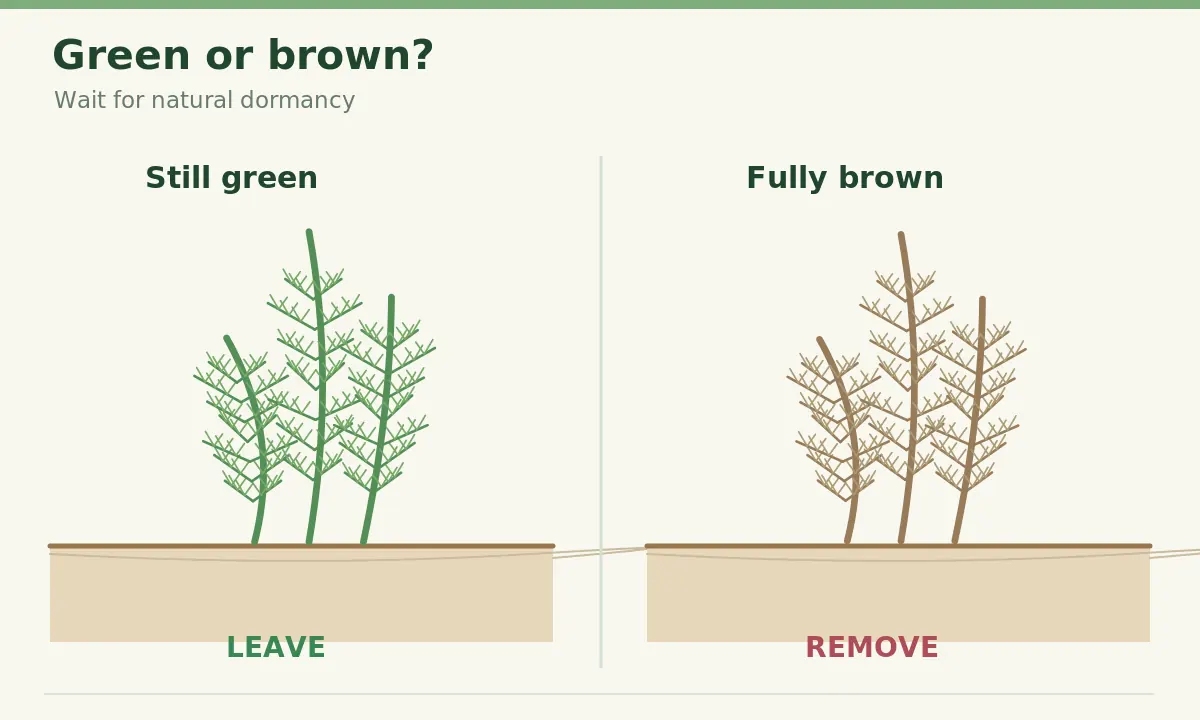
The key decision is biological rather than aesthetic. A healthy, green asparagus canopy should remain: it is still sending food below ground. A fully brown, brittle canopy no longer makes food and can be removed. If the bed is partly green, postpone broad cutting and revisit it. If snow or heavy rain makes late fall work impractical, protect the crown and return in early spring. The comparison illustration pairs one fully green plant with a dry brown stand to make the contrasting instructions unmistakable. Both arise from the same perennial crown, which stays in place.
Complete a Crown-Safe Sanitation Checklist
Before leaving the bed, verify the ferns were brown before removal, no new spears were cut, and all tools stayed above soil. Carry old stems away from the planting and clean tools before using them on other crops, especially if disease symptoms were present. Leave soil stable and avoid unnecessary deep cultivation. Record whether asparagus beetles or rust occurred this season so that future scouting is targeted. A sensible schedule honors local dormancy, not a fixed calendar, and it protects next year’s harvest by keeping the underground root and bud system intact.
Related Guides
- How to Grow Asparagus: Establish Crowns Before the First Harvest
- When to Stop Harvesting Asparagus So the Crowns Stay Productive
- How to Plant Asparagus Crowns With the Right Trench and Soil Cover
- How to Plant Bare-Root Asparagus Crowns and Fill the Trench Correctly
- How to Identify Common and Spotted Asparagus Beetles Before Treating Plants
How We Research and Verify Plant Advice
Sources checked on 2026-10-26: extension.umn.edu; extension.umn.edu. We reviewed each institution’s plant identification, correct growth stage and relevant cultural recommendations before adapting them into an independently written step-by-step guide. Where sources are region-specific, their calendar details are not applied universally. Pictures use simplified teaching shapes and should be compared with living specimens; they are not a substitute for laboratory disease diagnosis or local climate guidance. The relevant advice is paraphrased rather than reproduced.
Safety and Independent Editorial Disclosure
This independently prepared educational article does not claim sponsorship or affiliate approval. Our category reading links are informational, not product endorsements. See the VegWin affiliate disclosure. Clean sharp tools before cutting plants, protect hands from thorns and blades, and keep cut plant material away from children and pets where appropriate. Use only locally registered plant treatments labeled for the actual crop, and observe the product label. Do not rely on unsupervised home remedies or unverified harvest-safety promises.
No. Green ferns feed the crown and storage roots; wait until they are completely yellow or brown.
Remove fully brown ferns in late fall when feasible, or in early spring before new spears appear.
Careful aboveground removal after dormancy should not harm a healthy crown; avoid slicing into soil and buds.
Asparagus beetles and some pathogens can persist in old debris; sanitation may reduce pressure.
Investigate drought, disease and other stresses instead of assuming the plant has reached normal dormancy.