
Spearmint, Mentha spicata, can be multiplied from a healthy leafy stem instead of relying on seed. The key is not simply to place any green fragment in a glass. Choose a growing tip with identifiable leaf nodes, remove leaves that would sit underwater, and maintain clean water while the lower stem produces roots. The diagrams below distinguish the submerged node from the leaves that must remain in air. This is a practical propagation method for an identified, healthy kitchen mint plant, not a way to diagnose an unknown wild herb or prove that a contaminated plant is edible.
Recognize Spearmint Leaves and Stem Nodes
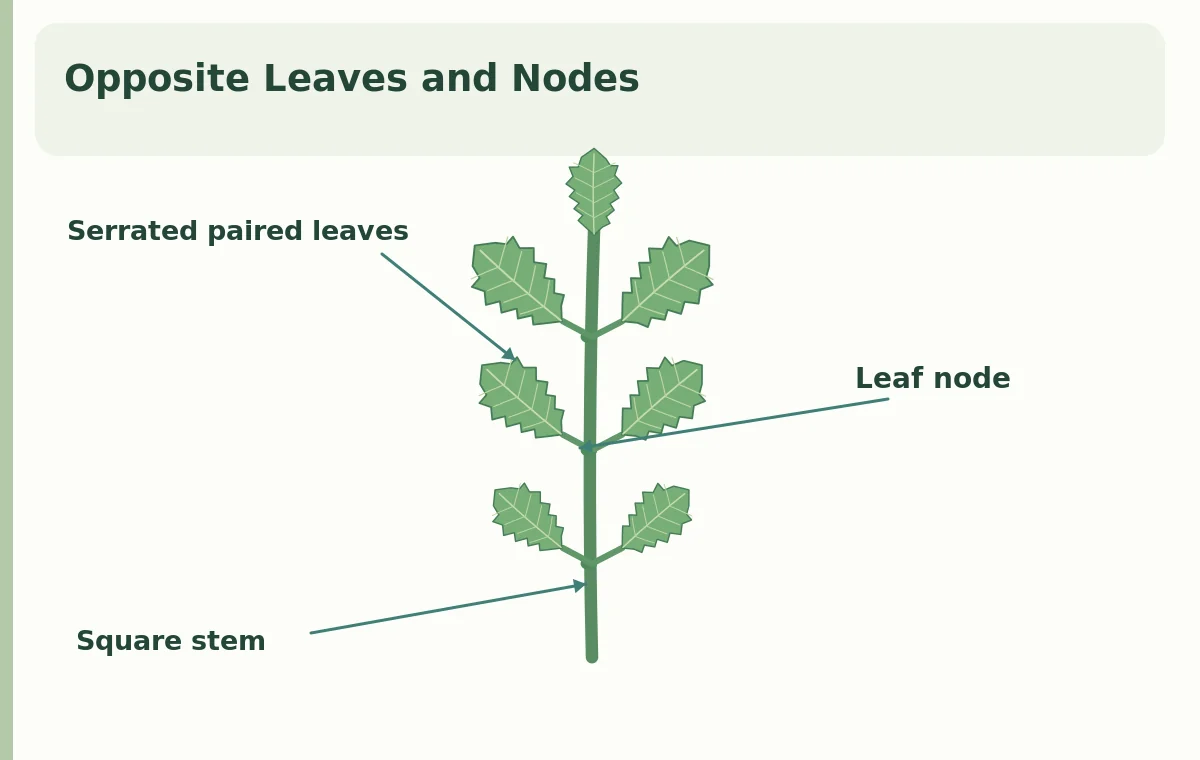
Spearmint normally bears opposite pairs of toothed, pointed leaves. Successive leaf pairs are often rotated around an upright, approximately four-sided stem. The region where a leaf pair joins the stem is a node; the bare length between two nodes is an internode. That distinction matters because new shoots and roots can arise around suitable nodes. Other mints vary in leaf width, texture and scent, so the illustration depicts spearmint specifically, not every plant sold as mint. Check the parent plant against its nursery label and botanical features. A cutting will reproduce that parent vegetatively, which is useful when seed-grown offspring would not keep an identical cultivar. Avoid taking material from a diseased, pesticide-exposed, or unidentified plant.
Select a Healthy Flexible Growing Tip
Choose an actively growing nonflowering tip with several healthy leaf pairs. Soft, flexible young growth is generally easier to manage than an old, tough stem. Take the cutting with clean scissors, making a deliberate cut just below a node so that a node remains near its lower end. Handle stems gently rather than pulling a branch free and tearing its attachment. Cuttings collected on a hot, dry afternoon can wilt quickly; keep harvested pieces shaded while preparing the jar. If the shoot is long, retain enough nodes for roots and leaves without crowding the container. The parent mint may regrow from the remaining shoot structure, but avoid stripping all growing tips from a weak or very young plant.
Remove Leaves That Would Sit Underwater
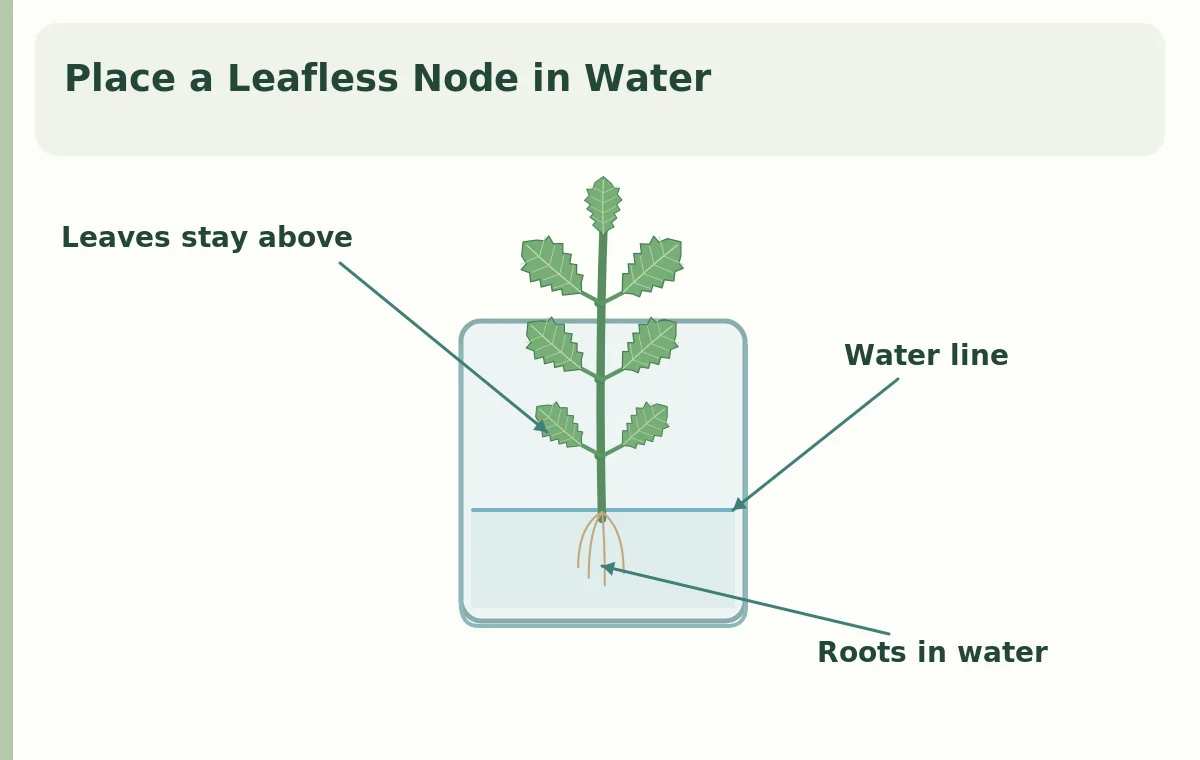
Strip the lower leaf pair or pairs from the part of the cutting that will go into water. Keep the upper leaf pairs intact and above the rim so they can provide photosynthesis without being submerged. Put the cut end and at least one lower node below the water surface, while placing the next leafy node clearly above it. A jar is a support and water reservoir, not a soil-depth gauge. Leaves left underwater can decay and cloud the water; a cutting with no leaves at all has less capacity to fuel new growth. The practical illustration deliberately shows the waterline between a leafless lower node and healthy upper foliage. If leaves crowd the neck of a jar, switch to a wider container.
Keep the Jar Bright and the Water Clean
Place the jar in bright but not scorching light and inspect it regularly. Replace cloudy water, rinse the container, and add clean water as the level drops. Avoid letting a stem rest on a hot windowsill where water warms excessively; shade from intense afternoon sunshine can reduce wilting. Some cuttings root within a couple of weeks, but timing differs with cultivar, temperature, season and stem condition. Do not add unverified fertilizers, sugar or bleach to a drinking glass as a rooting shortcut. Check the submerged stem for a firm surface and new pale root initials. If it turns slimy, collapses, or smells rotten, remove it from the jar rather than treating it as a usable new plant.
Identify True Roots Before Potting
Early root growth appears as small pale projections from the submerged stem, often near nodes. These elongate into fine branching roots; they are not leaf shoots and they should not point above the waterline in a drawing of an immersed cutting. Wait until a useful cluster of roots has formed before potting, but do not leave the cutting in water indefinitely simply to build a large tangled mass. Water-grown roots may be fragile and adapted to a constantly wet setting. The comparison picture shows a firm green stem, green leaves and pale new roots below water as the desired condition. A brown collapsing base with submerged leaves is a warning, not a mature rooted cutting. Choose a pot with drainage holes and a suitable potting mix.
Pot the Rooted Cutting at the Same Stem Level
Moisten a free-draining potting mix first and open a small hole so roots can settle without being forced around the bottom. Support the stem with one hand, position the roots below the mix, and gently firm the medium around them. The lowest retained leaves should remain in air, not be buried against wet compost. Water the pot to settle the mix and let excess moisture drain away. For the first days keep the plant in bright indirect light and protect it from extremes while it shifts from water roots to a soil environment. A drooping cutting may need gentler light and more stable moisture, not standing water in a decorative cachepot. Check for renewed tip growth before treating the transplant as fully established.
Contain Vigorous Mint Growth in a Pot
Mint commonly travels through underground runners. Once the rooted plant becomes strong, a container may be easier to manage than an open garden border. Choose a pot with adequate depth, space for the roots and effective drainage; do not assume a saucer of stagnant water counts as moisture management. A pot placed on soil can still let runners escape through drainage holes. Refresh the mix or divide a crowded clump if growth becomes weak or tangled. Harvest lightly from established tops, leaving viable leaf nodes so plants can branch again. If sharing rooted mint, include the cultivar name if known and mention its spreading habit. Locally severe winter or summer conditions may require moving the pot or adjusting water.

Troubleshoot Failed Roots Without Guessing
A cutting that droops at once may have lost too much water before rooting, been exposed to direct heat, or retained too many large leaves. Brown, soft submerged tissue points toward decay; clean the jar and start with fresh healthy material rather than hiding rot under potting soil. Pale, stretched growth with little rooting can be a light or season problem. Tiny roots that break during transplanting call for gentler handling and steadier moisture, not an invented rooting-hormone recipe. Distinguish normal aging of a leaf from spreading disease and seek local Extension identification for suspicious spots or pests. Document the number of nodes, waterline, season and transition to compost so the next batch of cuttings can be improved systematically.
Related Guides
- How to Root Mint Cuttings in Water With Leaves Above the Waterline
- How to Root Culinary Thyme Cuttings Without Rotting the Stems
- How to Root Culinary Sage Cuttings From Fresh Nonflowering Shoots
- How to Propagate Basil From Cuttings in Water or Potting Mix
How We Research Botanical Structure and Practical Steps
We reviewed authoritative university Extension and RHS or Kew references on October 28, 2026, focusing on the plant-specific structures and actions shown in the illustrations: www.rhs.org.uk source supports mint grows from softwood cuttings and readily makes roots from stems placed in water; plants spread by creeping roots. www.rhs.org.uk source supports rHS describes cutting below a stem node, removing lower leaves and observing roots in a water container. www.kew.org source supports spearmint has square stems and opposite, toothed leaves.. This article is an educational synthesis, not a cultivar trial. Botanical drawings simplify minor variation among cultivars; they do not certify conditions in a particular climate, soil, or garden.
Local Conditions, Plant Identification and Disclosure
Confirm the plant name, cultivar, seasonal conditions and any local pest diagnosis before applying a technique. No unverified chemical rates or affiliate partnerships are implied. Review VegWin’s affiliate disclosure and the relevant local Cooperative Extension advice before making safety-sensitive decisions.
Yes. Healthy mint stems with submerged lower nodes can produce roots in water; refresh the water when needed.
No. Remove lower leaves and keep the retained leaf pairs above the water to reduce decay.
Cut just below a suitable node on a healthy soft shoot, preserving several upper leaves.
Pot it once a useful cluster of pale roots has developed, using drained mix and gentle aftercare.
Spearmint spreads through underground stems, so a managed container can help limit its reach.