
Not every tulip must be dug up after it blooms. In a well-drained bed, some hardy bulbs can remain planted. In heavy wet summer soil, or when a bed must be cleared for other plants, lifting and storing the bulbs can be sensible. The mistake is digging as soon as the petals fall, while green leaves are still recharging the underground bulb.
This guide separates the decision to lift from the actual lifting date. It also explains how to handle the firm replacement bulbs and little offsets you may find, and how to avoid converting a good summer storage project into a damp bag of rotting bulbs. It covers spring-flowering tulips, not overwintering dahlia tubers or other tender summer bulbs.
Decide if lifting solves an actual problem
First ask why the bulbs need moving. University of Minnesota Extension explains that hardy bulbs can remain in place and may only need attention when flowering declines from crowding or when a planting area is changing. Tulips in especially wet summer ground may struggle, however; University of Illinois Extension discusses lifting in heavy, wet conditions to reduce rot risk. If bulbs are healthy and flower well in a free-draining bed, digging every year may create unnecessary handling losses. If construction, heavy summer irrigation or rearranging a border makes relocation practical, plan a marked lifting job. Record where the tulips actually grew: once the foliage disappears, unmarked bulbs become easy to slice with a spade.
Let green leaves recharge the underground bulb
After the petals fade, remove the spent bloom only if appropriate, but leave the green foliage intact. University of Minnesota and Illinois Extension both stress that leaves continue making the energy needed for next year’s growth. Do not braid, tightly tie or cut green leaves just to tidy the border. A spring bulb whose leaves are removed early may be too small to flower well in the next season. Wait for natural yellowing and withering rather than using the date printed in a national gardening calendar. The exact week varies with spring temperatures, cultivar and region. Small annuals can be planted nearby to soften the view without covering or crushing the leaves.

Mark the clump before every leaf disappears
Use a weather-resistant label and a simple map to record tulip location and variety when flowers are still recognizable. This is especially useful in mixed bulb beds where yellowing leaves of daffodil and tulip overlap. Avoid assuming that every narrow green leaf belongs to the tulips you plan to lift. The marker should sit outside the lifting zone so a fork will not pierce bulbs when you dig. If some leaves yellow suspiciously early while others remain vigorous, inspect for drainage or damage after their normal maturity; sudden collapse is not automatically a signal that a healthy bulb is ready. When digging must be delayed after foliage has disappeared, the label prevents blind probing across the bed. For the basics, see our guide: When to Divide Overcrowded Daffodil Bulbs After Their Leaves Turn Yellow.
Lift with a fork set beyond the bulb cluster
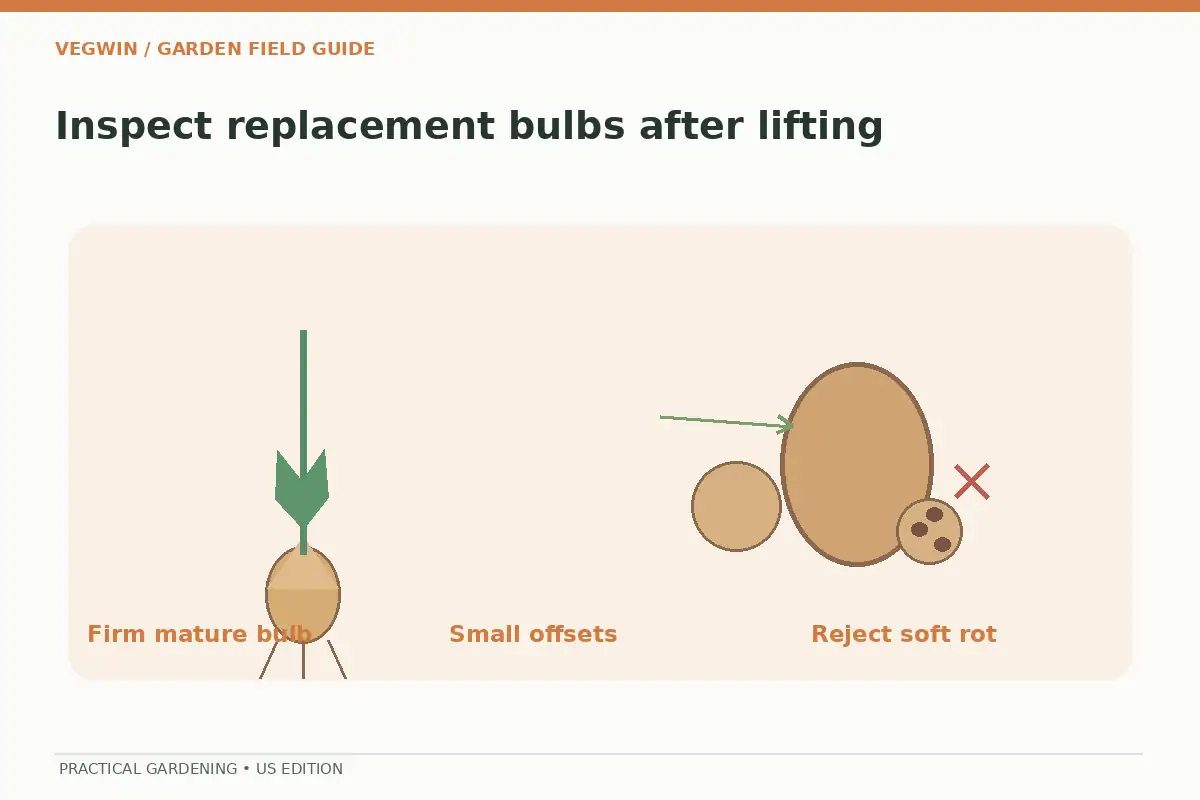
When foliage is yellowed and withered, loosen soil several inches outside the bulb group with a fork or spade. Work from more than one side and lift the clump gently instead of pushing a blade through its center. Remove loose soil without scraping healthy protective bulb tunics. You may find one large firm bulb with smaller offsets attached; Illinois Extension describes the daughter bulbs produced after tulip flowering. Do not assume every small offset is big enough to bloom next spring. Separate only what comes free without tearing the basal plate. Discard obviously soft, heavily discolored or damaged bulbs rather than putting them against healthy bulbs in a storage bag. Wash only if your source method specifically calls for it; extra water can increase storage problems. For the basics, see our guide: When to Cut Back Daffodil Leaves After Bloom Without Weakening Bulbs.
Dry and sort without leaving bulbs in direct sun
Spread healthy lifted bulbs in a single layer out of rain and hot direct sunlight while surface moisture evaporates. A shaded, well-ventilated area is preferable to a closed plastic bag, as both Minnesota and Illinois recommend cool, dry storage with airflow. Brush off loose dry soil and inspect each bulb before storage. A firm basal plate and dry papery tunic are more encouraging than a mushy neck, mold or a strong rot smell. Keep cultivar labels with each group. Do not pile wet bulbs in a bucket and hope they dry at the bottom; packed layers trap moisture and can spread decay. Be cautious about introducing purchased bulbs or soil from a visibly diseased patch into a healthy storage collection.
Use breathable storage until fall replanting
Store bulbs in mesh bags, shallow trays or similarly breathable containers where they remain dry, relatively cool and out of direct sun. University of Minnesota mentions old onion sacks and shallow trays; Illinois also describes mesh storage in a cool basement. Avoid a sealed plastic bin, a rainy porch, or a hot vehicle where temperature swings and condensation can be extreme. Do not promise that refrigerating every tulip bulb through the entire summer is necessary or correct: planting and winter chilling requirements vary with climate and bulb treatment. Check stored bulbs periodically for softness, mold or drying and remove compromised bulbs before they affect neighbors. Tag each bag with the type, collection location and intended planting bed.
Replant according to the regional fall window
Autumn planting timing should respond to local soil and seasonal conditions, not to the date you dug in spring. Tulip bulbs are typically placed in fall in climates with cold winters, but gardeners in mild-winter regions may need different bulb selection or a region-specific chilling plan. Consult Extension or nursery recommendations for depth and spacing suited to the bulb size and your soil. Set bulbs with the basal plate down and shoot tip up when it is obvious, backfill without waterlogging, and mark the location. Illinois notes that offsets may take additional growing seasons to reach flowering size. Do not force every tiny daughter bulb into a crowded formal display and expect it to perform exactly like a large purchased bulb.

Investigate nonflowering bulbs before replacing them
If a tulip produces leaves but no flowers, consider bulb size, shade, early defoliation, crowding and poor drainage before assuming a fertilizer deficit. University of Illinois notes that tulip bulbs can divide into smaller replacements after bloom; some take longer to flower again. Late-emerging leaves in a particularly cold spring may also be normal. If bulbs are rotted or missing, inspect site moisture and signs of digging animals. Keep a record of how many firm mature bulbs entered storage and how many emerged the following year. Replacing a weak bulb lot may be reasonable, but a wet planting site can ruin new bulbs too. Fix the physical growing conditions rather than trying to solve every failure with an extra scoop of fertilizer. If you are starting from scratch, read When to Divide Asiatic Lilies and Replant Bulb Offsets Correctly.
Related Guides
- How to Plant Tulip Bulbs in Fall With the Point Up and Root Plate Down
- When to Plant Dahlia Tubers: Identify the Eye and Avoid Cold Wet Soil
- When to Plant Canna Rhizomes and How to Set the Growing Points
- How to Plant Crocus Corms in Pots Without Winter Waterlogging
- How to Plant Anemone Coronaria Corms Without Wet-Soil Rot
How We Research and Verify the Instructions
We checked the linked sources on October 21, 2026. The distinct practical result is: A lift-or-leave tulip decision based on foliage stage, bed moisture and flowering history, followed by a drying, inspection and ventilated storage checklist. That comparison is a title-and-tag overlap review for the older published list, not a full-text audit of every historical or unpublished WordPress article. The drawings simplify real plants to teach identification and workflows and are not measurements to scale. Local Extension recommendations, seed packet details and climate conditions take priority where they differ.
Sources reviewed October 21, 2026: 1. University of Minnesota Extension — Leave leaves until yellow, lift crowded bulbs if needed, store cool dry ventilated and check for disease. 2. University of Illinois Extension — Allow tulip leaves to die naturally, lift when yellow and store in cool dry shade. 3. University of Illinois Extension — Bulb lifting after foliage yellows, rot risk in heavy wet soils and ventilated mesh storage. This educational guide contains no paid product endorsements or verified affiliate placements. Read the VegWin affiliate disclosure for the site-wide policy.
No. Hardy tulips can often stay in suitable well-drained beds; lift when necessary for moving, crowding or difficult wet conditions.
Avoid it. Allow foliage to yellow naturally so it can replenish the bulb for future growth.
After foliage has yellowed and withered, not immediately after the flowers fade.
No. Use dry, cool, breathable storage with good airflow and inspect bulbs periodically.
Not necessarily. Smaller daughter bulbs may need additional growing seasons before they reach flowering size.