
Freesias produce sweetly scented blooms on graceful spikes, but a bag of freesia “bulbs” is easy to mishandle if you plant it on the same schedule as hardy tulips. Freesia grows from corms, swollen stem bases that respond strongly to temperature, moisture, and seasonal conditions. In many North American gardens, a frost-free pot indoors or under protection is more dependable than leaving the corms in freezing ground.
There is also a difference between prepared corms sold for a planned flowering display and unprepared corms that follow a more natural cycle. RHS makes this distinction explicit. NC State Extension describes freesia as adapted to mild conditions and well-drained growing media. This article helps you decide which planting route applies before you bury anything in a wet garden bed.
Check whether your corms are prepared or unprepared
Look for a supplier label describing prepared, heat-treated or unprepared corms. RHS explains that prepared corms are treated to support a planned bloom schedule, while unprepared corms can be managed differently in mild climates. The label, not just the calendar, is your starting point. Store-bought mixed bags with no details should not be assumed to behave on a predictable national flowering date.
Inspect corms before planting. A healthy corm feels firm, has a papery outer covering and no soft wet patches or foul odor. Discard collapsed or badly moldy specimens rather than expecting potting mix to heal decay. Freesia corms are smaller and differently shaped than large lily bulbs; do not copy lily depth or spacing without checking freesia-specific guidance. Our walkthrough on how to plant crocus corms in pots without winter waterlogging sets out each step.
Choose an indoor pot or a mild-winter bed
Indoor or protected containers offer the most control where winter freezes or heavy rain would injure freesia. RHS gives a late-summer-to-winter window for indoor corms, with cool initial conditions followed by bright cool growth. Outdoors, conditions vary with climate and the corm type. In mild frost-free regions, unprepared corms may go into beds in late summer or fall; in cooler regions prepared corms may be started for a summer display.
Use local frost records and the actual supplier instructions before any outdoor planting. USDA hardiness zones indicate typical winter minima, but they do not tell you whether this season’s raised bed stays soggy during winter storms. A sheltered area with good drainage and a backup plan for cold events is essential for tender corms.

Set corms correctly in a free-draining pot
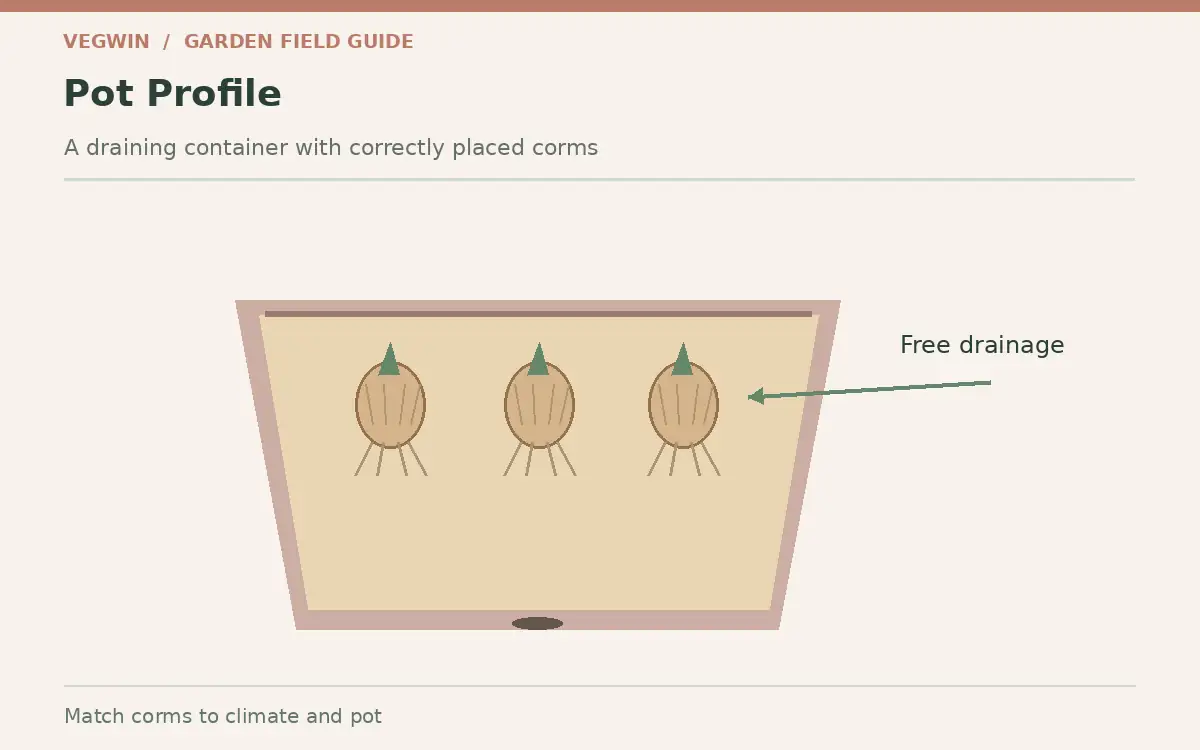
Choose a container with open drainage holes and enough depth for freesia roots. NC State Extension specifically highlights deep containers and a loose organic mix with a coarse draining component. Place the pointed end up and the flatter basal plate down. Follow the planting depth on the corm packet because pot-culture methods differ from outdoor beds; RHS describes a container method with tips close to the compost surface.
Do not press corms into waterlogged potting soil. Moisten the mix enough to settle it around each corm, and allow excess water to leave the pot. Crowding increases competition and complicates air movement later, so use freesia-specific spacing guidance rather than packing every corm until none of the surface shows.
Manage the cool period and bright growing phase
Freesias prefer a cool establishment phase rather than the hot room conditions used for tropical foliage plants. RHS describes an initially cool frost-free period followed by bright, ventilated, still relatively cool conditions for growth. The exact temperatures and duration should be adjusted to the supplier and environment; a sunny heated windowsill directly above a radiator may produce disappointing growth.
Watch the plant instead of assuming a calendar date guarantees flowers. Narrow sword-shaped leaves should emerge first. Shift the pot into adequate light as shoots grow, rotating it to reduce leaning. Avoid dark corners and enclosed damp spaces that invite weak stems and fungal problems. If you are starting from scratch, read When to Plant Gladiolus Corms and How Deep to Set Them for Strong Stems.
Water the roots without keeping the pot wet
Corms need moisture for active growth, yet saturated mixes exclude oxygen and increase rot risk. Check the growing medium a little below the surface before watering; the top can appear dry while the lower pot remains very wet. Use a watering can gently and empty any saucer that collects standing water. Free-draining media help most when water is also allowed to leave.
Yellowing leaves can follow the natural end of the flowering cycle, but yellowing in a waterlogged pot accompanied by a bad smell or soft corm tissue suggests a problem. Check moisture and drainage before adding fertilizer. Feed according to a relevant freesia supplier or regional guide during active growth; there is no universal rescue dose for a decaying corm.
Support bloom stems without breaking leaf fans
Freesia spikes can lean as flowers open, especially in indoor pots with light coming from one side. Install a thin support before the flower stalk becomes heavy, keeping it clear of the corm base. Tie loosely rather than squeezing the stem. Provide the best light you can while retaining cool conditions and ventilation.
Flowers generally open sequentially along a one-sided raceme, so do not cut the whole plant just because the first flower fades. You can remove spent blossoms for tidiness, but preserve healthy leaves after flowering so the developing replacement corm can build reserves. Flowers and leaves serve different jobs in the plant’s cycle. For the basics, see our guide: When to Plant Ranunculus Corms for Cool Weather and Healthy Roots.

Decide what to do after the flowers finish
Once flowering stops, let the foliage yellow naturally while gradually moderating water according to the plant and local conditions. In regions where outdoor winter cold or persistent soil wet would kill the corms, protect or lift them using guidance for your climate. In a truly mild, free-draining bed, some freesia may remain in place, but success is not guaranteed by a zone number alone. If you are starting from scratch, read When to Plant Gladiolus Corms for Strong Spikes and Staggered Blooms.
Label stored corms by flower color and the year. Keep them in conditions recommended for that kind of corm rather than copying the humid refrigerator treatment used for some seeds. Check stored material occasionally for softening and discard rot before it spreads.
| What you observe | Recommended next step |
|---|---|
| Cold winter / wet outdoor soil | Use a draining pot in a cool protected place. |
| Mild winter and very free-draining bed | Consider unprepared corms on the regional schedule. |
| Packet says prepared corms | Follow supplier bloom timing and local conditions. |
| Corm soft or foul smelling | Discard; do not plant rotten material. |
| Tall leaves but no flower buds | Recheck temperature, light and corm preparation. |
Troubleshoot missing blooms before buying more
Healthy leaves without flowers may indicate too much warmth, insufficient light, a mismatched preparation schedule or a small immature corm. Rank those possibilities against your actual conditions. Weak elongated shoots suggest the pot is too dark; slimy bases indicate moisture and sanitation problems. If a set of corms fails repeatedly, change one variable at a time. Our walkthrough on how to plant anemone coronaria corms without wet-soil rot sets out each step.
A simple record of corm type, planting date, pot medium, cool-phase location and flowering date is more useful than a generic promise that all freesias bloom a fixed number of weeks after planting. A new season can bring different indoor temperatures and daylight even in the same house.
Related Guides
- When to Lift Tulip Bulbs: Wait for Yellow Leaves and Store Them Dry
- When to Plant Canna Rhizomes and How to Set the Growing Points
- When to Dig Dahlia Tubers and Store Healthy Clumps Through Winter
- When to Plant Hyacinth Bulbs in Fall and Set the Right Depth
- When to Plant Caladium Tubers: Start Warm and Avoid Cold Rot
How We Research These Garden Care Decisions
This article compares the care needs of the actual species, growth stage, season and planting context rather than relying on a universal date. The sources below were checked on October 23, 2026. Where their regional advice differs, use your nearest Cooperative Extension and the plant or seed supplier label. Inspect plants and local conditions before acting; a structural publishing validator does not verify horticultural accuracy.
Sources reviewed: www.rhs.org.uk horticultural guidance (RHS explains prepared versus unprepared corms, indoor windows, container mix and temperature sequence.); plants.ces.ncsu.edu horticultural guidance (NC State Extension gives freesia climate, container, drainage, orientation and corm care information.); www.rhs.org.uk horticultural guidance (RHS plant guide confirms cool bright airy conditions and intolerance of waterlogged growing media.).
Editorial and affiliate disclosure: This page is informational. No affiliate offer or partner compensation is assumed. If commercial links are ever added after approval, review our affiliate disclosure.
No. Freesias are tender corms with a different climate and temperature response from cold-hardy tulips.
The pointed growing tip faces upward and the flatter basal plate faces downward.
They are suited to mild frost-free conditions; colder areas usually require protection or lifting.
Temperature, light, corm preparation and maturity are common causes to investigate.
No. Let healthy leaves work until they naturally yellow so corm reserves can develop.