
Gladiolus is often called a bulb flower, but its underground storage unit is a corm: a firm solid stem base. A new corm develops above the old one during the season. In cold-winter regions the practical task is to allow that new corm to mature, lift it without injury, cure it thoroughly and store it away from freezing and moisture.
Recognize a Gladiolus Corm Rather Than a True Bulb
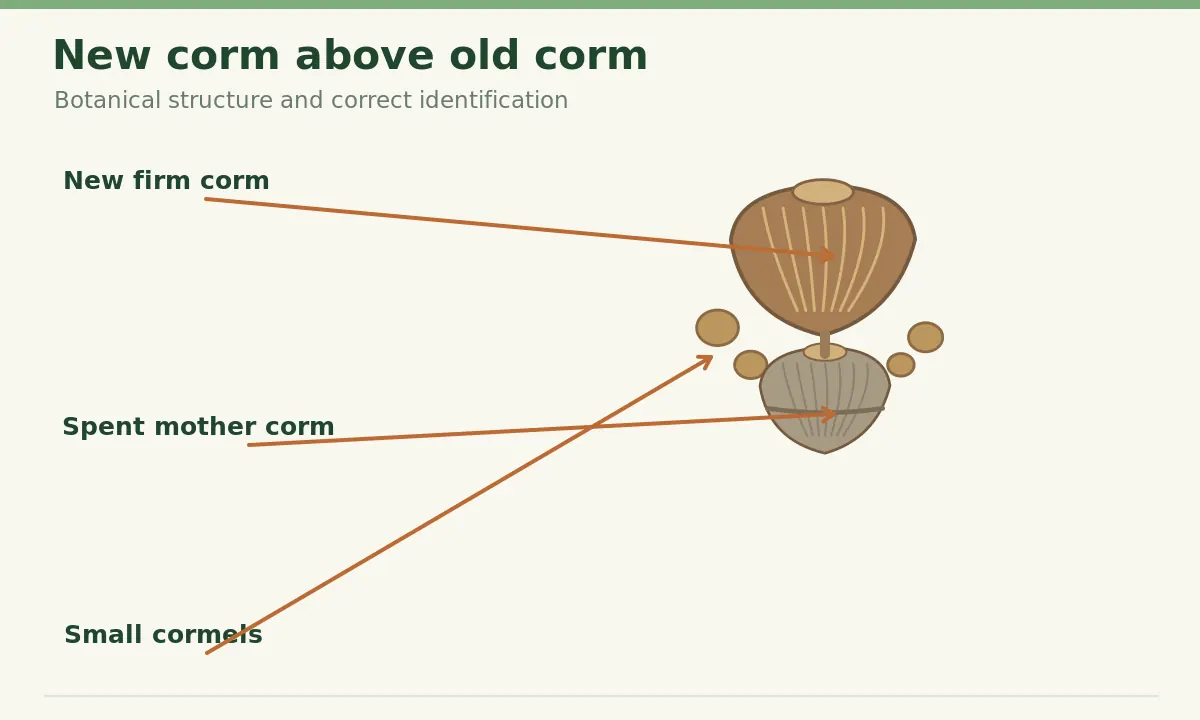
A gladiolus grows sword-shaped leaves and a tall flowering spike from a solid corm underground. Unlike the layered scales of a lily bulb, a gladiolus corm has dense solid tissue under a dry outer tunic. As it grows, the new corm forms above the spent old corm, and tiny cormels may appear around the base. Purdue Extension illustrates this stacked arrangement. Learning the structure matters at cleanup: the healthy new corm is the valuable storage unit, while an exhausted shriveled mother corm is usually discarded once the material has dried. Do not mistake a cormel for a diseased root swelling.
Let the Leaves Support the New Corm
The plant must photosynthesize after flowering to finish building the new replacement corm. Do not cut down all green foliage immediately when the decorative blooms fade. Purdue explains that corms should be allowed to mature as fully as possible before lifting, even though exceptionally early-flowering cultivars may be dug several weeks after bloom. Stems and leaves often yellow or brown naturally as the season ends. Weather patterns differ, so the exact autumn week should be set by the local climate and leaf condition, not a calendar copied from a distant garden. Remove unhealthy plants separately.
Decide Whether Winter Lifting Is Needed
In regions with winters cold enough to freeze the corms, gladiolus is commonly dug and stored indoors. Iowa State offers winter-storage guidance because corms are not reliably hardy under freezing conditions in its area. In mild climates some gardeners leave gladiolus in well-drained ground, but survival also depends on cultivar, drainage and winter wetness, not just an average minimum temperature. This guide describes lifting for cold-winter storage rather than promising that every gardener must excavate in autumn. Check local Extension guidance if the garden receives little frost or has particularly wet winter soil.
Use a Fork Well Away From the Stem
Dig the plant when leaves have matured and conditions are appropriate for safe lifting, often after a first frost in cold climates. Insert a garden fork or spade some distance from the base and raise a broad wedge of soil. Do not spear the corm with a tine or jerk on brittle dying leaves to pull it from hard ground. Shake away loose soil gently without banging corms together. Purdue advises rejecting damaged, discolored or diseased material. A bruise can become a storage entry point for rot. Keep varieties separately labeled if you need to identify flower colors next year.
Trim and Cure in Air Before Storage
Iowa State recommends trimming foliage to about 1–2 inches above the corm and drying material for roughly 2–3 weeks in a warm, dry and well-ventilated place. Drying after a careful lift is the curing phase; it is not the same as cool winter storage. Place corms in shallow breathable trays rather than a sealed wet plastic bag. Protect them from soaking rain and avoid overheating by trapping direct sun under glass. The corm should become firm and its dry outer covering papery. Keep diseased material out of the curing area to limit cross-contamination.
Separate New Corms From Old Mother Corms
Once material is well cured, inspect the base. A healthy replacement corm is generally above the shriveled previous season’s corm. Iowa State advises removing and discarding the dried old mother corm. Do not rip fresh wet tissues apart before curing; separation is easier when the junction dries. Save firm small cormels separately if you want to grow them on, understanding that they may take further seasons to reach flowering size. Discard soft, spotted or moldy corms. Label bags for large corms and cormels separately so the next planting does not confuse flowering material with immature propagation stock.

Understand the Role of Dry Tunics and Roots
Gladiolus corms normally have a protective dry outer tunic and remnants of old roots beneath. A papery covering after curing is not automatically a disease symptom. Conversely, black wet areas, a foul odor or soft collapsing tissue are reasons for rejection. Gently remove loose dirt and fully dead root fragments without scraping the healthy corm until it is wounded. Purdue warns that corms can carry disease and stresses care in storage. A firm new corm with an intact crown is more useful than one cleaned into a shiny but injured surface. Avoid washing corms immediately before storage.
Store in Cool, Ventilated Containers
Iowa State suggests mesh bags or old nylon stockings hung in a cool, dry, well-ventilated area with temperatures around 35–45°F. This is cooler than the warm curing site and should remain above freezing. Do not seal corms in airtight plastic, stack them as a dripping mass or store them beside ripening produce that causes unsuitable humid conditions. Real garages vary dramatically; monitor temperatures instead of assuming any garage is safe. Keep varieties labeled, corms away from rodents and the entire storage container out of reach of children and pets. Follow local disease-control guidance rather than improvised chemical dips.
Inspect Periodically Through the Dormant Season
Every few weeks, inspect bags for moisture buildup, soft spots and mold. Remove any deteriorating corm promptly so it does not contact its neighbors. If corms are excessively shriveled, review whether storage air is much too dry or warm; if surfaces are wet, ventilation may be inadequate. A rootless, dormant corm should not look like a living leafy plant, so do not judge success by the absence of green shoots. Check for unexpected sprouting if the storage area warms. Keep notes on the actual temperature, container and damage rate to improve the following year’s process.

Prepare for Replanting in a Frost-Safe Season
Remove stored corms for spring planting after local frost risk and soil conditions permit. Iowa State explains that large gladiolus corms are commonly planted several inches deep with spacing adjusted to size, while small cormels need different treatment. Follow specific local directions rather than treating this autumn storage guide as a universal depth chart. Choose firm stock and discard material that became moldy or collapsed. If you stored named cultivars, keep their labels beside the planting rows. Healthy stored corms should be able to grow new leaves and produce spikes when provided appropriate light, warmth and drainage.
Do Not Confuse Gladiolus With Lilies or Dahlias
Although retailers sometimes call gladiolus corms bulbs, they should not be represented with the scales of true lilies or the clustered tuberous roots of dahlias. The new gladiolus corm stacked over an old mother corm is an especially useful identification feature. Daylilies have fleshy roots, not gladiolus corms; lilies generally form layered true bulbs. Each type needs its own lifting and storage approach. When you purchase mixed dormant plants, read the genus and cultivar label before applying this method. Accurate identification helps prevent accidental damage when separating pieces at curing time.
Related Guides
- When to Plant Gladiolus Corms for Strong Spikes and Staggered Blooms
- When to Plant Ranunculus Corms for Cool Weather and Healthy Roots
- When to Plant Freesia Corms in Pots or Mild-Climate Gardens
- How to Plant Liatris Corms and Grow Upright Purple Flower Spikes
- How to Plant Tulip Bulbs in Fall With the Point Up and Root Plate Down
How We Research and Verify Plant Advice
Sources checked on 2026-10-26: yardandgarden.extension.iastate.edu; ag.purdue.edu; yardandgarden.extension.iastate.edu. We reviewed each institution’s plant identification, correct growth stage and relevant cultural recommendations before adapting them into an independently written step-by-step guide. Where sources are region-specific, their calendar details are not applied universally. Pictures use simplified teaching shapes and should be compared with living specimens; they are not a substitute for laboratory disease diagnosis or local climate guidance. The relevant advice is paraphrased rather than reproduced.
Safety and Independent Editorial Disclosure
This independently prepared educational article does not claim sponsorship or affiliate approval. Our category reading links are informational, not product endorsements. See the VegWin affiliate disclosure. Clean sharp tools before cutting plants, protect hands from thorns and blades, and keep cut plant material away from children and pets where appropriate. Use only locally registered plant treatments labeled for the actual crop, and observe the product label. Do not rely on unsupervised home remedies or unverified harvest-safety promises.
They are corms, solid swollen stem bases with protective tunics, rather than layered true bulbs.
After corms have matured, commonly around the first frost as foliage declines, without letting them freeze.
Iowa State recommends cool, dry ventilated storage around 35–45°F.
After adequate curing, discard the dried spent mother corm beneath the firm new corm.
Small propagation units around the main corm; they may require additional growing seasons before flowering.