
When to Harvest Sunflower Seed Heads and Dry Them Without Mold is a practical guide for identifying what you see on a living plant before taking action. The recommended method comes from the university Extension sources linked below; variety, weather, plant age and local conditions can change the best timing. Use the photographs or botanical diagrams as a guide, but examine the actual stem, root, leaf or seed head in your garden rather than relying on a caption alone.
Look Beyond Yellow Petals to the Developing Seed Disk
A sunflower’s bright yellow rays are not the seeds. The central disk holds hundreds of individual florets that can develop into seeds after pollination. A newly faded flower may still have soft, incompletely developed seeds, so do not cut the first head merely because its yellow petals droop. Watch the disk as it changes from a showy bloom to a head with increasingly distinct seed forms. This is particularly important when several heads on one branching sunflower mature at different times. Treat each seed head as an individual crop rather than choosing one harvest date for the whole plant.
Inspect the Back of Each Sunflower Head
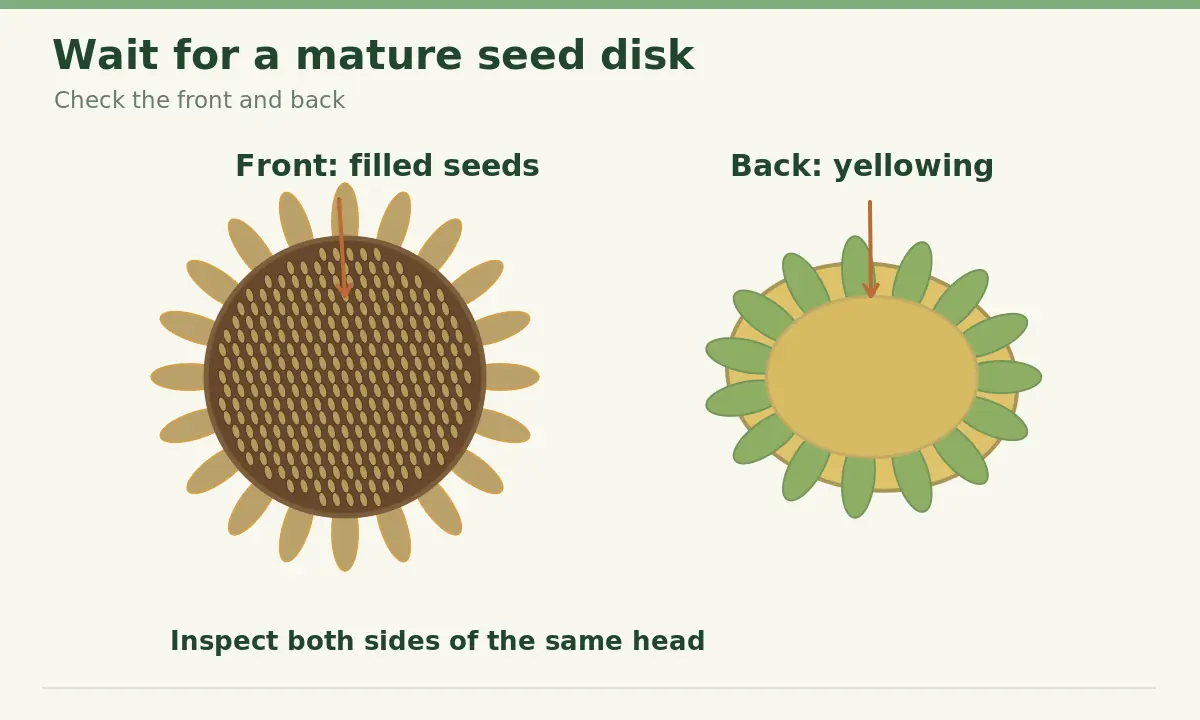
Gently tilt a reachable head enough to look at its backside without snapping its neck. As seeds approach maturity, the back commonly changes from green toward lemon yellow and eventually brown and dry. Iowa State Extension notes a lemon-yellow back and spent petals as useful harvest clues. A still-bright-green back usually suggests more development is needed if the plant remains healthy and weather permits. Color varies with conditions, so combine this clue with the state of the seeds. Never force a heavy head upright; support it with one hand and inspect from the side when possible.
Test a Few Seeds for Filling and Firmness
Carefully remove a small number of seeds from an accessible part of the head. Mature seeds should be filled rather than flat and papery, and their hulls should be increasingly firm. Iowa State advises checking a few seeds to ensure they are filled. Not every sunflower has striped hulls; oilseed forms may be dark, and ornamental cultivars vary. A pollination problem can leave many empty hulls even when the head appears old. If the back has yellowed but seeds are still soft and thin, provide time for completion where dry weather allows. Do not confuse a dark hull color with universal maturity.
Choose Whether to Harvest Now or Let It Dry
If the head is mature and birds or wet weather threaten, harvesting for further controlled drying may protect the seed crop. If the head is not yet mature and weather is favorable, leaving it attached can allow development to continue. The decision balances seed firmness, backside color, birds, storms and local humidity. A paper bag or breathable cloth can reduce bird feeding, but any cover must allow air circulation and must not trap rainwater against the head. Never assume a sealed plastic bag around a moist sunflower is safe. It can create the damp conditions that favor mildew and spoilage.
Cut the Head With a Manageable Length of Stem
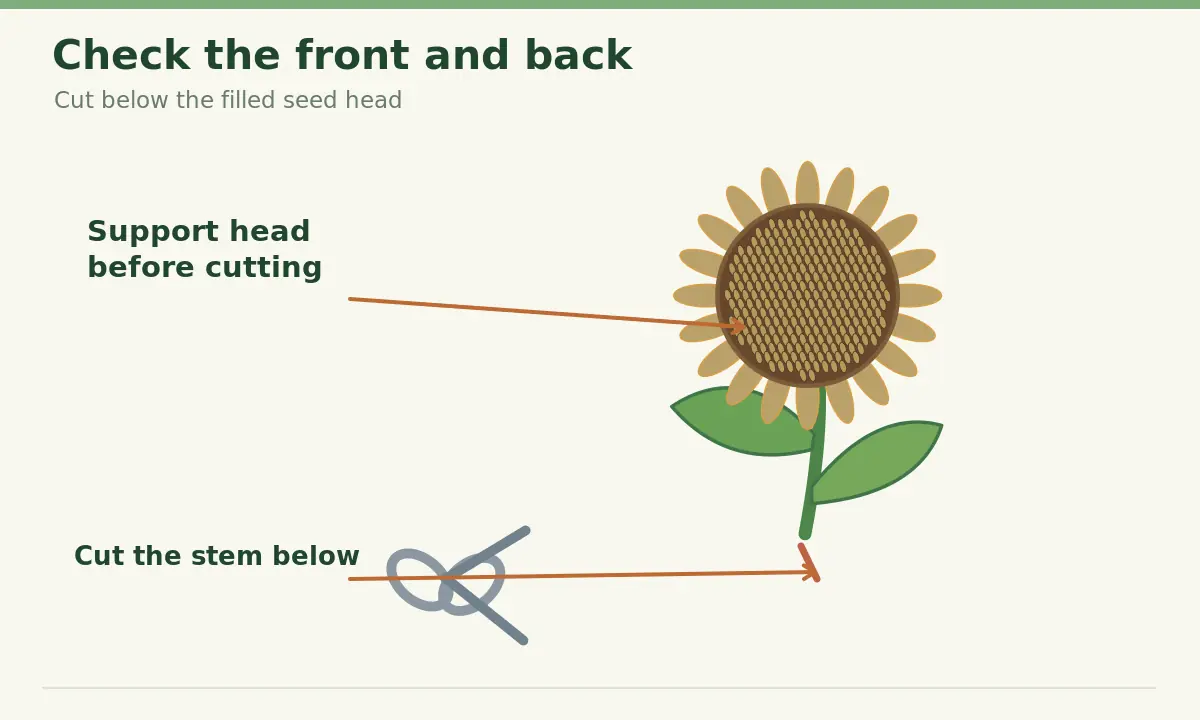
Use clean, sharp pruners on a mature head, leaving enough stem to hang or carry it without grabbing the seed disk. Support the head before cutting, especially on tall plants with heavy heads. A dropped head may scatter loose seeds or collect soil. In a community garden, check where branches and supports will fall before making the cut. If the plant also has later side flowers, avoid damaging those you want to leave for pollinators or seed. Iowa State describes removing mature heads and hanging them in a dry, ventilated place; the essential next step is controlled drying, not immediate airtight storage.
Dry Seed Heads With Air Circulating Around Them
Hang mature seed heads or arrange them on a clean open surface where air can move around each head. A dark or shaded, dry, well-ventilated location is preferable to a sealed plastic bin. Paper bags or breathable covers may catch seeds that loosen during drying while allowing moisture to escape. Check regularly for damp patches, musty odors or visible fungal growth, especially in humid regions. Move heads apart if they are touching. Seed drying can take longer in moist weather, so judge completion by the actual material instead of promising that all cultivars become storage-dry in an identical number of days.
Rub Dry Seeds Free Without Crushing the Hulls
Once the disk has dried enough and seeds release without tearing wet tissue, rub the head gently over a clean tray or screen. Use fingers or a suitable tool to separate seeds from dry flower fragments, avoiding damage to the hulls. Sort out debris and clearly damaged or moldy seed. A kitchen sieve or screen can help remove chaff, but choose openings that do not spill the seeds. Seed intended for planting should be labeled with the source plant and date. If you plan to eat the seeds, use food-safe handling and remember that roasting and other preparation methods follow separate tested guidance.
Understand Seed-Saving Limits in Hybrid Varieties
Not every garden sunflower produces seed that will recreate the parent plant. Open-pollinated lines may yield variable offspring if they receive pollen from other sunflower cultivars nearby. Modern hybrids can segregate markedly in the next generation, and some ornamental pollenless varieties produce little or no usable seed. If you want faithful flower color, height or form next season, check the cultivar’s breeding information rather than assuming saved seed is identical. Saving seed for birds is a different goal from preserving a named ornamental strain. The development of full seed also requires effective pollination and healthy growing conditions.
Store Only Fully Dry Seeds in Labeled Containers
Seed that feels cool and dry on the outside may still contain enough moisture to mold after sealing. Finish drying and examine a small sample before packing. Penn State Extension recommends cool, dark, dry conditions for stored garden seed, with appropriate labeling. Choose clean containers that protect seeds from pests once dryness is assured. For planting seed, keep the cultivar or plant description, year, and any cross-pollination uncertainty with the packet. For food-use seed, protect it from contamination and discard batches with visible mold or unusual odor. Do not make up a storage-life promise without knowing the seed condition.

Leave Some Heads Standing for Garden Wildlife
Harvesting every sunflower is not required. Mature heads can provide food to seed-eating birds, and spent stems can contribute structure in some wildlife-friendly gardens. Decide whether the head is for your seed collection, birds, or ornament. In a small plot you might collect one mature head and leave another for wildlife, accepting some seed loss. In a wet climate, standing heads can spoil before birds use them, so observe rather than assuming an unharvested head will remain wholesome all winter. Always avoid allowing seed-producing cultivars to spread into places where volunteer seedlings are unwanted.
Use a Two-Sided Harvest Checklist
Before cutting, look at the front: are the ray petals spent and the disk showing formed seeds? Look at the back: has the green tissue faded toward yellow or brown? Test a few seeds: are they plump rather than empty? Then consider your forecast and wildlife pressure. If all maturity clues agree, cut carefully and dry with air circulation. If one clue strongly suggests immaturity, reassess later while the plant remains viable. This two-sided inspection is more dependable than using a fixed planting-to-harvest day count across all sunflowers and climates.
Compare the Most Important On-Plant Clues
| Where to check | What to look for | Next step |
|---|---|---|
| Head back | Yellow or turning brown | Check seeds for filling |
| Seed hull | Firm, plump seed | Harvest and air-dry |
| Seed head | Wet and musty | Discard spoiled material |
Related Guides
- When to Harvest Sunflower Seeds: Read the Back of the Flower Head
- How to Save Sunflower Seeds for Next Year Before Birds Take Them
- How to Direct-Sow Sunflower Seeds at the Right Depth After Frost
How We Research and Check Garden Advice
Sources checked on 2026-10-26: Iowa State University Extension; Penn State Extension; Iowa State University Extension. We compared specific claims about plant parts, growth stage, safe handling, and regional limitations across the cited horticultural guidance. The drawings are simplified teaching illustrations, not proof that every cultivar has the same shape or every garden has the same season. Always prioritize local Extension guidance when it differs.
Safety and Independent Editorial Disclosure
This independent educational article is not sponsored and does not claim any affiliate approval. Internal reading links are educational only; review the VegWin affiliate disclosure. Use clean garden tools, keep hazardous products from children and pets, and handle edible harvests hygienically. Any pesticide use must follow the currently registered product label for your specific food crop and location. No homemade pesticide dosages or unverified safety guarantees are supplied.
It commonly shifts from green toward lemon yellow and later brown as the head matures and dries.
Not always. Check the back of the head and whether seeds are filled and firm before cutting.
No. Moist heads need airflow; sealed plastic can trap humidity and encourage mold.
Not reliably. Hybrid offspring may vary, and cross-pollination can also change seed-grown plants.
Yes. Leaving some mature heads can feed wildlife, though weather and animals may reduce the collectable crop.