
Petals drop, the heavy head tips downward, and the central disk changes color. That is the moment to look at the back of the flower head rather than deciding by the petals alone. A head that is starting to yellow may be ready to cut for further drying, while a brown, dry back is a stronger signal that seeds can be rubbed from the disk.
Your plan also depends on who gets the seeds. Leaving heads outdoors feeds birds and other wildlife; harvesting them protects more seed for sowing or kitchen use. Neither choice is automatically correct. What matters is distinguishing the point at which you can move the head to a sheltered drying space from the point at which loose seeds are adequately dry for storage. Wet seeds sealed too soon can mold regardless of how mature the flower looked.
Read the back of the sunflower head first
Turn the drooping head gently and inspect the base on the reverse side. As the seed crop matures, green tissue moves toward yellow and then brown. University of Illinois Extension describes a yellow-brown, drooping back as a useful harvest signal, while a thoroughly dry head is easier to shell. Flower petals may have already withered earlier, so their absence is not a sufficient test. Check multiple flowers on branched varieties because all heads do not mature at once. Use the condition of the actual seed head instead of the calendar printed on a seed packet.
Decide whether wildlife or seed saving is the goal
Leaving mature heads attached creates a natural feeding station. Birds and squirrels may remove a large portion before you collect it, but that can be a welcome part of a wildlife garden. If you need seed for planting, select healthy, true-to-type candidates and protect them before animals empty the center. Sunflowers sold for cut flowers, ornamental color, or food seed can differ substantially in head size and seed yield. A hybrid’s collected seed may not reproduce the same flower characteristics the following year. Mark which heads were saved and why so the results are meaningful.
Cut heads at the yellow-to-brown transition
When the back has turned yellow or yellow-brown and seed development appears advanced, clipping a head for indoor drying can reduce animal losses. Leave a short useful length of stem for tying or handling rather than cutting flush against the disk. Place the heads where air circulates and where they will not be exposed to rain or prolonged dampness. Do not pile wet heads together in a closed plastic bag. If the disk still contains undeveloped soft seed, drying cannot reliably reverse harvesting too early; compare another head before committing your entire crop.

Dry seeds before rubbing them free
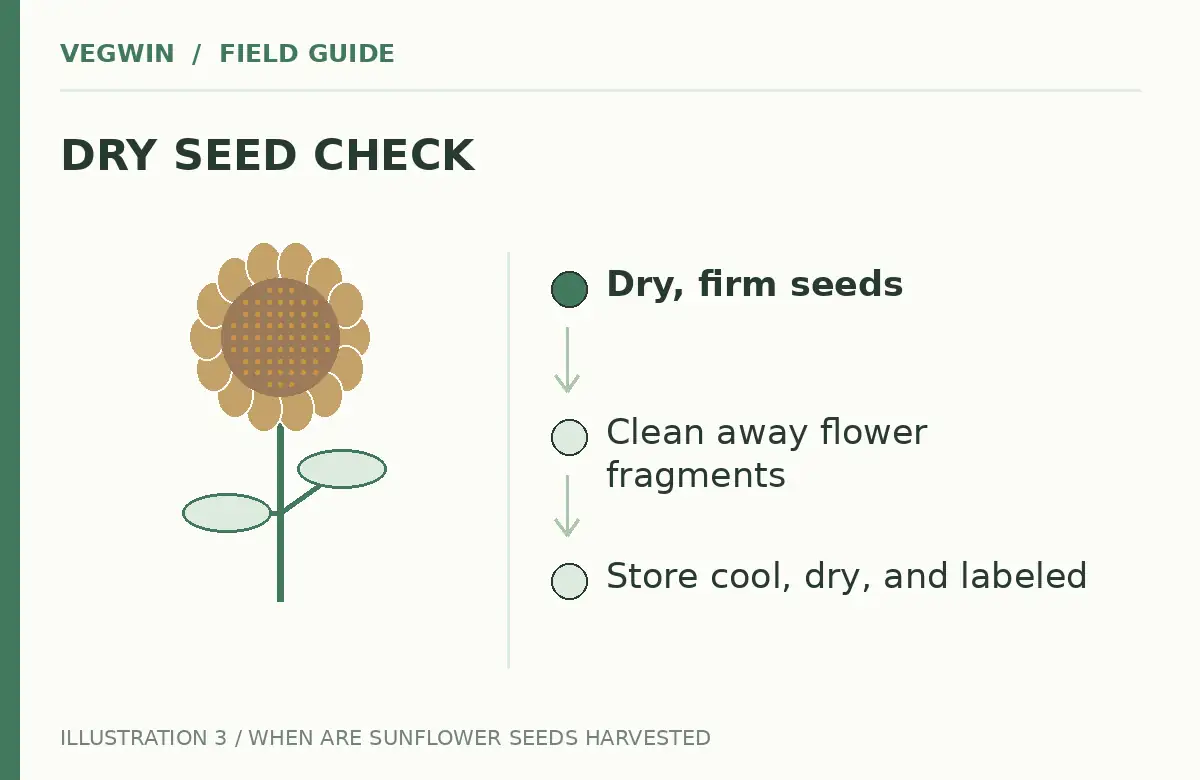
The goal is dry, firm seeds that can separate without leaving damp plant debris clinging to them. Spread or hang heads in a dry, shaded, ventilated location and check them periodically. In warm humid weather the process can take longer than a tidy online timeline suggests. Once the back is brown and the disk is dry, use clean hands to rub seed loose over a tray or clean bucket. Remove remaining flower fragments so they do not trap moisture in the seed lot. Handle heads gently when you want intact seeds for sowing rather than damaged kernels.
Protect selected heads without trapping moisture
A breathable cover can reduce loss to birds while allowing some airflow around the drying head. Avoid enclosing a damp head tightly in plastic, which can hold condensation against seeds. Protect indoor drying racks from mice as well as outdoor birds. Inspect the heads for mold or insect damage; a harvest ruined by moisture should not be mixed with sound dry seed. If a sudden storm is forecast and a head is already nearing maturity, a covered, well-ventilated drying location can be more predictable than leaving it exposed to repeated soaking.
Sort kitchen seeds from planting seed carefully
Choose your intended use before storage. Planting seed should be fully dry, clean, labeled by cultivar or seed source, and stored where humidity will not fluctuate severely. Kitchen seed needs clean handling and any food-preparation steps should follow a reliable tested recipe rather than improvised drying advice. Seeds gathered from an ornamental hybrid may germinate yet produce variable offspring. Do not assume every sunflower species or every seed treated for ornamental planting is suitable for eating. Commercial seed packets may carry coatings or restrictions that make their contents inappropriate for food use.

Know why a brown head can still fail storage
Brown color is a maturity clue, not a moisture meter. Check whether seeds feel dry, whether plant debris is crisp, and whether a trial batch develops condensation if temporarily enclosed. If you detect dampness, continue air drying rather than sealing the crop. Label the harvest date and variety where known. Storage success depends on dryness, cleanliness, and a cool protected place. There is no benefit in rushing to jar seeds because the garden season is ending; a small amount of remaining moisture can spoil a large batch.
Leave some seed heads for wildlife intentionally
If the garden can spare them, consider leaving several heads to serve birds through part of the cool season. Fallen hulls and volunteer seedlings are possible consequences, so choose the location thoughtfully. Removing a head after animals have emptied it may tidy the border without reducing the food already provided. If rodents are a concern near buildings, weigh wildlife benefits against attraction to the immediate area. Sunflowers can be part of a broader wildlife planting, but no single flower head can replace habitat diversity, water sources, or management suited to local species.
Keep records for next season’s seed harvest
Note when petals faded, when the back turned yellow, and when seed rubbed free easily. These observations will make next season’s decisions more reliable than generic dates because spring planting time and local conditions vary. Photograph the back of a head at each stage and save one labeled dry sample. When next year’s seedlings grow, compare them with the saved parent plant and record any differences. Especially with hybrids, visible variation is expected and not proof that the saved seed was contaminated or poorly handled.
Related Guides
- How to Direct-Sow Sunflower Seeds at the Right Depth After Frost
- How to Save Sunflower Seeds for Next Year Before Birds Take Them
How We Research and Verify Garden Advice
We focused on uses the often-overlooked back of the sunflower head to separate cut-and-dry timing from final seed removal, with options for birds versus seed saving. Local climate, cultivar, equipment performance, and plant health can change an otherwise reasonable recommendation. Sources were checked October 21, 2026. We do not include paid product links in this article; see our affiliate disclosure.
Sources checked October 21, 2026: Primary Extension reference (Yellow-brown drooping head as a harvest cue and indoor drying). Related Extension guidance (Flower seed maturity, dry brown heads, and hybrid offspring differences). These links support the horticultural distinctions, but do not replace local Extension guidance for a particular site.
Not necessarily. Check the back of the head and seeds; petal loss often occurs before full seed maturity.
Generally wait for the back to begin yellowing and the head to mature; very early-cut heads may have immature seeds.
The head should be dry and brown, and firm seeds should rub free readily without wet debris.
Yes, but the seedlings may not resemble the hybrid parent in color, height, or flower form.
Protect selected heads with a breathable covering or cut mature heads for indoor drying, and leave others for wildlife if desired.